
Understanding the Personal Protection Officer Certification
The Personal Protection Officer certification - a Korean National Police Agency-authorized credential hosted by the Korea Security Association - qualifies holders for security, guard, and personal-protection roles across public and private sectors.
Hello, this is Kolleges.
Today we want to talk about a specialized credential that protects the safety of those around us - the Personal Protection Officer certification.
Stalking and dating violence cases have been showing up in the news more often, leaving many people feeling uneasy. Personal Protection Officers are the ones who safeguard our security in those dangerous situations.
Let’s walk through what the Personal Protection Officer certification is, why it matters, and what makes it appealing. 😊
What Do You Learn for the Personal Protection Officer Certification and What Does the Job Involve?What Do You Learn for the Personal Protection Officer Certification and What Does the Job Involve?What Do You Learn for the Personal Protection Officer Certification and What Does the Job Involve?What Do You Learn for the Personal Protection Officer Certification and What Does the Job Involve?
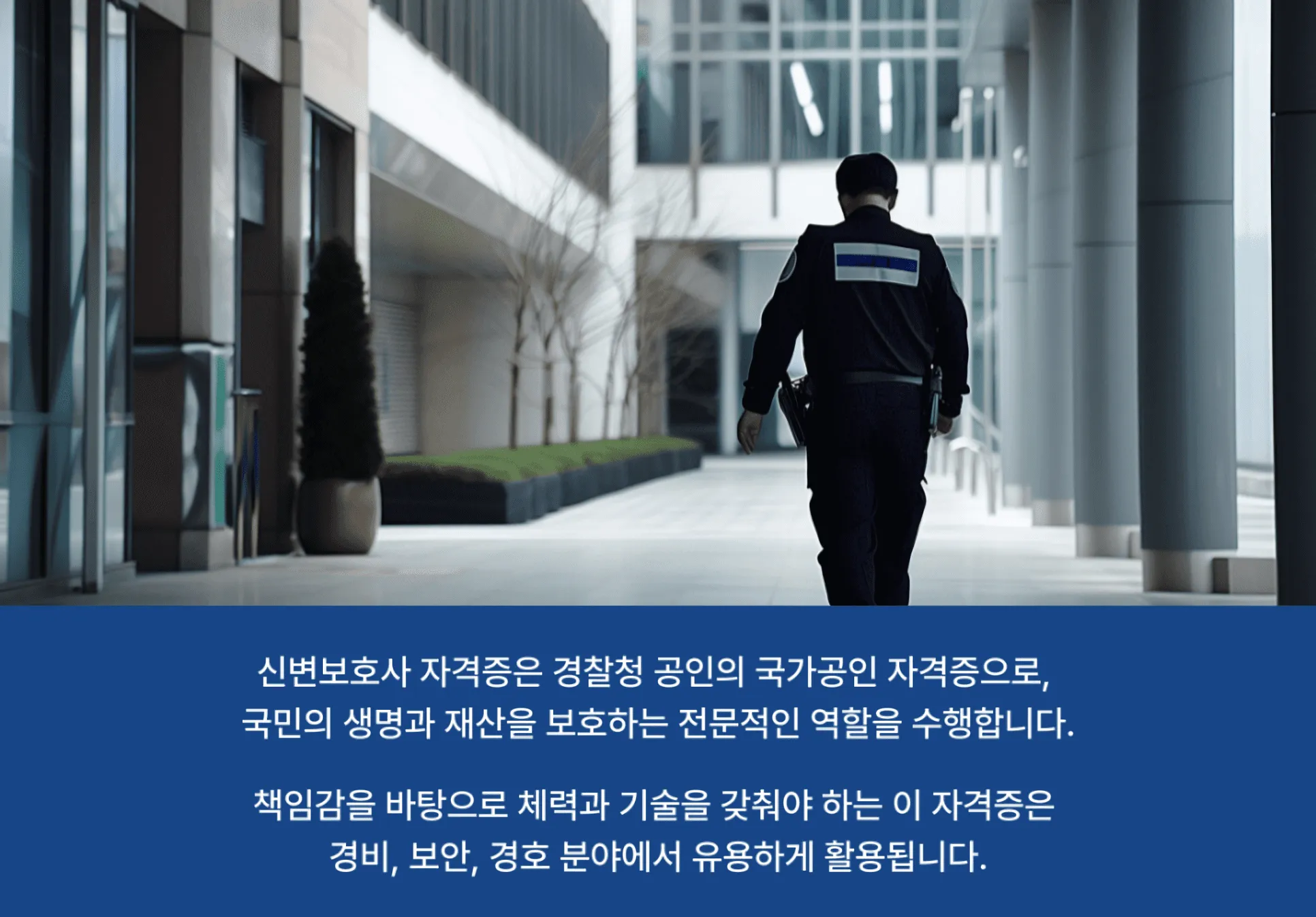
The Personal Protection Officer certification is hosted by the Korea Security Association and authorized by the Korean National Police Agency as a state-accredited private certification.
In short, it’s a professional certification for protecting the lives and property of the public.
It's commonly pursued by people working in or moving into security, guard, or protection-related fields. With this certification, you can take on a range of roles focused on personal safety.
For example, you might protect people in dangerous situations, or respond calmly in emergencies to minimize harm.
Physical fitness and technique matter, but what matters even more is responsibility.
Because you’re protecting lives and safety, the role demands a serious mindset.
Where Is the Personal Protection Officer Certification Used?Where Is the Personal Protection Officer Certification Used?Where Is the Personal Protection Officer Certification Used?Where Is the Personal Protection Officer Certification Used?

Holding the Personal Protection Officer certification opens up a wide range of opportunities.
You can work as a related public servant, such as a police officer or aide, or take on security duties at state-run enterprises and public institutions.
You can also work at general security firms or private protection companies, taking responsibility for people’s safety.
The rise in stalking crimes and dating violence underscores just how important Personal Protection Officers have become. They serve as a reliable presence - protecting victims and keeping them safe from threats.
There’s more. When commissioning as a junior officer (non-commissioned officer or officer) in the military, you can earn leadership-related bonus points, and you get preferential treatment in the recruitment of armed security guards at public institutions.
You’re also significantly more competitive when applying to private security firms. With so many advantages across multiple fields, the outlook for this certification is genuinely bright.
Introduction to the Practical Exam for the Personal Protection Officer CertificationIntroduction to the Practical Exam for the Personal Protection Officer CertificationIntroduction to the Practical Exam for the Personal Protection Officer CertificationIntroduction to the Practical Exam for the Personal Protection Officer Certification

The practical exam for the Personal Protection Officer certification covers a range of techniques designed to assess how you respond in real-world situations.
The practical exam is divided into two sections - Suspect Response Techniques and Apprehension and Escort Techniques.
- 1 Suspect Response Techniques - Focuses on the techniques used to subdue or control a suspect. It covers fine techniques like neck-pushing, wrist locks, elbow pushes with the shoulder, and radial-bone pushes, as well as applied techniques like arm-twisting and collar-pulling.
- 2 Apprehension and Escort Techniques - Focuses on safely restraining, subduing, and escorting a suspect. This includes techniques like binding, neck holds, jaw pressure, and knee-back pushes. The exam also evaluates combined movements that can be used effectively in real-world situations.
Assessment is done in pairs, and the practical exam - covering both individual techniques and combined movements - is scored out of 100 points. The format is similar to self-defense practice and is designed to objectively verify the candidate’s ability to perform the duties of a Personal Protection Officer.
Today we took a look at the Personal Protection Officer certification - far more than just a line on a resume, it offers the chance to take on a meaningful role protecting the lives and safety of the public.
Kolleges will be there to back you up as you pursue your goals and dream bigger. We hope the Personal Protection Officer certification becomes your next challenge.💪🧡
Frequently asked questions
Want to turn learning outcomes into verifiable assets?
From issuing to verifying and amplifying, see it for yourself with Kolleges.
Request a Kolleges demoRelated posts

Hospital Administrator Certification: Eligibility and Exam Content Explained
Korea's Ministry of Health and Welfare-accredited Hospital Administrator certification is open to health administration graduates and non-majors who complete the Association's training course, with a 60-77% historical pass rate.

Types of Private Certifications and How to Use Them
Private certifications cover hundreds of varieties and lower entry barriers versus national exams; pairing them with blockchain-based digital credentials lets learners share results on social media and drives organic promotion for issuing academies.
Is the Degree Era Over? What 11 Million Job Postings Reveal About Skills-Based Hiring
The data confirms that hiring is looking at skills over degrees. We break down the shift to skills-based hiring through the numbers from Oxford's research, remarks at Davos 2026, and signals from Korea.