
"Innovation Stories from Women Changing the World With Technology" - GDG SWU Lead Yewon Cho
 Robin Yoon · Customer Success Team Published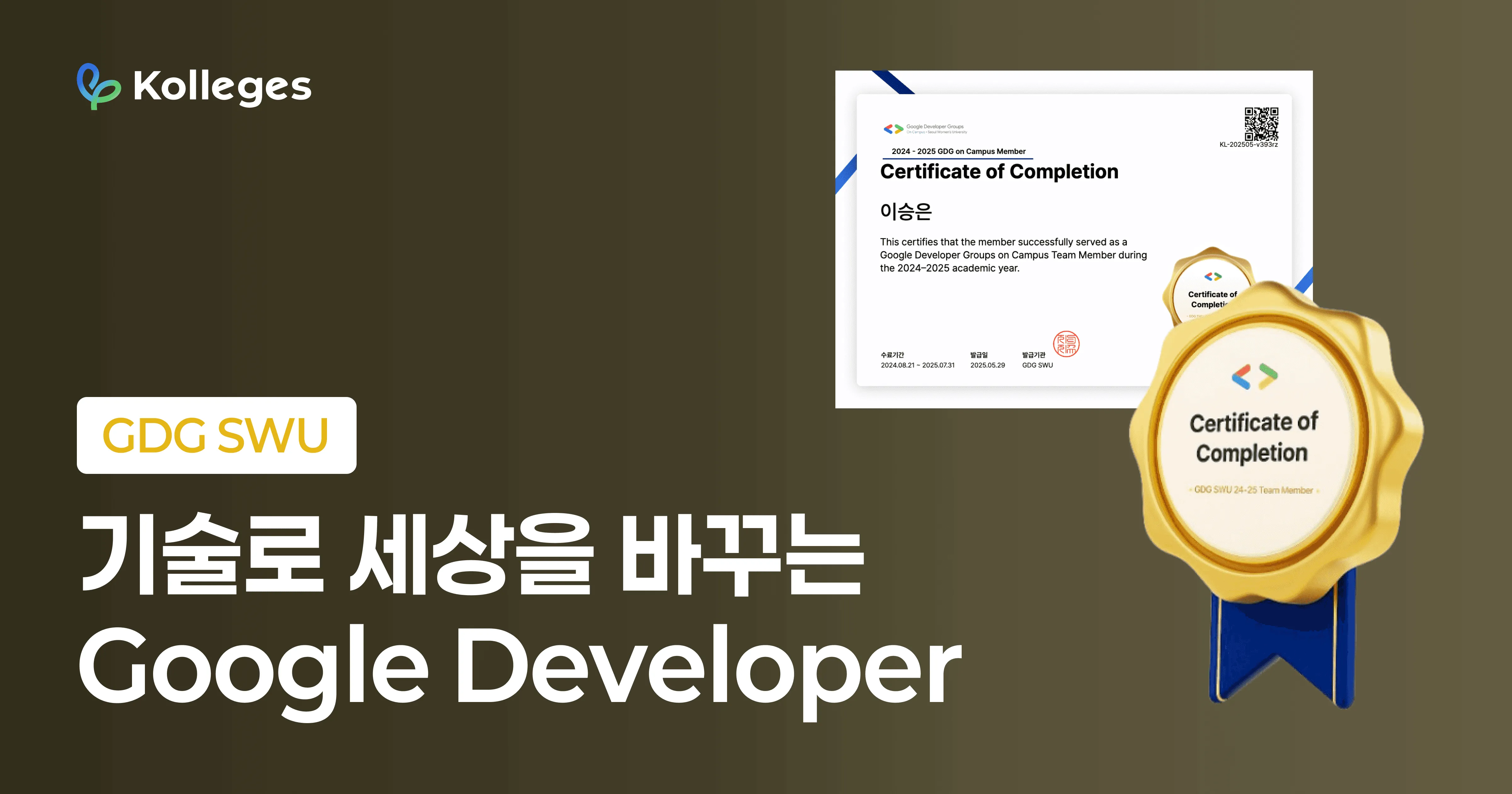
GDG SWU adopted Kolleges digital badges to replace uncredible self-made PDFs, enabling QR-based auto-issuance at hackathons and giving Google-sponsored activities a trustworthy, shareable certificate.
“We started with the intent of creating good value in the world. We wanted to solve real social problems through technology.” Those are the words of Yewon Cho, lead of GDG SWU (Google Developer Group Seoul Women’s University). Now in its third year, GDG SWU has established itself as the representative IT community of Seoul Women’s University.
Q. What kind of organization is GDG SWU?
GDG SWU is the Seoul Women’s University chapter of the Google Developer Group. Currently we have 11 operations staff and 20 general members - a total of 31 - a small organization, which lets us run tighter, more systematic activities. We’re a self-governed group that doesn’t pursue commercial profit, and our goal is to solve social problems through technology.
Our activities revolve around two big pillars: technical study and growing the developer community. Recently we’ve also been preparing to collaborate with the university’s community service organizations, which we expect will give us richer resources - advice, connections to relevant people, and financial support.
Q. The diversity of your members is striking.
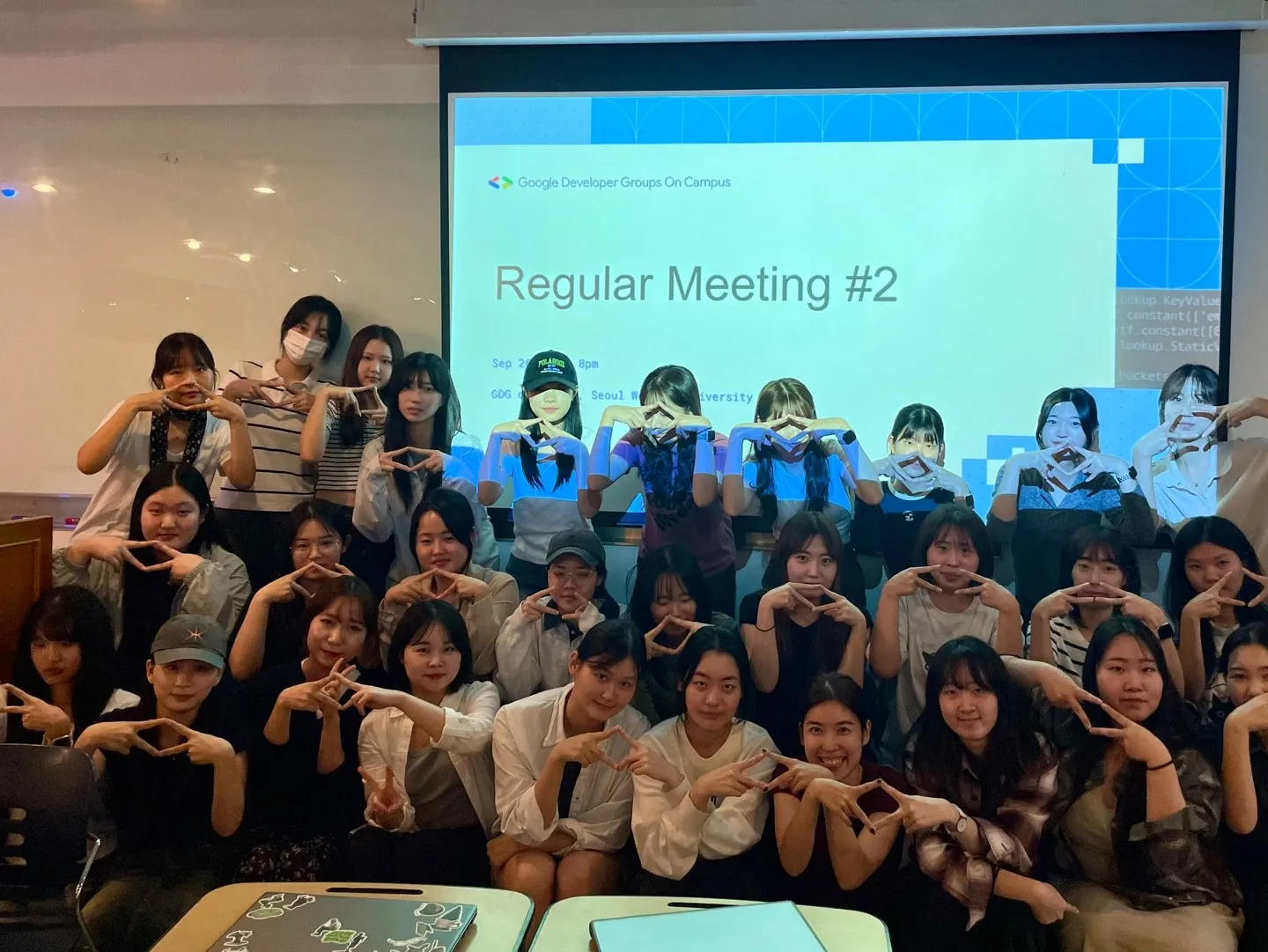
That’s right. It’s our biggest distinguishing feature and source of pride. We have students from all kinds of backgrounds - Business Administration, Humanities, Fine Arts, Healthcare, Computer Science, and more. In typical IT clubs, designers only make card news and work distribution isn’t structured, but we try to make the most of each person’s specialization.
For example, we sometimes have students from Ceramic Art or Metal Engineering take on UX/UI design - and this diversity actually becomes the driver of more creative outcomes. At hackathons in particular, planners, developers, and designers form one team and have to finish a project in a short window. The synergy from teammates with such different backgrounds is genuinely remarkable.
Q. What’s the hardest part of running it?
Since we’re a self-governed group, the biggest challenge is having to solve everything from start to finish ourselves. From preparing educational materials to juggling it with academics - it’s a continuous chain of difficult work. Archiving in particular hasn’t been done properly, so systematic handover between cohorts is hard, and we’ve even had cases where we had to create new accounts from scratch.
Also, over time, member motivation drops, and people sometimes get tired of repetitive activities. To address this, we work to present concrete outcomes and a vision for growth. We also provide new experiences through joint activities with other organizations.
Q. We’re curious about what led you to adopt Kolleges.
Even though GDG activities are sponsored by Google, no official activity certificate is issued separately. For university students, an official activity certificate matters a lot for employment, and certificates we made ourselves lacked credibility. Existing certificates damage easily over time, and PDFs often get stored and then lost or deleted.
Kolleges solved all these concerns at once. From the first impression, the unique, MZ-generation-friendly design stood out. Customization is the trend among today’s 20-somethings, and the customization features - simple choices that still let you express individuality - were appealing. The student response when they first received the badges was very positive too.
Q. Any especially memorable outcome from the hackathon?
The biggest outcome was successfully running an event in collaboration with multiple IT clubs at Seoul Women’s University. Representatives from each group came together to integrate needs and build it jointly, and afterward we got a lot of partnership inquiries from external groups.
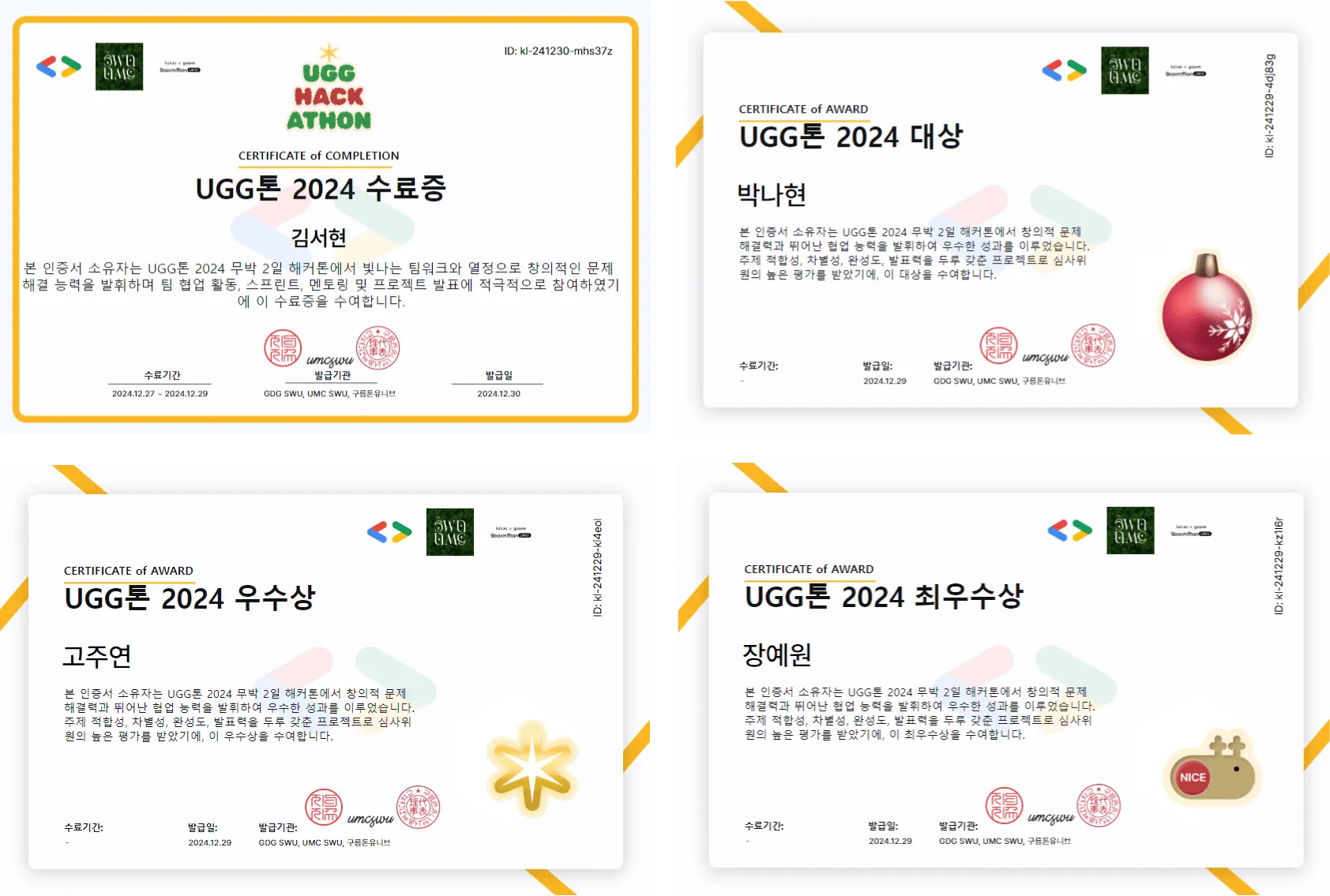
The customization features of Kolleges were especially helpful for the year-end-themed hackathon. With just a few clicks, we could create certificates that captured the mood of the event, which also significantly boosted the credibility of the hackathon itself.
Q. What are your plans going forward?
If last semester focused on internal activities and regular sessions, we’re now preparing for a bigger challenge. The biggest goal is to host a global event within Asia. With different academic schedules and many things to be mindful of, it won’t be easy, but we believe cultural exchange with students from other countries will be a new growth opportunity for us.
We’re also planning to build a stable website. Right now we mainly communicate via Instagram, but going forward we want to build a more credible platform to expand opportunities for sponsorship and collaboration. In particular, we currently have many upperclassmen, so going forward we want to grow participation from incoming students and build a sustainable operating structure.
Q. Finally, your assessment of Kolleges?
A service that’s both convenient and trustworthy.
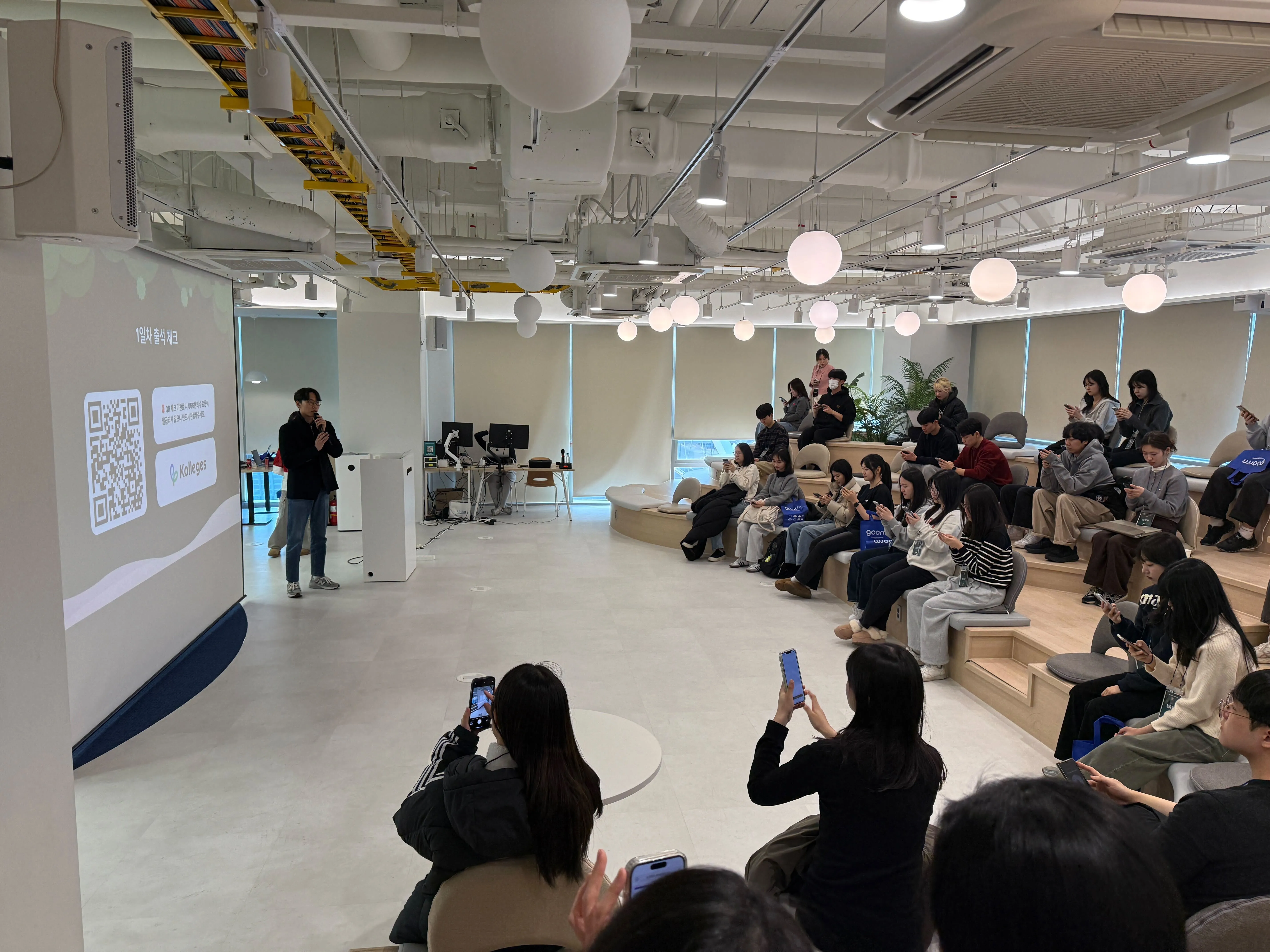
Convenient services often turn out flimsy, but Kolleges provided continuous care along with reliability. The ability to auto-issue many certificates with a single QR code was a big advantage at time-sensitive events like a hackathon.
Of course, there were areas that need improvement. For example, the SNS sharing feature wasn’t easy to spot, and it was inconvenient to find award recipients among users who signed up with nicknames. But even accounting for these small inconveniences, overall I was very satisfied with the service.
Ending the interview, Lead Yewon Cho expressed her aspiration: “I hope GDG SWU grows beyond a typical university club into an organization that creates real social change.” We look forward to seeing what fruit this group’s challenge - embracing technology, diversity, and social value all at once - will bear.
[GDG SWU Homepage]
[UGG-thon Certificates and Awards]
[UGG-thon]
- Creative problem solving through collaboration among students of diverse majors
- Successful completion of UGG, a 50-person 2-day-no-overnight hackathon
- Led joint events of Seoul Women's University IT clubs
- Attempted to solve social problems through collaboration with social venture companies
- Improved operational efficiency by adopting blockchain-based digital certificates
Frequently asked questions
Want to turn learning outcomes into verifiable assets?
From issuing to verifying and amplifying, see it for yourself with Kolleges.
Request a Kolleges demo Related posts
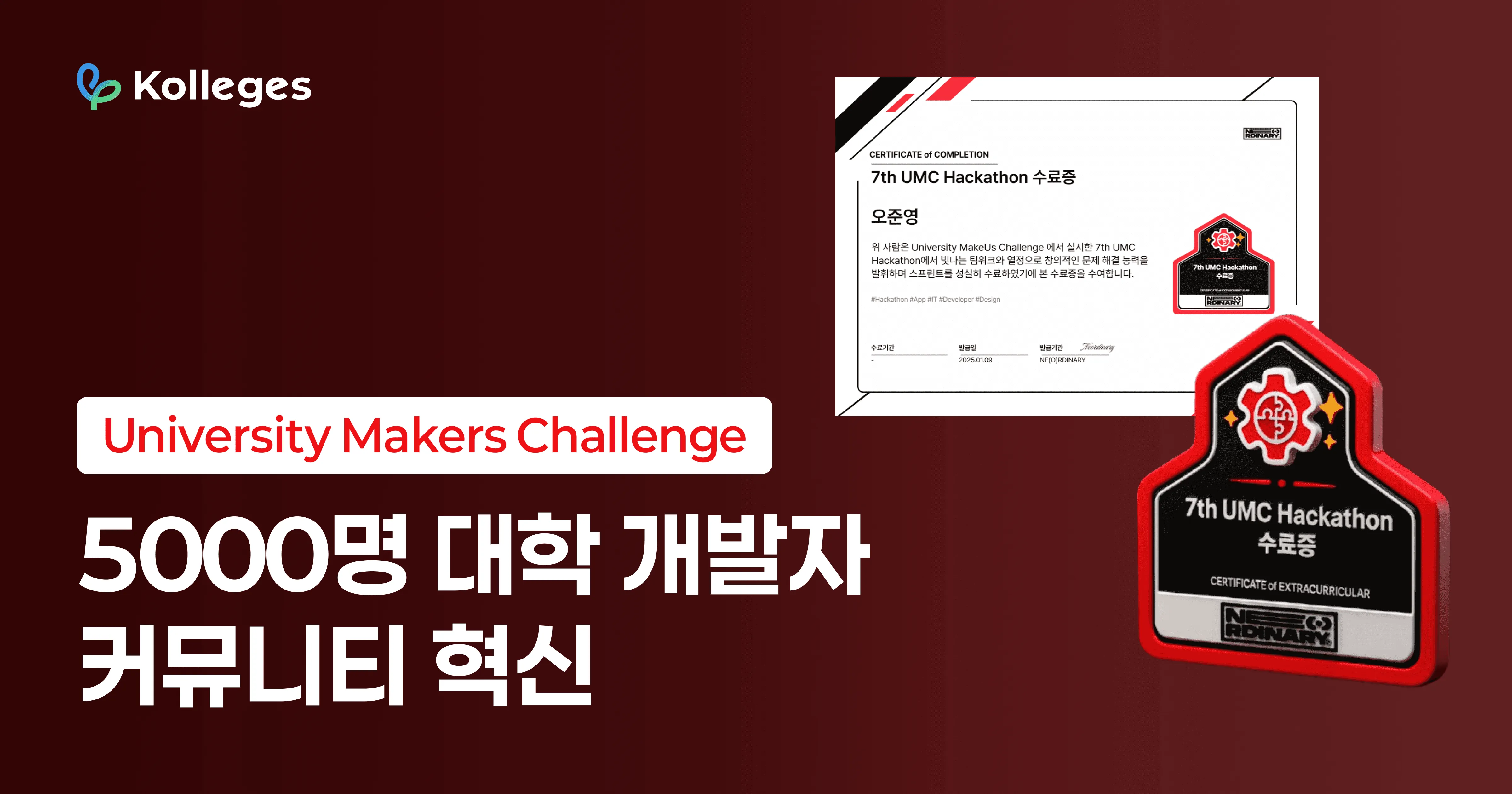
"The UMC Innovation Story Leading 5,000 College Developers" - Junyoung Oh, Head of Operations at UMC | Kolleges
UMC cut its top support burden - endless certificate reissue requests from 1,000 students per cohort - by switching to Kolleges bulk digital badge issuance.
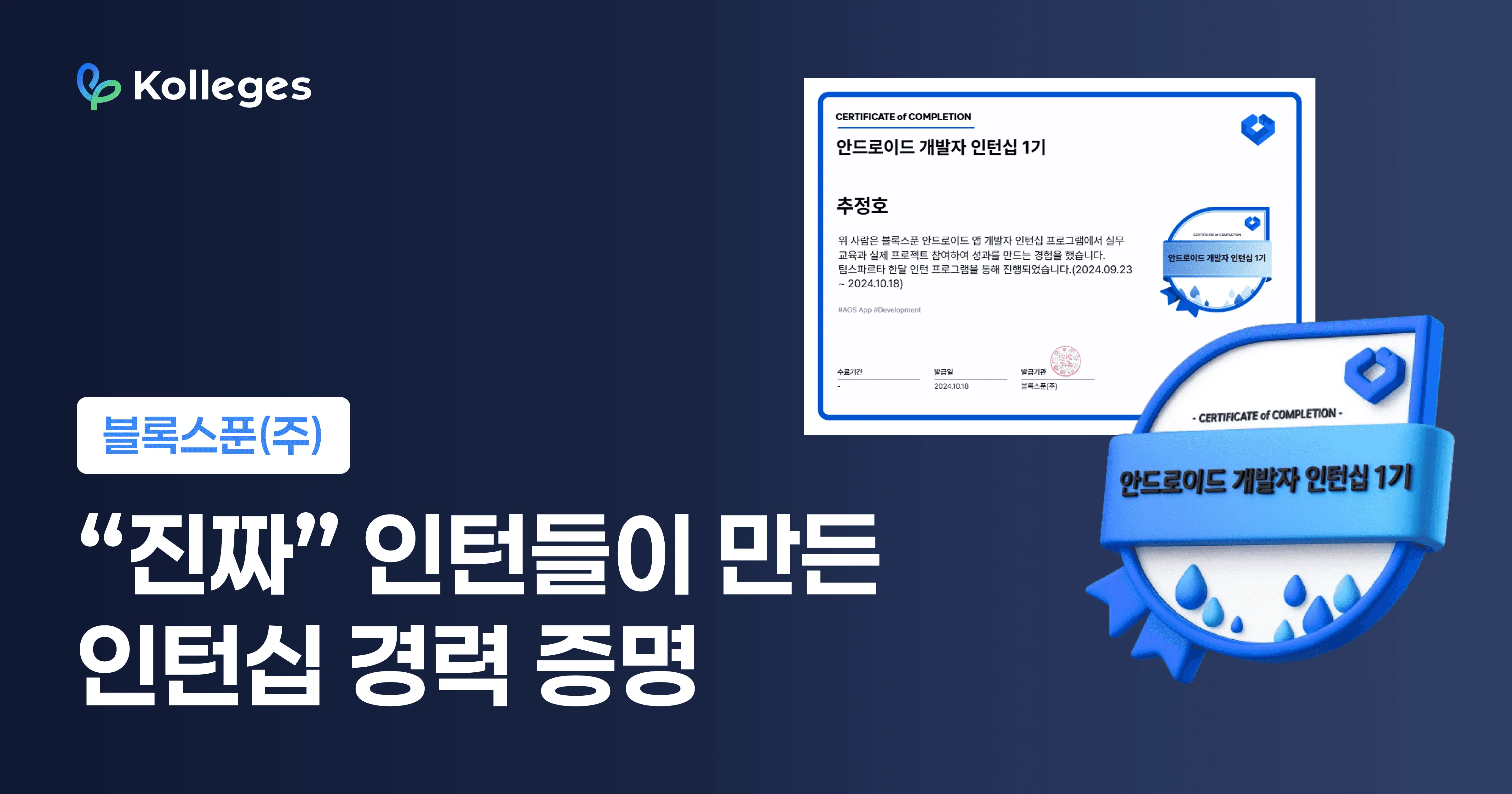
Real Interns, Real Results at Blockspoon - A One-Month Record | Digital Badges
Three Blockspoon interns - a growth marketer and two Android developers - completed meaningful real-world projects in a single month and shared blockchain-issued digital badges as proof on LinkedIn.
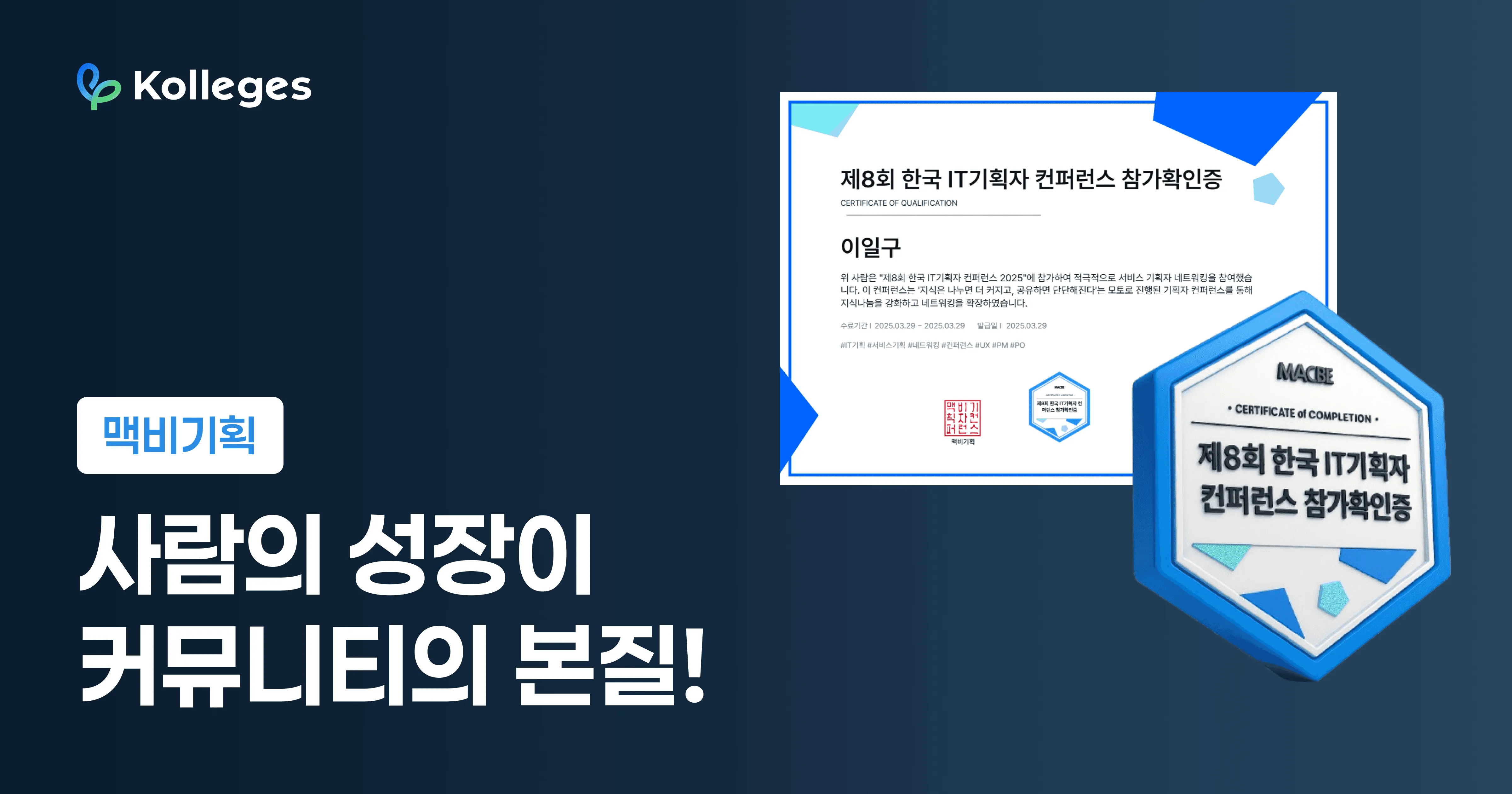
The Growth of People is the Essence of Community - An Interview with Lee Il-gu, Leader of MACBE Planning | Kolleges
MACBE Planning uses Kolleges digital badges to turn K-Planning Conference participation into verifiable credentials, boosting brand recognition and community identity across seven cohorts.