
Private Certificate Registration: Requirements, Documents, and Key Considerations
Private certificate registration requires verifying eligibility, preparing operating regulations and business documents, and staying current on annual license tax and change registrations after approval.
Hello, this is Kolleges.
Today we’ll cover something many people ask about: the requirements for registering a private certificate.
It can feel unfamiliar and intimidating at first, but with a step-by-step approach you can prepare for it without much trouble.
We’ll break the essentials of private certificate registration into three key points to make it easy to follow.
- Why registration matters - operating without registering is subject to legal penalties, and some fields are ineligible
- What to prepare - get your operating regulations and business documents ready in advance
- After registration - pay the annual registration license tax and handle change registrations
Why Is Private Certificate Registration Necessary?Why Is Private Certificate Registration Necessary?Why Is Private Certificate Registration Necessary?Why Is Private Certificate Registration Necessary?
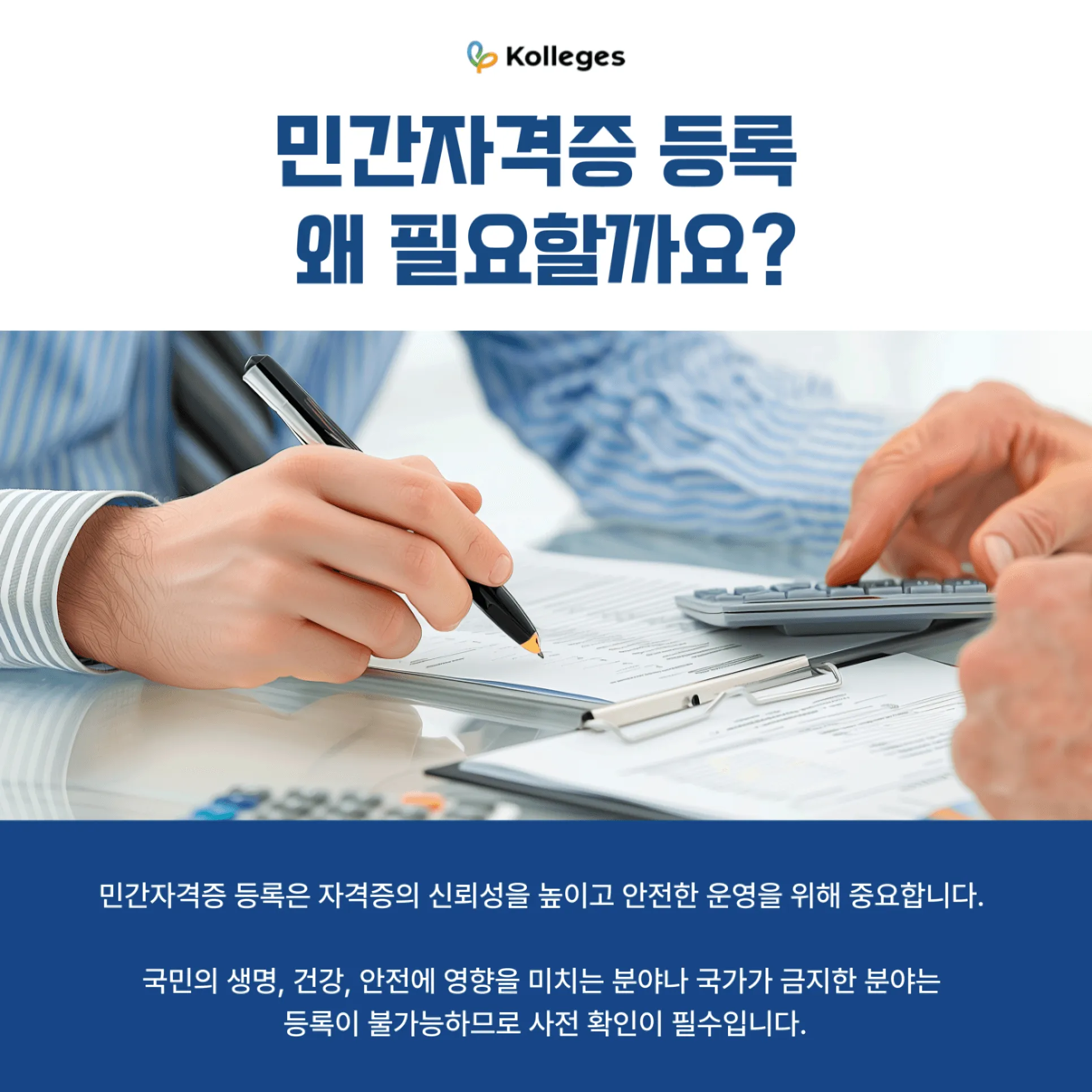
If you want to operate a private certificate, registration is mandatory.
Private certificate registration isn’t just a procedural step. It exists to improve the credibility of the certificate and ensure safe operation.
But not every certificate is eligible.
If it directly affects the life, health, or safety of the public, or falls under a field prohibited by the government, registration isn’t possible.
So before applying, you need to check that your certificate doesn’t fall under any prohibited categories.
Another important point is identifying the supervising ministry.
Each private certificate may have a different supervising ministry, so applying to the wrong one can mean your documents get transferred to another ministry, dragging out the processing time.
What Do You Need to Prepare for Registration?What Do You Need to Prepare for Registration?What Do You Need to Prepare for Registration?What Do You Need to Prepare for Registration?
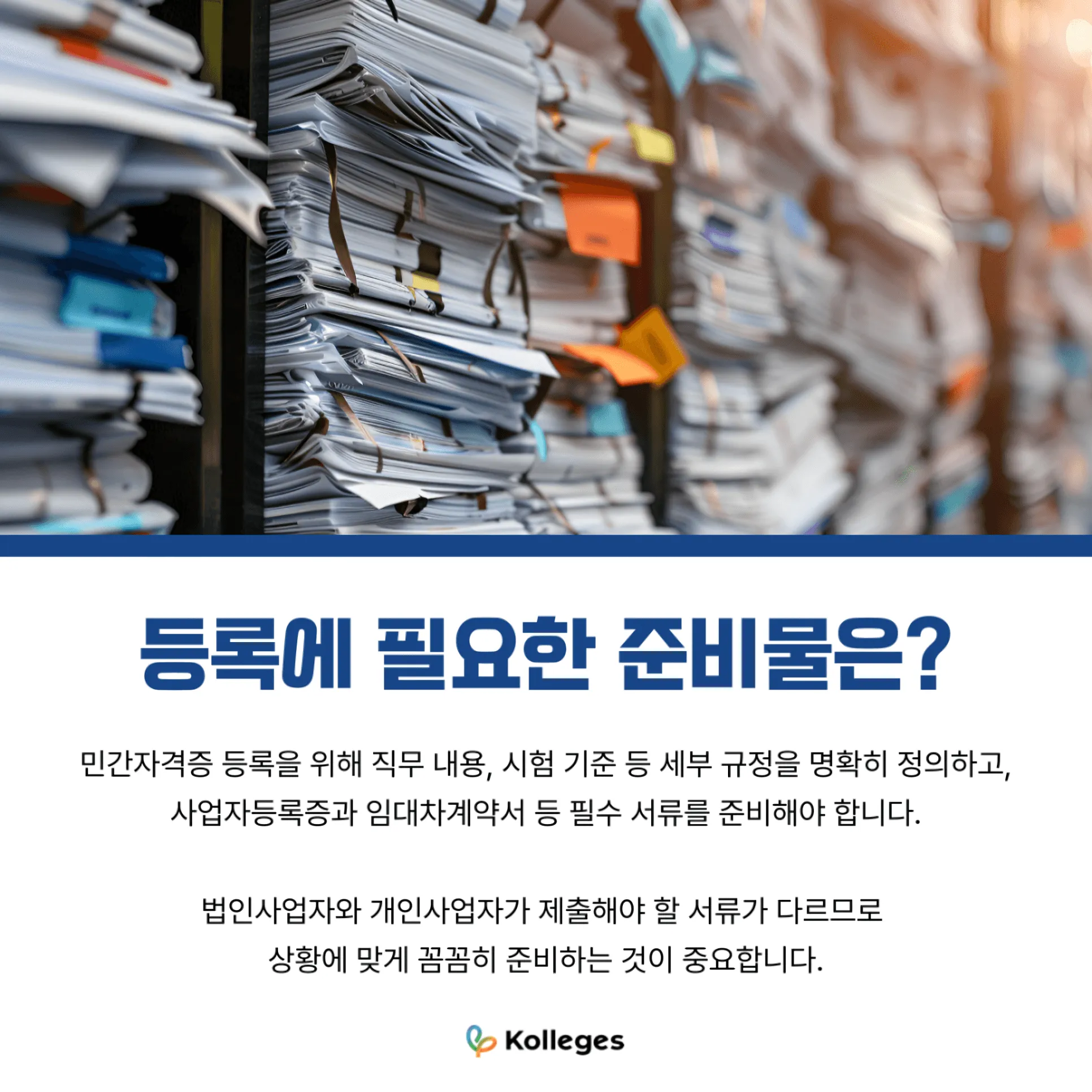
The first task in the private certificate registration process is preparing the documents. Documentation can be tedious, but getting it right the first time makes the rest much smoother.
To start, you’ll need to define the detailed regulations for operating the private certificate.
For example, the certificate’s job content, exam criteria, subjects, and evaluation method all need to be clearly defined.
You’ll also need documents like a business premises lease agreement (if you lease) and a business registration certificate. The required documents differ slightly between corporate and sole proprietors, so it’s important to prepare carefully based on your situation.
After you submit the application, the supervising ministry reviews the documents. Note that during the review you may be asked to supplement your documents.
In that case, you need to respond promptly to avoid rejection. Once all documents pass without issue, registration typically takes about 3 months to complete.
Things to Stay on Top of After RegistrationThings to Stay on Top of After RegistrationThings to Stay on Top of After RegistrationThings to Stay on Top of After Registration
Completing registration doesn’t mean the process is over.
To maintain your private certificate registration, you have to pay the annual registration license tax - did you know that?
If you don’t pay the license tax, your certificate registration can be canceled or suspended. In particular, once registration is complete, you must pay the license tax and submit a payment confirmation.
Beyond that, if you want to modify or change the certificate’s content, you need to apply for a change registration.
For example, if you want to change exam criteria, subjects, or job content, you have to fill out a change registration application and submit the related documents. Document preparation is required here too, and you also need to make sure the changes align with the management and operating regulations.
That covers what you need to know about the private certificate registration process. It can feel complex and difficult at first, but if you tackle it step by step, it’s manageable.
A well-prepared private certificate is more than just a piece of paper - it’s the first step toward greater credibility and broader recognition of your expertise.😉🧡
Kolleges provides all the information you need throughout this process and serves as a dependable partner. 😊
If you have any questions, please reach out anytime. We’re rooting for your successful certificate registration and will continue to bring you useful information. Thank you.
Frequently asked questions
Want to turn learning outcomes into verifiable assets?
From issuing to verifying and amplifying, see it for yourself with Kolleges.
Request a Kolleges demoRelated posts

How to Register a Private Certificate
Learn the full Korean private certificate registration process, key pitfalls to avoid, and how to register for free with Kolleges consulting instead of paying up to 1,000,000 KRW.
Registering a Private Certification, Part 1: Required Documents and Application Process | Kolleges
Educational institutions and sole proprietors can officially register a private certification in Korea by submitting the right documents and an Operations Regulation to KRIVET's Private Qualification Information Service between the 1st and 20th of each month.
Why Operating a Private Certification Is Harder Than Registering One | Kolleges
Discover why one-third of private certifications are abolished each year and how automating issuance, history management, and marketing prevents early abolishment.