
Can I put a private certification on my resume?
Private certifications strengthen resumes when they're relevant, credibly sourced, and framed around concrete skills gained - not just credential names.
Hello, this is Kolleges.
Today we want to talk about private certifications, something many of you have been wondering about.
In particular, the question “Can I put a private certification on my resume?” is an important concern for people preparing certifications.
Today, with Kolleges, let’s look at whether private certifications are actually advantageous in the job market.
What is a private certification? What is a private certification? What is a private certification? What is a private certification?
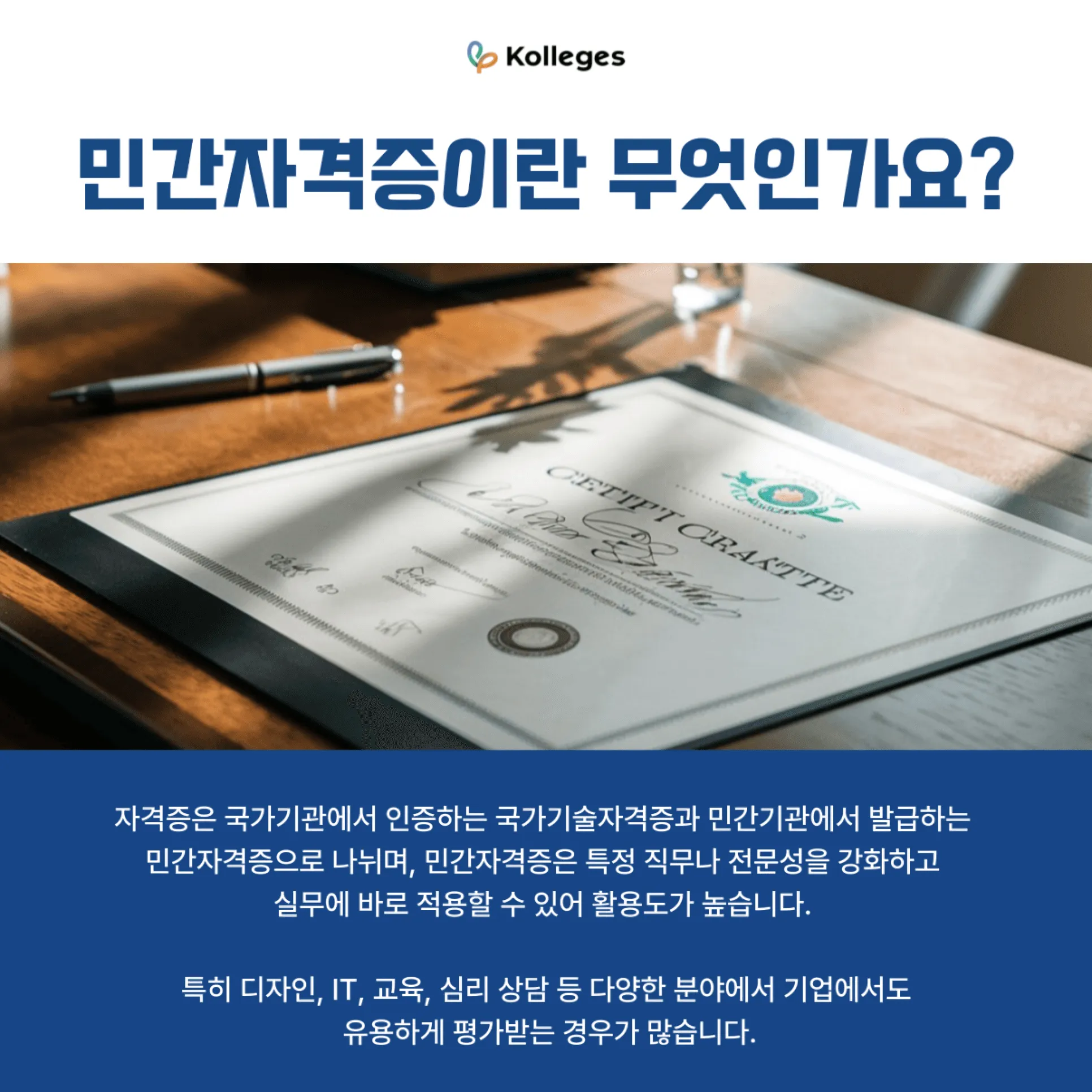
Let’s start with what a private certification is. Certifications generally come in two categories: national technical qualifications certified by the state, and private certifications issued by private institutions.
National qualifications are issued by credible government agencies or associations, while
private certifications, as the name suggests, are issued by various private educational institutions.
That doesn’t mean private certifications are less important. In fact, they're increasingly being used to strengthen specific job functions or expertise. For example, private certifications in fields like design, IT, education, and counseling psychology - which can be applied to practical work right away - are often highly valued by companies.
Can I put a private certification on my resume? Can I put a private certification on my resume? Can I put a private certification on my resume? Can I put a private certification on my resume?
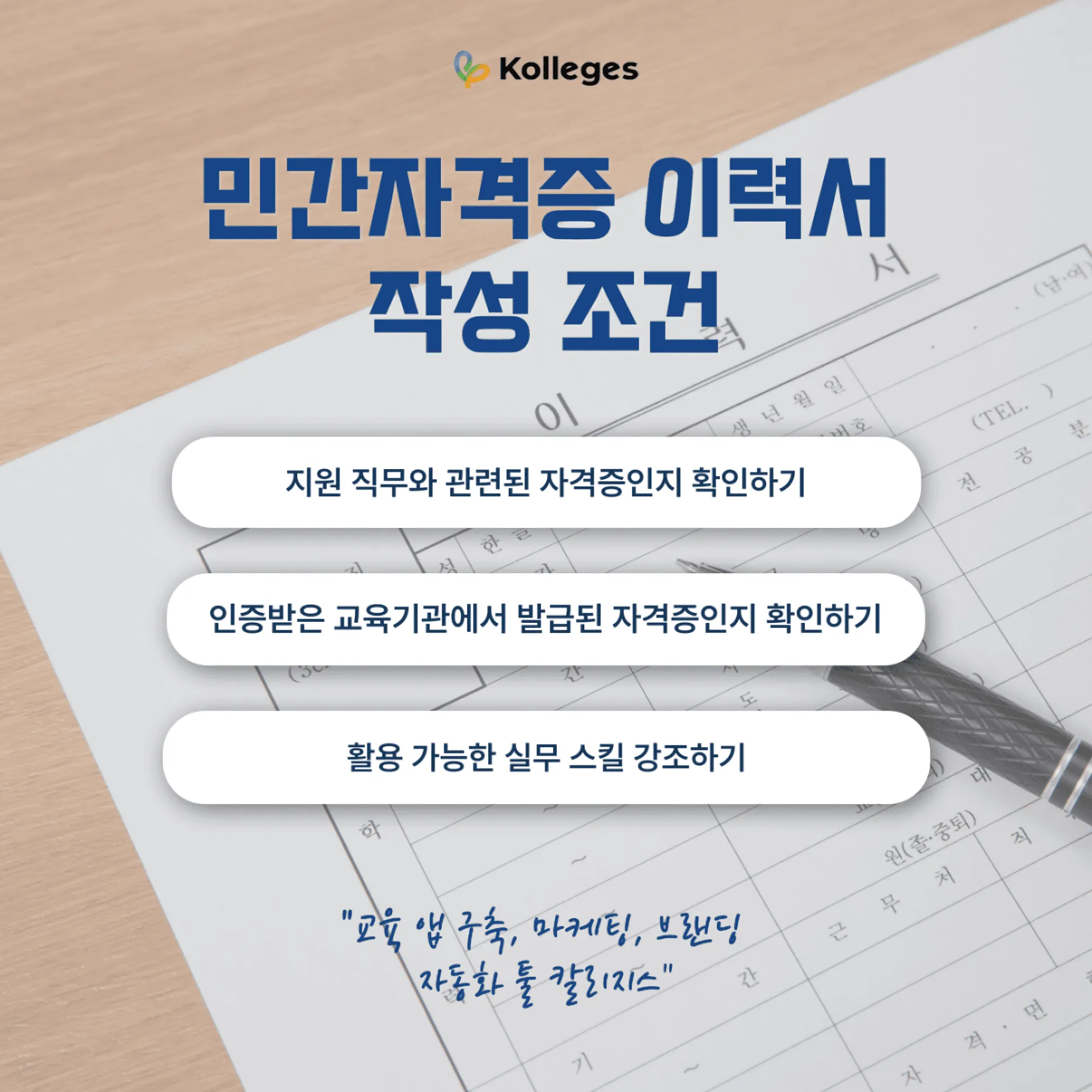
We hear the question “Can I put a private certification on my resume?” a lot. The short answer is yes, you can. But there are a few conditions.
- 1 Check that the certification is related to the job you're applying for - For example, applying to a design company while listing a graphic design-related private certification will clearly be a positive signal. On the flip side, an unrelated certification is cleaner left off.
- 2 Check that the certification was issued by an accredited educational institution - Hiring managers often look carefully at the source of a certification. A private certification issued by a credible institution adds to your trustworthiness.
- 3 Highlight applicable, practical skills - Rather than just listing certifications by themselves, it's better to concretely describe the practical capabilities or experience you gained through them. Adding something like ‘successfully carried out a project after obtaining the OO certification’ makes the value land much more strongly.
Career development using private certifications. Career development using private certifications. Career development using private certifications. Career development using private certifications.

Private certifications are not just for finding a job - they help meaningfully with career development and strengthening expertise.
For working professionals or those dreaming of a career transition, they’re a strong choice for using time efficiently.
We also recommend them for job seekers. For those stepping into society for the first time, a private certification can add confidence. Even a relatively simple certification is evidence of your learning drive and effort.
In addition, when you need a new skill at work, a private certification has the strength of being something you can learn quickly and apply right away.
For those challenging themselves to a completely new field, a private certification can be a key that complements your expertise and opens new paths.
Today we covered private certifications, with tips for putting them on your resume and how to use them in your career.
What matters is not the type or name of the certification, but emphasizing the experience and skills you gained through it.
If you’re hesitating about whether to put it on your resume, write it with confidence and present it boldly. From here on, Kolleges is right beside you on the challenge toward your dream.
If you have questions, feel free to reach out.
Frequently asked questions
Want to turn learning outcomes into verifiable assets?
From issuing to verifying and amplifying, see it for yourself with Kolleges.
Request a Kolleges demoRelated posts

Digital Badges vs. Traditional Certificates: Which Strengthens Student Employability?
Digital badges embed verifiable skill metadata and integrate with LinkedIn, giving graduates a data-backed credential that employers can trust and discover - unlike paper certificates that require manual verification.
How to Use Digital Badges in Resumes and Portfolios
Digital badges embedded in resumes, portfolios, and LinkedIn profiles function as verifiable, metadata-rich credentials that strengthen your case in skills-based hiring.
Top 5 Popular Private Certifications: Which One Fits You?
From counselor to barista, this guide compares five in-demand private certifications - who each suits, where they lead, and how to earn them.