
How to Use Digital Badges in Resumes and Portfolios

Digital badges embedded in resumes, portfolios, and LinkedIn profiles function as verifiable, metadata-rich credentials that strengthen your case in skills-based hiring.
A growing number of companies and educational institutions are adopting digital badges as a new form of competency credential. Badges are a substantive form of proof that carries metadata about who earned them, when, and against which criteria.
For job seekers in particular, more and more are using badges as a tool for documenting their learning and achievement in formal materials such as resumes and portfolios.
Here is how to put digital badges to work in your resume and portfolio.
Adding digital badges to a resume
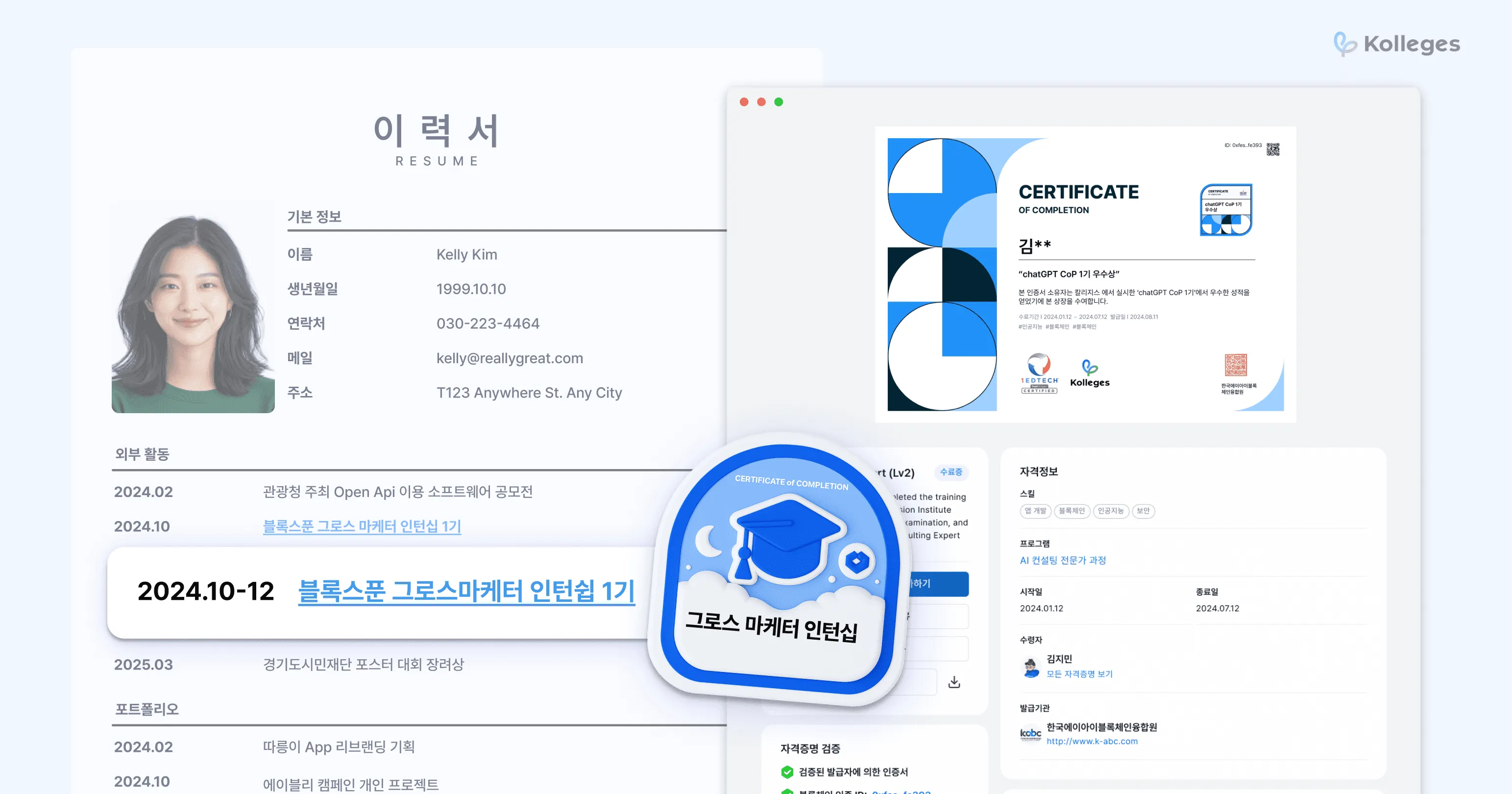
On a resume, digital badges provide both visual emphasis and credibility.
- 1 Stronger visual recognition - A well-placed badge communicates quantified skills or completed programs more effectively than plain text.
- 2 Verifiable links - Attaching a verification URL to the badge image makes it easy for reviewers to confirm authenticity.
- 3 Role relevance - A brief description on the badge shows how it ties to a specific job function.
A digital badge is not just a design element. It is a data-backed, trustworthy credential that strengthens the persuasiveness of a resume.
How to use digital badges in a portfolio
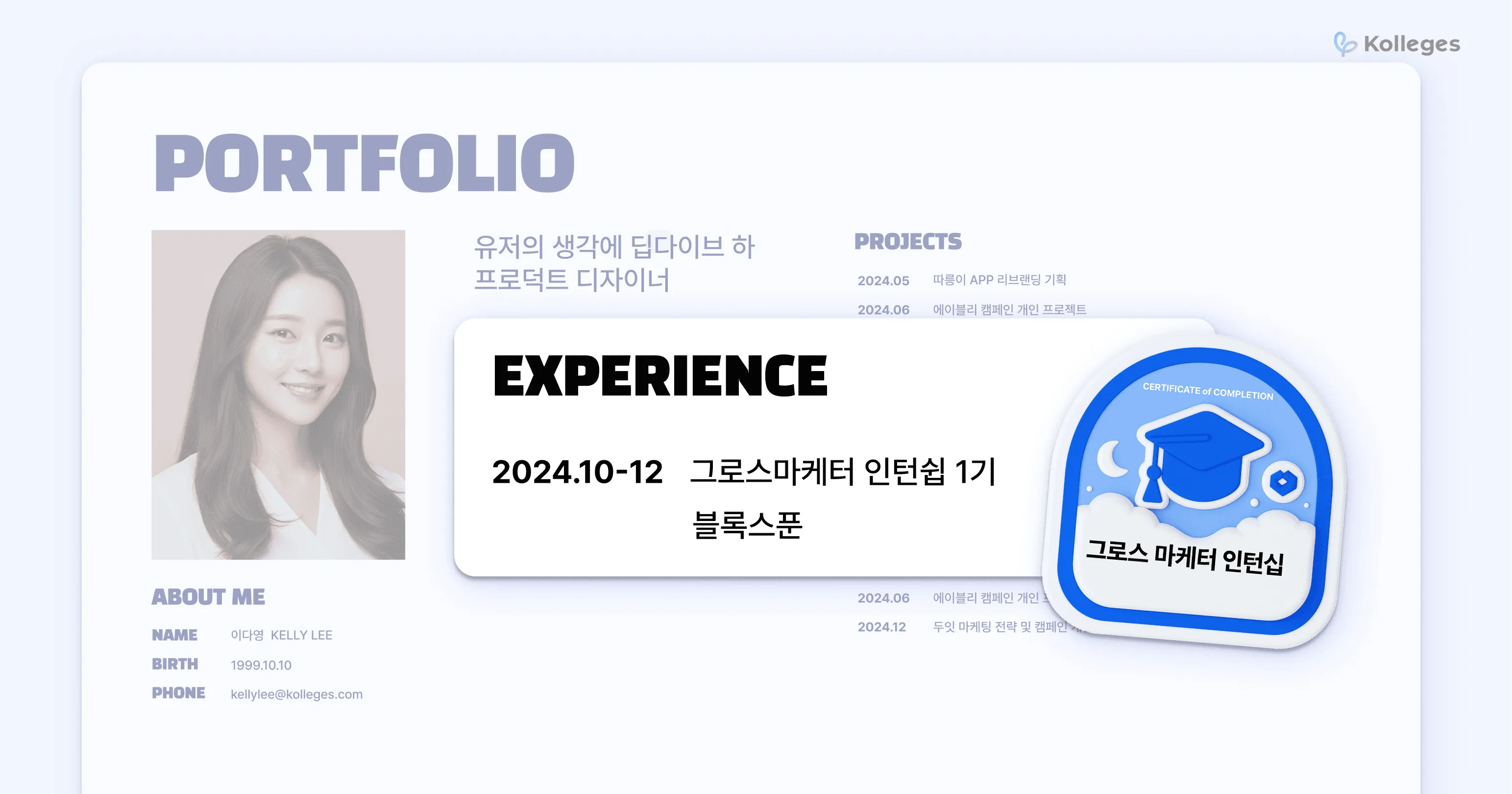
If a resume is a summary document, a portfolio is the space where you make experience concrete. Digital badges work well as evidence of outcomes tied to specific projects or learning results.
- 1 Organized by skill - Divide the portfolio into sections like ‘Data Analysis’ or ‘UX/UI’ and place the relevant badges alongside the work to show a concrete competency stack.
- 2 Linked to deliverables - Make each badge clickable so it leads to the corresponding project, turning the portfolio into a mini hub.
- 3 Badge collection section - Create a dedicated area for credentials to demonstrate that your learning and career history are systematically managed.
What digital badges mean in the job market
Digital badges have moved beyond simply being credentials used to land a job. They are establishing themselves as a new tool for evaluating competency.
- 1 Compatibility with AI recruiting systems - ATS platforms and AI-driven resume parsers prefer structured data, which gives badge metadata strong compatibility.
- 2 The rise of skills-based hiring - Beyond traditional certifications and credentials, badges are used as an indirect signal of technical capability in screening and interview stages.
- 3 Advantageous for non-traditional and career-switching candidates - When someone has focused intensively on a specific skill over a short period, a badge plays a major role in formally certifying that work.
Using digital badges effectively on SNS and in your network
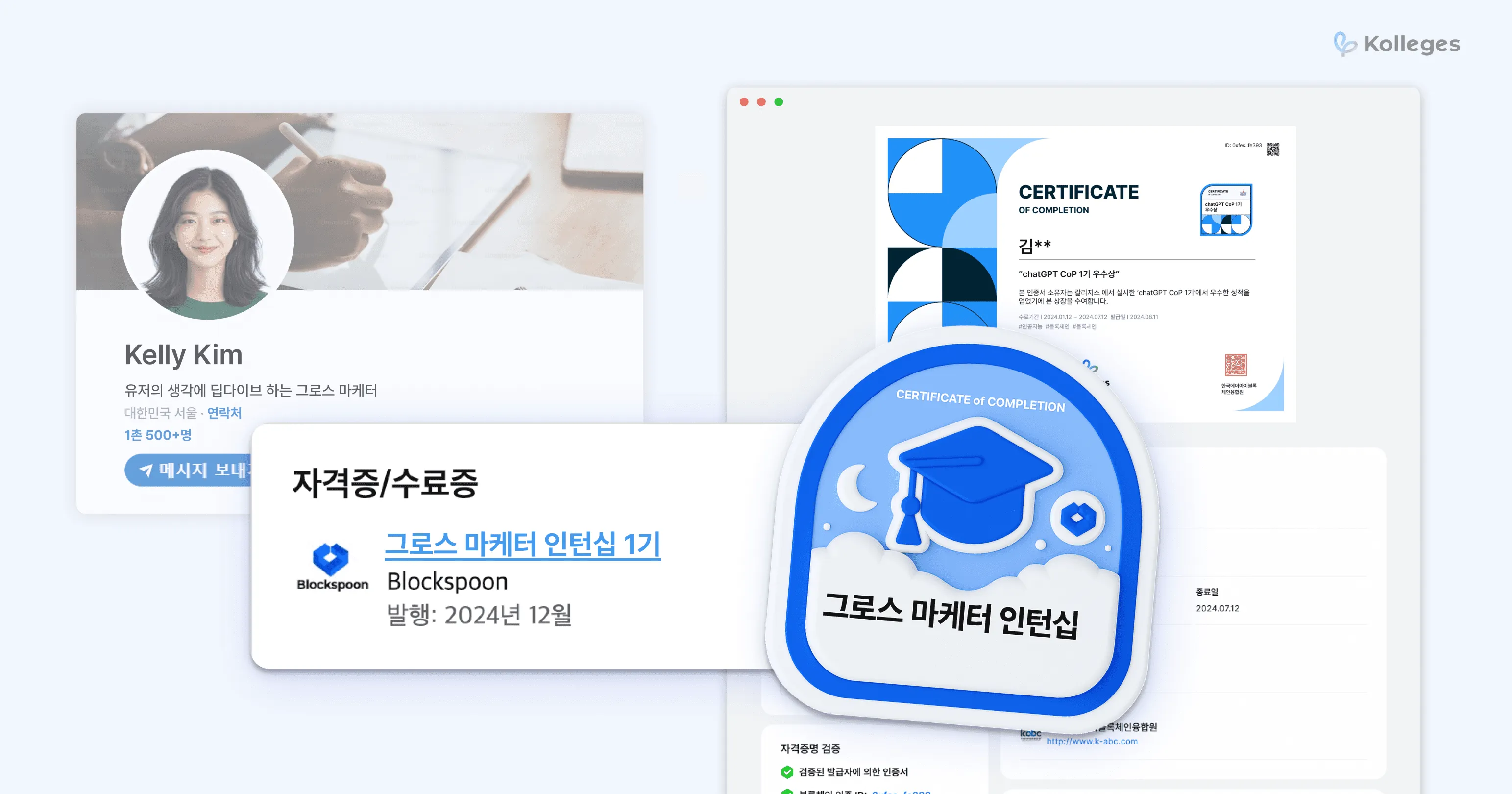
Rather than simply storing the digital badges you earn, proactively sharing them externally and putting them to work in your network matters more than ever.
In particular, on recruiting platforms like LinkedIn and other SNS channels, a badge naturally surfaces both its authenticity and the underlying learning process and competencies.
- 1 Adding to your LinkedIn certifications - Fill in the issuer, date, and verification URL so recruiters can check authenticity.
- 2 Strengthening your brand through feed shares - Share badges on your LinkedIn feed along with reflections or what you learned to highlight expertise and effort.
- 3 Extending into SNS content - Repurpose the badge as content on a blog, Instagram, X (formerly Twitter), or Facebook to build personal brand through narrative.
Used in resumes and portfolios, digital badges become a tool for
verifiable competency, data-driven credentials, and interactive storytelling.
If you are thinking about how to capture and present your experience in your future career, use digital badges as a deliberate strategy.
Kolleges is here to help you put digital badges to work.
Frequently asked questions
Want to turn learning outcomes into verifiable assets?
From issuing to verifying and amplifying, see it for yourself with Kolleges.
Request a Kolleges demoRelated posts

Automating Institutional Outcome Sharing with Digital Badges and LinkedIn Integration
Connecting your LinkedIn company page to Kolleges makes every learner badge share automatic, zero-cost exposure for your institution's brand.

The fundamentals of career growth: a complete guide to building your performance portfolio
A performance portfolio built around quantified outcomes and digital badges is the most credible way to prove job-performing ability during hiring, role transitions, and internal career growth.

Digital Badges vs. Traditional Certificates: Which Strengthens Student Employability?
Digital badges embed verifiable skill metadata and integrate with LinkedIn, giving graduates a data-backed credential that employers can trust and discover - unlike paper certificates that require manual verification.