

More digital badges only create value when each one is built on competency-driven design, outcome-based issuance, and real-world usability - quantity without that framework produces nothing but badge fatigue.
What it takes for badges to become a tool for educational innovation
“Would it really be better if there were more digital badges?” As with any technology, digital badges produce very different results depending on how they are used.
More badges issued does not mean better usage
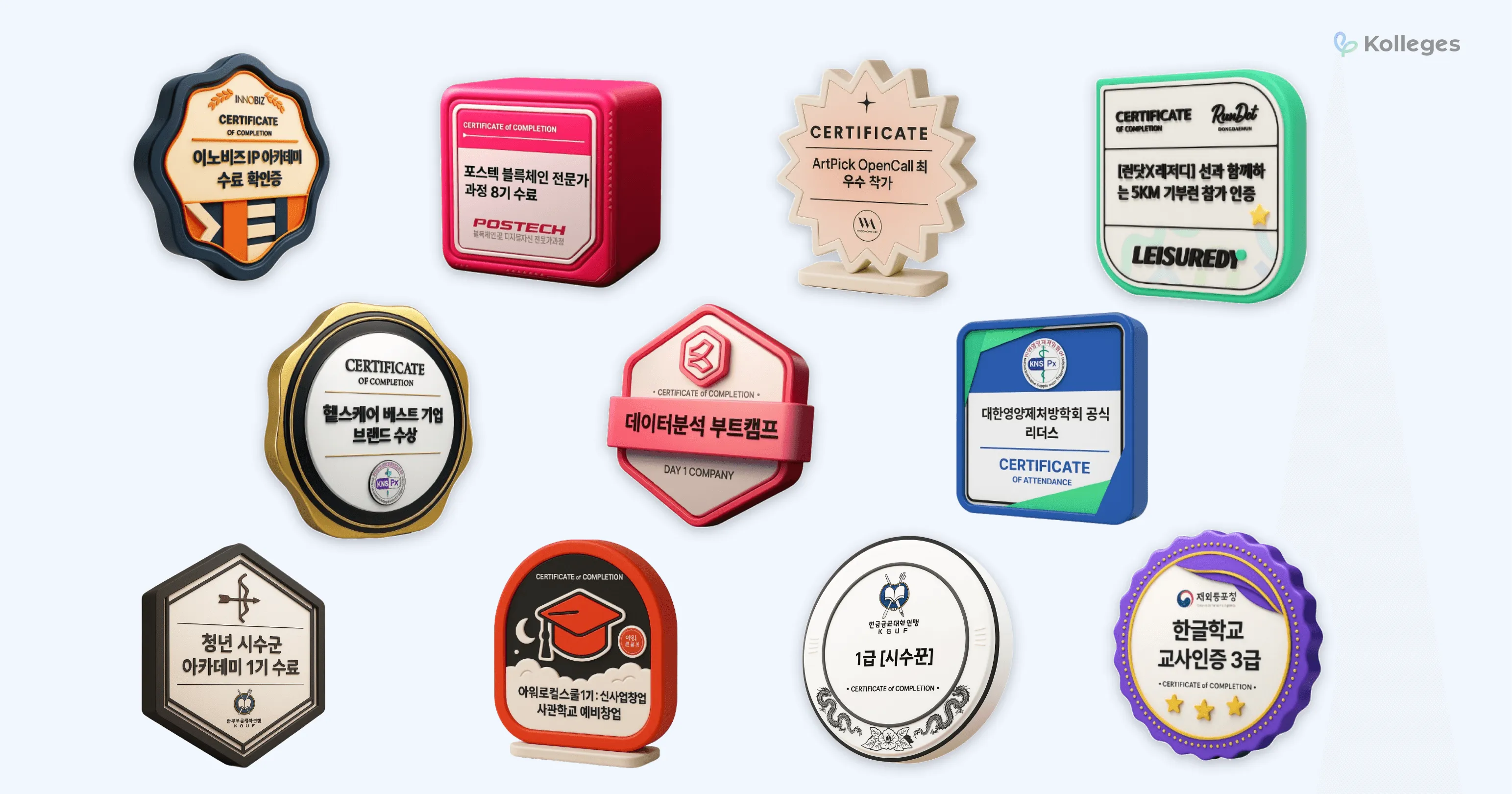
Digital badges are not a passing trend - they are emerging as a next-generation credentialing method that schools, institutions, and companies are all paying attention to.
But the more important question is this:
Who actually looks at this digital badge? And where is it used?
If certificate-style digital badges proliferate without discipline, neither learners nor employers will recognize their value, and a kind of fatigue will set in.
Issuing badges without design results in nothing more than a “simple badge”
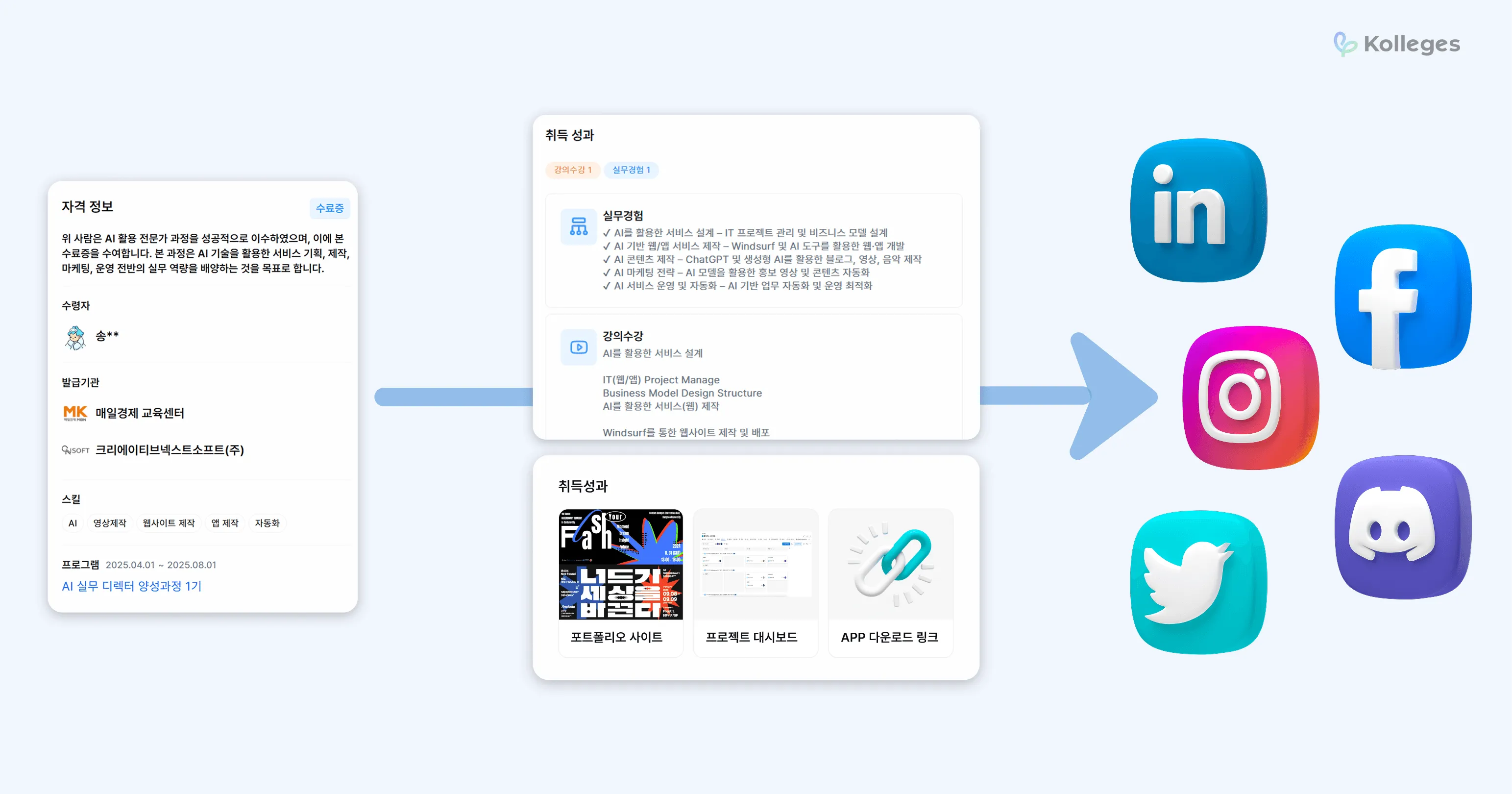
A genuinely effective digital badge requires competency-driven design → outcome-based issuance → external usability, three stages that must connect.
- Badges issued just for submitting an assignment
- Badges with unclear certified content
- Badges that are hard to use because they do not integrate with external platforms
end up as nothing more than a simple badge.
What matters is trustworthiness and connectedness.
Why digital badges matter

So why do digital badges matter - and why are they necessary? The reason is that traditional resumes, diplomas, and certificates of completion struggle to capture the learner’s process and context.
A digital badge is not simply “completed,” it is a tool that records, visualizes, and lets you share how, under what process, and against which criteria a competency was demonstrated.
Kolleges designs that process
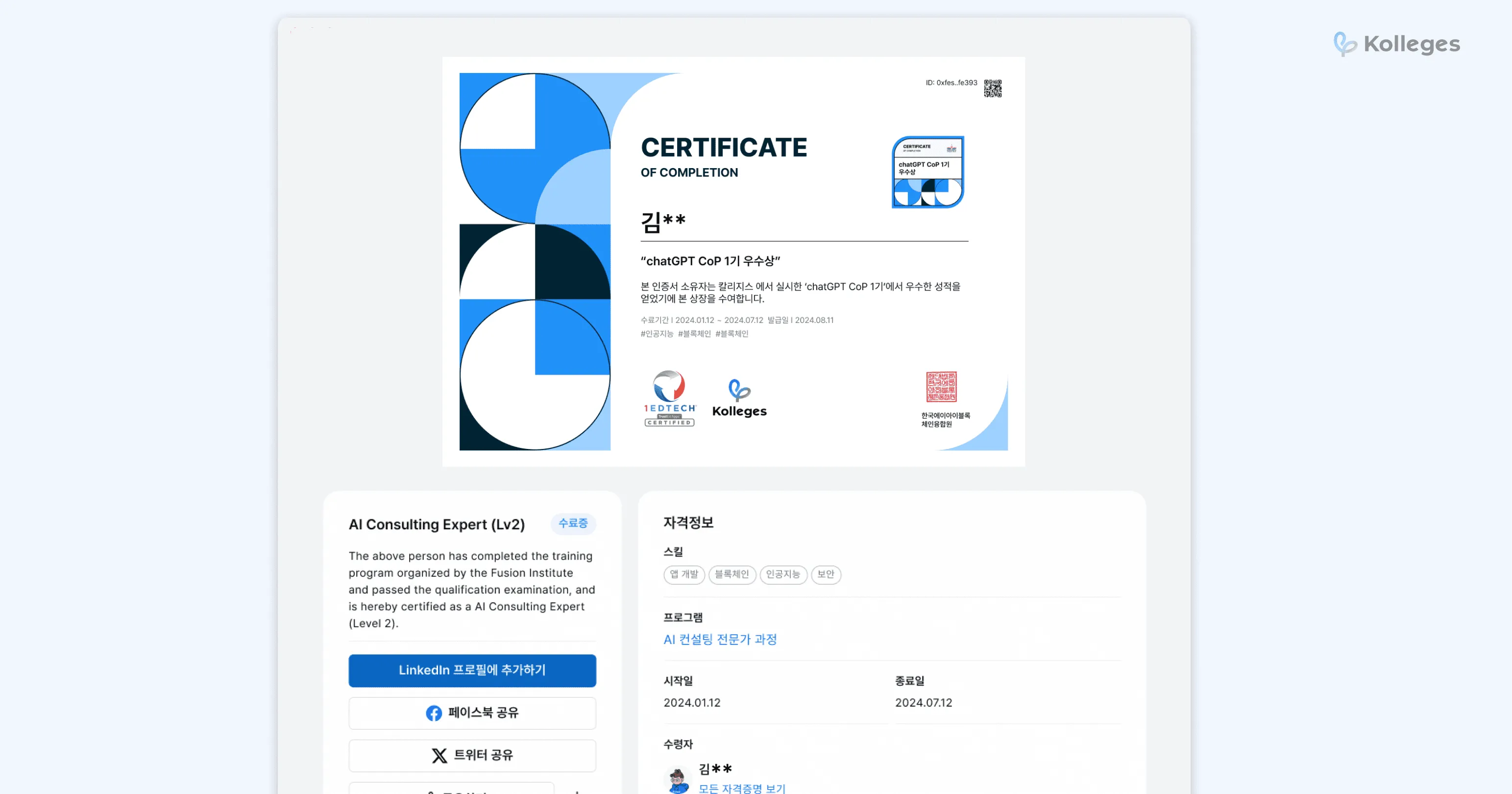
With Kolleges:
-
Through the class feature, badges can be issued automatically based on learning outcomes such as attendance, assignments, and missions.
-
Learners can review each mission and track their own growth path using data.
-
English-language badges and LinkedIn integration allow them to be used immediately in global careers.
You can also issue digital badges from external systems via API, making it possible to scale flexibly across diverse educational programs.
A digital badge proves not just completion, but achievement.
The platform that articulates that language most precisely - turning learner outcomes into a language of competency the broader world can use - is Kolleges.
Frequently asked questions
Want to turn learning outcomes into verifiable assets?
From issuing to verifying and amplifying, see it for yourself with Kolleges.
Request a Kolleges demo
Related posts

A 10-Point Digital Badge Design Checklist for Your Institution
Badge programs fail not from bad technology but from skipping design-stage decisions; this 10-point checklist helps institutions build badges that recipients actually use and share.

Automated Outcome Sharing, Built with Digital Badges | When Completion Leads to the Next Course
Digital badges automate outcome sharing by turning every graduate share into an ongoing discovery loop - complete with custom ad banners, recommended next courses, and one-click sharing to 8 social networks.

From Certificate Issuance to Connection: The Next Step in Outcome Management
Standards like Open Badges, CLR, and LER transform one-off certificate issuance into a connected, reportable flow of learning and employment outcomes.