
2025 Certification Trends: Which Credentials Actually Help You Get Hired
A job-function breakdown of 2025's most employable certifications - IT/data, office, engineering, and ESG/safety - with difficulty, prep time, and how digital badges make each credential verifiable to employers.
As the job market shifts rapidly, the value of a “credential” is shifting with it. In 2025, what matters is no longer the number of certificates you hold but how directly each certificate aligns with the job and what concrete work you can perform with it. As the digital transformation of industries accelerates, employers no longer evaluate competence on the basis of paper certificates alone. Applicability to real work, project experience, and transparent verification of capability have become the new criteria - and certificate selection is becoming much more strategic as a result.
This article lays out the certifications most likely to genuinely help with employment in 2025, by job function, and digs into the questions job seekers most often ask: difficulty, prep time, job fit, and practical application. At the end, we connect the discussion to the advantages of issuing these credentials as Digital Badges, with a realistic strategy for entering the workforce.
1. IT and Data - Credentials That Quickly Prove Applied Skill
Data and AI remain the hottest job categories in 2025. ADsP is popular among beginners because non-majors can establish a foundation in data analysis with a relatively short prep period. SQLD is a strong asset for roles that use SQL daily and serves as a common language across data engineering, analyst, and back-end developer roles. Engineer Information Processing is treated as a baseline qualification for developer roles and earns bonus points in public-sector hiring, making it a stable choice.
What these certifications have in common is that once acquired, they establish a foundation of applied skill and translate naturally into a hands-on portfolio.

① ADsP (Advanced Data Analytics Semi-Professional)
| Item | Details |
|---|---|
| Difficulty | Moderate - centered on statistics fundamentals and data-analysis theory |
| Prep time | 3-6 weeks (6-8 weeks for non-majors) |
| Format | Multiple-choice written exam |
| Pass rate | 35-45% (per the Korea Data Agency) |
Best-fit roles
Data analyst, marketing analyst, service/product planning, foundational AI modeling roles
What job seekers want to know
-
The most broadly applicable entry-level credential for non-majors
-
Builds the foundation needed to develop a data-driven mindset
-
“ADsP preferred” actually appears often in job postings
Practical application
-
Understanding of foundational data-analysis frameworks
-
Prep knowledge for SQL and Python
-
Stronger data interpretation when writing reports
② SQLD (SQL Developer)
| Item | Details |
|---|---|
| Difficulty | Moderate to high |
| Prep time | 4-8 weeks |
| Format | Written exam |
| Pass rate | Around 30-40% (officially reported) |
Best-fit roles
Data engineer, back-end developer, BI analyst, log analytics / data QA
What job seekers want to know
-
Most companies use SQL in real work, so it pays off immediately
-
No practical exam, so entry barriers are low - though the questions are tough
-
Can substitute for the coding test in data-role hiring
Practical application
-
Data preprocessing and extraction
-
Statistical processing with JOIN and GROUP BY
-
Service KPI analysis
③ Engineer Information Processing
| Item | Details |
|---|---|
| Difficulty | Moderate to high |
| Prep time | 2-3 months |
| Format | Written + practical exam |
| Pass rate | Around 20-30% (varies) |
Best-fit roles: Developer, IT planning, QA, IT positions in public institutions
What job seekers want to know
-
Earns bonus points in public enterprises and public institutions
-
Treated as a baseline qualification for entry-level developer roles
-
Provides a learning roadmap for non-IT majors
Practical application
-
Foundational development knowledge
-
Essential back-end concepts such as networking, databases, and operating systems
-
Stronger communication in project collaboration
2. Office and Administrative Work - OA Skills Are Both Fundamental and Essential
Computer Specialist Level 1 covers Excel and Access in depth, making it highly practical. Most companies handle data management and reporting through Excel, and those who pass the practical exam are highly trusted. MOS is an international certification widely valued at foreign-affiliated firms and startups, and it can officially certify document-creation skills that extend to PowerPoint.
Computer Specialist Level 1 is difficult, but its value once obtained is unmatched. For those preparing for office work, it is the fastest path to building “immediately applicable” practical skills.

| Item | Details |
|---|---|
| Difficulty | High (practical exam is challenging) |
| Prep time | 6-8 weeks |
| Format | Written + practical exam (Excel, Access) |
| Pass rate | Around 10-20% (practical exam basis) |
Best-fit roles
Administrative/office work, accounting/finance, HR/general affairs, operations manager
What job seekers want to know
-
The credential with the clearest preference at public institutions and large enterprises
-
High practical-exam difficulty translates into high credibility
-
Officially demonstrates Excel automation capability
Practical application
-
Data management and report automation
-
Workflow efficiency via formulas, pivots, and macros
-
Building work-purpose databases in Access
⑤ MOS (Microsoft Office Specialist)
| Item | Details |
|---|---|
| Difficulty | Moderate |
| Prep time | 2-4 weeks |
| Format | Practical exam (computer-based simulation) |
| Pass rate | Generally high (no precise official figure) |
Best-fit roles
Planning, operations, marketing, business manager, office work at foreign-affiliated firms
What job seekers want to know
-
An international credential applicable at overseas firms
-
The PowerPoint credential is well-regarded in planning roles
-
Shorter prep time than Computer Specialist
Practical application
-
Stronger presentation skills
-
Advanced Excel functions and pivots
-
Standardized documents and higher report quality
3. Engineering - Essential Credentials for Manufacturing, Semiconductors, and Facility Management
Industrial Engineer Electrical, Industrial Engineer Mechanical Maintenance, and Engineer Plant Maintenance carry strong competitive weight in Korea’s core industries - manufacturing, plants, logistics, and semiconductor processes. Most of these involve both written and practical exams, enabling work-centered verification of capability.
Engineer Plant Maintenance in particular has seen rising demand with the transition to smart factories. It is a representative practice-oriented credential where “practical-exam skill equals deployability on the floor.”

⑥ Industrial Engineer Electrical
| Item | Details |
|---|---|
| Difficulty | Moderate to high |
| Prep time | 2-3 months |
| Format | Written + practical exam |
| Pass rate | Generally around 30% |
Best-fit roles
Facility management, electrical-systems engineer, semiconductor/manufacturing equipment engineer, factory maintenance
What job seekers want to know
-
Stable role, high starting salary, diverse shift formats
-
Can be expanded to Electrical Engineer (higher-tier credential)
-
Strong asset for facility roles in public enterprises
Practical application
-
Electrical-system inspections
-
Power-consumption management
-
Compliance with safety regulations
⑦ Industrial Engineer Mechanical Maintenance
| Item | Details |
|---|---|
| Difficulty | Moderate |
| Prep time | 1.5-2 months |
| Format | Written + practical exam |
| Pass rate | Around 35-45% |
Best-fit roles
Mechanical maintenance, facility engineer, semiconductor-line maintenance, manufacturing production technology
What job seekers want to know
-
Very high demand at semiconductor and manufacturing firms
-
Combines powerfully with electrical credentials
-
Career growth through work based on failure-history analysis
Practical application
-
Maintenance and PM schedule management
-
Equipment inspections and fault diagnosis
-
Root-cause analysis of facility problems
⑧ Engineer Plant Maintenance
| Item | Details |
|---|---|
| Difficulty | Moderate |
| Prep time | 2 months |
| Format | Written + practical exam |
| Pass rate | Around 40% |
Best-fit roles
Automation-facility engineer, production management, factory operations, smart-factory-related roles
What job seekers want to know
-
Hiring demand is rising with the accelerated adoption of smart factories
-
The practical exam carries significant weight, providing strong validation of applied skill
-
A clear advantage as a “practice-oriented credential” when entering manufacturing
Practical application
-
Equipment monitoring
-
Sensor and PLC inspection
-
Production-line stabilization
4. Environment and Safety - Essential Specialty Credentials in the ESG Era
Industrial Engineer Energy Management and Engineer Industrial Hygiene have become increasingly important as ESG and industrial-safety regulations tighten. Manufacturing, semiconductor, and bio companies invariably hire for safety and health roles, and public institutions continue to expand their energy-management staff.
Forestry Technician offers stable demand in the public-sector forestry hiring track and is a strong choice for job seekers prioritizing stability.

⑨ Industrial Engineer Energy Management
| Item | Details |
|---|---|
| Difficulty | Moderate |
| Prep time | 1.5-2 months |
| Format | Written + practical exam |
| Pass rate | Around 25-40% |
Best-fit roles
Energy management for buildings and factories, public-institution energy centers, facility management
What job seekers want to know
-
High preference at public institutions and stable hiring volume
-
Strongly improves employment odds when combined with related building or facility credentials
Practical application
-
HVAC and boiler management
-
Energy-efficiency improvements
-
Energy-performance analysis
⑩ Engineer Industrial Hygiene
| Item | Details |
|---|---|
| Difficulty | Moderate to high |
| Prep time | 2-3 months |
| Format | Written + practical exam |
| Pass rate | Around 20-30% |
Best-fit roles
Safety management at semiconductor, bio, and chemical firms; manufacturing safety and health; work-environment measurement agencies
What job seekers want to know
-
Safety-and-health roles offer strong salary stability and high demand
-
Essential in the production, environment, and safety organizations of large enterprises
Practical application
-
Hazardous-material management
-
Work-environment measurement
-
Verification of compliance with safety regulations
⑪ Forestry Technician
| Item | Details |
|---|---|
| Difficulty | Moderate |
| Prep time | 1 month |
| Format | Written + practical exam |
| Pass rate | Around 50-60% |
Best-fit roles
Forestry management at the Korea Forest Service or local governments, landscaping firms, public-sector forestry roles
What job seekers want to know
-
Bonus points in civil-service hiring
-
Also usable in field roles at landscaping firms and construction companies
Practical application
-
Forest formation and management
-
Pest and disease control
-
Support work in landscape construction
A Certificate Is Just the Start - Competitive Edge Comes from “Demonstrable Capability”
In the 2025 job market, the deciding factor is how transparently capability can be demonstrated, more than the certificate itself. Paper certificates and simple PDFs are hard to verify and reveal little about what someone can actually do.
That is why Digital Badges are spreading rapidly across universities, education institutions, and companies.
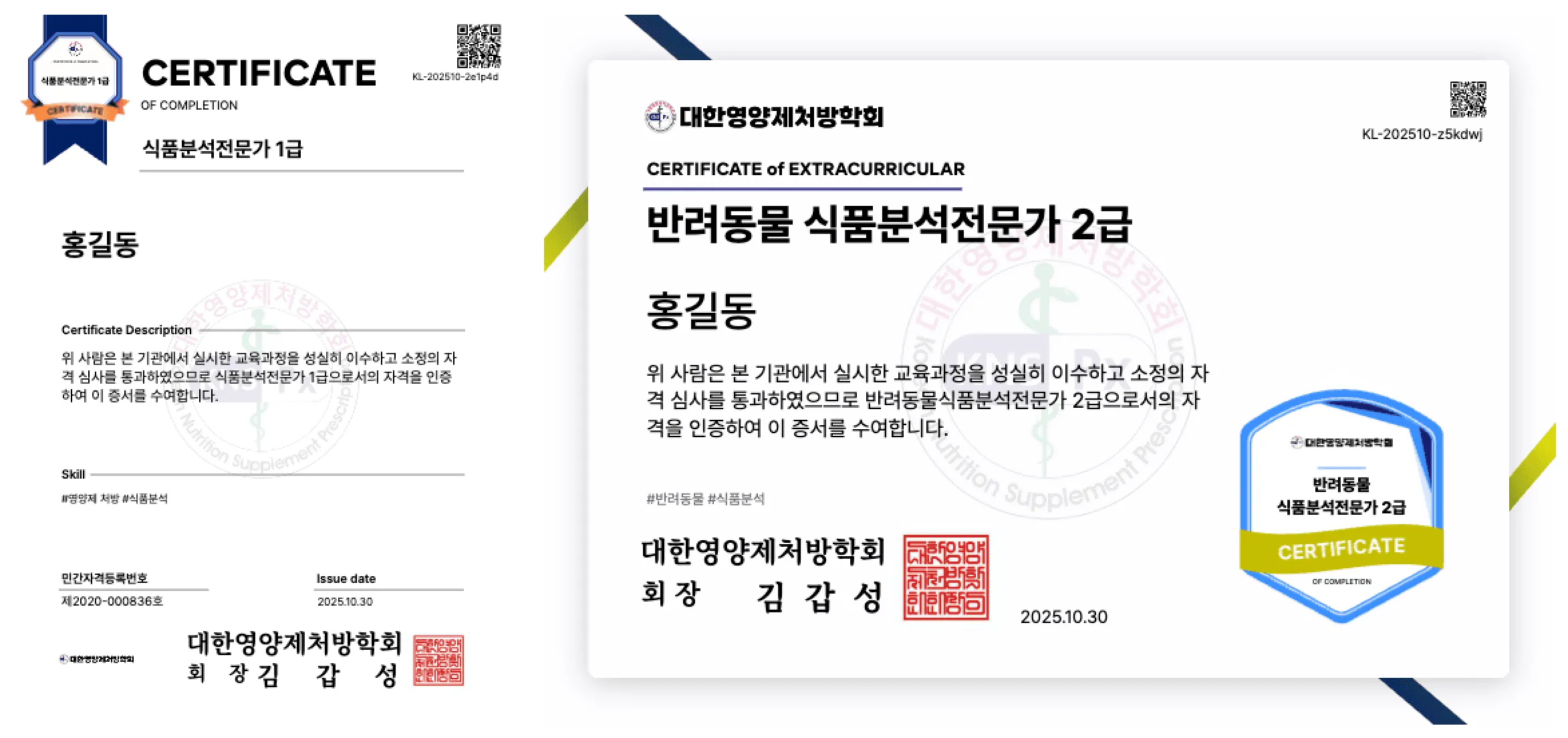
Digital badges offer the following advantages.
In other words, the loop closes: certificate acquired → digital badge issued → verifiability strengthened for employers → competitive advantage in the job market.
Kolleges issues credentials, completions, and field-practice achievements as digital badges based on international standards, helping job seekers communicate their capability with clarity and trust.
Frequently asked questions
Want to turn learning outcomes into verifiable assets?
From issuing to verifying and amplifying, see it for yourself with Kolleges.
Request a Kolleges demoRelated posts
Top 5 Popular Private Certifications: Which One Fits You?
From counselor to barista, this guide compares five in-demand private certifications - who each suits, where they lead, and how to earn them.
What Is AI Literacy: The New Baseline Skill for Practitioners in 2026
AI literacy - the capacity to understand, apply, and critically evaluate AI outputs - is now the baseline work skill across all job roles, not just technical ones.

Digital Badges vs. Traditional Certificates: Which Strengthens Student Employability?
Digital badges embed verifiable skill metadata and integrate with LinkedIn, giving graduates a data-backed credential that employers can trust and discover - unlike paper certificates that require manual verification.