
DELE and FLEX: A Look at Spanish Language Certifications

DELE is the stronger pick for overseas study or work, while FLEX is better suited for employment or university admission within Korea.
Hello, this is Kolleges!
Today we’re going to talk about Spanish language certifications - a topic many of you are interested in.
More and more people are learning Spanish these days, and the reason is simple: more than 500 million people worldwide speak Spanish. 😊
Spanish is the main language used in Spain and across Latin America, and one of the most widely spoken languages in the world after English and Chinese. So having a Spanish language certification opens up many opportunities.
Let’s dive into Spanish language certifications. There are several types, and we’ll cover two of the most well-known - the DELE and the FLEX.
Let’s look at the characteristics of each.
DELE: a globally recognized Spanish language certification DELE: a globally recognized Spanish language certification DELE: a globally recognized Spanish language certification DELE: a globally recognized Spanish language certification
First, let’s introduce the DELE.
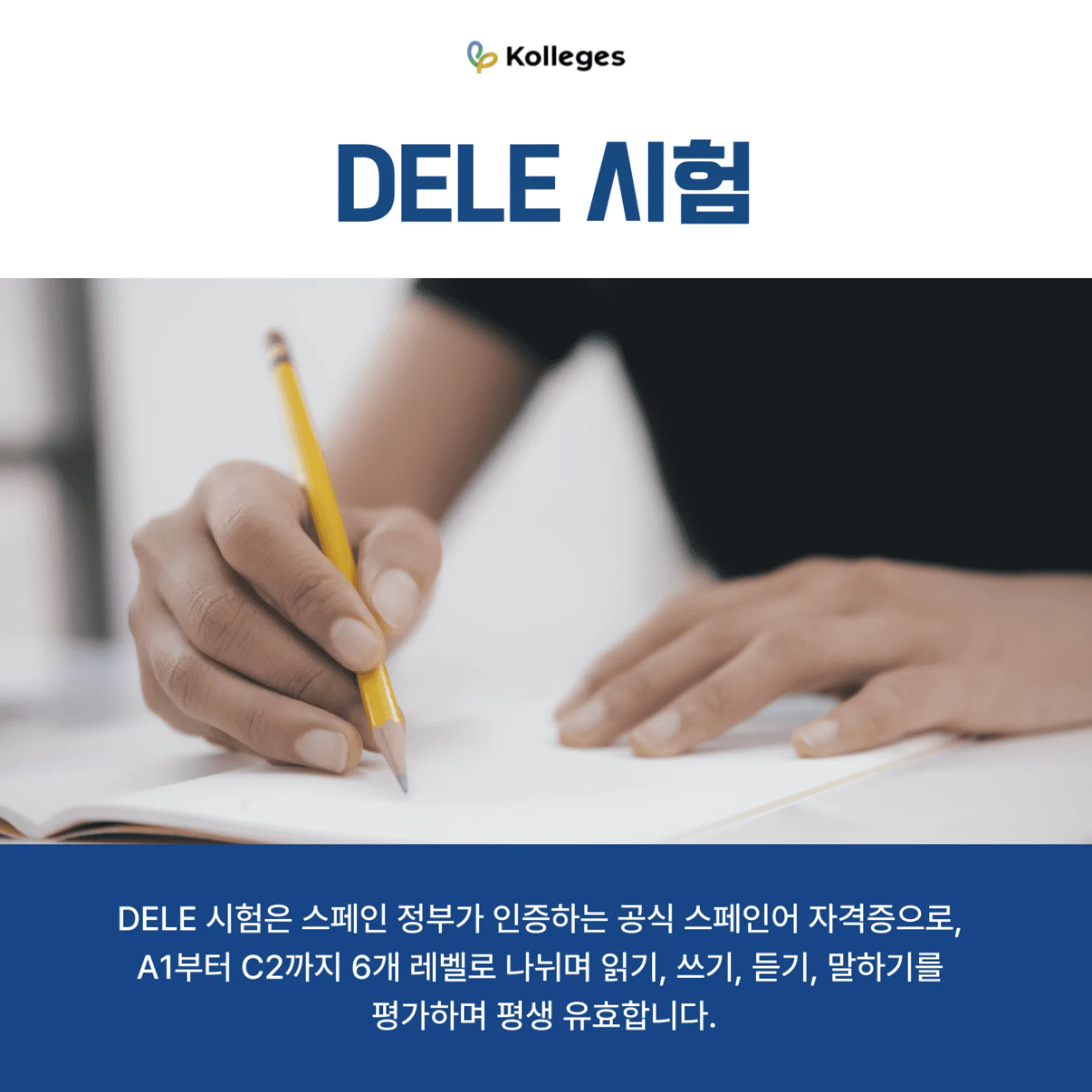
DELE stands for Diploma de Español como Lengua Extranjera, and it’s an official Spanish language certification recognized by the Spanish government.
Administered by the Instituto Cervantes, this exam is recognized globally, and many foreign institutions and companies use it to assess Spanish proficiency.
The DELE has six levels, from A1 to C2. A1 is the beginner level and C2 is the highest. B1 and B2 are the most commonly taken levels, while C1 and C2 reflect a professional level of fluency.
The exam assesses four areas - reading, writing, listening, and speaking - each worth 25 points, and you must score at least 60 points total to pass. Critical detail: scoring below 30 in any one area results in a failure.
Once you pass, the certification is valid for life, which is a major advantage.
FLEX: a Spanish language certification useful within Korea FLEX: a Spanish language certification useful within Korea FLEX: a Spanish language certification useful within Korea FLEX: a Spanish language certification useful within Korea
Next, let’s look at the FLEX.
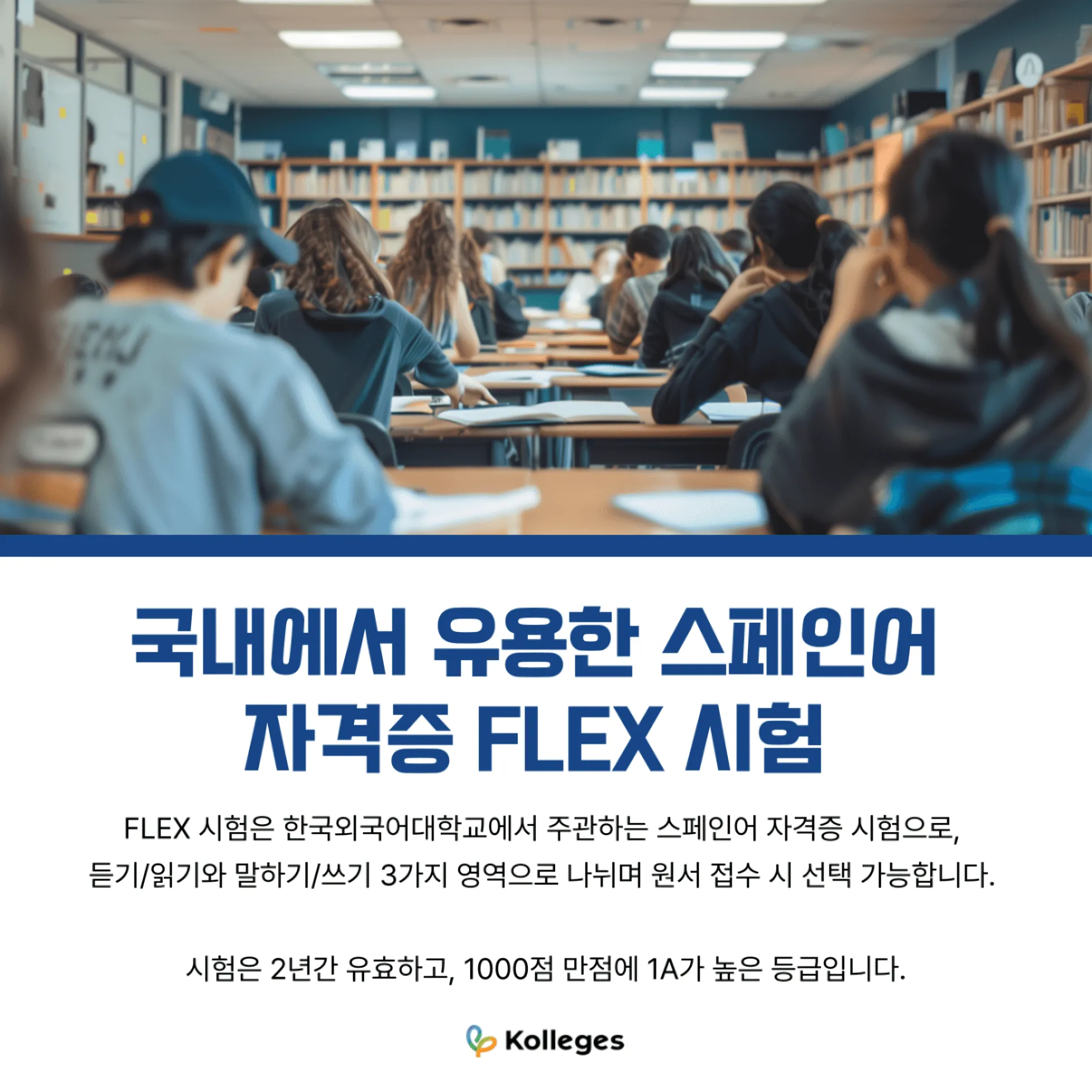
FLEX is a Spanish language certification administered by Hankuk University of Foreign Studies.
It’s essentially a domestic certification, often taken by those preparing for employment or university admission within Korea.
Unlike the DELE, the FLEX is valid for only two years from the date of the exam.
After that, score certificates can still be issued, but issuance is restricted after three years - keep the validity period in mind.
The FLEX exam is divided into three areas: listening/reading and speaking/writing. You can choose which sections to take when registering.
FLEX scores go up to 1000, with 1A being the highest grade. Scoring high in each section earns you a higher grade.
What’s the difference between the DELE and the FLEX? What’s the difference between the DELE and the FLEX? What’s the difference between the DELE and the FLEX? What’s the difference between the DELE and the FLEX?
Now let’s compare the DELE and the FLEX. Both certify your Spanish proficiency, but their characteristics differ ✔
| Category | DELE | FLEX |
|---|---|---|
| Validity period | Valid for life | Valid for two years |
| Administering body | International exam by the Spanish government | Domestic exam by Hankuk University of Foreign Studies |
| Purpose | Advantageous for using Spanish abroad | Advantageous for domestic employment or university admission |
So depending on the purpose of earning a Spanish certification, your choice will differ. If you're considering study abroad or work overseas, DELE is the stronger fit, while FLEX is the better choice for employment or academics within Korea.
Earning a Spanish language certification means more than simply proving your language skills. Speaking Spanish well opens up opportunities to work and communicate across many countries.
DELE and FLEX each have their strengths, so choosing the exam that matches your goal matters.
Earning a Spanish language certification requires steady study and preparation, but it can bring you many opportunities in return ✨
If you’re starting to study Spanish, take the information Kolleges shared today, choose the exam that fits you, and give it a shot.
Frequently asked questions
Want to turn learning outcomes into verifiable assets?
From issuing to verifying and amplifying, see it for yourself with Kolleges.
Request a Kolleges demoRelated posts
Comparing Japanese Language Certifications: FLEX, JLPT, JPT
JLPT offers the highest international recognition for Japan-bound learners, while JPT and FLEX's point-based systems give a more granular proficiency picture - pick based on your goal.

How to Use Digital Badges in Resumes and Portfolios
Digital badges embedded in resumes, portfolios, and LinkedIn profiles function as verifiable, metadata-rich credentials that strengthen your case in skills-based hiring.
Types of Private Certifications and How to Use Them
Private certifications cover hundreds of varieties and lower entry barriers versus national exams; pairing them with blockchain-based digital credentials lets learners share results on social media and drives organic promotion for issuing academies.