
How to Prepare for the Big Data Expert Certification and Use It After You Pass
The Big Data Expert certification opens doors across IT, finance, marketing, and healthcare by validating your skills in data collection, analysis, and visualization.
Hello, this is Kolleges.
Many people are paying attention to big data these days. In this post we want to talk about the data professionals at the center of it - big data experts.
We’ll cover what the Big Data Expert certification is, what these professionals do, and how the credential can be put to use after you earn it.
What is a big data expertWhat is a big data expertWhat is a big data expertWhat is a big data expert
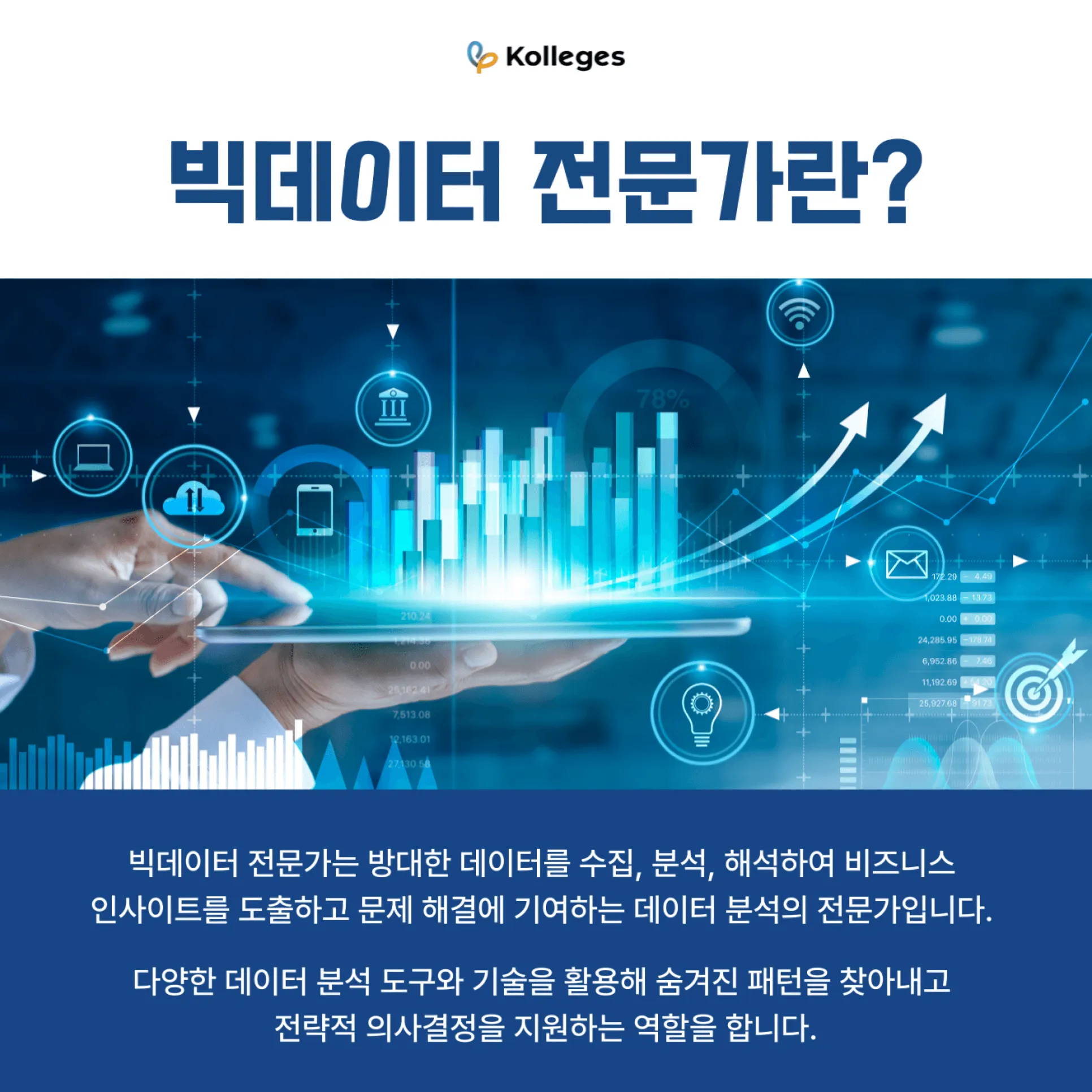
When you hear “big data expert,” it might sound like someone doing something difficult and complicated. 🤔
Put simply, they are professionals who analyze data and extract meaningful information from it. They take on a range of roles - using consumer data at companies to plan new products, or telling decision-makers through data which policies will be more effective for the public.
PCs, the internet, and mobile devices are so widely used today that the volume of data we generate has grown enormously.
For example, searching online or using an app leaves behind data.
The role of the big data expert is to make sure that data isn’t left idle but instead put to productive use where it’s needed.
Big data experts don’t just handle data - they also design and plan the programs that analyze it. They do critical work delivering essential insights, such as analyzing behavioral patterns or forecasting the future from data.
How to prepare to become a big data expertHow to prepare to become a big data expertHow to prepare to become a big data expertHow to prepare to become a big data expert
So how do you prepare to become a big data expert? Systematic preparation matters, but there’s no need to overthink it. It’s a field anyone can step into by working through the stages one at a time.
- 1 Learn the fundamentals of data analysis - First, to analyze data, you need to understand basic statistics and data structures. Learning how to interpret and apply data is the foundation of a big data expert's skill set. In the process, you naturally pick up data analysis tools like R and Python.
- 2 Gain real project experience - No matter how much you study, hands-on experience with real data is essential. Recently, more training programs include practice-based projects. Having collected and analyzed real data builds confidence for both the certification exam and the workplace.
- 3 Prepare for the certification exam - The Big Data Expert certification evaluates the full range of data collection, analysis, and visualization capabilities. It covers technical content like data mining, machine learning, and data visualization. Stack your knowledge steadily through study, and you'll find certification within reach before you know it.
What can you do after you earn the Big Data Expert certificationWhat can you do after you earn the Big Data Expert certificationWhat can you do after you earn the Big Data Expert certificationWhat can you do after you earn the Big Data Expert certification
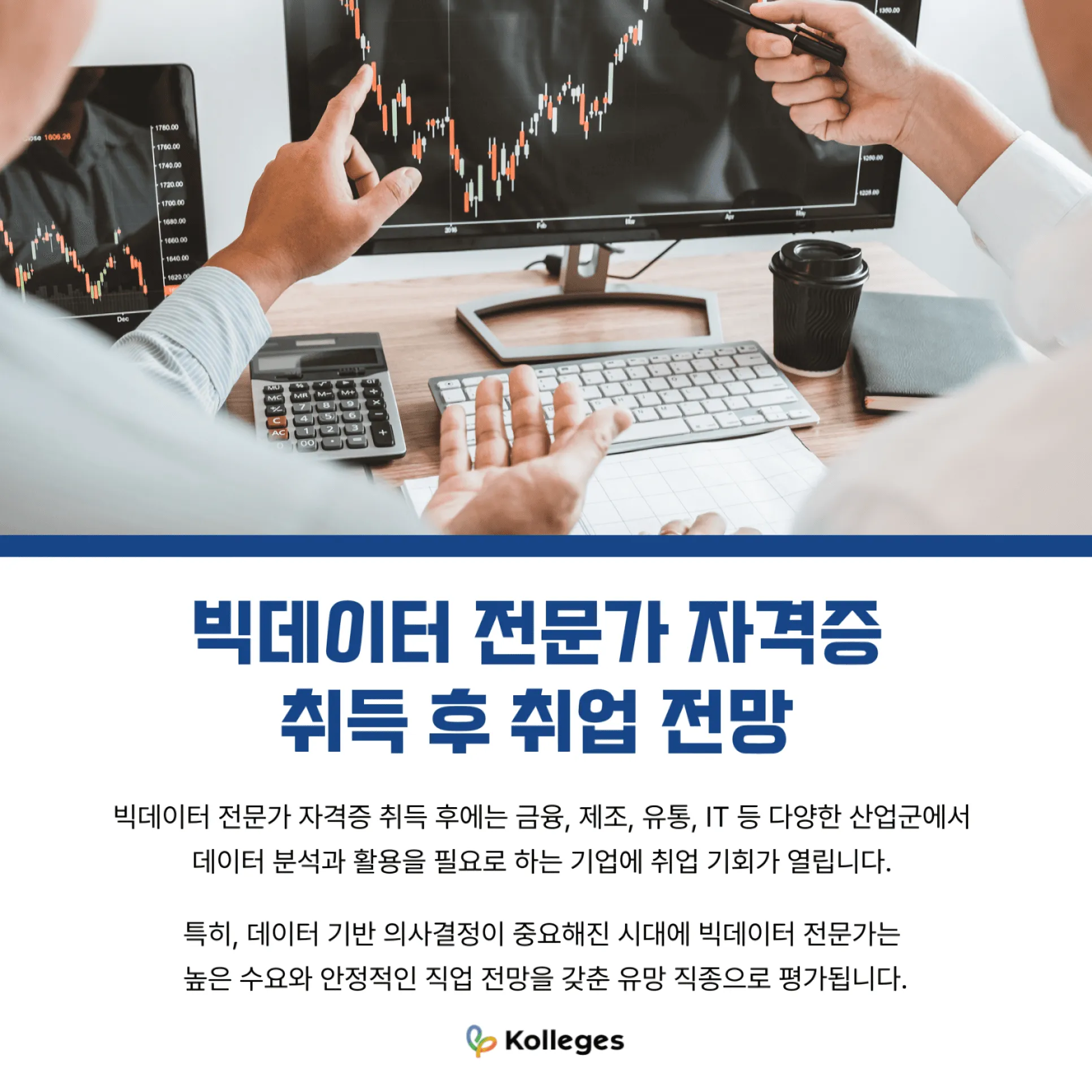
Once you earn the certification, new opportunities open up across multiple fields. Today there’s barely an industry that doesn’t use big data, and demand for professionals with data analysis skills continues to grow.
You can work as an expert in any field that makes data-driven decisions - IT companies, financial firms, marketing, healthcare, and more.
You also have an advantage when launching a startup or working as a data-analysis freelancer.
Today we talked about big data experts. Data analysis and application are skills that will be essential across every industry going forward.
To develop those skills, the Big Data Expert certification is a great starting point ✔
If big data has caught your attention, why not start right now? Kolleges is cheering you on. 🧡
Frequently asked questions
Want to turn learning outcomes into verifiable assets?
From issuing to verifying and amplifying, see it for yourself with Kolleges.
Request a Kolleges demoRelated posts
What Is AI Literacy: The New Baseline Skill for Practitioners in 2026
AI literacy - the capacity to understand, apply, and critically evaluate AI outputs - is now the baseline work skill across all job roles, not just technical ones.

What to Do After Bootcamp? Digital Certification Strategies That Lead to IT Jobs
Combining bootcamp training, role-specific certifications, and digital badges creates a verifiable, shareable evidence trail that gives IT job seekers a concrete edge over traditional resumes.
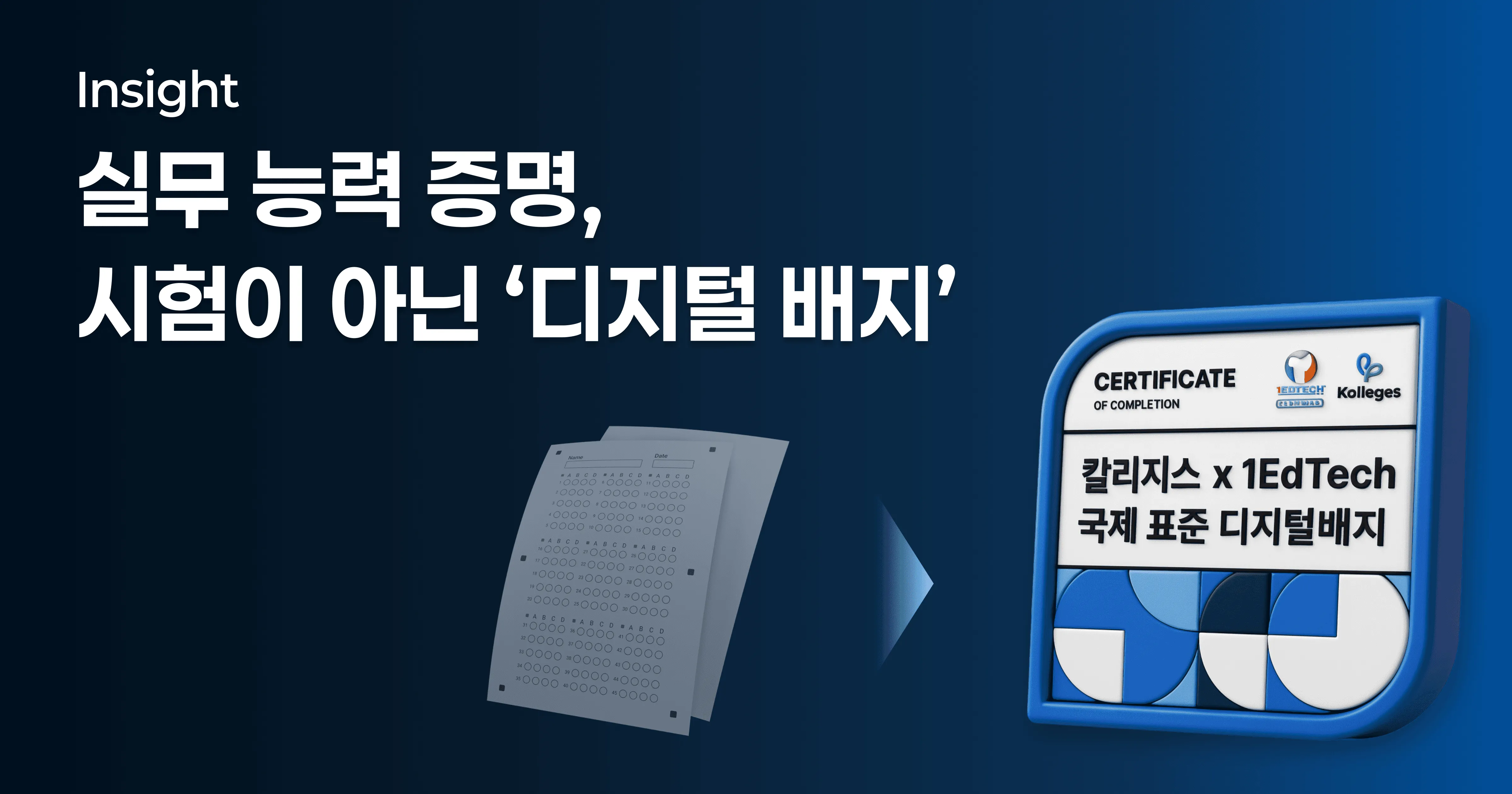
Proving Practical Skills with Digital Badges, Not Exams
Digital badges embed project links, tech stacks, and assessor sign-offs directly into verifiable metadata, replacing scattered files with a standardized proof of practical capability.