
How to Issue Digital Badges and Store Them Safely (feat. IPFS)
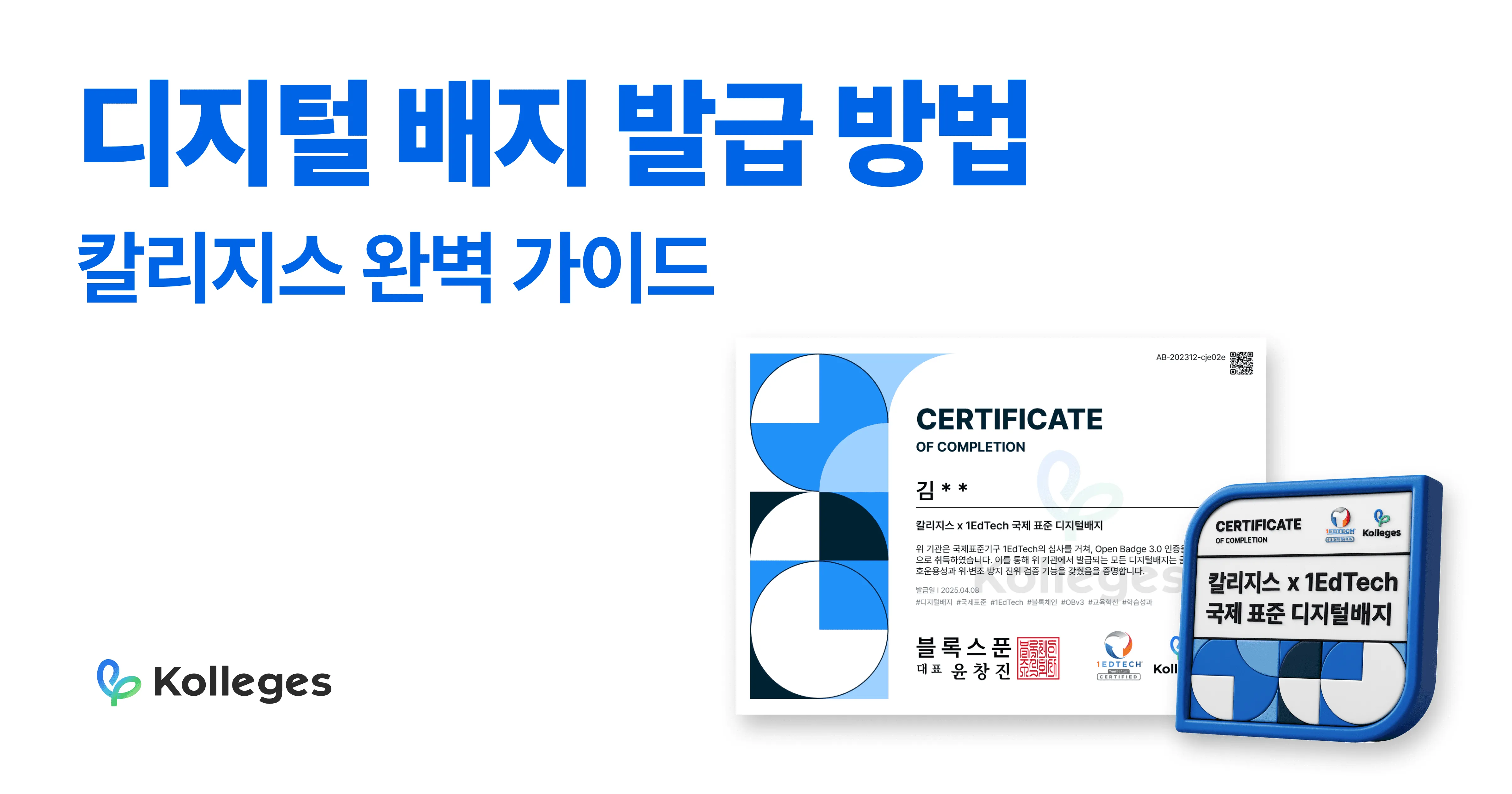
Digital badges become tamper-proof Verifiable Credentials by combining JWT cryptographic signatures with IPFS distributed storage, letting anyone verify authenticity via a content-addressed CID link.
“Is this certificate really legitimate?” When someone asks that, you should be able to answer: “It carries a seal, it cannot be tampered with, and anyone can verify it.”
Do you still think of a digital badge as merely an online certificate? It is evolving into a tamper-proof “trust technology.”
This article explains how digital badges are created and how they are stored so that anyone can trust them. If you handle digital credentialing for an institution or company, this is required reading.
What information is contained in a digital badge?
Just as a paper certificate carries an official seal, a digital badge requires a cryptographic signature.
A digital badge is not simply a PDF image. It must contain structured data about which institution recognized which outcome for whom, under what conditions.
For example, it includes the following information.
| Question | Field | In plain terms |
|---|---|---|
| Who issued it? | issuer | The ABC institution (name, web address, email, DID, etc.) |
| Who received it? | credentialSubject | The user's DID |
| When was it issued? | issuanceDate | The issuance timestamp |
| What was the achievement? | achievement | Title and description of the certificate |
| What were the criteria? | criteria | e.g., ‘Attendance of 80% or above’ as the completion criterion |
Bare information alone is not enough to guarantee trust. To verify who really issued the credential and confirm there was no tampering, a “digital seal” - that is, a signature - is required.
Sealing the digital badge (JWT)
Once the badge’s information is ready, it is wrapped in a token called a JWT and signed with the issuing institution’s private key.
The algorithm used here is RS256. Anyone can verify the signature using the public key URL.
In other words, the badge becomes a “sealed badge,” a verifiable VC (Verifiable Credential) that anyone can check.
So what exactly is a VC?
A VC (Verifiable Credential) is a digital badge that includes:
-
Structured information about who recognized what for whom
-
A digital signature (the seal)
-
A link to the public key that verifies the signature
This entire structure follows the global standard Open Badges 3.0. That means it can be issued and verified the same way anywhere in the world.
Why store digital badges on IPFS?
Once a digital badge is created, the next task is safe storage.
If you simply place it on a server:
-
It cannot be accessed when the server is down
-
It can be quietly tampered with
There are real risks of this kind. To avoid them, we use IPFS (InterPlanetary File System).
| IPFS advantage | In plain terms |
|---|---|
| Tamper-proof | A single changed character produces a completely different address (CID) |
| Distributed storage | Replicated across computers worldwide, so failures are not a concern |
| Verifiable by anyone | Knowing the CID is enough to view and verify |
A CID functions like the fingerprint of a file. If the content changes, the CID changes too, so any forgery is immediately exposed.
Digital badge issuance at a glance
| Step | Description |
|---|---|
| 1. Prepare information | Organize what achievement to recognize and for whom |
| 2. Generate the JWT | Complete the VC form with a digital signature |
| 3. Upload to IPFS | Receive the CID |
| 4. Deliver to user | Provide the CID link to the user |
Example
{ "certificate_number" : "A2025-00001", "vc_jwt" : "<sealed badge token>" }
Users can now view their badge at any time through the generated link. Example CID link: https://ipfs.io/ipfs/{cid} Paste the token into a JWT decoder (jwt.io) and you can immediately see who issued what, when, and to whom.
In summary,
- A digital badge is a sealed credential
- A VC is a verifiable, structured badge
- IPFS is the immutable digital vault
The age of digital badges starts with “trust technology.”
From DID identifiers to VC-based structured credentials to IPFS storage, anyone can now issue and verify digital credentials without paper and without worrying about tampering.
Not sure where to begin with digital badges?
VC, DID, IPFS - the technical concepts are not hard, but designing and building them yourself still takes significant time and resources.
That is why many institutions and companies choose the digital badge solution Kolleges.
With Kolleges:
-
You can easily issue digital badges that conform to the VC structure without complex engineering work,
-
Badges securely stored on IPFS are generated automatically, and
-
Course attendance verification, qualification validation, and completion branding are all delivered in one platform.
Leave the technology to Kolleges and let your institution focus on trust. Adopt digital badges the right way, today.
Frequently asked questions
Want to turn learning outcomes into verifiable assets?
From issuing to verifying and amplifying, see it for yourself with Kolleges.
Request a Kolleges demoRelated posts
Digital Badges: How Is a DID Created and Stored?
Kolleges generates DID-based digital badges using the did:key method with RSA key pairs - storing only the public key server-side while delivering the encrypted private key to the user for self-custody.

Why ISO 27001 (Information Security) Certification Is Essential for Digital Badge Platforms
Digital badge platforms must hold ISO 27001 certification because learner credentials are lifelong career assets - any forgery, leakage, or outage directly harms individuals, not just institutions.

Digital Badge Adoption Checklist | 7 Things to Verify Before Signing in 2026
From the version and roles of 1EdTech certification to the ISO 27001 edition number, personal data processing consignment, the amended privacy law effective September 2026, and public procurement requirements - seven things to verify before signing a digital badge solution contract.