
Why ISO 27001 (Information Security) Certification Is Essential for Digital Badge Platforms

Digital badge platforms must hold ISO 27001 certification because learner credentials are lifelong career assets - any forgery, leakage, or outage directly harms individuals, not just institutions.
What Is ISO 27001?
ISO 27001 is the international standard for certifying an Information Security Management System (ISMS).
In simpler terms, it is a framework that verifies an organization systematically designs and operates what information it holds, where it is located, what risks exist, and how it will protect it.
The core of ISO 27001 is the ongoing management of the following three security principles:
-
Confidentiality: Ensuring only authorized people can access necessary information, preventing leakage of personal information and institutional data.
-
Integrity: Protecting data from being altered or deleted, maintaining the trustworthiness and accuracy of certification information.
-
Availability: Managing systems so that anyone can safely access them when needed, guaranteeing uninterrupted services for educational programs, employment verification, and more.
So how do you build this framework, and how do you get verified?
ISO 27001 evaluates the following elements based on more than 100 review items.
| Evaluation Element | Core Meaning |
|---|---|
| Policy & Operations | Create security rules and assign accountability |
| Human Security | Grant each person only the access they need |
| Technical Security | Apply system security like encryption and access control |
| Physical Security | Properly lock server rooms and equipment |
| Risk Management | Identify risk, reduce risk, then review again |
A particularly important point is that “documented systems” + “actually running operations” must be reviewed by an independent third-party expert organization for objective verification.
This is not a certification you can pass with well-written documents alone - you must demonstrate real security capability and operational maturity.
An organization with ISO 27001 certification is therefore internationally recognized for operating information security at the “management level,” not just at the operational level.
This becomes the strongest evidence of trust for customers and users, signaling: “We can protect your data safely.”
Why Verifying Information Security Certification Is Essential When Educational Institutions Adopt SaaS
SaaS (Software as a Service) refers to software services that you use directly via the web with no separate installation or deployment.
In other words, users don’t need to manage the system themselves - they entrust functionality and data to the service provider and simply use the service.
Most of the software we use today is delivered this way.
In particular, educational institutions already rely heavily on SaaS-based software in areas such as:
-
Email services: Gmail, Outlook
-
Collaboration/document tools: Google Workspace, Microsoft 365
-
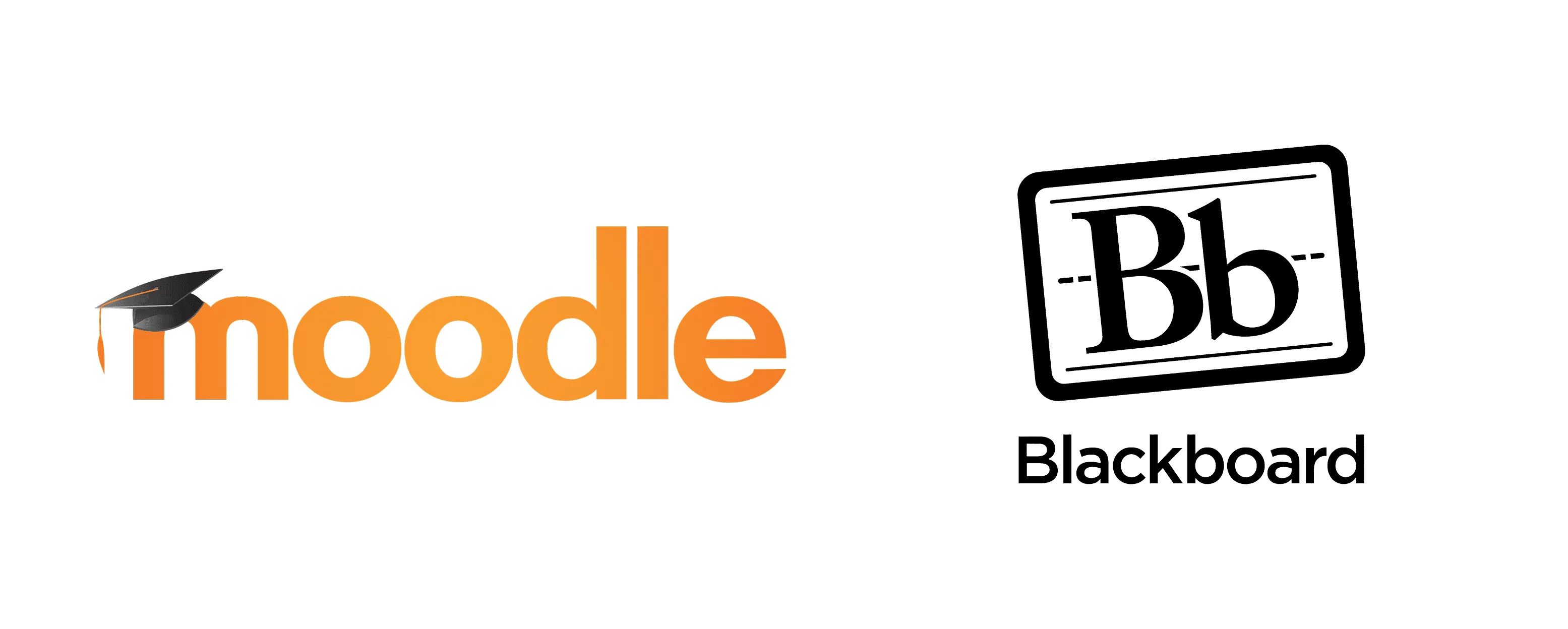
Learning Management Systems (LMS): Moodle, Blackboard
-
Class operations/attendance management: Canvas, Brightspace
-
CRM: HubSpot, Salesforce
-
Survey/form services: Qualtrics, SurveyMonkey
In short, the core operational functions of educational institutions depend on external software services, and personal information is managed within them.
So what happens if security is not adequate?
-
Leakage of student and learner personal information → Could result in legal issues, compensation claims, and administrative sanctions
-
Service outages → Disruption of learning and operations
-
Backup/recovery failures → Loss of operational data
-
Malware/ransomware infection → Long-term service paralysis
-
Failed bids or partnerships → Lack of security certification can directly reduce evaluation scores
In the end, there must be a clear answer to “Is the data we’ve entrusted truly safe?”
Therefore, when adopting SaaS or software, educational institutions must verify whether the provider holds international information security certification (ISO 27001).
ISO 27001 status is the minimum requirement that determines whether collaboration is possible, and the standard that protects the trust of students and institutions.
Why Security Matters Most for Digital Badge Platforms
Digital badges hold the most sensitive achievement data of learners - their competencies, qualifications, and careers.
What happens if this data is leaked or forged?
The very integrity of “that person’s career” collapses.
And the damage extends not to the organization but to the individual’s lifelong career.
Major Threats
| Threat | Specific Risk | Examples of Real-World Scenarios |
|---|---|---|
| Data Forgery/Tampering | Hiring based on forged badges / collapsed trust / institutional liability | Person A forged a nonexistent “AI Expert Badge” and got hired at a global company - after hiring, the contract was terminated due to skill mismatch, and corporate HR considered sanctions against the issuing institution |
| Personal Information Leakage | Identity theft / phishing / secondary damage from account takeover | Student emails and phone numbers leaked, social accounts hijacked via spear phishing; sensitive completion data leaked, with false rumors potentially spreading to employers |
| Service Outage (DoS, failure) | Institutional trust drops as verification fails / business paralysis during admissions and hiring season | Verification page goes down during peak hiring season so companies cannot confirm qualifications, and the institution loses credibility with future students and HR partners |
| Admin Access Control Failure | Insider data deletion / external account compromise puts all data at risk | A departing employee account is not deleted, enabling malicious issuance or revocation; a shared password means one hacked account exposes all records |
| Platform Integration Vulnerabilities | Side-door attacks via LMS/HR systems / data loss incidents | API integration with another LMS without security review provides an attack pathway; missing metadata mapping permanently invalidates some badges |
| Certificate Store Damage / Inadequate Backup | Permanent loss of preserved data / unrecoverable | The server holding badge records fails and the backup is also damaged, deleting entire course completion records |
| Tampering of Badge Verification Pages | Malicious site redirects / brand damage | Phishing pages reached via verification links compromise learner accounts |
In the end, a security incident equals career bankruptcy.
That is why digital badge platforms must operate at an ISO 27001-level security framework.
Core Security Requirements From the ISO 27001 Perspective
ISO 27001 is not “security documentation.”
It is a risk-based management framework for finding, protecting, and continuously improving.
Applying Required ISO 27001 Controls
All threats listed in the table above are addressed by the following key ISO 27001 controls:
| Key Control Element | Risk Response Approach |
|---|---|
| Access Control (RBAC/MFA) | Prevents forgery/tampering and insider incidents |
| Encryption and Key Management | Blocks personal data leakage |
| Log Monitoring & Anomaly Detection | Detects account hijacking and abnormal behavior |
| DR (Disaster Recovery) | Prevents service outages and data loss |
| Supply Chain Security | Addresses API integration vulnerabilities |
| Regular Vulnerability Assessments | Reduces attack surface |
In short, every one of the 93 security controls is a shield protecting a learner’s future.
The Heart of Security: The PDCA Cycle Must Work
A platform handling lifelong credentials isn’t done by deploying a few off-the-shelf security solutions.
Plan: Risk assessment → control design
Do: Operate policies + monitor logs
Check: Audits/inspections/breach response reports
Act: Improve security vulnerabilities → reassess
What happens if this cycle breaks?
You get the absurd situation where older certificates verify just fine, but recent badges fail verification.
Do You Still Need ISO 27001 With DID & Blockchain-Based Certification?
(DID, Decentralized Identifier: A method that allows individuals to manage their own identities without a central authority)
A question that often comes up:
“Isn’t blockchain inherently safe?”
The answer is ❌
-
Blockchain is strong at preventing data forgery and tampering
-
But ID management, access control, and infrastructure security still need to be managed
-
The issuance, hosting, and public verification infrastructure for badge data is a central system
In other words, even with DID and blockchain, personal data protection is not automatically solved.
That’s where ISO 27001 becomes an essential piece of the puzzle. On the service operations side, data access, system operations, and incident response must be completed as standardized management processes.
Why ISO 27001 Is Especially Important for Digital Badges
Digital badges are certification data used for a lifetime.
Whenever they are submitted - for employment, job changes, study abroad - they must always be verified accurately, and must be impossible to tamper with.
In this context, ISO 27001 is not just a declaration that “we’re doing security well.” It certifies whether information security frameworks are actually operated based on the 114 controls (Annex A Controls) of the international ISO standard.
(Annex A Controls = the reference set of security controls covering technical, physical, and organizational dimensions)
For example, an ISO 27001-certified platform guarantees the following.
ISO 27001 also requires continuous improvement of security through the PDCA cycle (Plan-Do-Check-Act: Plan → Execute → Inspect → Improve, as a continuous mode of security operations).
It’s not “certified once and done” - it’s a certification you must continuously maintain and demonstrate operational maturity for.
So for a certification service like digital badges, where trust matters most, ISO 27001 is not an option - it’s a responsibility and a baseline requirement.
Effects of ISO 27001-Based Digital Badge Adoption
-
Increased social trust in the institution’s certification service
-
Prevents data manipulation/omission risks when submitted during job applications
-
Reduces security risks when integrating with internal and external systems
-
Strengthens response capability for personal data protection laws and public sector security evaluations
The core value of digital badges - “Verifiability” - only delivers when it’s safely protected.
🚨 Worry-Free Information Security: ISO 27001-Certified Digital Badges
Digital badges contain not just achievement data, but certification methods directly linked to sensitive personal information such as learner name, email, and date of birth.
Therefore, “personal data protection” is not a technical option - it is a legal and ethical requirement.
As a digital badge platform that has earned official ISO 27001 certification, Kolleges provides:
-
Minimum personal data collection and encryption
-
Misuse prevention based on access control and log management
-
Service stability with data tamper-proofing and always-verifiable credentials
-
operated in accordance with international standards (Open Badges 3.0, 2.1, and all 2.0 versions).
Digital competency certification that educational institutions can trust, personal data protection that learners can submit with confidence - the platform that satisfies both is Kolleges.
The more secure the student’s personal data, the further their competencies will travel.
Institutional trust begins with security.
Frequently asked questions
Want to turn learning outcomes into verifiable assets?
From issuing to verifying and amplifying, see it for yourself with Kolleges.
Request a Kolleges demoRelated posts

Digital Badge Adoption Checklist | 7 Things to Verify Before Signing in 2026
From the version and roles of 1EdTech certification to the ISO 27001 edition number, personal data processing consignment, the amended privacy law effective September 2026, and public procurement requirements - seven things to verify before signing a digital badge solution contract.

Five Essential Checks Before Adopting Digital Badges
A practical five-point checklist - covering data privacy, blockchain stability, Open Badges 3.0 compliance, issuance management, and share UX - to evaluate before adopting digital badges.
Top 5 Digital Badge Providers in Korea | 2026 Comparison Guide
We compare five major digital badge platforms in Korea along two axes - their 1EdTech certification records and what happens after issuance - and lay out selection criteria by institutional situation.