
The Strategy of Universities with High Employment Rates: Digital Badges That Convert Student Experience Into Outcomes
 Robin Yoon · Customer Success Team Published
Digital badges turn invisible student experiences - extracurriculars, capstone projects, overseas programs - into verifiable, shareable competency credentials that employers can trust instantly.
Student Anxiety About Employment: How Should Universities Respond?
The higher education environment, both domestically and internationally, is changing rapidly. In particular, there is growing recognition that two of a university’s core performance indicators - employment rate and early post-graduation settlement rate - cannot be improved with conventional approaches alone.
Beyond earning a degree, students accumulate a wide range of learning experiences, but a combination of factors has driven up employment anxiety.
Key Challenges Students Face
| Issue | Description |
|---|---|
| Skills Gap | About 75% of companies say they have difficulty finding talent with soft skills (communication, problem-solving, etc.). |
| Lack of Career Exploration and Networks | Theory-centric education is reaching its limits, and skill-based hiring (focused on practical ability) is spreading. |
| Rapidly Shifting Competitive Landscape | The global talent market and AI-driven hiring expand the pool of competitors. |
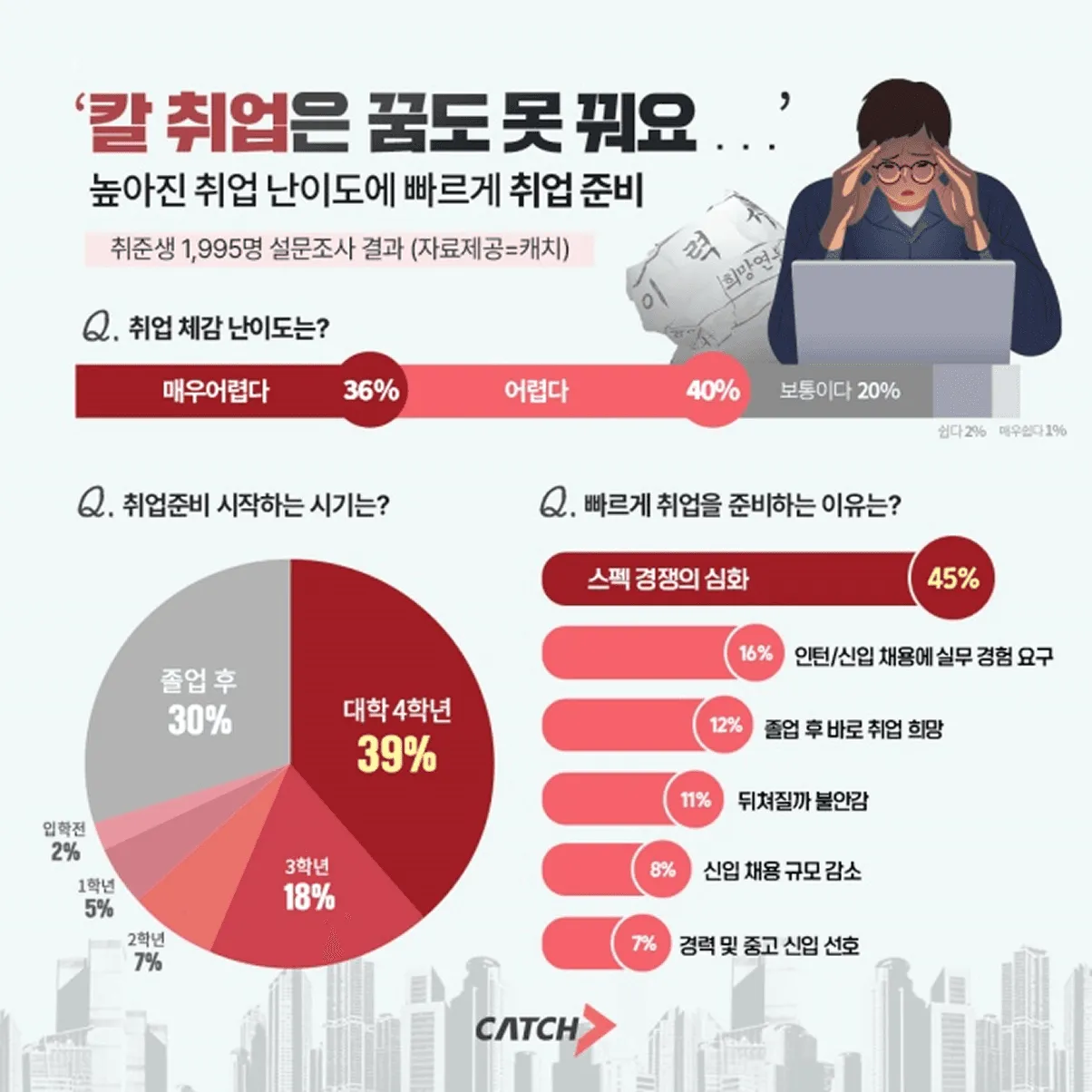
According to major surveys, 70% of university students started job preparation before graduation, yet the dominant feeling was that “preparing for employment is hard.”
This reflects very practical concerns:
-
Do I have the skills companies are looking for?
-
How can I show that I can immediately apply what I’ve learned?
-
Can I be confident the role I’ve chosen is the right direction?
-
What can differentiate me from countless other applicants?
In other words, the challenge universities must solve is improving how student competencies are proven and building a support system that considers the many factors of successful employment.
Strategies Universities Should Consider to Raise Employment Rates
To raise students’ employment readiness, universities can consider a combination of the following strategies.
First, Strengthening Linkages With Industry

Use industry-academia projects (capstone design: practice-based projects performed in collaboration with industry) to produce practical deliverables, and
-
Expand corporate field training, role-experience programs, and on-the-job mentorship
-
Hold job fairs and actively run regular industry exchanges (industry-academia networking events, executive guest lectures, recruiting briefings, etc.)
to help students raise their understanding of specific roles
and acquire the abilities they can use on the job.
In fact, many universities are expanding employment-relevant programs through curriculum models that engage companies (industry-academia courses).
Second, Systematic Career Exploration and Career Coaching Support
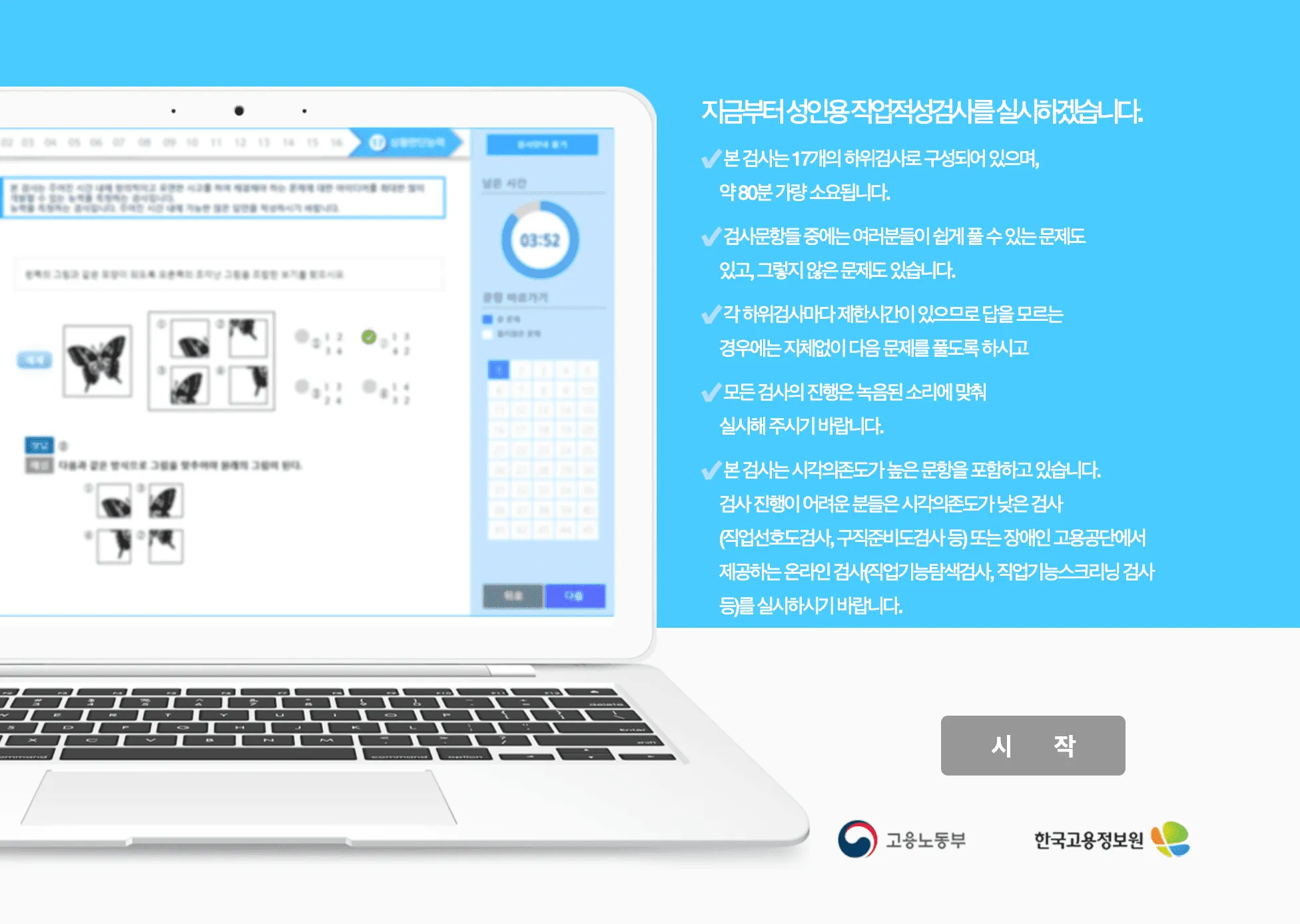
Personality assessment-based job recommendations
-
Designing employment-preparation roadmaps
-
Strengthening résumé and interview consulting
These processes help students discover their strengths early and begin their career development in the right direction.
Students who have completed career planning tend to show higher acceptance rates than those who apply without a plan.
Third, Strengthening Extracurricular Activities to Accumulate Competitive Experience
-
Volunteering, leadership, entrepreneurship, study abroad
-
Competition awards, student council activities, study clubs
-
AI and data literacy (the ability to read and interpret data and use it for decisions) and other future-competency programs
These experiences are assets that show the student’s genuine differentiation - something a degree alone cannot convey.
Companies are paying attention not only to majors but increasingly to problem-solving ability, collaboration, and communication.
Fourth, A Strategy of Making Educational Outcomes Visible
For companies to trust a student, they must be able to see at a glance what projects the student worked on and what abilities they demonstrated.
For example:

-
Posting team project deliverables on a portfolio site
-
Uploading class outcome videos to a YouTube channel
-
Auto-logging activities in an integrated campus extracurricular system
-
Providing activity URLs shareable with companies
-
Adopting certification methods that can be shared on social media
-
Issuing digital badges so that learning outcomes can be seen at a glance
These efforts connect into immediately usable evidence for students in the employment market.
And it is at this point that digital badges become the most practical way to expose previously invisible outcomes with data.
Because the badge embeds deliverables, role, and issuance criteria, every student activity - across major, extracurricular, and industry experience - is transformed into a “verifiable competency asset.”
(Activity → Achievement → Visualization → Sharing: a virtuous cycle of “visible outcomes”)
Digital Badges: A Tool That Converts Student Experience Into Evidence
Universities want to connect students’ diverse experiences to educational outcomes, but with conventional methods (résumé, certificate of completion) alone, it is difficult to clearly show what was accomplished and what competencies were demonstrated.
Digital badges are an outcome-conversion technology that resolves this limitation.
They structure learning experiences as outcome-centered data, making student competencies visible in a form that companies can understand.
Because the badge contains the information necessary for hiring decisions - deliverables, role, issuance criteria - it is not a simple completion record but a trustworthy competency credential.
The core value can be summarized in two points.
1. Structuring Experience Around Actual Competencies
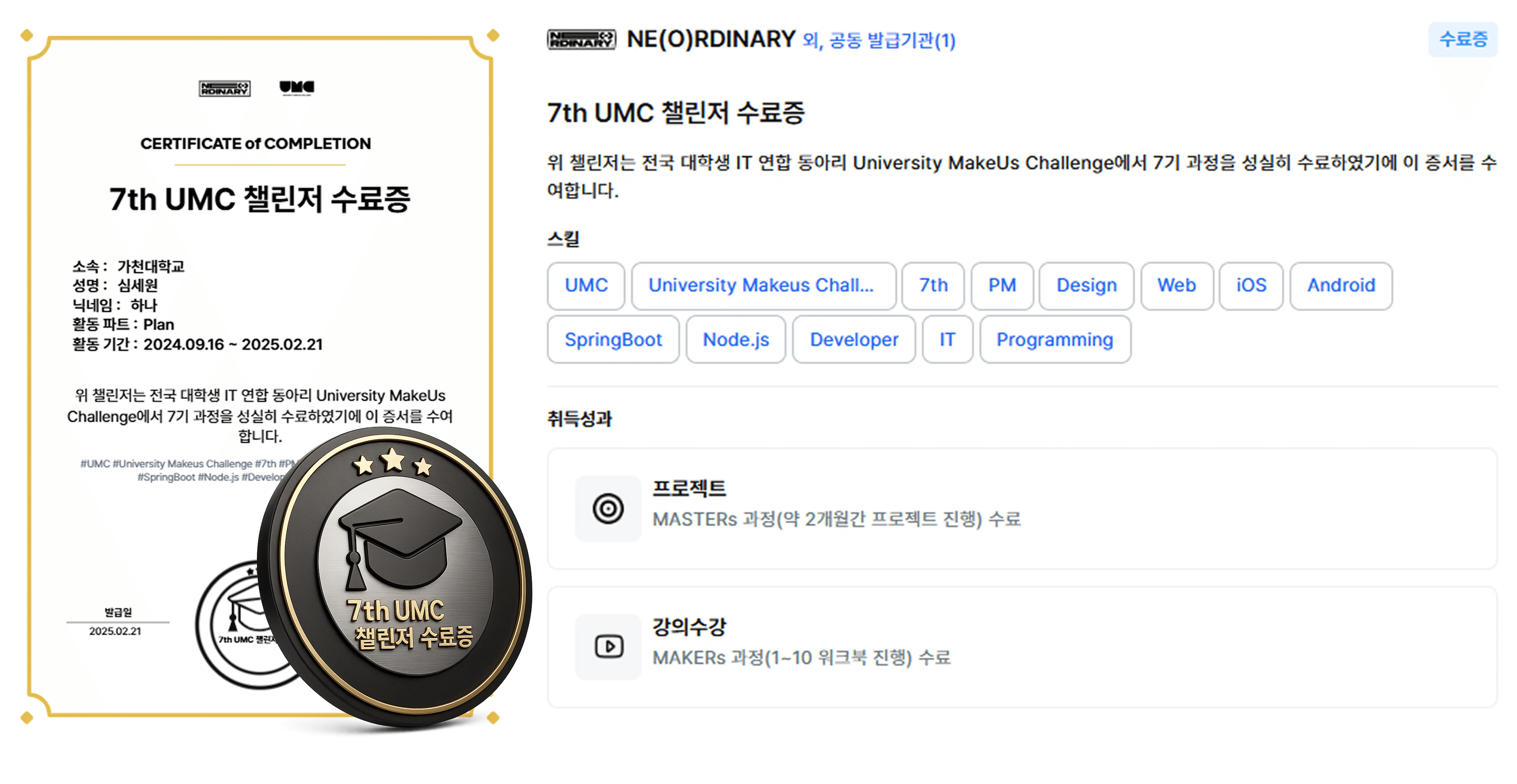
The varied experiences students accumulate - extracurricular activities, competitions, industry-academia projects, overseas programs, entrepreneurship - are broken down into competency units (skill sets) and recorded. Beyond simply listing whether they participated, this process turns each experience into an information system that shows, at a glance, what outcomes it produced and what role the student played in solving the problem.
Key elements include:
-
A link to view the deliverable, enabling immediate verification of the actual output
-
Issuance criteria and performance details presented together to clarify why the competency was recognized
This data structure naturally reflects the practical core competencies companies most want to see - problem-solving, collaboration, and communication - and is regarded as transcending the limits of degree-centric proof.
In other words, experiences that previously could only be described in a single résumé line are now structured into usable data, becoming a true competitive advantage.
Experiences that were invisible are converted into meaningful evidence in the employment market. It is the technology that translates them - beyond a simple résumé record - into the outcome language companies can understand.
2. A Digital Proof That Companies Can Verify Immediately
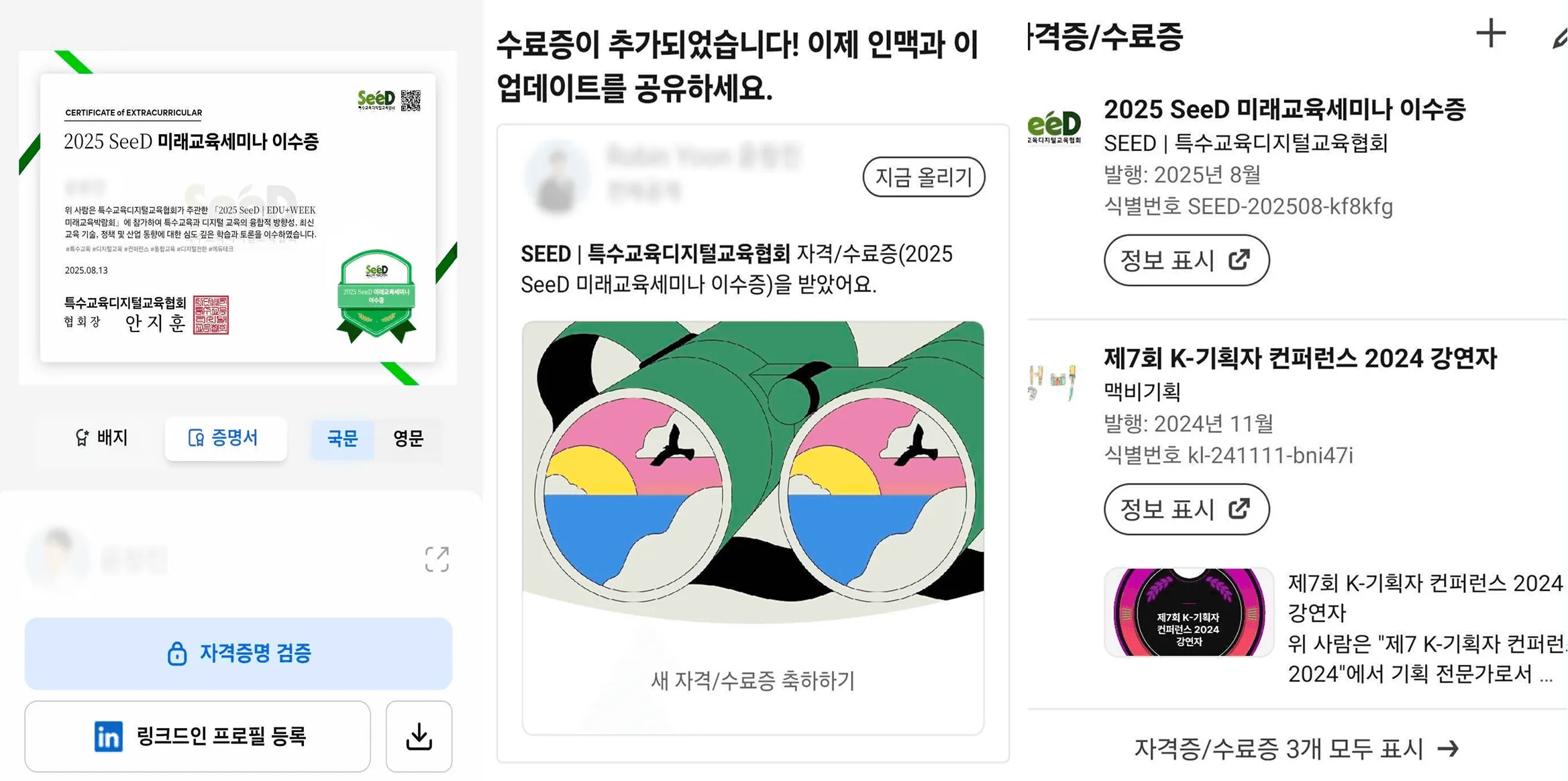
A digital badge delivers a learner’s outcomes in a form that companies can verify immediately. Whether attached to social media, a portfolio, or a résumé, a single click takes the viewer to the badge verification page, where they can see the actual project deliverable, the role played, and the issuance criteria - all the information needed for a hiring decision.
For employers, this means they don’t have to separately validate email attachments or screenshot images - they can easily confirm verified data that includes the source and trust information.
The credibility of this structure is reinforced by:
-
Tamper protection technology that minimizes doubt about the basis of certification
-
A competency officially endorsed by the university, maximizing assessment trust
Going further, SNS algorithms classify “achievement content shared directly by acquaintances” as high-trust content.
So when an achievement is shared through a digital badge, it isn’t merely visible to a wide audience - it’s seen by people actually connected to the learner: peers, friends, and seniors.
The more people recognize an achievement, the more employers also treat it as a trustworthy competency, naturally raising the chance the candidate gets attention.
In short, a single alumnus’s share becomes the starting point for discovering new opportunities, and as those experiences accumulate, a virtuous cycle is created that accelerates the student’s career growth.
Verifiable, data-backed outcomes earn employer trust, and trust opens larger opportunities. And those opportunities turn a student’s future into reality faster.
In Summary
-
For the student, previously invisible outcomes are converted into competitive evidence
-
For the university, all educational activities are connected to promotion and outcomes
Digital badges are the most practical answer to the question educational institutions have wrestled with for a long time:
How do we grow students, and how do we let the world see that growth?
Reference Cases of Adoption at Korean Universities

Many universities are already experiencing real improvements in educational outcomes
192 universities in Korea are operating digital badges.
Representative cases are below.
Hanyang University
-
Applied badges to e-learning credit courses and the semiconductor expert training program
-
Differentiated into Bronze, Silver, and Gold tiers based on completion level
-
2,843 participants, 4,568 badges issued → A meaningful case of transitioning even credit-based programs into a competency-based certification system
Sungkyunkwan University
-
Issued digital badges centered on extracurricular activities
-
Linked outcome certification to micro-degree completers
-
Increased student participation and accumulated completion outcome data → A successful operating model for objectively measuring extracurricular education outcomes
Konkuk University
-
Opened Korea’s first badge-dedicated portfolio platform (2025)
-
Automatically records, manages, and shares student outcomes → Established the foundation for elevating university brand value and expanding badge utilization
Students Travel Farther with Digital Badges
Students grow through many activities beyond grades, but in many cases that growth is not officially visible. The problem universities need to solve is clear:
-
Record every student experience as data
-
Prove competency with verifiable standards
-
Respond to the skill-based hiring environment that society demands
-
Present educational outcomes through quantified indicators
-
And through this, strengthen university competitiveness
Kolleges is a digital badge solution that has been fully certified across the international-standard Open Badges 3.0, 2.1, and 2.0 versions. While leading the latest standards, it also lets you bring in and reuse existing badges, so universities can extend their accumulated educational outcome assets to future standards without losing them.
It converts student achievements into visible outcomes and produces a clear result: stronger employment competitiveness.
Be the university that clearly demonstrates educational outcomes.
The fastest way to prove student competency - Kolleges Digital Badge
Frequently asked questions
Want to turn learning outcomes into verifiable assets?
From issuing to verifying and amplifying, see it for yourself with Kolleges.
Request a Kolleges demo Related posts

University Branding and Learner Credentialing in One: Five Ways Universities Use Digital Badges
Universities are deploying digital badges across curricula, extracurriculars, industry partnerships, staff development, and admissions branding to prove educational value and raise institutional profile.
When Grades Aren't Enough: How Do You Capture Student Competencies?
Transcripts capture scores but not skills - digital badges and CLR close that gap by connecting learning objectives through CASE to portable, verifiable competency records.
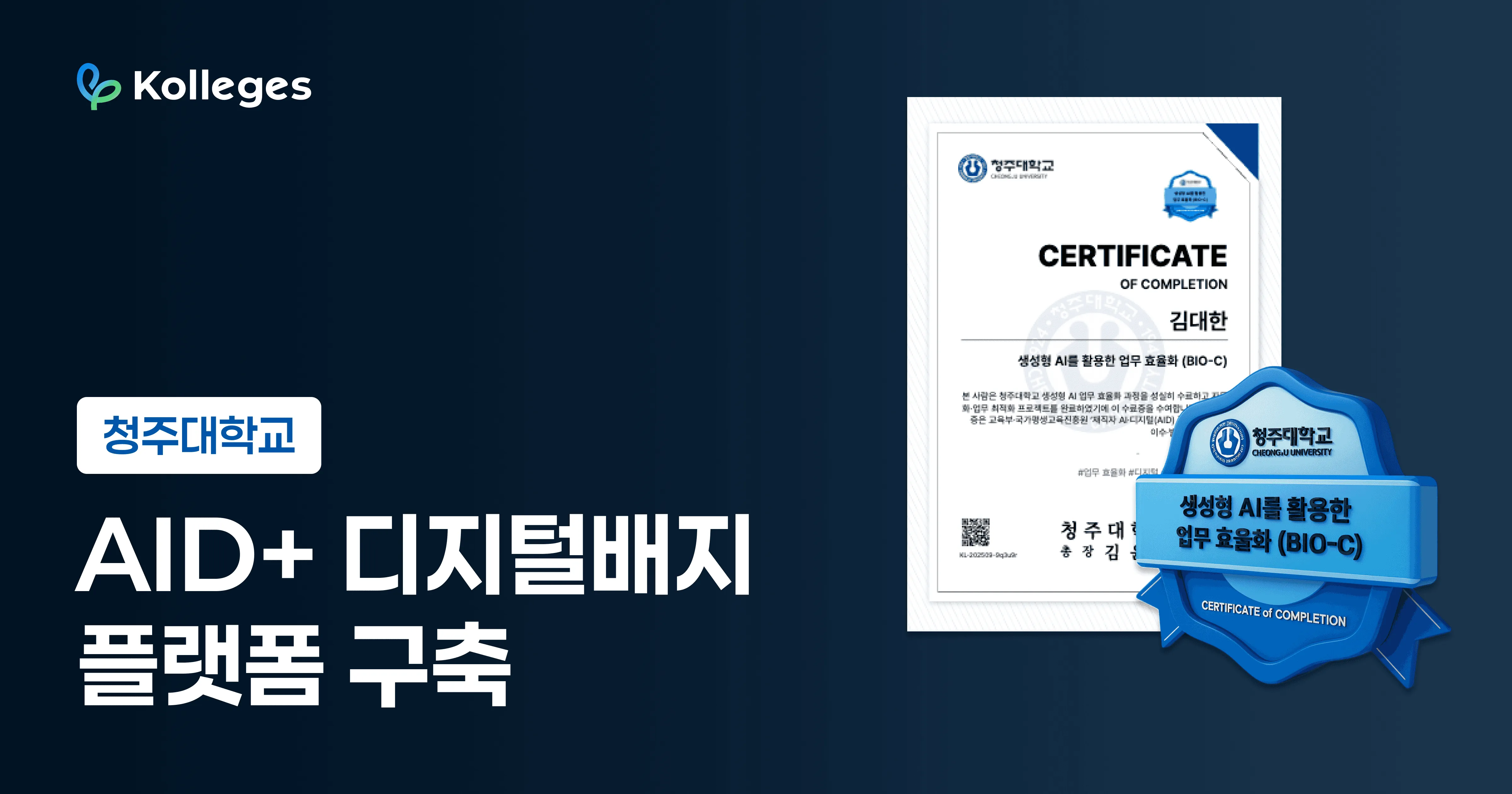
Cheongju University Adopts Kolleges Digital Badge Learning Recognition System
Cheongju University piloted digital badge-based learning recognition in four intensive programs, enabling students to share verified project portfolios directly with employers.