
Everything About the AID 30+ Project and Digital Badges
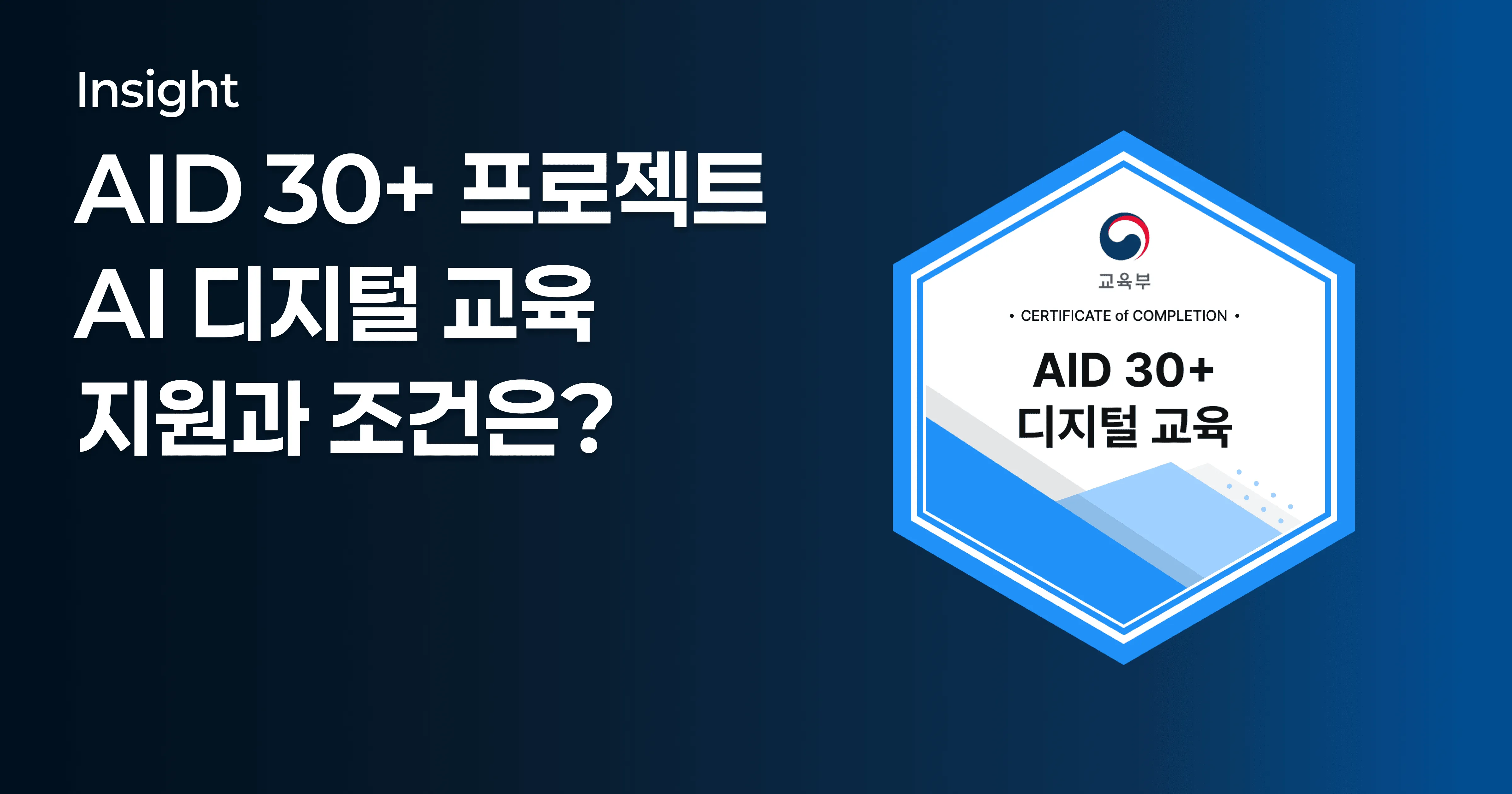
Korea's government-backed AID 30+ Project requires universities running adult AI and digital re-skilling programs to certify completions with Open Badges 3.0 digital badges issued under the university president's name.
Hello,
A digital certificate and badge issuance solution -
this is Kolleges.
Education today is changing fast as AI gets adopted across the field.
Beyond ChatGPT, instructional cases using a wide range of AI tools - Perplexity, Claude, and others - are emerging.
Today’s news
A leading example is the AID initiative. Word just came in that Chosun University, Kyungil University, Daegu Dongyang University, and Jeonju University were selected for the AID 30+ Intensive Camp organized by the National Institute for Lifelong Education.
So what does AID mean?
AID is a portmanteau of Artificial Intelligence (AI) and Digital, and it stands for AI digital education.
The “AI·Digital (AID) 30+ Project” was launched for the first time in October 2024.
In an era where digital competitiveness equals national competitiveness, Korea ranks at a world-class level overall, but lags relatively in the talent-related categories of “digital skill competence” and “employee training.”
The goal is to strengthen digital re-skilling and up-skilling for adults.
The government has set a target of selecting 100 institutions - general universities, junior colleges, and cyber universities - by 2027 to develop them as hubs of adult AI digital education.
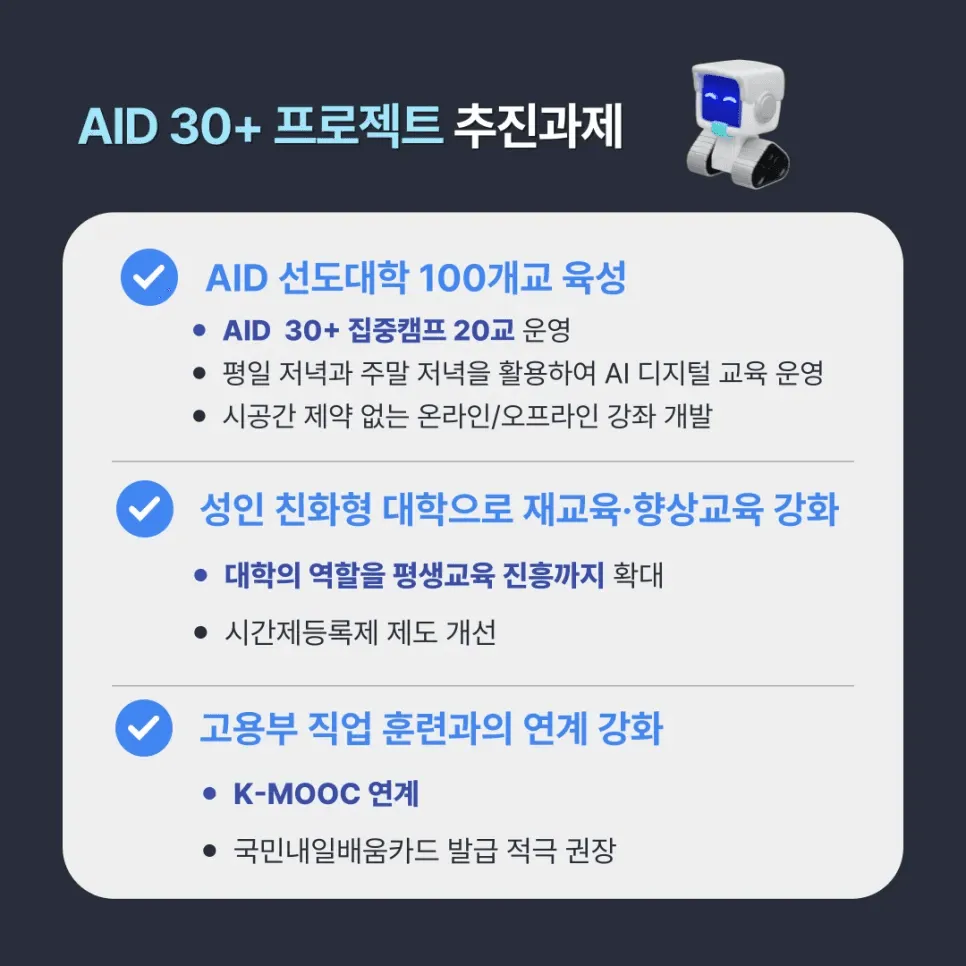
What’s actually included in the AID program?
The programs include: AI·Digital (AID) 30+ Intensive Camp at 20 institutions, Digital Transformation Focused Junior Colleges at 30 institutions, AI·Digital (AID) Course Packages at 20 institutions, MOOC Leading Universities at 15 institutions, Match-up Consortia (5), and Digital Innovation Cyber Universities at 10 institutions.
Among these, the AID 30+ Project was designed to strengthen the AI and digital competencies of adults aged 30+ and, on that basis, support re-skilling and up-skilling for adult learners.
Starting in 2025, intensive camps will run at 20 institutions nationwide and course packages at another 20 - including the previously mentioned Chosun University, Kyungil University, and Daegu Dongyang University.
Are there concerns about AI adoption in the classroom?
The biggest hurdle cited is that instructors still lack expert knowledge of AI use. AI is being adopted quickly in education, but more systematic support and infrastructure is needed for instructors to use it effectively.
The argument is that AI training and hands-on programs for instructors are essential to solving this.
The core of the AID initiative
This program has a distinctive characteristic - it covers not only enrolled students but also adult learners.
Through the two programs below, it’s critical to choose AI models suited to the needs of enrolled students and adult learners and to develop content that matches. Industry partnership matters too, so the AI requirements of employers must be captured in a timely way and reflected in the curriculum.
🟣 AID 30+ Intensive Camp
🟣 AID Course Packages
Do you know the common assessment and certification method shared across these two programs?
It’s “digital badge issuance.”
Completion outcomes must be certified as digital badges issued under the university president’s name.
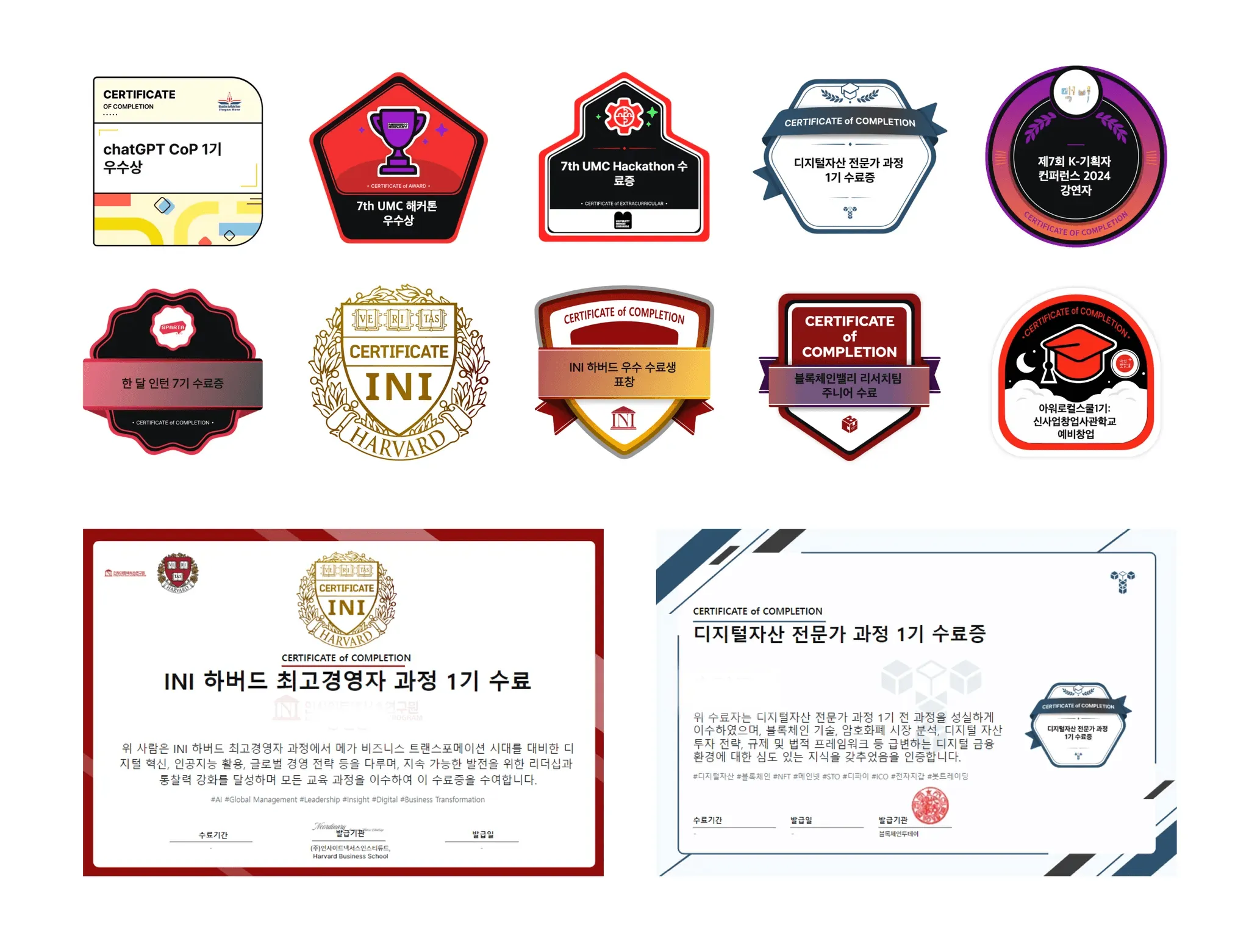
So why are digital badges necessary?
✅ What is a digital badge?
As emphasized in briefing materials,
considering accessibility, convenience, usability, and interoperability,
choosing an international-standard digital badge solution (Open Badges 3.0) is essential.
So why Kolleges for AID program digital badges?
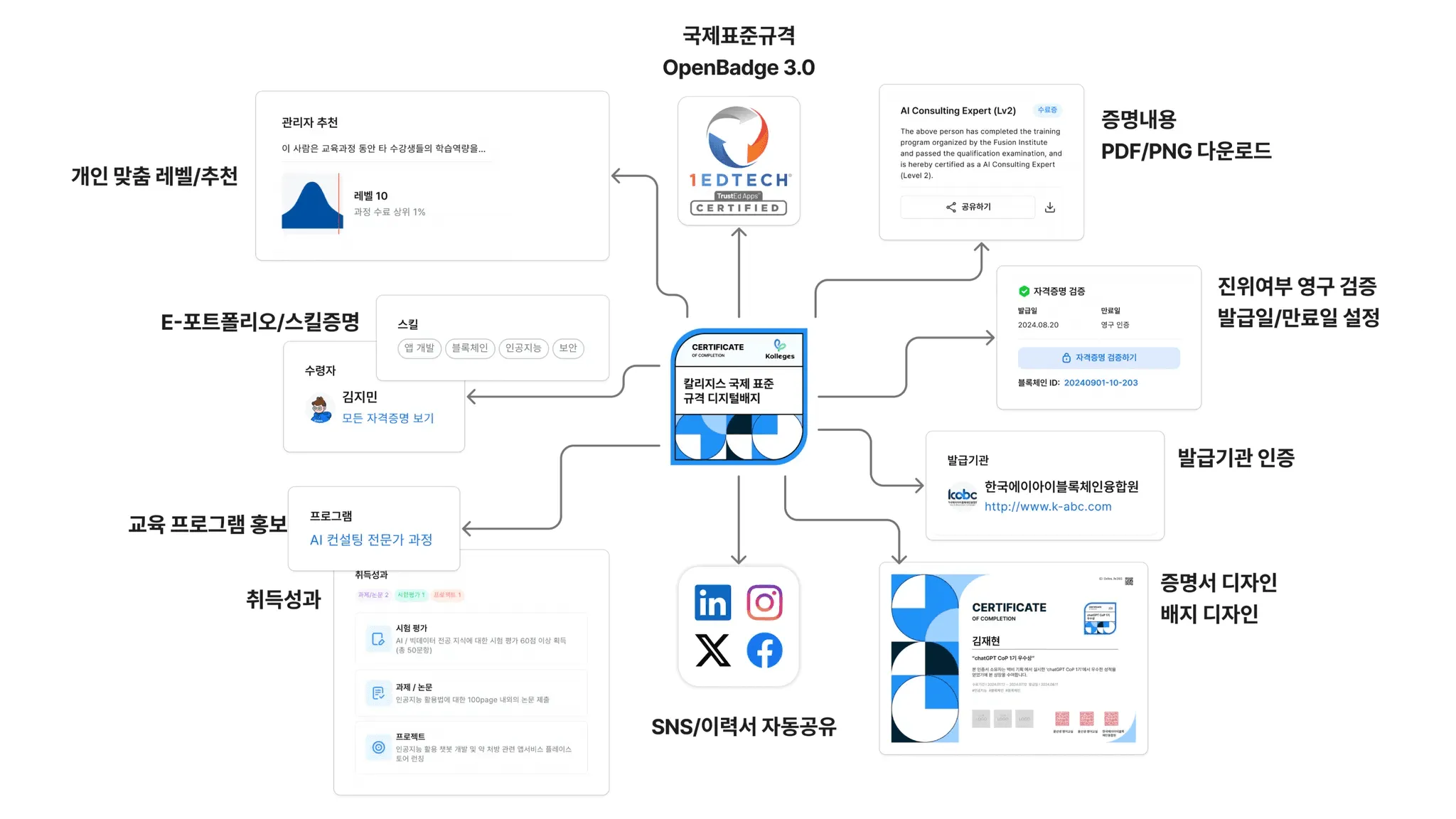
💬 See Kolleges digital badge use cases right now
Digital badges are mandatory in the AID intensive program -
partner with Kolleges, the custom digital badge solution.
🔍 Reach out anytime with questions.
Further reading
Newsis · Lecturer News · UNN · Hangyo
Frequently asked questions
Want to turn learning outcomes into verifiable assets?
From issuing to verifying and amplifying, see it for yourself with Kolleges.
Request a Kolleges demoRelated posts
What is the AID 30+ Intensive Camp? 2025 Selected Universities and Program Areas
In 2025, 20 Korean universities run the Ministry of Education's AID 30+ Intensive Camp - short-form AI and digital upskilling for working adults, with verified digital badges as proof of competency.
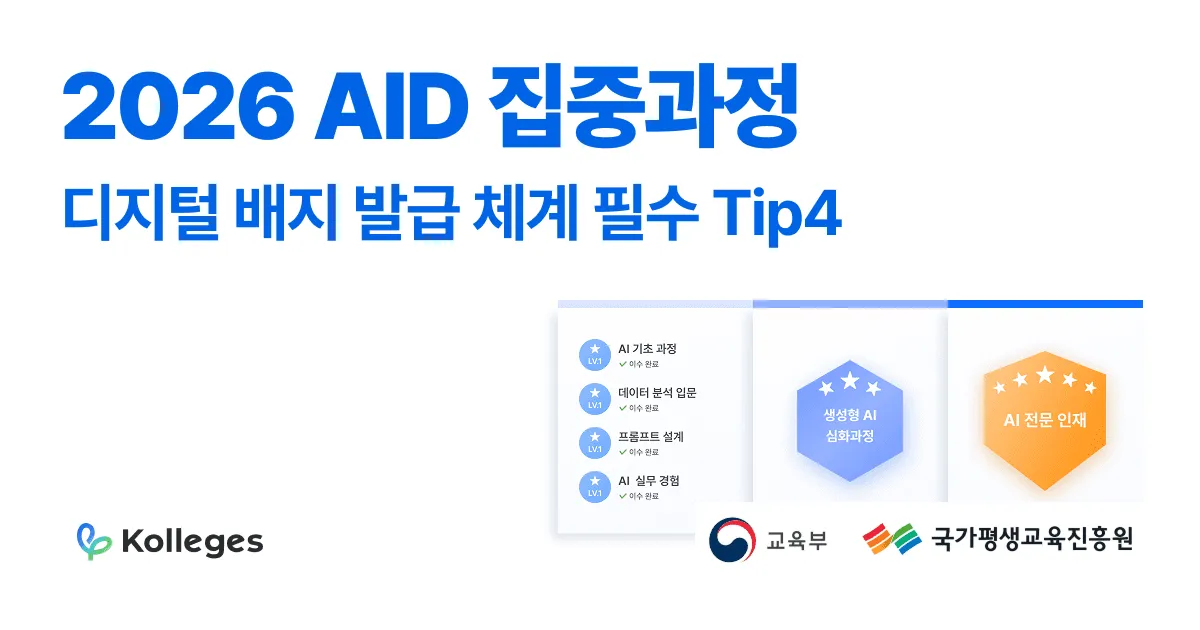
Designing the Digital Badge System for AID 30+ Intensive Camps and Bundled Courses
Design competency, course, and integrated badges for AID 30+ and Bundled Courses with the right metadata and automated issuance rules to satisfy both program evaluation and learner utility.
Inside Korea's 2026 AI·D Intensive Programs for Working Adults
Korea's 2026 AI·D intensive programs require universities to build digital badges into curriculum design, evaluation, and outcome diffusion from day one - not treat them as post-completion paperwork.