
Kwangwoon University De-Butler × XRPL hackathon wraps up - interviews with the organizers and the top-prize winner
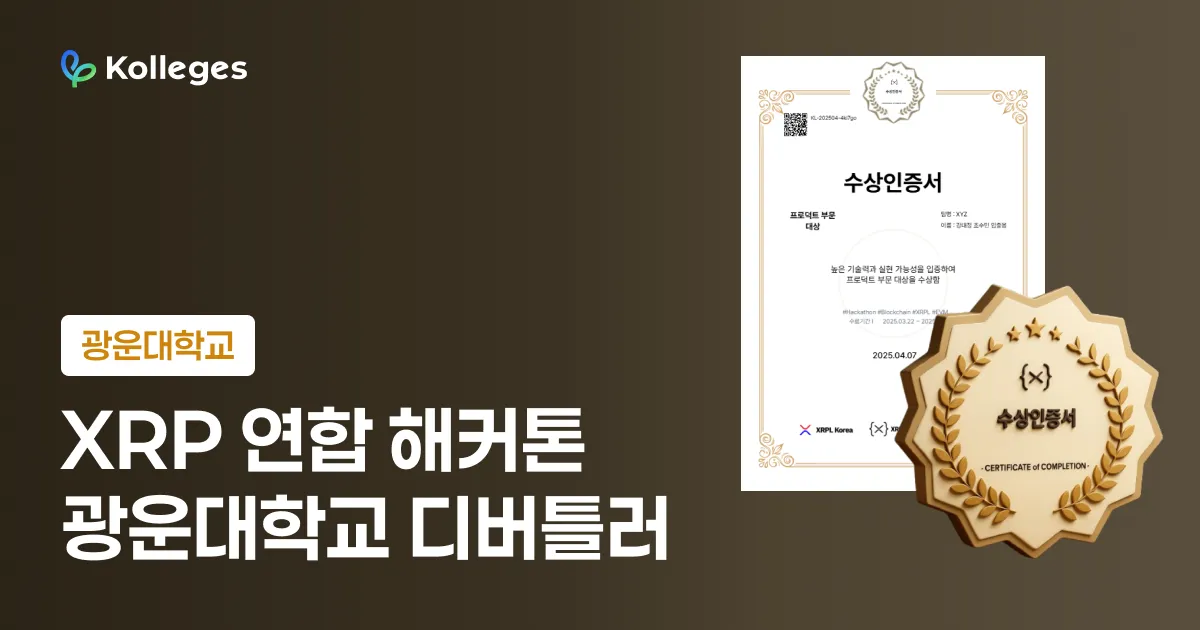
How the De-Butler × XRPL blockchain hackathon DE-BUTHON came together and wrapped up - told through interviews with the organizers and the top-prize winner, plus a behind-the-scenes look at issuing digital certificates and badges with one CSV upload.
An interview with De-Butler President Park Ye-chan, organizing-team member Ham Yu-jin, and grand-prize winner, front-end developer Oh Eun-jin
It’s not common for a student society to join hands with a global blockchain community to host a hackathon. Held over two days starting March 22, 2025, at Kwangwoon University’s Memorial Hall, the XRPL KOREA blockchain hackathon “DE-BUTHON” was a stage created together by Kwangwoon’s blockchain society “De-Butler” and XRPL Korea. From idea planning to recruiting partner companies to running the event, the students led it all, and Kolleges took part as a partner, supporting the issuance of attendance and award certificates as digital certificates and badges. We met President Park Ye-chan, who oversaw the event; organizing-team member Ham Yu-jin, who handled operations and design; and Oh Eun-jin, the front-end developer of team “XRPedia,” which won the grand prize.
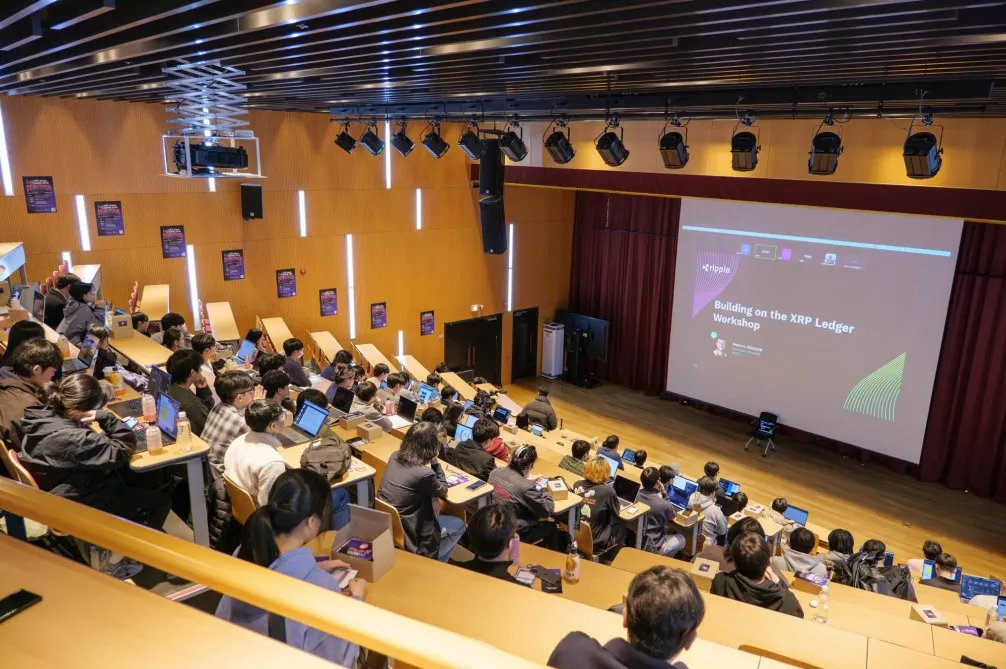
What kind of place is Kwangwoon’s blockchain society De-Butler?
An education-focused society that onboards aspiring developers into Web3
Q. First, please introduce yourselves briefly.
“Hello, I’m Park Ye-chan, president of De-Butler. I was in charge of the overall planning and management of this DE-BUTHON.”
- Park Ye-chan, De-Butler President
“Hello, I’m Ham Yu-jin, an organizing-team member at De-Butler. I handled operations and overall design for DE-BUTHON.”
- Ham Yu-jin, Organizing Team
“Hello, I’m Oh Eun-jin, the front-end developer who built a digital materials-sharing platform called ‘XRPedia’ at DE-BUTHON and won the grand prize.”
- Oh Eun-jin, Developer
Q. Please tell us about the De-Butler society.
“De-Butler is an education-centered blockchain society that’s been around for about two years. Recently, alongside DE-BUTHON, we’ve been busy preparing to launch a society alliance community called ‘BLCC.’ We provide high-quality education to students who aspire to be developers and serve as a way for them to onboard into Web3.”
- Park Ye-chan, De-Butler President
Q. Compared with other development societies or hackathons, what makes De-Butler special?
“Even as a young society, we try to plan and run many substantial events to give students more hands-on experience. This DE-BUTHON with XRPL is one of them, and we also periodically run an event called ‘Blockchain Week’ that makes use of blockchain technology. Studying is of course important, but the whole organizing team is doing its best to give members a variety of experiences beyond that.”
- Park Ye-chan, De-Butler President
Web3 is a question of values, not technology
“Let’s own our own data”
The word Web3 still feels unfamiliar to many. President Park chose an explanation that starts from “values” rather than technical jargon.
Q. The concept of Web3 is honestly a bit unfamiliar. If you could explain it simply and easily, what kind of concept is it?
“Web3 is a concept focused on ‘values’ rather than technology. If today’s internet is Web2 - a model where we use centralized services managed by big corporations - Web3 breaks away from that with the idea of ‘let’s own our own data.’ This is called decentralization, the technology to realize decentralization is blockchain, and you can think of coding as the tool that implements it.”
- Park Ye-chan, De-Butler President
The idea of returning ownership of data to individuals rather than platforms touches on the certification of educational achievements as well. Completion certificates and badges no longer remain mere internal documents of an institution; instead, the structure becomes one where the person who receives them owns, verifies, and shares them directly.
DE-BUTHON 2025, a hackathon students built from start to finish
Lowering the barrier with two tracks: idea and product
Q. How did you come to plan and run this DE-BUTHON together with XRPL Korea?
“I really wanted to host a hackathon before my term ended, and a good opportunity came along with XRPL Korea, who happened to be preparing a joint session, so we held it together. From idea planning to building partnerships to running the event, members took part proactively in every step and gained a lot of experience. In the planning process, considering that Web3 feels difficult to many college students and the general public, we split it into two tracks - ‘idea’ and ‘product.’ Through this, we hoped Web3 technology could reach the public and students in a more approachable, friendly way.”
- Park Ye-chan, De-Butler President
Q. Could you tell us what was good and what was difficult about running the event together with an outside organization?
“The best part was being able to take on the entire design process of the event from start to finish as the lead designer. It was especially appealing to design the very space the builders would actually use, and being able to take the lead on deciding the overall concept and mood was a special experience too. That said, having to handle every detail on my own was demanding both physically and time-wise. Through this process, I realized just how important ‘collaboration’ is for producing good results.”
- Ham Yu-jin, Organizing Team
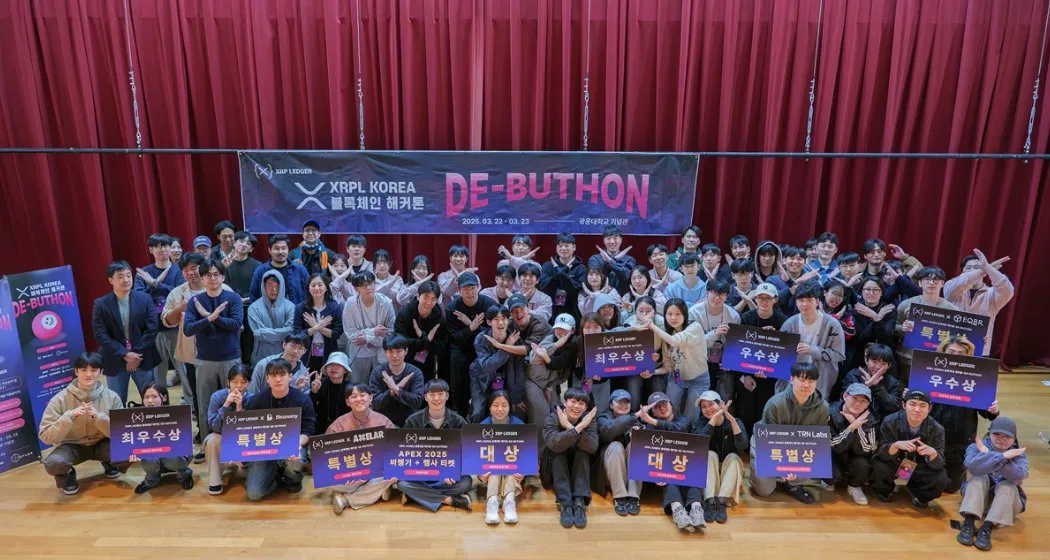
Grand-prize winner XRPedia, solving the problems of materials-sharing platforms with blockchain
Taking on the three limits of centralized platforms: fees, trust, and participation
Q. Please introduce the grand-prize-winning XRPedia service.
“XRPedia is a digital materials-sharing platform that uses Web3-based blockchain technology. We designed it to solve problems that arise on existing centralized platforms like HappyCampus - excessive fees, content trust issues, and low participation. With a decentralized structure that runs without a central server, we lowered fees and raised trust and accessibility. Material providers are rewarded with tokens according to their contribution, and all transaction histories and ratings are recorded securely on the blockchain without forgery. Ultimately, our goal was to create a fair and sustainable digital materials ecosystem for both creators and users.”
- Oh Eun-jin, Developer
In judging, the project was recognized for demonstrating high technical capability and feasibility. Oh Eun-jin also shared a plan to carry this idea forward into an actual startup, beginning with a campus startup club.
The digital certificate issuance that changed how the event wrapped up
Issuing completion certificates, done with a single CSV upload
An event isn’t judged by the moment it ends but by how it wraps up. Anyone who has ever run a hackathon knows that the most labor-intensive task for an organizer is issuing attendance and award certificates.
Q. How did it feel to run the event using Kolleges at DE-BUTHON 2025?
“From an organizer’s standpoint, the hardest part of preparing hackathons and other events was the follow-up. Issuing official completion certificates and proving participants’ specific activity experiences was especially hard, but at this DE-BUTHON, working with Kolleges let us wrap the event up cleanly. I was especially satisfied that we could issue completion certificates and badges in a polished way.”
- Park Ye-chan, De-Butler President
For Ham Yu-jin, who handled both operations and design, saving resources was key.
“Since I was in charge of operations, issuance, and design all at once, cutting down on resources was important, and template-based certificate and badge creation let me manage that. Because I could use existing templates and assets to design and issue right on the web, I was able to make quality credentials without any initial design work or separate external tools. The post-event completion-certificate issuance process was especially impressive - you can issue certificates automatically just by uploading a CSV file, which was a huge help in saving time.”
- Ham Yu-jin, Organizing Team
The view from the receiving side was no different. Oh Eun-jin, a participant and award winner, pointed to the certificate’s “content” and “trust.”
“Compared with other events, it held more specific content, and with its anti-forgery feature I thought it was highly trustworthy. Lately I’ve been organizing my portfolio in Notion, and it was great to manage and easily prove my career with digital certificates and badges; I think it’ll be useful for networking down the road too.”
- Oh Eun-jin, Developer
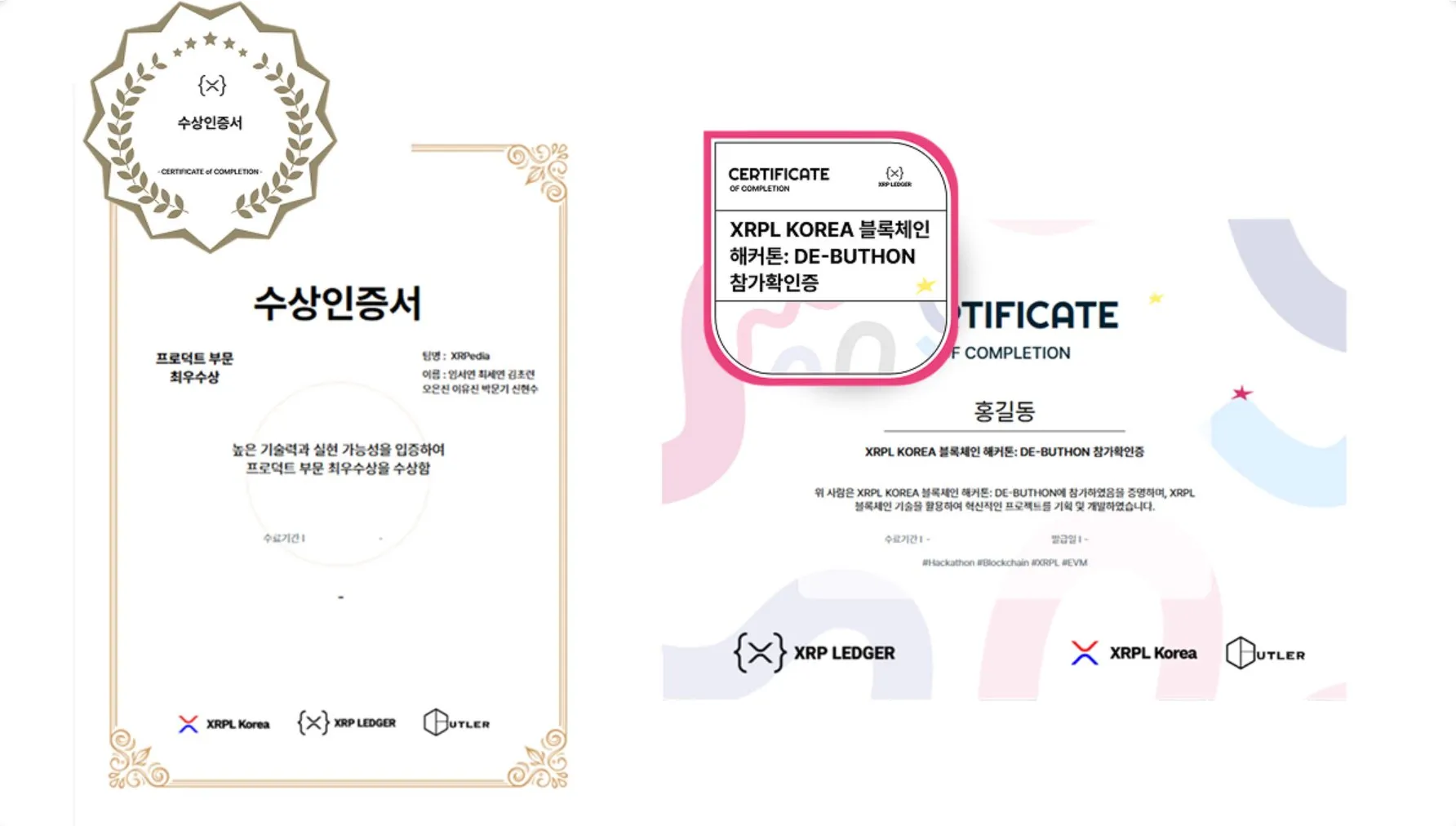
The certificates and badges Kolleges issues follow the international standard 1EdTech Open Badges. Participants can share the credentials they receive straight to a Notion portfolio, LinkedIn, or social media, and the receiving side instantly verifies authenticity by QR code and link. That’s why event organizers no longer have to separately handle certificate-reissue or authenticity-verification requests.
Until next time
Q. Finally, please share a word for the Kolleges team.
“Thanks to Kolleges, we were able to wrap up the event successfully - thank you. I hope you’ll keep an interest in De-Butler’s various activities going forward.”
- Park Ye-chan, De-Butler President
“Even without professional development or design knowledge, I could easily handle everything from certificate and badge design to issuance. As an aspiring product designer there were still some inconvenient parts, but I think I analyzed and learned a lot in the process. I’d like to run smooth events using Kolleges at future events too.”
- Ham Yu-jin, Organizing Team
“As a user who experienced issuing completion certificates and badges firsthand, I plan to make active use of it in my upcoming job search. The XRPedia my team won with was praised for its strong business viability and planning, so we’re going to take on a startup challenge starting with a campus startup club. Given the nature of the service, there will likely be occasions for education or certification, so I’d love to bring Kolleges into our service too and spread the word about distinctive records and achievements more widely.”
- Oh Eun-jin, Developer
It was a candid story full of deep affection for development and for the society, told by the organizers and the award winner. In the interview, they shared even the parts of using Kolleges they found lacking, without holding back, which gave us a precious chance to hear valuable user feedback. The effort of the people who made the event and the achievements of those who took part remaining as verifiable records even after the event ends - that’s the standard for wrapping up an event that DE-BUTHON showed.
For nonprofit hackathons and group events, Kolleges supports digital certificate and badge issuance free of charge.
Frequently asked questions
Want to turn learning outcomes into verifiable assets?
From issuing to verifying and amplifying, see it for yourself with Kolleges.
Request a Kolleges demo
Related posts
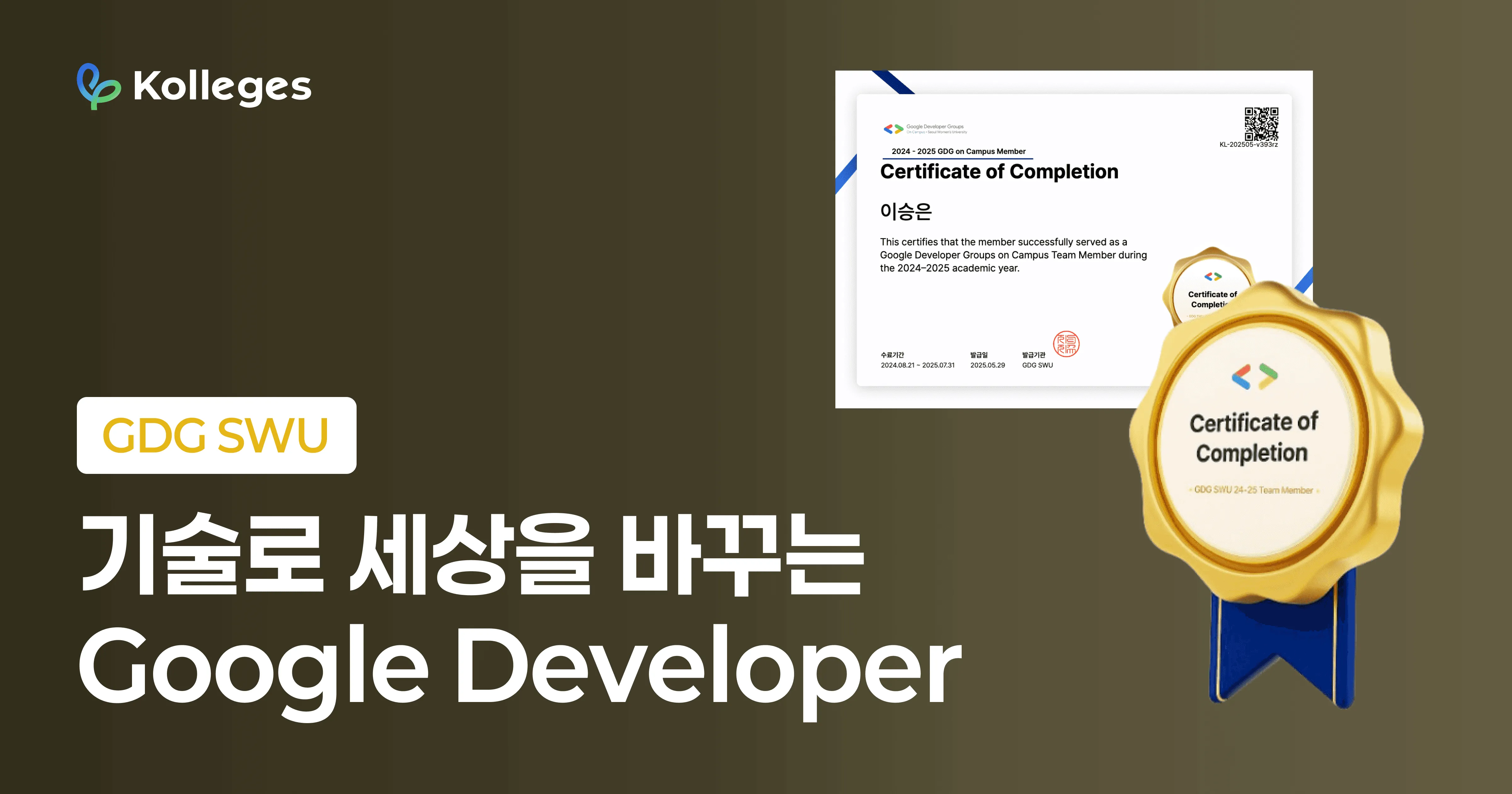
"Innovation Stories from Women Changing the World With Technology" - GDG SWU Lead Yewon Cho
GDG SWU adopted Kolleges digital badges to replace uncredible self-made PDFs, enabling QR-based auto-issuance at hackathons and giving Google-sponsored activities a trustworthy, shareable certificate.
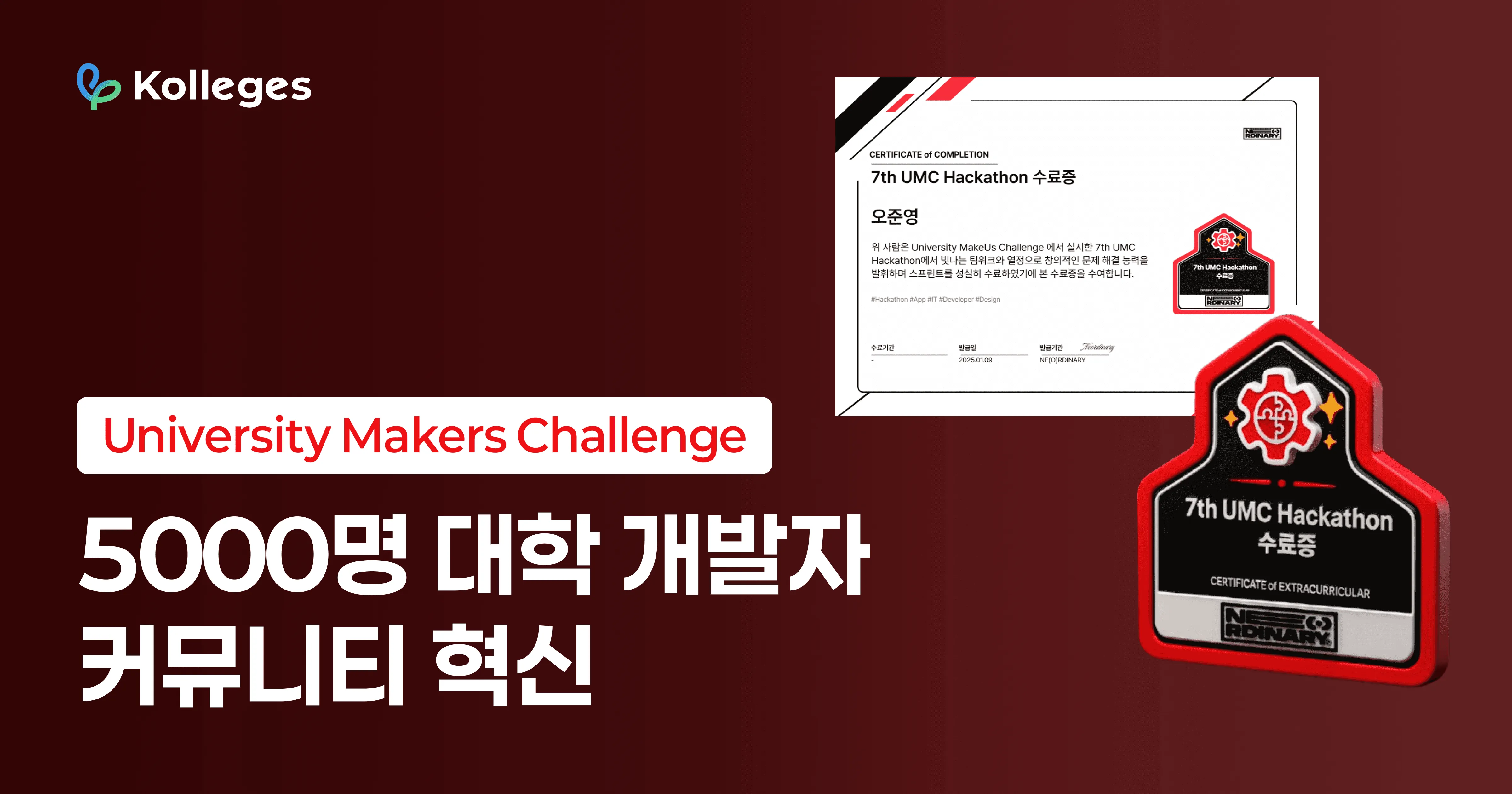
"The UMC Innovation Story Leading 5,000 College Developers" - Junyoung Oh, Head of Operations at UMC | Kolleges
UMC cut its top support burden - endless certificate reissue requests from 1,000 students per cohort - by switching to Kolleges bulk digital badge issuance.

Automated Certificate Issuance in Just a Few Clicks
Kolleges automates certificate issuance end-to-end - upload an Excel participant list, set optional completion conditions, and the system generates and delivers every certificate in bulk with no manual editing.