
How to Recruit Vocational Training Students: 6 Practical Strategies for KDT and Naeil Baeoom

Six actionable strategies - from D2L instructor branding and rapid trend-response curriculum to badge-driven social sharing - help KDT and vocational training programs increase enrollment without additional ad spend.
The job-training (adult education) market has moved beyond the era of simply “selling courses” and into a structure where the learning experience itself becomes outcome sharing.
According to a Toss Payments report, adult education transaction volume grew 17% year-over-year, with job and hobby education in particular growing more than 50%.
But rising demand doesn’t mean every institution succeeds.
The core question is: “How do we get learners to discover our program, trust it, and come back?”
- Building a structure where the instructor builds trust directly
The platform-centered era is fading,
and what’s taking its place is a D2L (Direct to Learner) structure where the instructor forms the relationship directly.
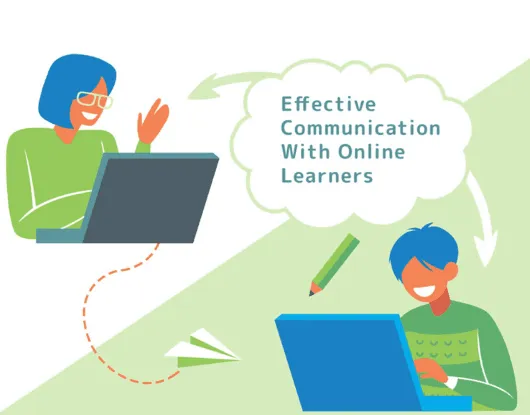
A Biz.W News article also emphasized that “the instructor’s fandom matters more than the platform for converting enrollments.”
For example, a marketing instructor opened a weekly “Learner Q&A Session” after class.
Students asked questions directly, and the answers were compiled into a newsletter and sent out. Feedback like “this class doesn’t feel like it ever ends” increased, and re-enrollment rates rose 1.8x compared to before.
Apply it now
The key is building “an experience that stays connected even after completion.” An individual instructor’s trust becomes the brand asset of the institution.
- Fast planning, immediate feedback loops
For job training, the game is how fast you can offer “the education people need right now.”
In 2025 in particular, demand for video production and marketing using generative AI has exploded.
The market is reflecting this trend in real time.
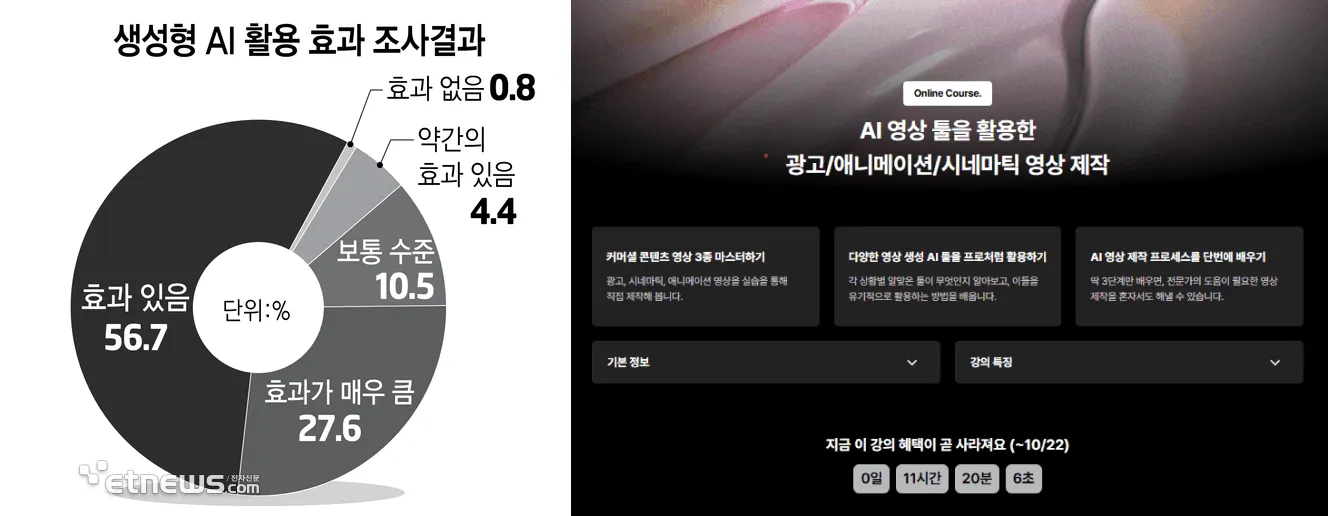
(Survey results on the use and impact of generative AI, source: KITA Korea International Trade Association / AI video tool course, source: FastCampus)
For example, FastCampus recently launched a course on “applying AI video tools” in line with the trend.
Cases like this show that reading demand quickly and responding immediately is at the heart of student recruitment.
It’s an era where the education market values “who opens first” more than “who plans first.”
Apply it now
-
Weekly keyword review: Monitor rising job keywords through Naver DataLab and trend reports. Examples: “AI marketing,” “data visualization,” “cloud practice,” “UI/UX education.” → The faster a keyword’s search volume rises, the faster demand is rising too.
-
Build a mini course to test reactions within a week: When a trend appears, open a pilot lecture (2-3 hours) the very next week. For example, if “AI marketing practice” search volume spikes, open a short workshop covering only the essentials to gauge reactions, then expand into a full curriculum afterward. → Even securing 20-30 initial participants can produce reviews that justify converting to a full program.
-
Immediate feedback loop: Analyze learner survey (Google Forms) results within three days, and announce updates to materials and curriculum. → The perception of “education where feedback gets reflected immediately” carries into the next recruitment cycle.
-
Publish an open schedule calendar: Disclose the next opening date and upcoming course calendar on your institution’s website or blog so learners “wait for the next opportunity.” → The waitlist effect drives higher initial enrollment in the next recruitment.
Demand doesn’t wait. The speed of planning, launch, and feedback is the speed of trust.
- Build trust with problem-solving content
People care less about “what can I learn?” than “can this solve my problem?”
For example, rather than “Marketing Practice,” use 👉 “Build the practical skills to plan a campaign even without experience,”
and rather than “Intro to Data Analysis,” use 👉 “Learn the data analysis methods you can apply directly to report writing.”
These phrasings are far more concrete and reduce learner anxiety.

(source: Inflearn)
Apply it now
-
Course title formula:
[Problem situation] + [Solution] + [Outcome]e.g., “Complete your job-change portfolio even without a major! A practical project course” -
Build a 3-channel content set ① Blog: problem-solving case studies ② Instagram: before/after card news ③ Naver Post: concrete practical tips
-
Insert search keywords: “job training,” “practical work,” “job seeker,” “career change,” “project” - 3 to 4 of them
The sequence is always the same: empathy → trust → enrollment. The most powerful asset is content that speaks to the learner’s concerns.
- When experience-centered course design becomes outcome sharing
Today’s learners want “education they participate in” more than “education they listen to.”
One IT training institution displayed graduates’ project deliverables and attached a “digital certification badge” next to each participant’s name.
Those deliverables were shared on social media, drove 30,000 organic views, and new enrollment inquiries surged without any additional ad spend.
In other words, education with visible outcomes is the starting point of outcome sharing.
Apply it now

(source: ‘Developer Career Pioneering Camp Hanghae 99’ YouTube channel)
“Visible results” speak louder than words. Learner outcomes are the most persuasive trust content.
- Structures where learners share their own outcomes
A structure that gets learners to share what they’ve learned voluntarily - this is the most efficient method of spread today.
One institution ran a “share your badge on social media with the hashtags #JobBadge #SkillTag #InstitutionName” event after completion.
The result: organic inbound traffic increased by 120%, and new enrollment inquiries flowed in steadily via hashtag clicks.
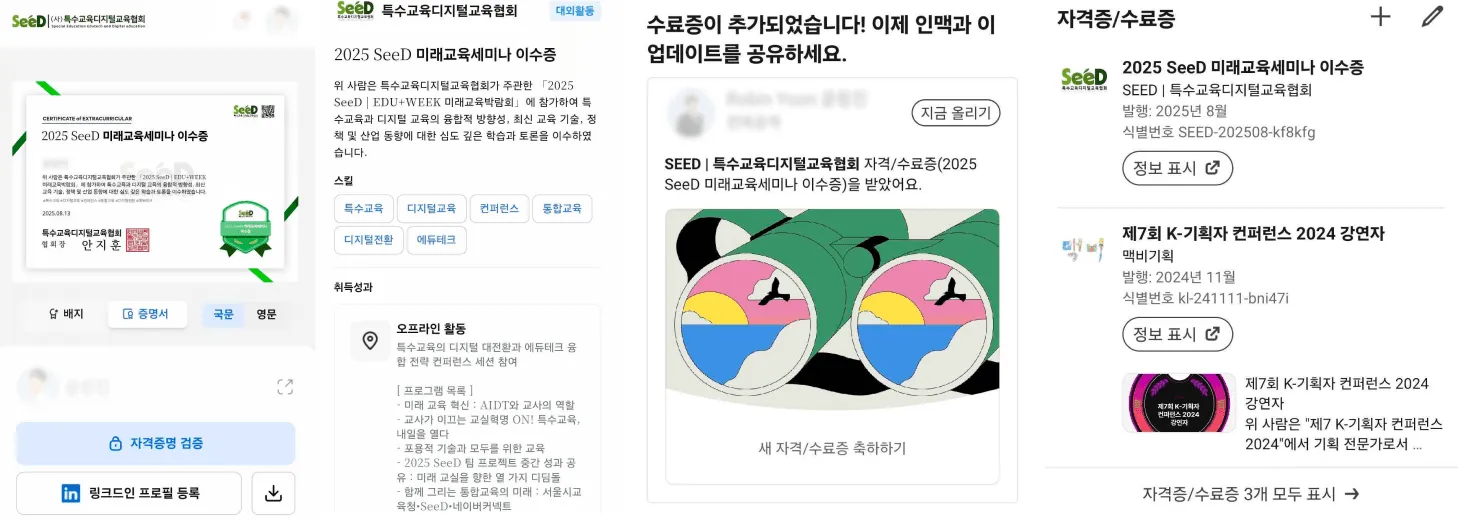
Apply it now
Learner pride is the energy of outcome sharing. The more “people who want to show off their results,” the more an education program spreads.
- Sustaining the relationship
The problem with many education programs is that they end the moment the course ends.
Institutions that maintain the relationship, however, see re-enrollment rates of over 30%. One institution opened an online alumni community after course completion, where graduates shared job-search stories and assignment know-how.
As a result, follow-on course registrations occurred naturally.
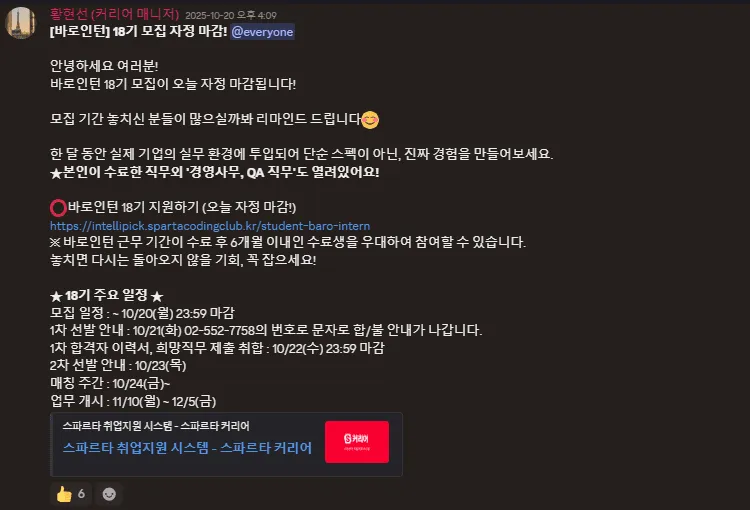
(source: Team Sparta Careerthon)
Apply it now
The relationship isn’t management - it’s continuity of experience. The community that continues after completion brings in the next course.
”Outcome certification” is at the center of change
In the end, what moves the adult education market today is “proof of outcomes.”
Learners want “what can I show?” more than “what did I learn?”
The Kolleges digital badge solution responds to this trend precisely.
When a course ends, a completion badge is issued automatically, and learners can easily share it on social media or in portfolios.
Through this, institutions raise their credibility, and learners can visually prove their growth.
Education that leaves outcomes behind - from that moment, student recruitment becomes natural.
“The era of education you can show off” - its starting point is the Kolleges digital badge.
Frequently asked questions
Want to turn learning outcomes into verifiable assets?
From issuing to verifying and amplifying, see it for yourself with Kolleges.
Request a Kolleges demo
Related posts

How to Grow Job Training Enrollment: Building a Structure Where Students Share Their Own Outcomes
Digital badges turn course completions into a self-sustaining referral loop - learners share achievements across 8 platforms with one click, cutting paid-ad dependency while driving 40% of new enrollments through word-of-mouth.

2025 Student Recruitment Trends: 7 Practical Strategies Every Education Institution Must Know
In 2025, education institutions win enrollments by combining CRM-driven funnel management, platform social proof, and digital badge sharing into a single data-grounded recruitment engine.
Connecting Alumni to Their Next Course: A Recommendation-Based Digital Badge System
Kolleges' admin-configured related-badge feature plus a built-in 1/3/7-day notification cadence turns badge earners into repeat enrollees - no external CRM required.