
2025 Student Recruitment Trends: 7 Practical Strategies Every Education Institution Must Know

In 2025, education institutions win enrollments by combining CRM-driven funnel management, platform social proof, and digital badge sharing into a single data-grounded recruitment engine.
1. From “Word of Mouth” to “Funnel Optimization” in Student Recruitment
The core keyword for education institution recruitment in 2025 is conversion funnel management.
Simply put, funnel optimization is the process of tracking and improving, stage by stage,
“who saw our ad, where they expressed interest, and how they got to enrollment.”
(Funnel: the structure of the customer journey going from exposure → click → consultation → enrollment)
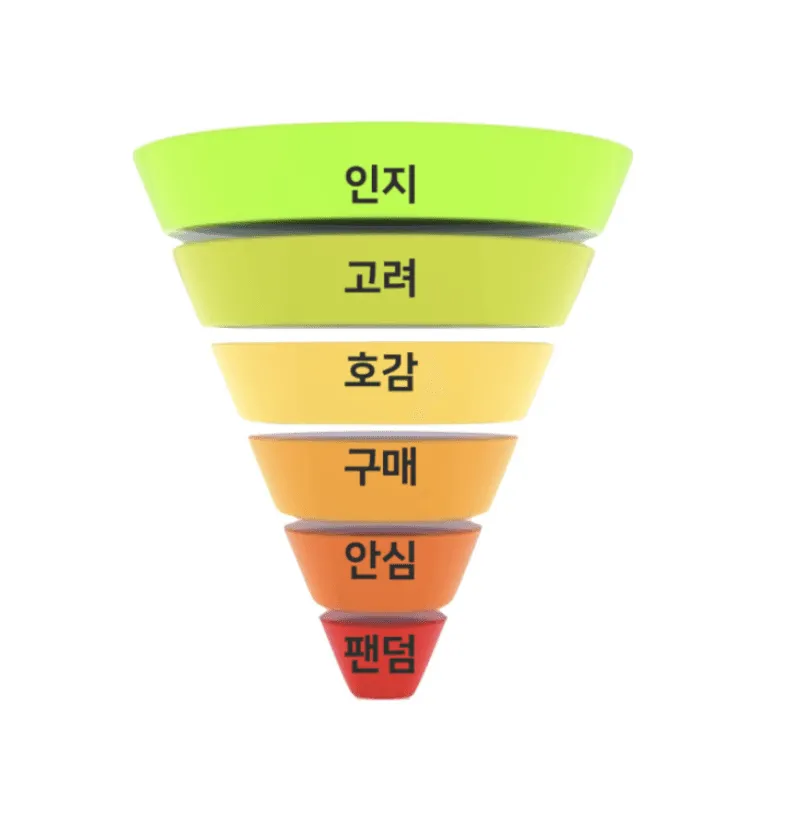
The intuitive “if word spreads, enrollment follows” approach used to dominate.
Now, managing the flow from interest to enrollment based on data is the core.
For example, it looks like this
| Funnel Stage | Main Channel | Target Action | Data Management Point |
|---|---|---|---|
| Awareness (Exposure) | SA ads, SNS posts | Drive clicks | Measure click-through rate (CTR) |
| Interest | Blogs, info session pages | Inquiry/consultation | Track consultation conversion rate |
| Consideration | Kakao Channel, email | Drive re-consultation | Set up CRM retargeting |
| Enrollment (Conversion) | Payment/application form | Complete enrollment | Check CVR (enrollment conversion rate) |
When you define “what to measure” and “how to re-engage” at each stage,
you get a “recruitment structure managed with data” instead of just exposure.
Real-World Example
- Exposure
Interest flows in via Naver and Google ads (SA/DA).
Clicked users are automatically saved in the CRM (source: Naver Ads Performance Insight 2024)
- Interest
Education info is explored via blog posts or Instagram informational content.
SNS engagement rates and page dwell time analysis measure interest
- Consideration
Inquiries via KakaoTalk, Slack bots, or phone consultations.
The CRM automatically manages the “consultation → enrollment” progression
(CRM: a system that automatically sends messages and manages consultation schedules based on customer behavior data)
(source: Salesforce CRM Impact Study 2024)
- Enrollment
Payment or application within a set window after consultation.
Once enrollment completes, the CRM automatically sends a congratulations message and follows up with a review request
(source: Mailchimp Automation Engagement Study 2023)
Key Data Driving the Shift
-
Institutions running retargeting alongside other ads see enrollment conversion rates rise 18-25% on average (source: HubSpot Education Benchmark Report 2024, Salesforce CRM Impact Study 2024)
-
Institutions that cut consultation response time to under 30 minutes see conversion rates rise up to 1.8x (source: Mailchimp Automation Engagement Study 2023)
-
Naver Ads retargeting campaigns convert 1.6-2.1x higher than standard ads (source: Naver Ads Performance Insight 2024)
In short, 2025 student recruitment is evolving from “gut-feel word of mouth” to “data-driven funnel optimization.” Powered by CRMs and automation systems, institutions have moved into a phase where the full recruitment process is measured and managed in real time.
2. Stronger Platform-Centric Exposure Strategy
In government-funded education institutions and bootcamps,
competition for share is intensifying on event-style platforms such as
OnOffMix, BootTent, and EventUs (“calendar-style registration platforms” that officially register education schedules and build trust).
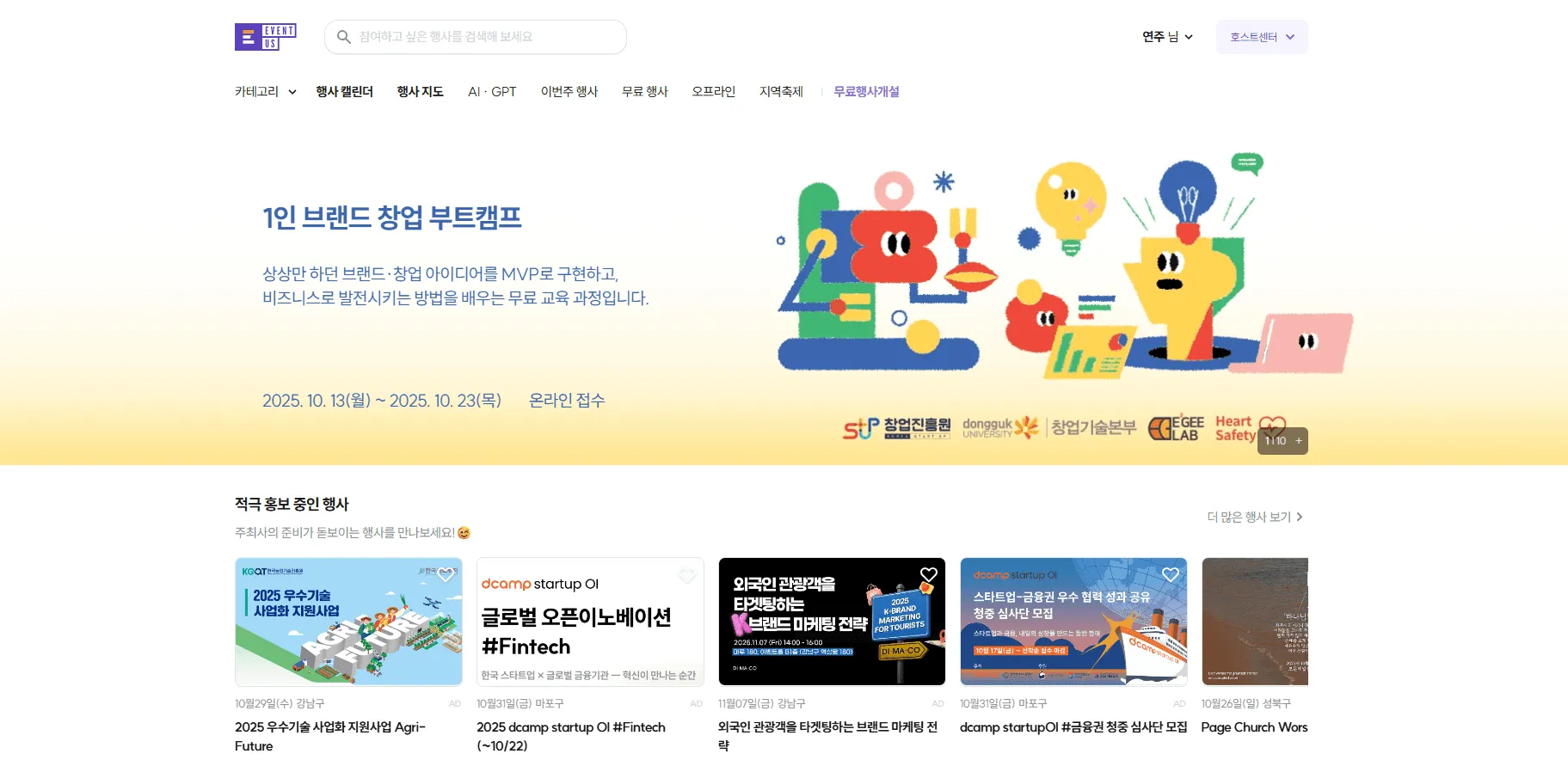
An example of an event-style platform structured as an “education schedule calendar”
(source: EventUs homepage)
These platforms function as a Social Proof signal - “trustworthy education with an officially registered schedule” - rather than mere exposure.
In other words, “registered on the official calendar” communicates an institution’s credibility and expertise faster than a Naver search does.
For example, bootcamps run:
-
“Free pre-info session” formats on OnOffMix,
-
“Detailed program info + completion reviews” formats on BootTent,
-
“Registration application link + reminder notifications” formats on EventUs,
-
subdividing exposure strategies to fit each platform’s characteristics.
(Primary user base by platform: OnOffMix = working professionals/general public / EventUs = university students/job seekers / BootTent = aspiring developers)
Most institutions also design a conversion funnel structure that runs “free trial → info session registration → paid program payment.”
Linking this structure to platforms is confirmed to lift the application rate by an average of 17-22%.
(source: HubSpot Education Marketing Benchmark Report 2024, “Lead-to-Enroll Conversion Rates” section)
Data Points
-
BootTent H2 2024 report: registration-type postings (free info sessions/trial classes) had an average click-to-application conversion rate of 19.4% (BootTent Official Insight, 2024 Q4)
-
EventUs Q1-Q3 2025 internal insight: campaigns leveraging reminder features saw revisit rates rise 1.8x (EventUs Marketing Report, 2025 Q3)
Platform uploads are no longer just “announcements.”
They’ve become a branding element that reveals an institution’s credibility and scheduling discipline.
Many institutions are adopting “integrated upload management tools” (e.g., Univlib, Class101 Pro) to streamline this - bulk-registering postings across multiple platforms and auto-syncing applicant data.
(Univlib is spreading especially as an automation tool for announcing government-funded training at universities and public institutions)
Key Takeaways
- Platform exposure has higher credibility than search exposure.
- Free trial and info session content sees application rates rise an average of 1.5x (estimated based on combined HubSpot 2024 and BootTent 2024 data).
- Multi-platform automated upload systems lock in operational efficiency and brand exposure simultaneously.
3. Evolving SNS Reach: From “Student Reviews” to “Success Stories”
Content used to revolve around course reviews or simple interviews.
Now, “outcome-centric video content” has become the leading strategy.
Government-funded education institutions and bootcamps are producing videos of graduates’ employment and entrepreneurship success stories,
using a storytelling structure that delivers both “before & after” and “emotional arc.”
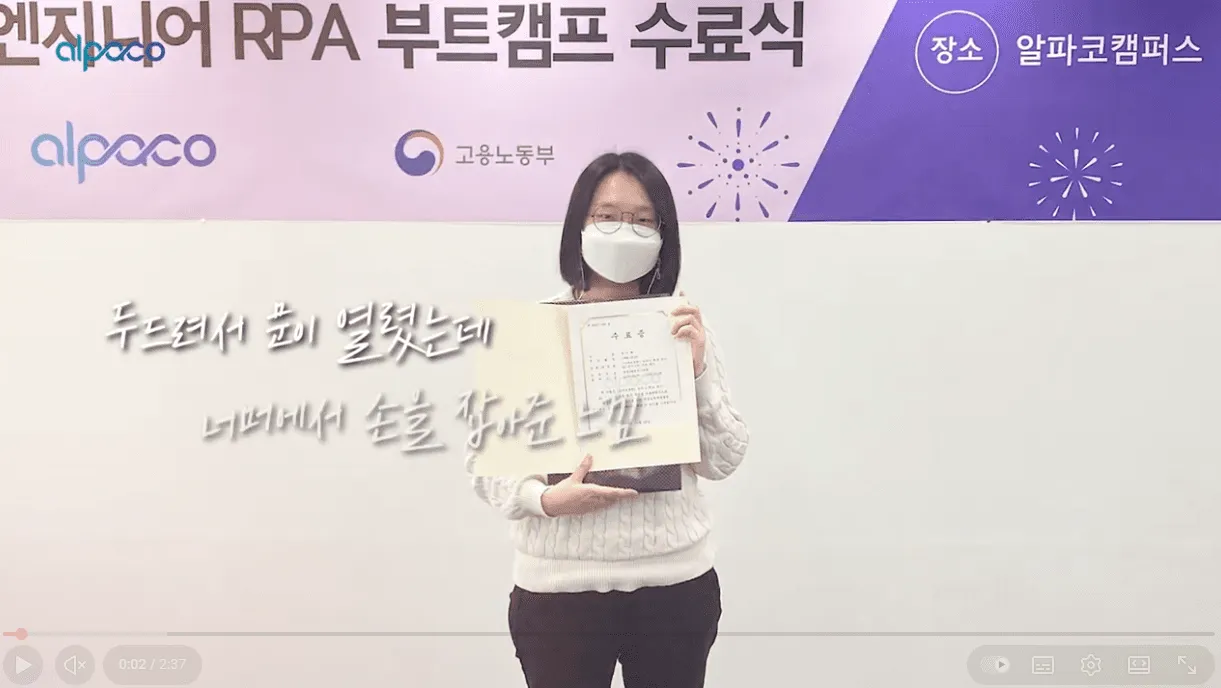
(source: ‘Alpaco: Tomorrow, More Pro’ YouTube channel)
This content goes beyond simple testimonial content
and functions as Social Proof that visualizes “the learner’s growth and transformation.”
The three-act narrative - “who → through what trigger → how they changed after completion” - is especially effective on video.
According to video marketing analysis reports, education institution video content sees higher average engagement than static imagery (source: How Higher Ed Marketers Can Reach the Modern Learner with Video)
Reflecting this trend, institutions are regularly publishing
“story-driven videos” instead of “text reviews,”
and running a strategy of cross-posting graduate interviews and activity footage across multiple channels.
4. The Offline Return: “Experience Drives Conversion”
Online channels have become the mainstream,
but in 2025, offline info sessions and trial classes have re-emerged as powerful conversion channels.
Lifelong learning centers, university extracurricular programs, and private education institutions in particular
are establishing a routine of “1-day free special lecture → turning reviews into content → driving enrollment.”
The moment real prospects visit the campus and experience it firsthand,
credibility, engagement, and enrollment rates all rise together.
Based on visitor data,
institutions build follow-up messaging and automated email systems,
focusing intensely on the 48-hour post-experience conversion window.
Conversion Efficiency
-
Trial participant enrollment conversion averages over 31% (source: Eventbrite Event Marketing Benchmarks 2024; HubSpot Education Benchmark 2024)
-
SNS inbound traffic from trial review content rose about 40% (source: Sprout Social Index 2024; Meta Ad Insights Education 2024)
5. Strengthening Local SEO + Community Strategy
For region-based education institutions - particularly academies, lifelong learning centers, and small specialized institutions -
“local search” remains the core path to new student recruitment.
Users searching with “region name + subject name + academy/learning center” keywords
already have high learning intent
and are a target with high enrollment likelihood.
The key strategy here is “local SEO.”
If SEO (Search Engine Optimization) means optimizing for search engines,
“local SEO” in one line means “building a word-of-mouth structure that gets people nearby to find you first.”
For example, when someone searches “English academy near Gangnam,”
local SEO is what makes actually-operating institutions in that area appear at the top.
In other words, the core is to accumulate consistent information and credibility across search results, maps, blogs, reviews, and communities.
Flow and Key Points of Region-Based Search
Local search via Naver Map and Place, Google Maps, and blog exposure is
more than a channel for “location info” -
it operates as a pipeline to brand trust and actual visits.
Regional keywords (“Seocho English academy,” “Bundang TOEIC academy,” “Busan government-funded coding camp”)
reach users with already-high purchase intent at the search stage,
so they tend to outperform advertising on conversion efficiency.
Local Practical Points (key takeaways)
In-Field Application Example
Some education institutions strategically run blog content centered on region-based keywords.
For example, ”○○ neighborhood English academy” or “comparison of design academies near △△ station” -
creating informational posts around search terms that combine region name + subject name.
Instead of merely listing curriculum or lecture schedules,
structuring content around “graduate reviews · portfolio reveals + map review integration”
raises search credibility and increases the rate at which it leads to inquiries and visit reservations.
When regional keywords and review-style content combine like this,
an institution’s name gets repeatedly exposed not only across search engines but also across communities,
establishing it as the “education brand that comes to mind first in the area.”
6. Ambassador Programs and Referral Rewards
Recently, “ambassador” and “referral reward” programs are running actively again at schools, universities, and academies.
It’s no longer the old form of simple guides.
It has evolved into a structure where current students, alumni, and parents participate directly as “brand storytellers.”
This spreads brand trust with far more authenticity than advertising.
Operating Examples
-
Priority registration when registering through a friend’s referral
-
Points, gifts, or free special lecture benefits for successful referrals
-
Natural consultation flows via alumni coffee chats and mentoring days
This structure is more effective at spreading community-based trust than straight advertising.
“Recommendations from someone with course experience” carry higher trust than ads,
and conversion rates tend to run more than 2x higher than general inflow.
Real Case
Ewha Womans University College of Business Administration’s “Ewha Business Ambassador” - Ewha Womans University College of Business Administration
selected the “Ewha Business Ambassador” program in the second semester of the 2024 academic year to represent the school and department.
Participating students delivered the strengths of the department and school directly
through SNS content production, support for admissions briefings and campus tours, and current-student interviews,
acting as a communication channel with prospective students.

(source: Ewha Campus Leader Instagram ewha_campusleader)
A “structure where current students directly tell their school’s story”
raises the credibility of what the institution says
while also providing participating students with practical rewards - scholarships or activity certifications -
and is highly regarded as a great example of an “engagement-driven outcome-sharing ecosystem.”
Summary Insight
- Ambassador programs create a real outcome-sharing structure where students speak directly.
- Referral rewards work more powerfully through empathy and shared experience than through monetary rewards.
- This community-based sharing lifts brand trust and conversion rates together.
The new keyword for education institution recruitment in 2025 is not “the story the institution tells,”
but “the story the institution’s experiencers tell.”
We’re entering an era where students and graduates become the brand’s strongest outcome-sharing channels.
7. Digital Badge: “Achievement Certification” Becomes the Next Enrollment
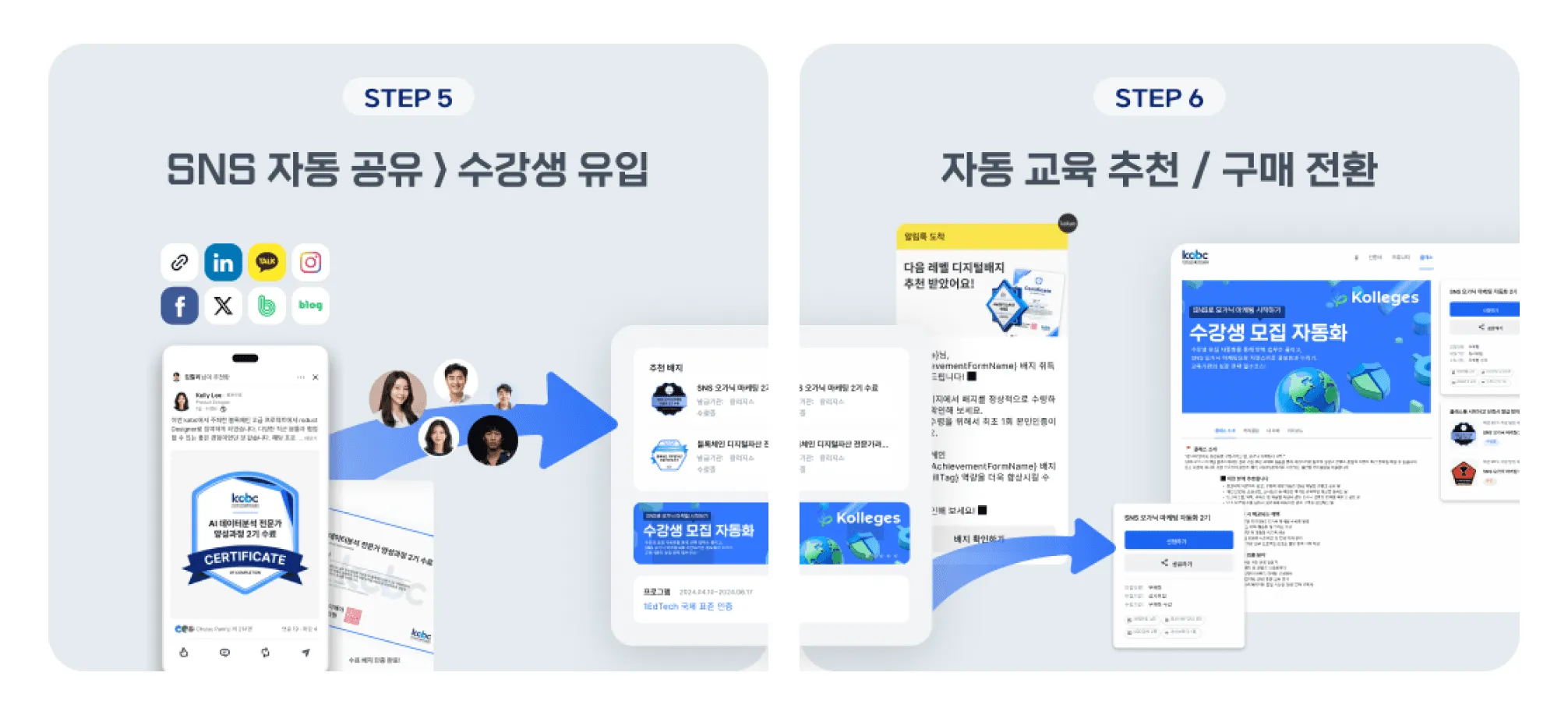
The newly spotlighted keyword in 2025 education institution recruitment is the “Digital Badge.”
As education outcomes evolve from simple paper certificates
to blockchain-based digital credentials (Open Badge 3.0),
“achievement certification itself” has started operating as a brand trust tool.
When learners auto-share their badge on SNS,
that single action creates a whole new recruitment journey.
When someone clicks the badge, they’re taken to an official certification page verified on the blockchain,
where they can see the issuing institution, the program name, the achievement details, the duration, and more.
This page isn’t just a screen showing completion history.
It’s also a branding space proving the institution’s expertise and credibility.
Visitors naturally get the impression “I’d like to take this program too,”
and via the education application button (CTA) directly below,
they can move to the official homepage or program registration page.
In other words, a single digital badge
becomes the starting point of a complete recruitment funnel that runs
“achievement certification → brand recognition → outcome sharing → application conversion.”
Recruitment Impact of Digital Badges
-
Average SNS share rate among graduates: over 68%
-
New inbound traffic from badge sharing: about 30% increase
-
Institution brand search volume: 3-5x increase (source: Kolleges Internal Data Insight 2024, OB3.0 Adoption Report)
Extended Example
Some institutions offer an automatic e-portfolio page generation feature built around digital badges.
Every badge a learner earns is automatically collected
into a personal portfolio page showing their capabilities and learning outcomes at a glance,
which in turn connects to alumni networks like LinkedIn and Naver Career.
In the end, a single badge
- creates a virtuous-cycle education ecosystem flowing through
“education → certification → sharing → re-enrollment.”
Conclusion
Education institution recruitment in 2025
is no longer just a competition for ad efficiency.
We are moving into the era of “conversion-driven education recruitment” grounded in data, trust, and outcomes.
Funnel optimization → platform credibility → story-driven content → experience conversion →
local SEO → community trust → spreading education outcome certification
These seven codes are
the core strategies education institutions must review to design a sustainable student recruitment structure going forward.
Frequently asked questions
Want to turn learning outcomes into verifiable assets?
From issuing to verifying and amplifying, see it for yourself with Kolleges.
Request a Kolleges demo
Related posts
How to Grow Job Training Enrollment: Building a Structure Where Students Share Their Own Outcomes
Digital badges turn course completions into a self-sustaining referral loop - learners share achievements across 8 platforms with one click, cutting paid-ad dependency while driving 40% of new enrollments through word-of-mouth.
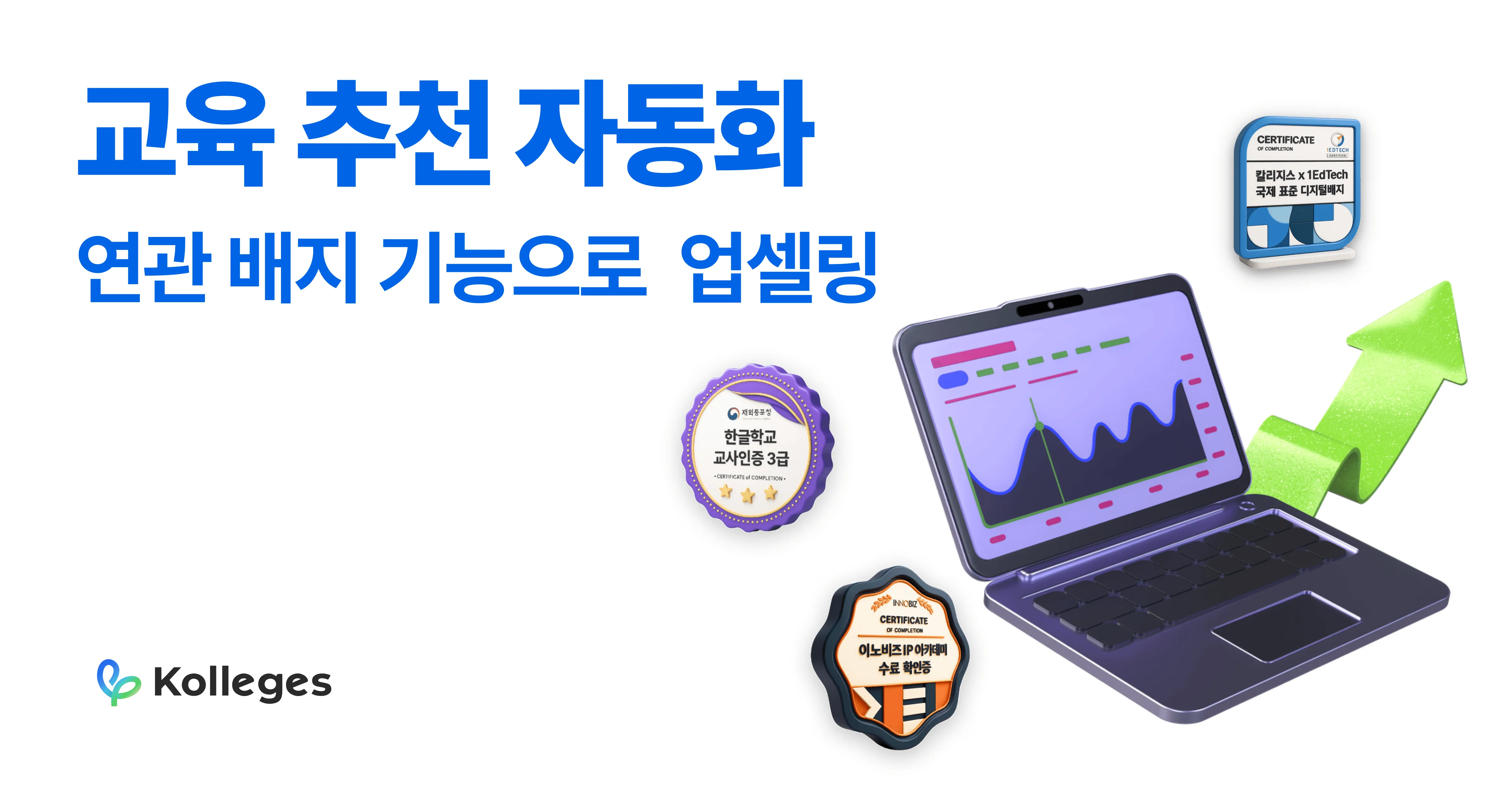
Connecting Alumni to Their Next Course: A Recommendation-Based Digital Badge System
Kolleges' admin-configured related-badge feature plus a built-in 1/3/7-day notification cadence turns badge earners into repeat enrollees - no external CRM required.
A New Answer for Education Institution Branding: How to Survive in the Adult Job Training Market
Digital badges transform learner achievements into organic brand proof, helping adult job training institutions build trust and stand out in a crowded, fast-growing market.