
How to Grow Job Training Enrollment: Building a Structure Where Students Share Their Own Outcomes

Digital badges turn course completions into a self-sustaining referral loop - learners share achievements across 8 platforms with one click, cutting paid-ad dependency while driving 40% of new enrollments through word-of-mouth.
The Self-Sustaining Outcome-Sharing Ecosystem Digital Badges Create
“We didn’t fill the cohort again this time.” “Ad spend keeps rising, but applications keep falling.” “People no longer respond to phone outreach.”
These are real concerns from people running job training programs. Post-pandemic, the online education market grew explosively, but so did competition. Companies are putting more budget into employee retraining, yet from the institution side, student recruitment keeps getting harder.
The Limits of Traditional Recruitment and a New Approach
Why Traditional Recruitment Methods Are Losing Power
The reasons student recruitment is getting harder in the job training market are clear.
Sharp drop in advertising efficiency: Click costs on Google Ads and Naver Ads rise every year, while conversion rates fall. The number of potential customers you can reach with the same budget has dropped sharply.
Choice paralysis from information overload: With hundreds of programs appearing in search results, consumers find it harder to choose. Differentiation through simple program descriptions alone is impossible.
Difficulty establishing credibility: As countless education programs flood online, consumers’ doubts grow - “Will this actually help on the job?” “What will change after I complete it?”
A New Solution: A Structure Where the Student Experience Becomes Shared Proof
So what do you do? The answer is to build a structure where “student achievement itself becomes brand trust.” Design it so the moment a program ends becomes the starting point of new outcome sharing.
2. A Three-Step Core Strategy to Grow Student Recruitment
2-1. Step One: Building Search-Based Credibility
Problem-Solving Content That Goes Beyond Keyword Optimization
Don’t just chase keywords like “digital marketing training” or “data analytics program.” You need content that solves the problems prospective students are actually wrestling with.
-
“How to improve marketing ROI”
-
“Getting started with data analysis using Excel”
-
“Digital transformation that non-majors can understand”
Strategic Use of Sample Content
Free content should be a trust-building process, not just bait. Even a single 15-minute mini-lecture can give the certainty of “this instructor explains things clearly” and “I can apply this on the job right away.”
2-2. Step Two: Experience-Centered Program Design
Participatory Education Structure
Move beyond traditional one-way lectures and design programs where learners participate and produce real outcomes.
-
Projects based on actual corporate cases
-
Peer feedback and discussion sessions
-
Personalized coaching and mentoring
Immediately Usable Practical Skills
The content shouldn’t stop at theory - learners should be able to use it on the job right after completion. This goes beyond simple satisfaction and turns into the confidence that “the time and money I invested weren’t wasted.”
Outcomes Tied to Personal Branding
Design the program so that portfolios or project deliverables produced during training can be used on a learner’s LinkedIn profile or résumé. When this happens, the training experience itself becomes a personal career asset.
2-3. Step Three: Self-Driven Spread Through Digital Badges
This is where the Kolleges digital badge plays the key role. It needs to be more than a certificate - it should be a symbol of an achievement worth sharing.
Instant Sense of Achievement
A digital badge issued the moment a learner finishes the course delivers an immediate sense of accomplishment. This becomes pride - “It was hard, but I did it” - and naturally drives the urge to share it on SNS.
One-Click SNS Sharing
Through Kolleges’ automated sharing system, learners can post their badge to up to 8 platforms - including LinkedIn, Instagram, and Facebook - with a single click. The institution’s brand and program name are automatically exposed alongside.
Spread Through the Network Effect
When one learner shares a badge, tens or hundreds of people in their network learn about the program. Unlike advertising, this carries the powerful credibility of a recommendation from someone you know.
3. Tactical Execution to Maximize Student Recruitment Impact
3-1. Concrete Execution of SNS Word-of-Mouth Strategy
Designing Badge-Sharing Events
Events like “Share your badge on SNS with a hashtag and get 20% off your next course” can drive voluntary sharing. This isn’t just a discount event - it’s an outcome-sharing strategy that celebrates and amplifies the learner’s achievement.
Real Reach Impact Example
When one learner shares a badge on LinkedIn, it’s exposed to an average of 500-1,000 people in their network. If a cohort has 30 learners and 50% of them share their badges, the program reaches a total of 7,500-15,000 people.
3-2. Massive Reduction in Recruitment Burden for Program Operators
Cost-Efficiency Comparison vs. Existing Methods
| Method | Cost Structure | Conversion Rate |
|---|---|---|
| Google Ads | KRW 3,000-5,000 per click | 2-3% |
| Digital badge sharing | Unlimited spread after one-time production cost | 32% via referrals |
Leveraging Kolleges’ Automation System
Education staff no longer need to produce and send certificates one at a time. The Kolleges system automatically issues badges and provides an environment where learners can share with one click.
Maximized Operational Efficiency
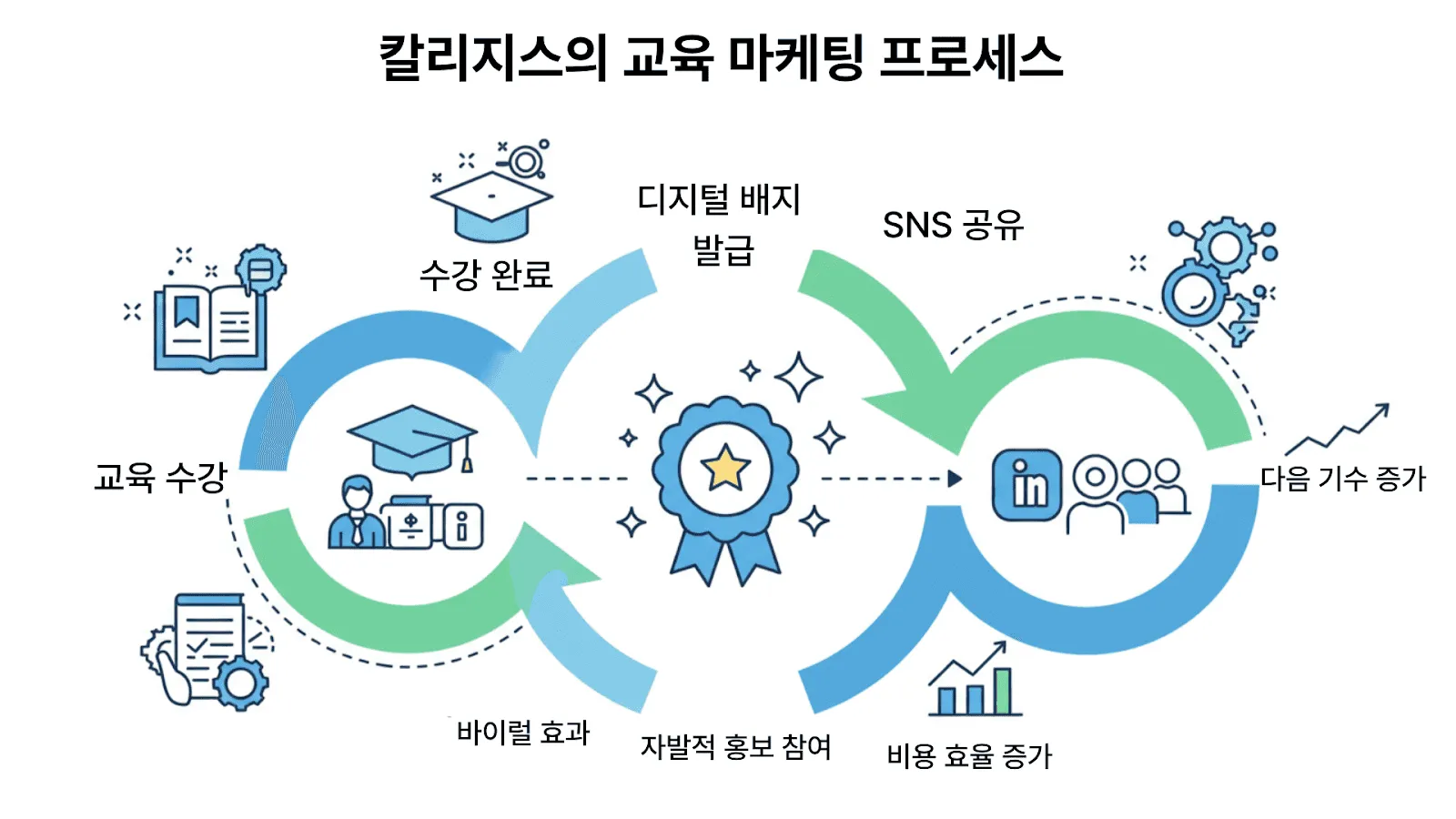
What used to be advertising → recruitment → training → completion
now becomes a virtuous cycle: training → completion → badge issuance → automatic sharing → new recruitment.
3-3. Measuring Performance and Optimization
Trackable Metrics
-
Number of badge shares and distribution by platform
-
Website inflow growth driven by sharing
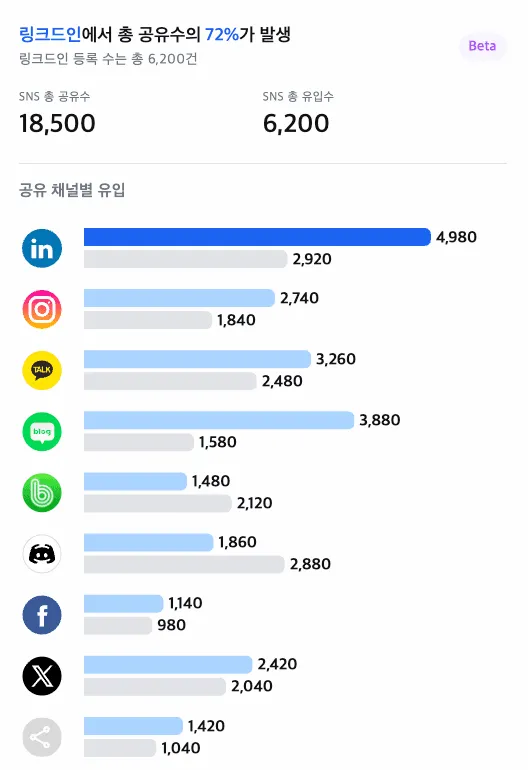
Measuring Network Expansion
You can track how many new potential customers each learner’s badge share reached. This lets you see which channels and programs produce stronger sharing impact.
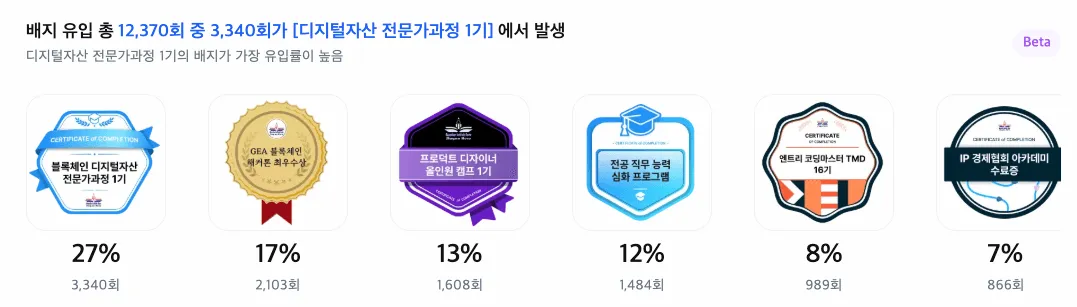
ROI Calculation and Optimization
You can precisely measure ROI from digital badge outcome sharing versus traditional advertising and optimize how you allocate your recruitment budget.
4. Field Application Cases and Real Outcomes
A University Lifelong Learning Center’s Results
One university lifelong learning center saw the following results after adopting digital badges.
- 40% of new students came in via personal referrals
- 25% increase in re-enrollment among existing students
- 500% increase in SNS mentions
- Significantly higher brand recognition
A Specialized Education Institution Building Brand Equity
One IT-specialized education institution saw the following results through learner badge sharing.
- 200% growth in corporate followers on LinkedIn
- Surge in custom corporate training inquiries
- Recognized credibility and expertise within the industry
A New Education Ecosystem Built on Experience Diffusion
The secret to success in the job training market is no longer big ad spend or flashy campaigns. It’s building a structure where a learner’s achievement and satisfaction naturally bring the next learner.
A digital badge isn’t just a certificate - it’s the core tool that creates this virtuous cycle. Learners want to show off their accomplishments, and in the process, the institution’s brand naturally spreads. This delivers reach backed by stronger trust than any advertising.
The question is no longer “How do we recruit students?” but “How do we create an experience students want to share themselves?” Kolleges’ digital badge system is a powerful partner for building exactly this kind of new education ecosystem.
Start now!
See how Kolleges digital badges can change your education program. Create a new experience where the learner’s achievement becomes the brand’s growth.
Frequently asked questions
Want to turn learning outcomes into verifiable assets?
From issuing to verifying and amplifying, see it for yourself with Kolleges.
Request a Kolleges demo
Related posts

How to Recruit Vocational Training Students: 6 Practical Strategies for KDT and Naeil Baeoom
Six actionable strategies - from D2L instructor branding and rapid trend-response curriculum to badge-driven social sharing - help KDT and vocational training programs increase enrollment without additional ad spend.

Automated Outcome Sharing, Built with Digital Badges | When Completion Leads to the Next Course
Digital badges automate outcome sharing by turning every graduate share into an ongoing discovery loop - complete with custom ad banners, recommended next courses, and one-click sharing to 8 social networks.

2025 Student Recruitment Trends: 7 Practical Strategies Every Education Institution Must Know
In 2025, education institutions win enrollments by combining CRM-driven funnel management, platform social proof, and digital badge sharing into a single data-grounded recruitment engine.