
A New Answer for Education Institution Branding: How to Survive in the Adult Job Training Market

Digital badges transform learner achievements into organic brand proof, helping adult job training institutions build trust and stand out in a crowded, fast-growing market.
Education Institution Branding: A Survival Strategy for the Adult Job Training Market
1. Introduction: Why Branding Is a Survival Strategy in Adult Job Training
The adult job training market is growing rapidly. According to the Korea HRD Association, the domestic corporate education market reached roughly KRW 4 trillion in 2023, and individual participation in job training grew 35% year over year.
Several shifts drove this growth. COVID-19 normalized remote learning, making it possible to learn anytime and anywhere. The MZ generation completely changed how lifelong learning is perceived - graduation is no longer the end; continuous learning and growth have become the expectation. Job changes and career pivots are now routine, increasing the need to acquire new skills. The government has supported this with large-scale programs like the National Lifelong Learning Card and K-Digital Training.
But as the market has grown, so have the problems. The biggest concern facing education institutions is a lack of brand recognition. No matter how good the lectures are, only the individual instructor or specific course name gets known - the institution itself often goes unremembered.
Content variety has its limits too. Keeping up with rapidly shifting market demands stretches staffing and resources thin. The bigger issue is how hard it is to prove training effectiveness. Showing in numbers whether a course actually led to a promotion or salary bump is not easy.
The competition has gotten fiercer. Global platforms, large enterprise HRD centers, and specialized edtech companies have all entered the market. In this environment, simply offering good lectures isn’t enough. Strategic branding has become the deciding factor for survival.
2. The Competitive Landscape of the Adult Job Training Market
Looking at today’s education industry, the competition is genuinely intense.
First, online education platforms are pushing hard. Global platforms like Coursera and Udemy have entered the Korean market in earnest, and domestic players like FastCampus and Inflearn are rapidly expanding share with massive content libraries and competitive pricing.
Large corporations haven’t been standing still either. Samsung, LG, and SK have already fully upgraded their internal training systems. What started as internal employee training has expanded to suppliers and external businesses. Their brand power is formidable.
Meanwhile, specialized edtech startups are carving out niches. Focused on areas like AI, data analytics, and digital marketing, they’re moving quickly by leveraging the latest technology and agility.
How can small and mid-sized education institutions survive in this environment? Content quality alone isn’t enough. Building brand trust, making training outcomes visible, and delivering sustained experiences to learners has become essential.
3. Core Branding Strategies for Education Institutions
Start With a Clear Brand Identity
The first thing to do is answer this question clearly: “Why do we offer this education?”
Some institutions might choose “Practical skills you can use on the job from day one” as their mission. Others might differentiate with an outcome-driven message like “80% of graduates land a job within 3 months.” Or you could go relationship-driven with “A trusted partner for your lifelong career journey.”
Whatever direction you choose, consistency matters most. Once you set your brand identity, it must be delivered the same way across all outreach and every customer touchpoint.
Build Trust Through Stories
Adult learners are genuinely careful when investing in education. Time and money are limited. To win them over, concrete success stories are far more effective than course descriptions.
Before & after stories like “After completing the marketing program, Mr. Kim’s salary jumped 30% in six months” or “After her data analytics training, Ms. Park successfully transitioned to a large company’s strategic planning team” carry powerful persuasive weight.
Design the Full Brand Experience
Branding doesn’t only happen inside the classroom. Every moment a learner interacts with your brand is a branding opportunity.
It starts from the first impression of the website, runs through the consultation experience, the feel of the actual class, and continues into post-training follow-up. Across every stage, you need to deliver a consistent and differentiated experience.
For example, what if consultations didn’t just explain the curriculum but also carefully listened to each individual’s career goals and proposed a tailored learning roadmap? What if you offered job placement support and alumni network access after training? The perceived brand value would be much greater.
Use Digital Channels Properly
Today’s adult learners use multiple channels to find information. They check basic information on websites, validate expertise on LinkedIn, and get a feel for actual class atmosphere on Instagram or YouTube. Through KakaoTalk, Band, or Discord, they want real-time questions and answers.
Provide content suited to each channel’s characteristics while keeping your core brand message consistent. On LinkedIn, share industry trend analysis and professional insights. On Instagram, show the vivid reality of class sessions.
4. Branding Innovation With Kolleges Digital Badges
Make Outcomes Visible
The biggest change Kolleges digital badges bring is making training outcomes visible. Traditional PDF certificates get saved somewhere on a computer and forgotten. Digital badges are different.
When learners add a badge to their LinkedIn profile, the hiring managers and colleagues who see it naturally learn about the institution. Friends who see a badge on an Instagram story sometimes ask, “I want to take that program too.” Sharing a badge on a KakaoTalk profile or blog lets learners show off their accomplishments while organically spreading the brand.
Why does this spontaneous sharing matter? Because it carries much higher trust than paid advertising. Word from someone you know or a real experience report is more powerful than any ad message.
Embed Your Brand Identity
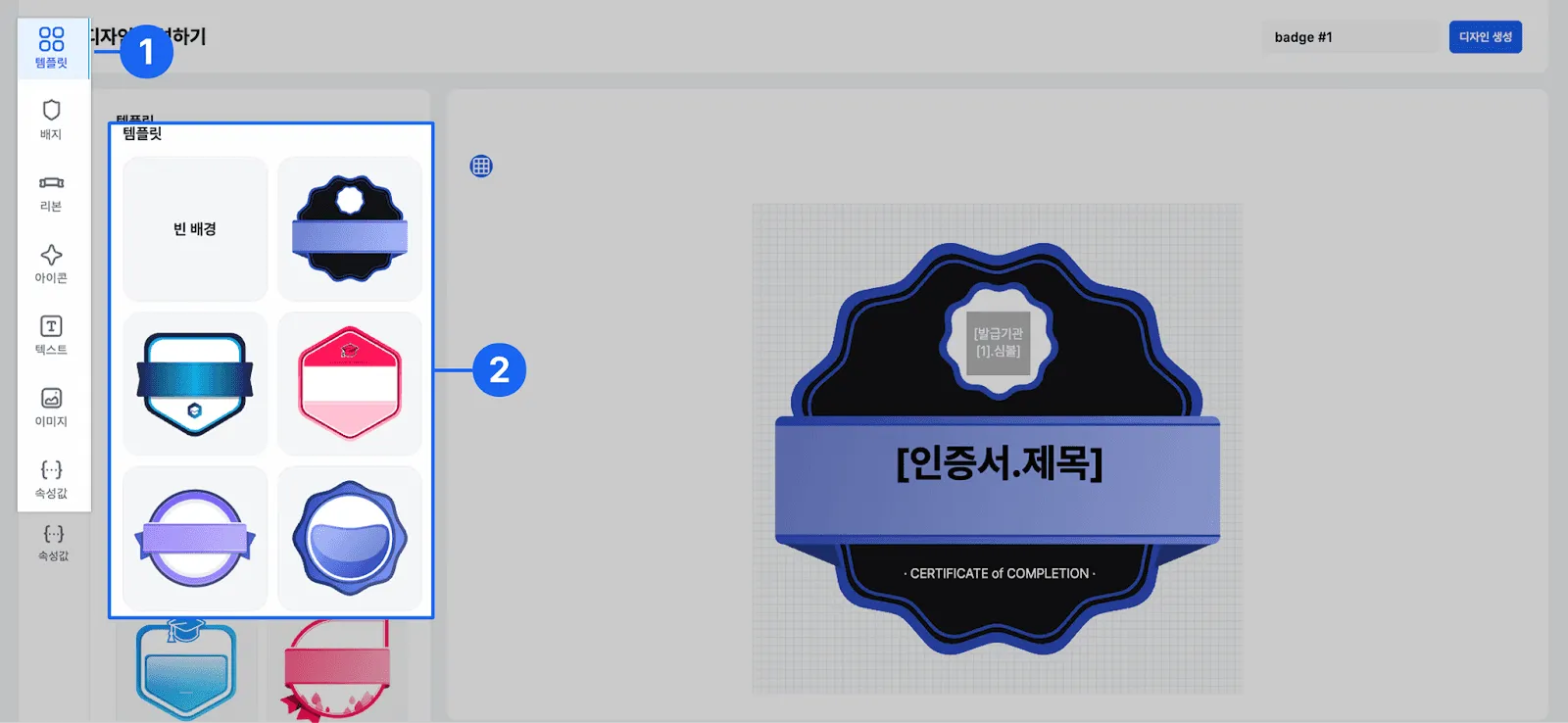
Another strength of Kolleges is that it provides per-institution custom designs, not a one-size-fits-all template. Your institution’s logo, brand colors, and unique symbols can be woven naturally into the badge.
Badges designed this way pair perfectly with your homepage or landing page. Visitors get a consistent brand experience across the entire site. It might seem like a small detail, but these details add up to a professional, trustworthy brand image.
See the badge design guide for details.
Creative Ways to Use Badges
Treating digital badges as just a replacement for certificates is a missed opportunity. You can use them more creatively.
Create different badges by achievement level. Foundation badges, advanced badges, project completion badges - splitting them by stage motivates learners to engage further to earn the next one.
A hall of fame is another great idea. Displaying the badges and stories of top graduates on your homepage motivates current students and provides proof of training effectiveness for prospects.
The collection concept is fun too. Giving learners a reason to take multiple courses to collect badges builds a stronger tendency to keep training with the same institution. It’s the same principle as a game’s achievement system.
5. Measuring Branding Performance
To confirm whether your branding investment is actually working, you need measurement. Kolleges provides clear data here as well.
Track the Flow From Badge Issuance to Sharing
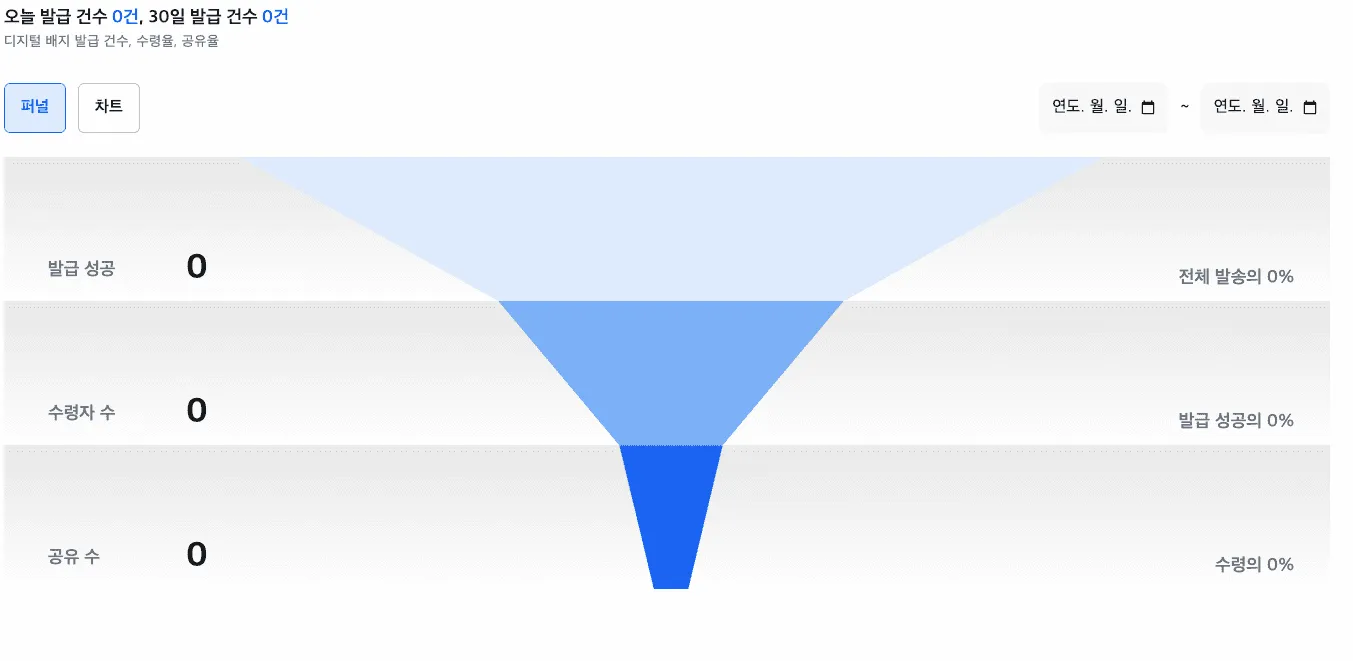
You can see, step by step, how many learners who completed training actually received their badge, and how many of those shared it online. This data indirectly tells you about training satisfaction and brand attachment.
If the receipt rate is high but the share rate is low, you could think about improving the sharing interface or offering sharing incentives.
See Which Programs Build Brand Power
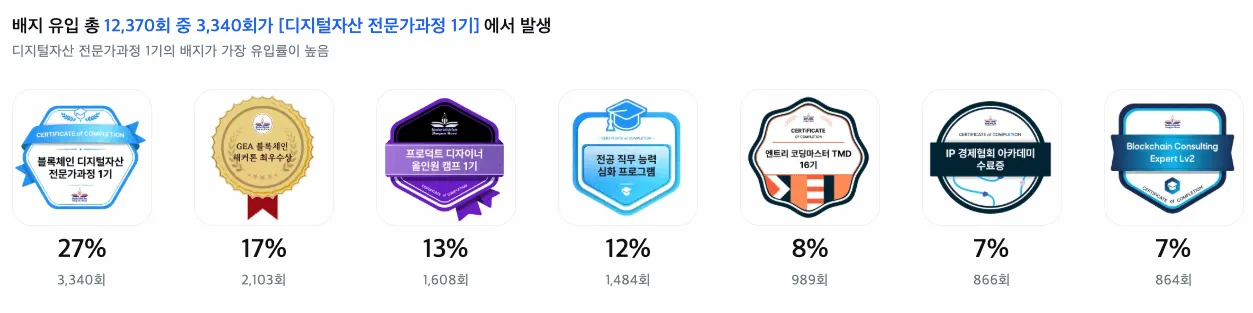
Looking at share rates by badge tells you which programs are most effective at spreading the brand. If the “Digital Marketing Expert Program” badge accounts for 30% of total shares, it’s a core brand asset for your institution.
You can use this information to allocate budget or inform new program planning.
Compare Channel Reach
Looking at data showing that LinkedIn accounts for 72% of total shares while Instagram or Facebook show relatively lower numbers helps you understand your target audience and build channel-appropriate content strategies.
Track Changes Over Time
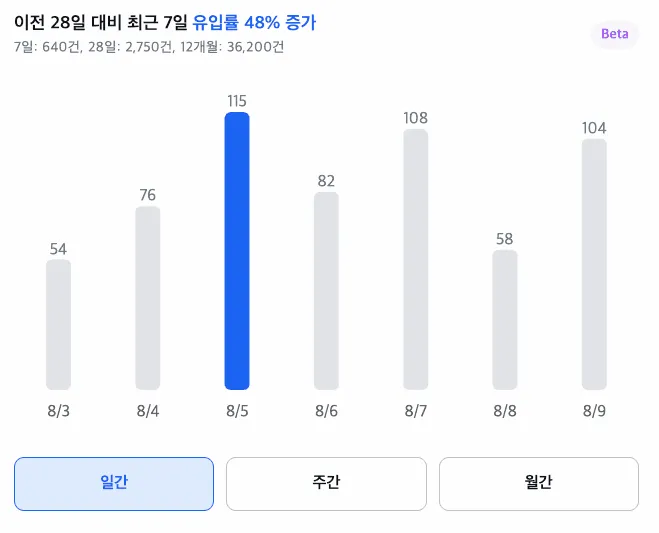
If badge sharing has grown 48% over the past 28 days, a recent campaign or new program launch is likely working. If it’s down, you can analyze the cause and find ways to improve.
In this way, Kolleges digital badges go beyond simple credentials and serve as tools that prove branding outcomes in numbers.
Small Changes Make Big Differences
The adult job training market has moved beyond knowledge competition into an era of brand trust competition. No matter how good your content is, if you can’t communicate it and build trust, you can’t survive the competition.
Kolleges digital badges can be a game-changer here. Learners become brand evangelists themselves, naturally communicating the institution’s value to their network. Institutions no longer need to do one-way outreach. A win-win structure emerges where learners show off their achievements while simultaneously spreading the brand.
Digital badges may look like a small change. But these small changes add up to bigger outcomes - higher brand recognition, increased trust, and word-of-mouth spread.
In the adult job training market, branding is no longer a choice - it’s a requirement. Take the first step with Kolleges. It’s time to properly show the world the true value your institution holds.
Frequently asked questions
Want to turn learning outcomes into verifiable assets?
From issuing to verifying and amplifying, see it for yourself with Kolleges.
Request a Kolleges demo
Related posts

2025 Student Recruitment Trends: 7 Practical Strategies Every Education Institution Must Know
In 2025, education institutions win enrollments by combining CRM-driven funnel management, platform social proof, and digital badge sharing into a single data-grounded recruitment engine.
Connecting Alumni to Their Next Course: A Recommendation-Based Digital Badge System
Kolleges' admin-configured related-badge feature plus a built-in 1/3/7-day notification cadence turns badge earners into repeat enrollees - no external CRM required.

Build and Manage an Education-Institution Homepage with Ease
Kolleges lets education institutions build and operate a full homepage - page design, menus, community boards, leaderboards - without any development work.