
2025 EduPlus Week Future Education Expo - Key Keyword: "Personalized Learning"
At the 2025 EduPlus Week expo, 170+ organizations from 15 countries converged on "personalized learning," and Kolleges served as the event's official digital badge partner, issuing blockchain-based credentials via Open Badges 3.0.
Hello, this is Kolleges.
We visited the 2025 EduPlus Week Future Education Expo, where you can see firsthand the present and future of edtech where education meets technology. This year’s event drew strong interest with 170+ companies, institutions, and organizations from 15 countries participating, presenting concrete possibilities for smart education environment changes and personalized learning in the era of the Fourth Industrial Revolution.
🔥 The keyword mentioned most often at this expo was, hands down, “personalized learning.” From AI-driven learning personalization in the classroom to administrative automation for teachers, learning record management, and emotional and physical fitness management - personalized learning was already becoming reality.
👉 The State of Personalized Learning, Booth by Booth
Mirae N - Textbook-Linked Online Platform
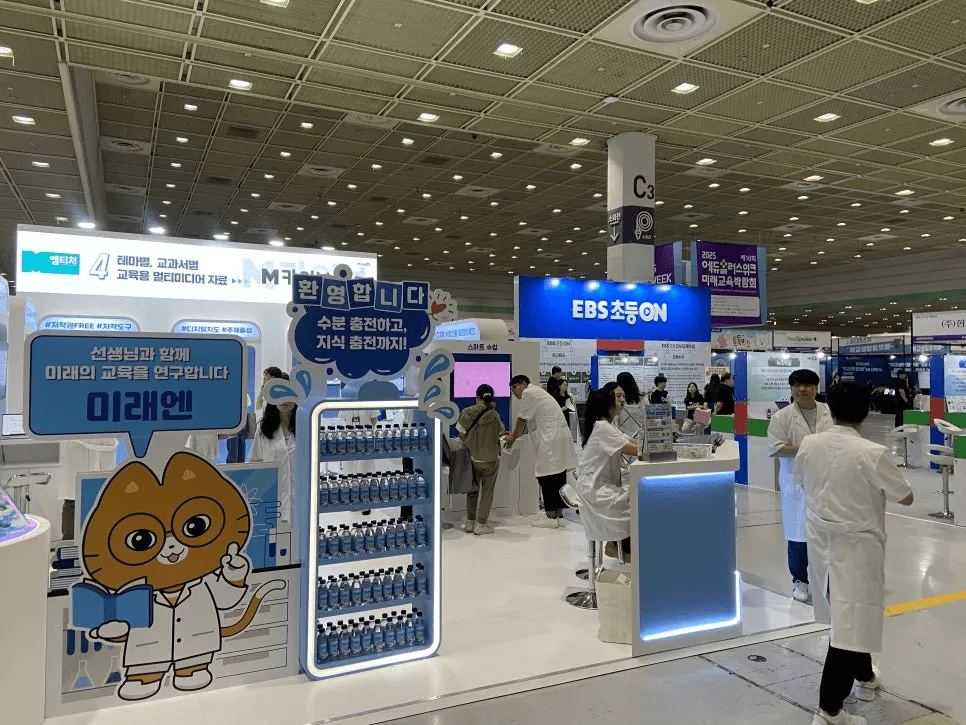
The Mirae N booth was full of the expertise you’d expect from a textbook content specialist. Beyond textbooks for Korean, math, social studies, science, and other subjects, they showcased supplementary learning materials that work alongside digital resources, helping teachers build richer lessons. The biggest strength they highlighted was an online platform tied to textbooks that makes it easy to provide materials tailored to each student’s level.
SchoolFlat - Customized Math Textbook
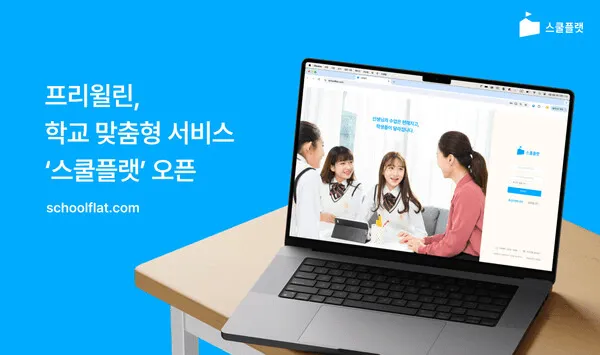
SchoolFlat is a math-textbook-centered learning platform with personalized features for both teachers and students. With content that visualizes math concepts, a rich question bank, and level-based learning features, it supported teachers in designing differentiated lessons. The “adaptive learning system” - which automatically adjusts question difficulty based on each student’s progress - drew particular attention. Teachers we met at the site strongly resonated with the idea that the platform could solve the “level gap” problem common in math classes. Students could move beyond just solving problems and combine concept understanding with self-directed learning, making math feel more approachable.
Horang Edu - Korean-Language Coding
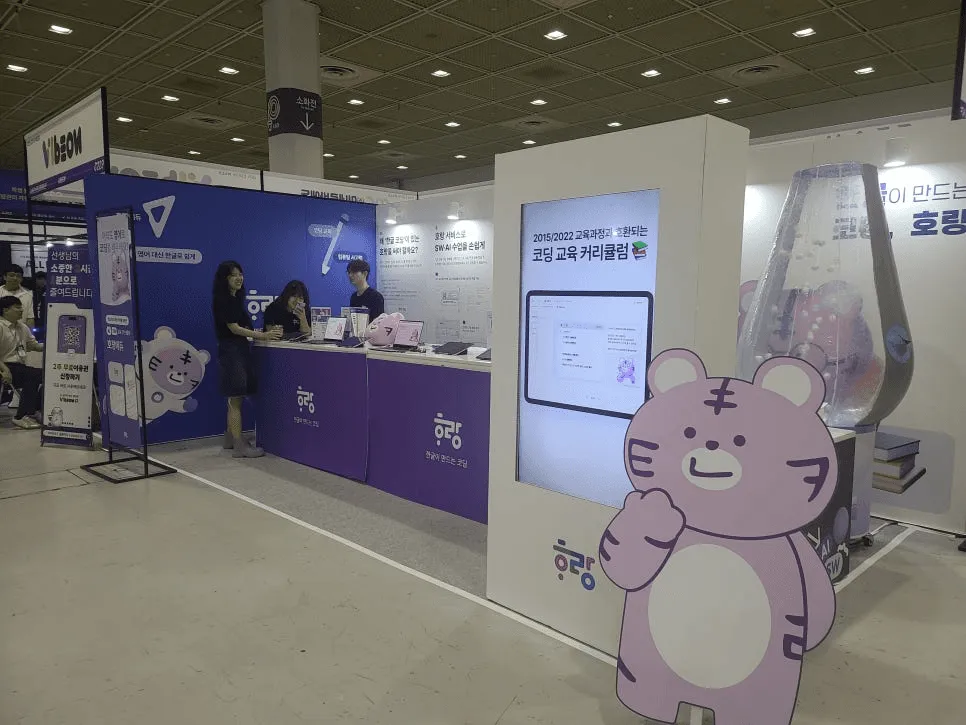
The Horang booth drew visitors with its distinctive theme of “Korean-language coding.” Instead of English grammar or complex symbols, this solution lets learners learn the basics of coding using familiar Korean. It was effective at reducing the preconception that “coding is hard,” and was accessible even to elementary students. Impressively, the design naturally bridges block-based coding to text-based coding, letting learners grow comfortably from basics to advanced material. Tied to digital literacy education, it clearly has potential as an important tool for nurturing future talent.
MODI - Robotics and IoT Coding

The MODI booth was a lively space where visitors could experience robotics and IoT hands-on. By assembling modular blocks to create desired functions, MODI goes beyond simple educational tools, enabling project-based learning that fuses software coding with hardware building - earning praise for being well-suited to STEAM education. Live demonstrations of small robots moving and lighting up drew a lot of interest, showing the potential for children to develop not just technical skills but also problem-solving and collaborative thinking.
EBS Elementary ON CodeMos - Media Literacy
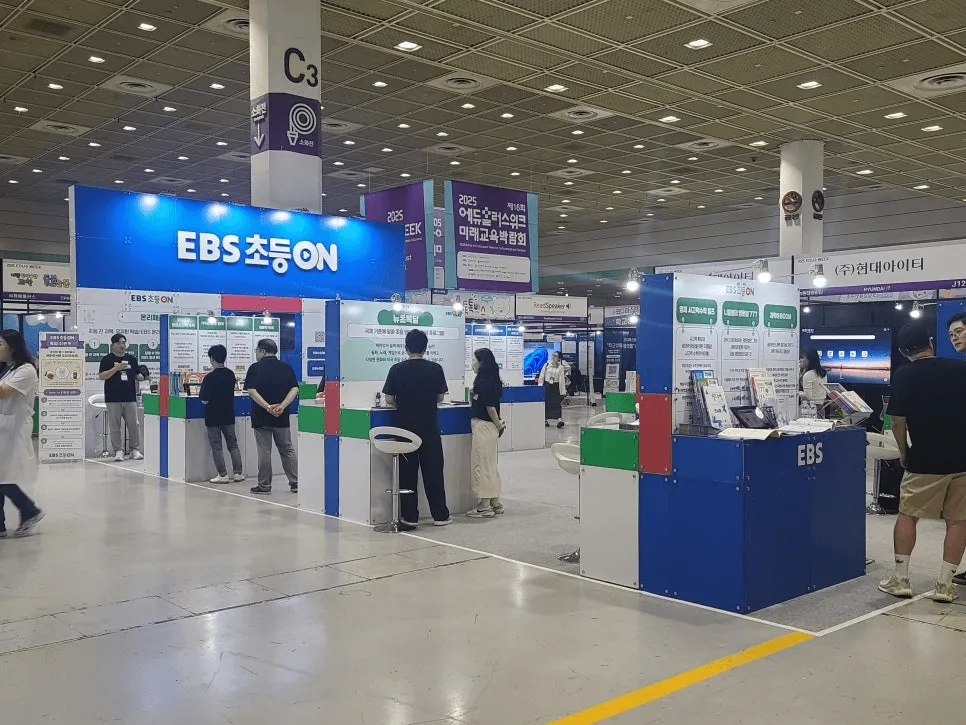
EBS Elementary ON CodeMos was introduced as a platform that fuses media literacy with software education. It’s distinctive in helping children develop the critical thinking and creativity needed for the digital world alongside learning coding skills. With a curriculum that scales from block coding all the way to Python, it supports continuous learning from elementary through middle and high school - a point worth noting. It’s a practical solution that both teachers and parents would find compelling.
RealPT - AI-Based Physical Fitness Management
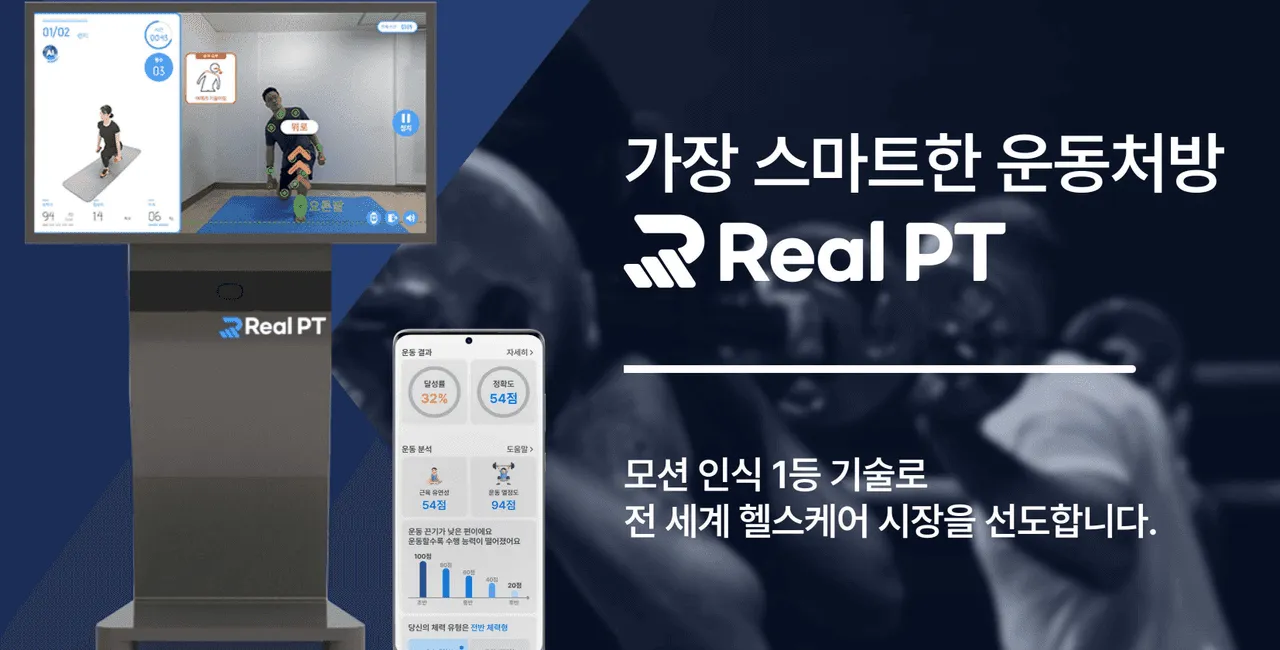
The RealPT booth focused on “physical fitness management” - a relatively overlooked area in education. They demonstrated an AI-driven coaching system that measures each student’s fitness and recommends customized exercise programs based on the results. Going beyond simple fitness testing, the platform accumulates growth data and connects it to health management and exercise habit formation. The demo also showed pose recognition that guides students toward proper form - clearly usable not just in PE classes but also in health education.
Kkulgum-e - Collaborative Task Platform
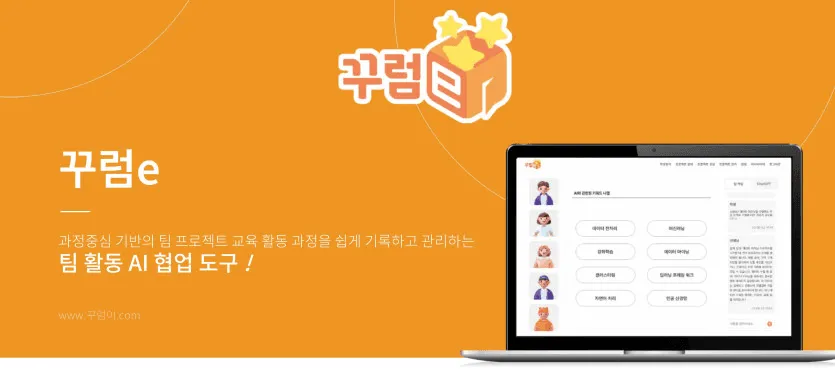
Kkulgum-e is a service that helps students write documents simultaneously and run collaborative tasks smoothly through chat and video conferencing. Particularly useful for process-based assessment, AI analyzes student participation and provides reports to teachers. From a teacher’s perspective, you need tools to evaluate not just the final output but also the collaboration process itself, and Kkulgum-e is offering exactly that solution. As students share opinions and refine documents together on team projects, they get an experience similar to a real work environment - clearly valuable for building future-ready talent.
Jajakjajak - AI Writing
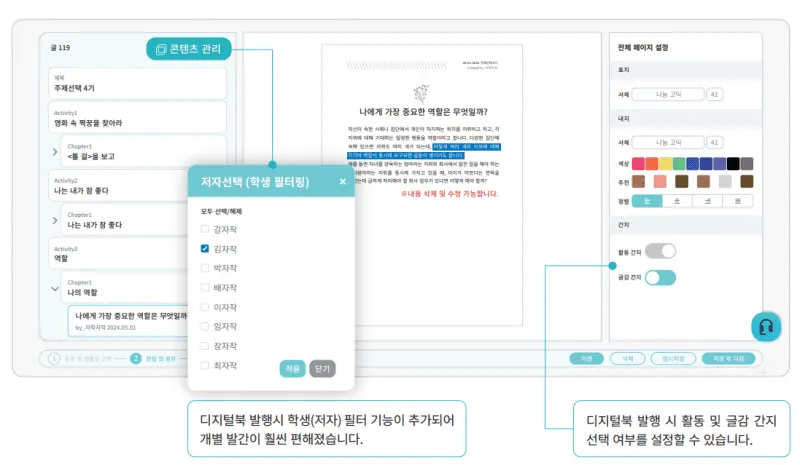
Jajakjajak is a distinctive platform for writing education. Teachers provide a writing prompt, AI gives feedback on the student’s writing, and the work can even be compiled into a class anthology. It earned praise as a useful tool not only for Korean class but also for developing each student’s expression and creativity. At the booth, we saw students sharing their writing with each other, leaving comments, and building a collaborative writing experience. Beyond mere writing drills, it can serve as a space for communication and self-expression through writing - drawing a lot of interest.
Dahanni - Class Management Automation
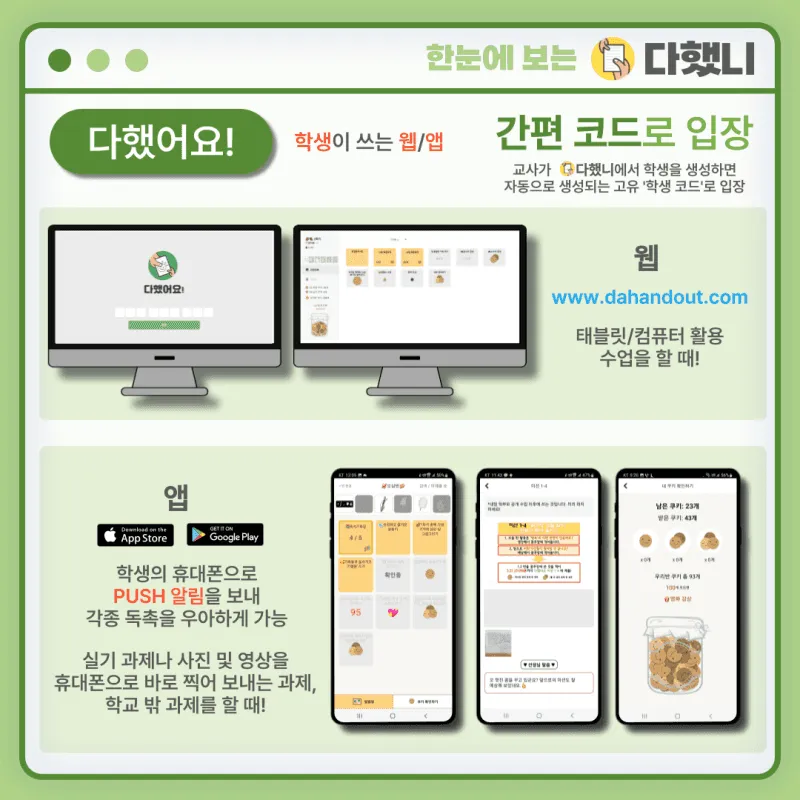
The Dahanni booth introduced a class management automation tool. The core feature was digitizing student assignment submission status, life records, and announcement management - significantly reducing teachers’ administrative burden. The part that drew the most interest was the visual presentation of each student’s learning attitude and assignment progress. It’s a tool that raises class operation efficiency and frees up time for personalized guidance.
SimSpace - Student Emotional Management
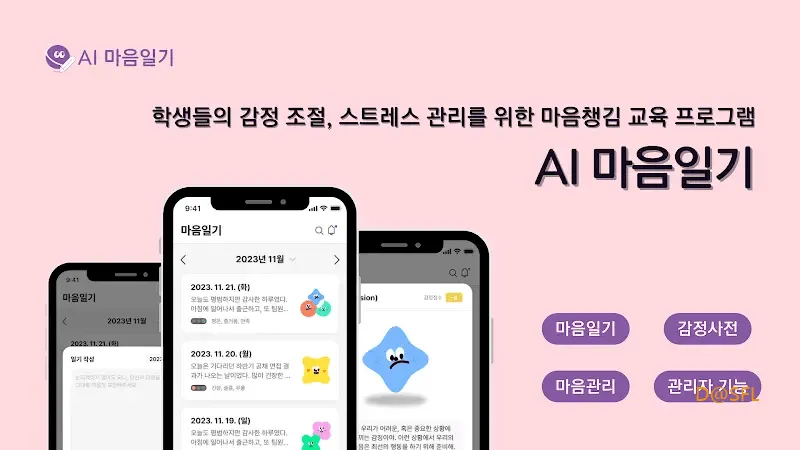
SimSpace is a student emotional management platform - a tool for practicing Social and Emotional Learning (SEL), which is increasingly emphasized in education. AI analyzes student-written diary-style records to identify emotional states, and teachers get an intuitive view of the emotional landscape across the entire class. Beyond reacting to issues after the fact, the platform can detect emotional changes early and connect students to counseling or support - a major advantage. In a live demo, students’ emotional states were displayed as a graph-based dashboard, drawing strong interest from teachers.
Hakgyojongi - Digitizing Administration
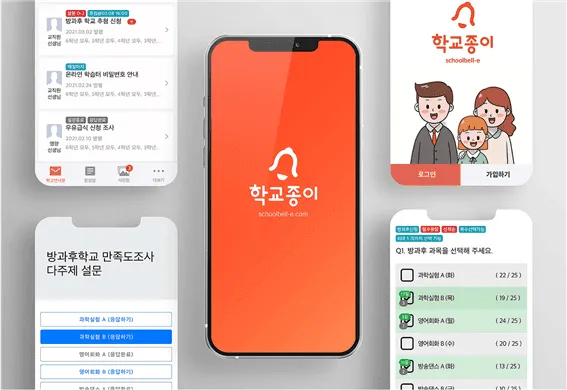
Hakgyojongi leads school administrative digitization. It’s a solution that lets teachers and parents handle the announcements, absence notes, and field trip reports they exchange most frequently - all simply via mobile. The live app demo showed teachers sending bulk announcements and parents conveniently checking and replying. The complex paper-document-centered administrative process clearly gets streamlined, drawing high reception from both parents and teachers. They also explained that when adopted at the school level, the operational efficiency gains are significant.
Kolleges - Customized Outcome Certification via Digital Badges
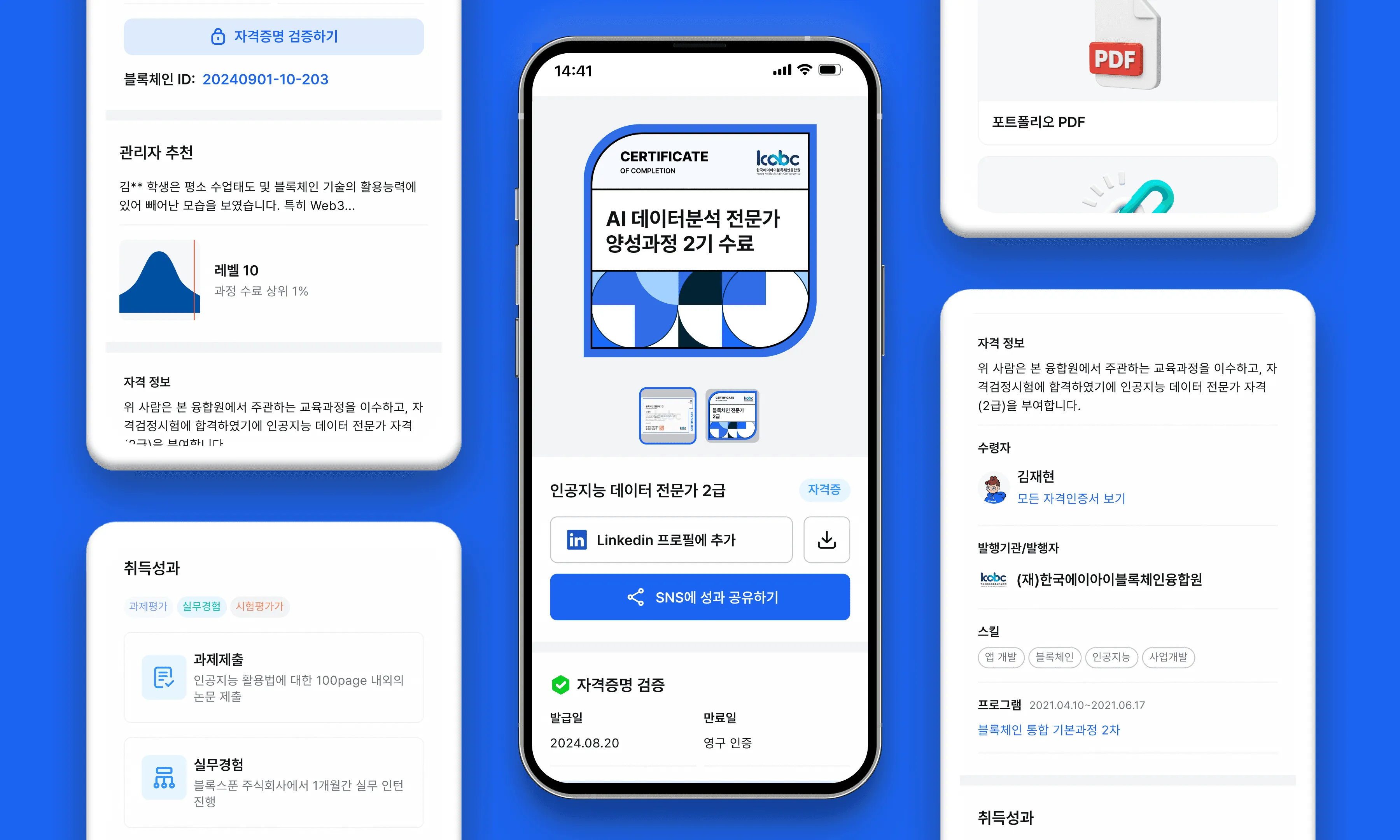
Kolleges goes beyond simply issuing certificates. It is a digital badge solution that certifies learner outcomes in a customized way and systematically manages records. Education institutions can handle student management, outcome-based badge issuance, and credential verification all on a single platform - reducing administrative burden and creating a transparent record of outcomes.
At the expo, the live demo showed how an education administrator could issue customized digital badges reflecting each learner’s individual outcomes to an entire cohort with a single setup. Learners could immediately link and share the issued badges to SNS and portfolios, proving their achievements in real time.
This process dramatically shortened the inconvenient paper-certificate-based procedure while simultaneously delivering two values: a personalized outcome management tool for learners, and per-learner record management and institutional credibility for education institutions.
AI Digital Textbooks (AIDT) and Personalized Learning
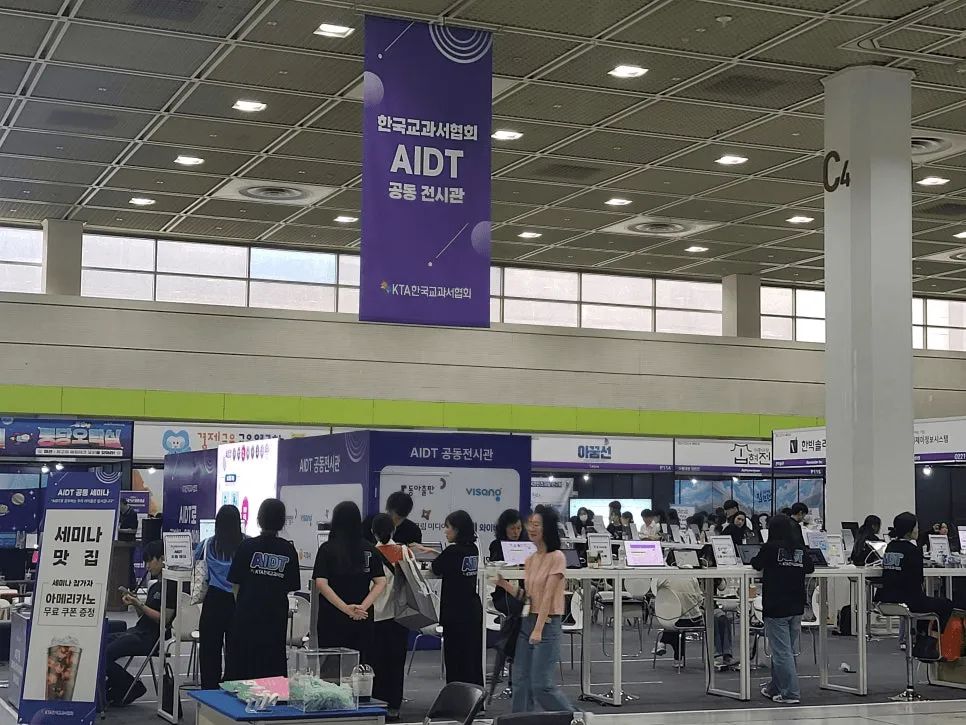
One of the central themes at this expo was AI Digital Textbooks (AIDT). We could experience firsthand how learning tailored to each student’s level becomes possible, showing AIDT firmly establishing itself as a key tool for personalized learning.
That said, since its legal status changed from “textbook” to “educational material,” AIDT use isn’t mandatory for all schools - it depends on each teacher’s and school’s choice. Ultimately, AIDT outcomes depend on field strategy and teacher commitment.
🎤 The Future Classroom from the Seminars
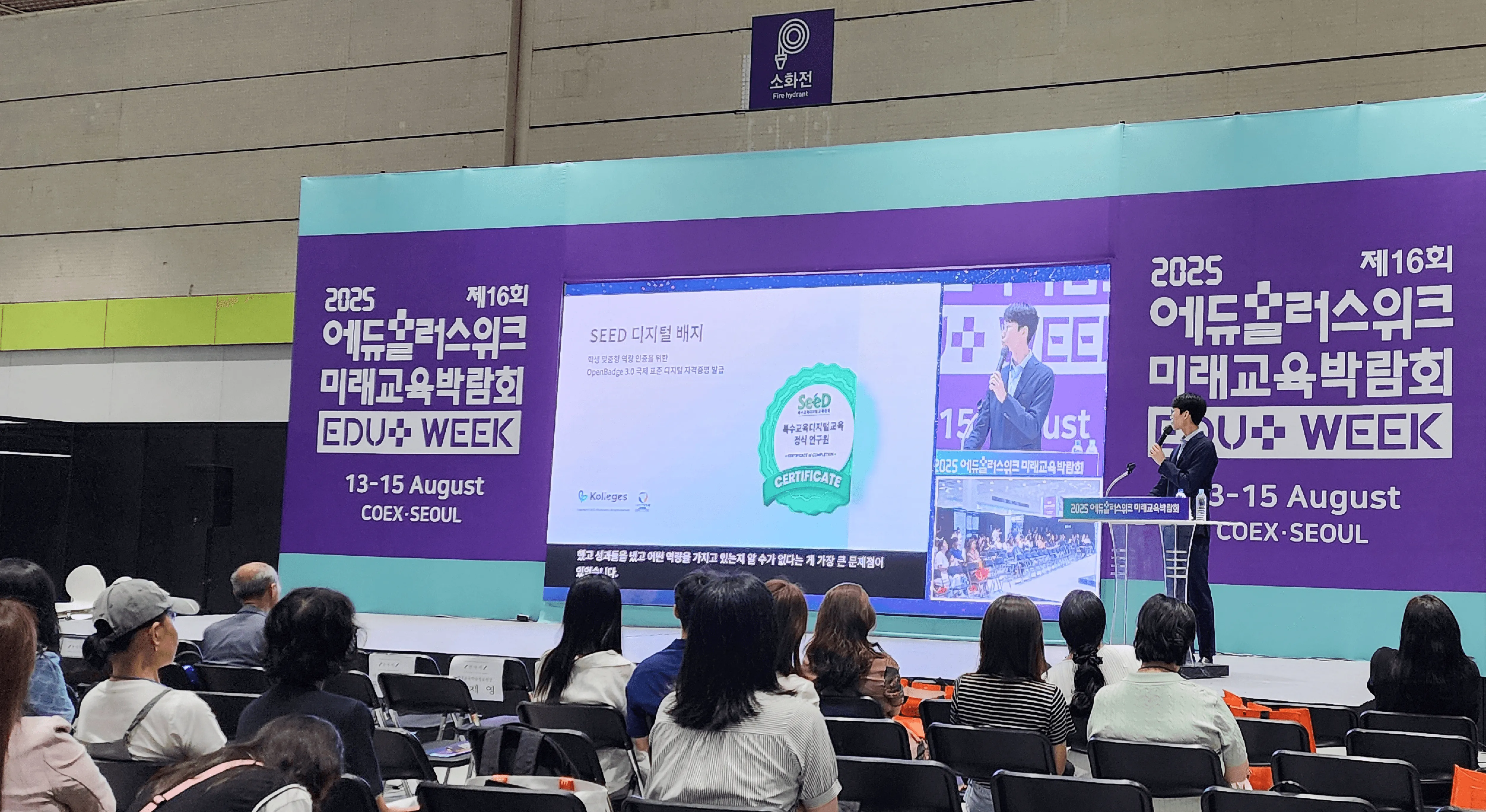
Another pillar of this expo was the conference organized by the Special Education Digital Education Association (SeeD).
The day-long sessions spanned keynote talks, book talks, research findings, panel talks, and case presentations, delivering deep insights to participants.
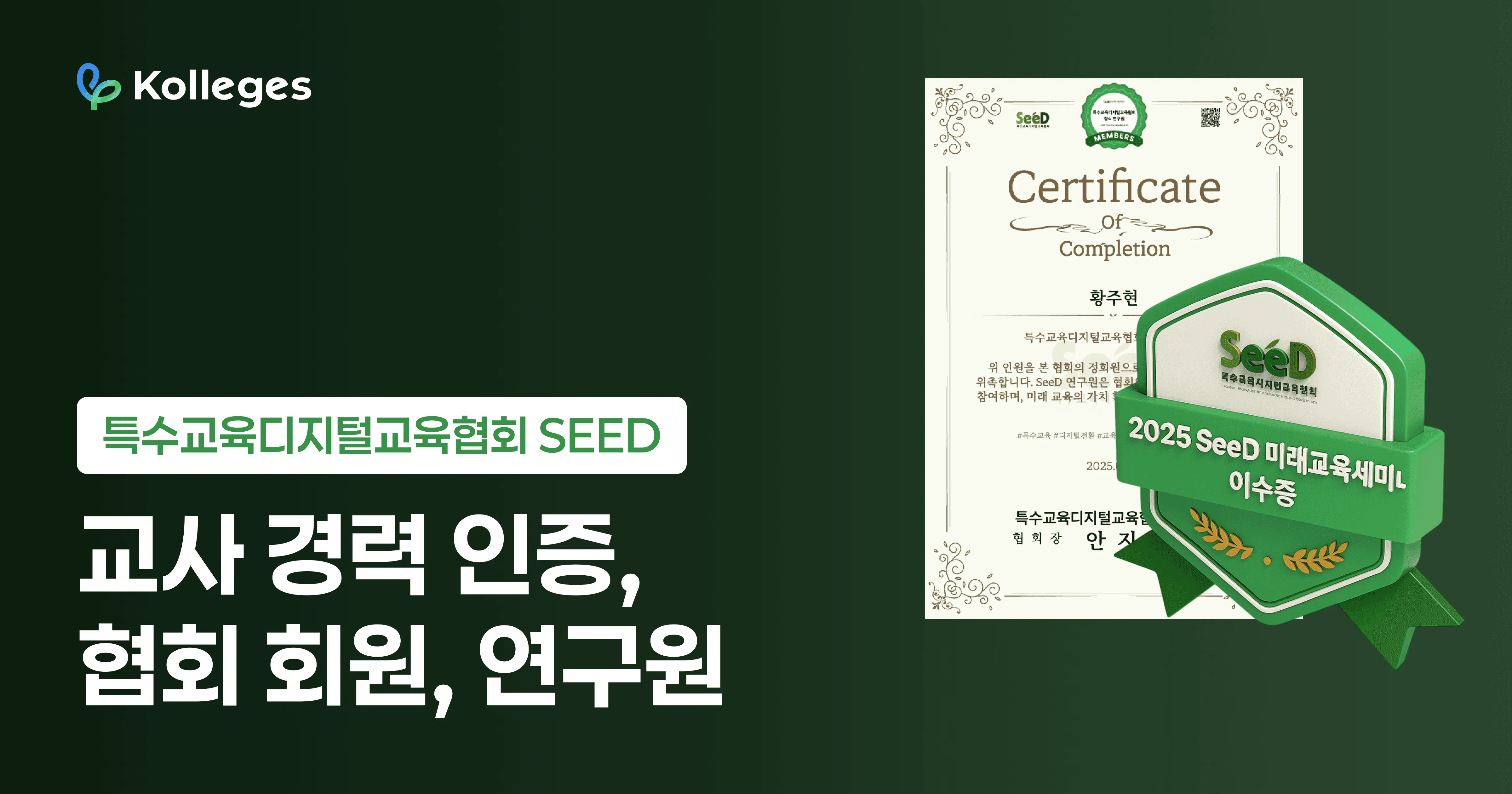
In addition, blockchain-based digital badges were issued to seminar attendees and speakers:
-
Seminar participants: 2025 SeeD Future Education Seminar Completion Badge
-
Speakers: 2025 Future Education Expo SeeD Official Leaders Badge
In addition, full members of the Special Education Digital Education Association and certified researchers will each receive professional credential badges. All badges are securely stored on the blockchain and cannot be tampered with, and can be linked to a personal portfolio for easy online verification and sharing.
This experience drew attention from attendees because it goes beyond receiving a paper certificate and becomes a new system that transparently records and manages personal career and learning outcomes.
Kolleges digital badges, the official partner of this expo, deliver the following.
Through this, education institutions can deliver customized outcome certification and record management, and learners can carry their accomplishments forward as trustworthy career proof, not mere records.
✨ The power to prove the end of learning - start customized outcome certification with Kolleges.
Frequently asked questions
Want to turn learning outcomes into verifiable assets?
From issuing to verifying and amplifying, see it for yourself with Kolleges.
Request a Kolleges demoRelated posts
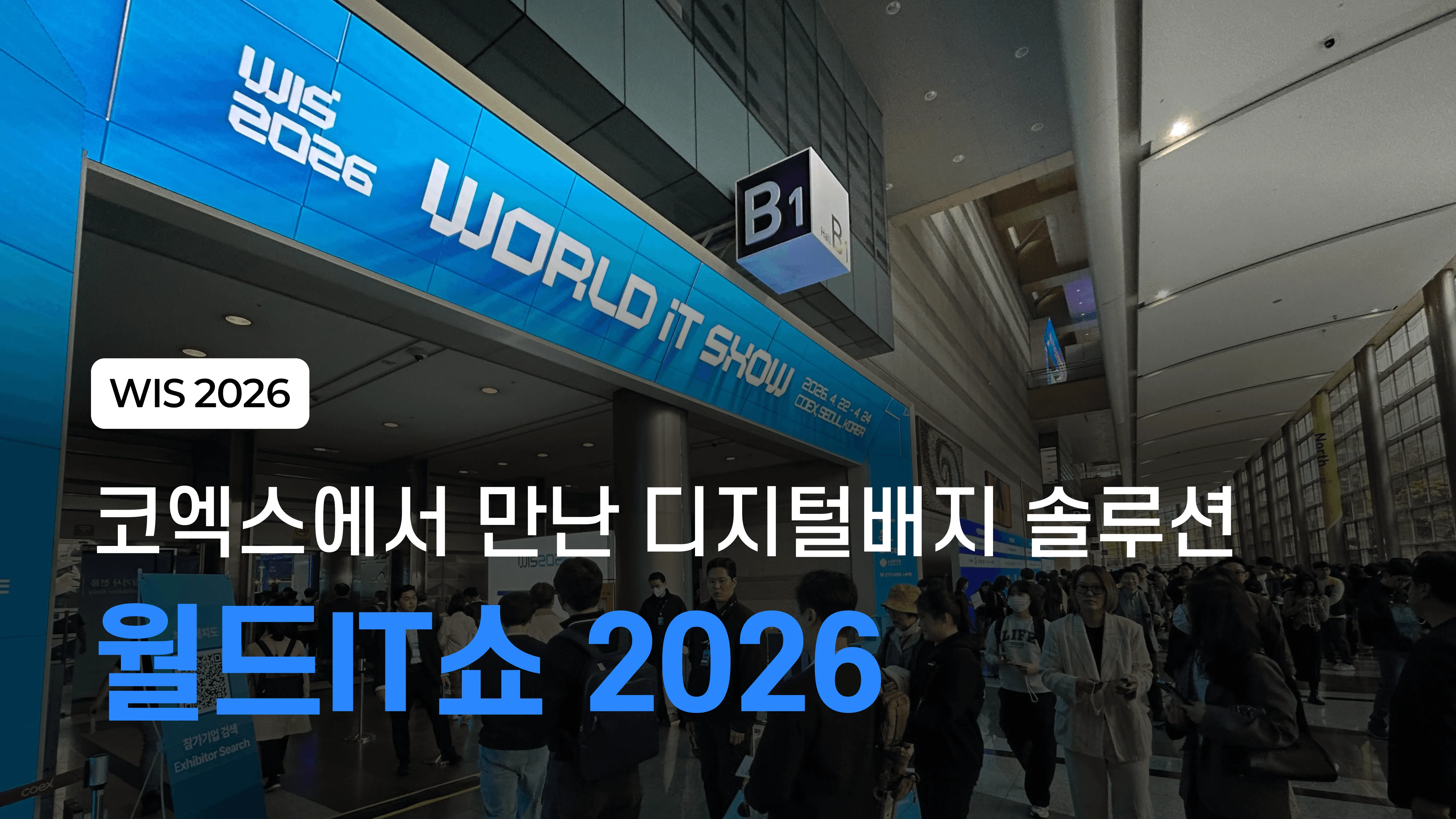
World IT Show 2026 Recap: Why Certificates Need to Become Verifiable Data
WIS 2026 confirmed that institutions across Korea need more than certificate issuance - they need education outcomes structured as verifiable, reusable data, which is exactly what Open Badges 3.0 enables.
Webinar Platforms: Pros, Cons, and How to Prepare an Online Seminar | Kolleges
A side-by-side breakdown of Zoom, Google Meet, and Microsoft Teams helps you pick the right webinar platform based on scale, features, and cost.
Reinventing Educational Outcome Certification: SeeD's New Challenge | Kolleges
South Korea's Special Education Digital Education Association (SeeD) issued blockchain-based digital badges at EduPlus Week 2025, turning seminar completion and speaker recognition into verifiable, shareable credentials built on Open Badges 3.0.