
KOHI Mandatory Training: A Certificate Issuance Guide for Health and Welfare Workers | Kolleges

Health and welfare workers legally required to complete KOHI elder human rights training can now finish in 4 hours (down from 6 in 2025) - here's the full process from signup to certificate.
For anyone working in the health and welfare sector, KOHI mandatory training is something you cannot afford to skip. With changes to the system taking effect this year, many workers are unsure how to proceed.
Today we will walk through why KOHI mandatory training matters, and the full process from application to certificate issuance - step by step.
📚 Why is KOHI mandatory training required?

In elder care, the most important value is human rights. KOHI mandatory training is the legally designated program that exists to safeguard that value.
-
KOHI (Korea Human Resource Development Institute for Health and Welfare) is an education body directly operated by the state
-
It is statutory training that must be completed under the Long-Term Care Insurance Act for the Elderly
-
It is not merely a procedure to maintain qualifications - it is a process for raising human rights awareness and service quality

👉 Failure to complete the training results in administrative penalties such as fines and clawback of benefits, so completion is mandatory.
In addition, starting in 2025 the required training hours have been reduced from 6 hours to 4 hours, easing the learning burden while keeping the core content intact.
🙆♀️ Who is required to take it?

The point that most people find confusing is “Am I a target?” The eligible groups are:
-
Operators of home-based long-term care facilities
-
Workers in home care, home bathing, and home nursing services
-
Workers in day and night care and short-term care institutions
-
Care workers and related health and welfare staff
In short, anyone directly involved in elder care work must complete the KOHI mandatory training.
🖱️ Three steps from application to learning
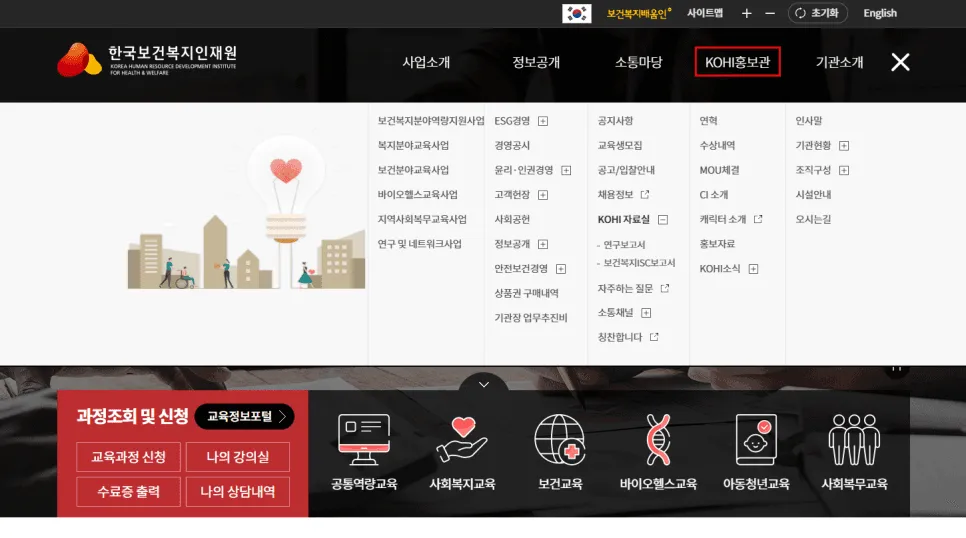
The enrollment process is not complicated. Just follow these three steps.
- 1 Sign up - Visit the KOHI website and register an account. Choose the appropriate type for your situation (individual, civil servant, or public service worker). Note that you cannot change this after signing up.
- 2 Apply for training - From the top menu, search for courses, select “Elder Human Rights Training,” and apply through the online (cyber) training course.
- 3 Start learning - Go to My Page, open Learning Status, and click the Start Learning button. Available on both PC and mobile (Chrome browser). The learning period is 21 days; completion requires finishing all sessions and passing the assessment.
📜 How to issue your certificate

After completing the training, you must issue and store your certificate. This document is required when submitting materials for institutional evaluation or supervisory inspection.
-
Log in to KOHI → My Page → Print Certificate
-
Confirm the year and course name before issuing
-
We recommend keeping both a printed copy and an electronic file
👉 Reissuance requests are common when certificates are lost, so it is safest to save an electronic file in advance.
✅ Don’t forget KOHI mandatory training!

KOHI mandatory training is not just an administrative procedure - it is a core process for raising the quality of elder care services and strengthening the expertise of workers.
If you have not yet registered, sign up on the KOHI website today. And make sure to keep your certificate on file.
Kolleges is a platform where you can manage not only statutory training like KOHI but also private certification courses for professional development - all in one place.
👉 Kolleges - the platform that connects learning and growth. We will be your reliable education partner.
Frequently asked questions
Want to turn learning outcomes into verifiable assets?
From issuing to verifying and amplifying, see it for yourself with Kolleges.
Request a Kolleges demoRelated posts

Safety Education Completion Certificate: Issuance and Use Cases at a Glance | Kolleges
A safety education completion certificate proves you completed required safety training - issued by KOSHA, schools, or private platforms - and opens employment, exam, and volunteer opportunities.

Food Hygiene Education Certificate: Issuance, Application, and Fees at a Glance
Food service operators in Korea must complete annual hygiene training under Article 40 of the Food Sanitation Act - skipping it triggers fines that escalate from KRW 200,000 to KRW 600,000.

Boosting University Competitiveness Through Education Administration Automation
Automating university administration - from graduation checks to event attendance - saves over 90% of staff time and enables real-time digital credential issuance.