
Three Core Advantages of Open Badges as an Essential Tool for Credible Credentialing
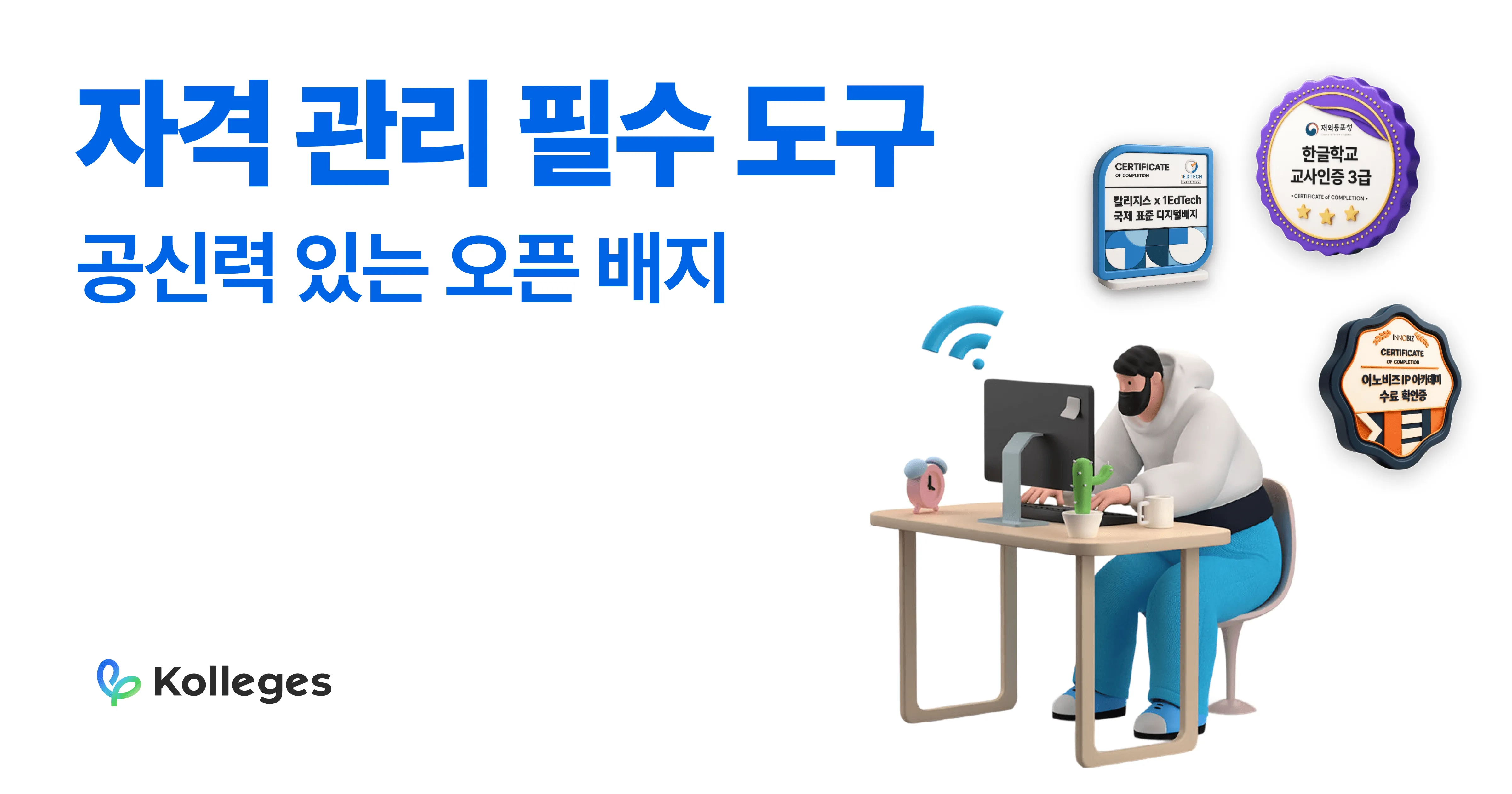
Open Badges outperform paper certificates by combining tamper-resistant, data-based verifiability, instant online sharing, and sequential career record-keeping in a single globally-standardized credential.
Three Advantages of Open Badges That Education Institutions Should Be Watching
Open Badges have been drawing increasing attention from education institutions and companies.
Open Badges are digitally issued credentials
designed to certify, with accuracy and trust, the competencies a learner or professional has acquired
or the programs they have completed in a given field.
Today, we’ll walk through the advantages of Open Badges in a more professional and structured way.
- Stronger trust and verifiability - tamper-resistant, metadata-based credentialing
- Easier online sharing and broader access - verifiable anywhere with a single link
- Optimized for lifelong learning and career records - visualizes and structures the learning journey
1️⃣ Stronger Trust and Verifiability
One of the greatest strengths of Open Badges is their tamper-resistant, data-based verifiability.
Each badge embeds key information - issuing organization, learning content, issue date, evaluation criteria -
as metadata, so anyone can confirm the badge’s authenticity with a single click.
This makes a far higher level of credible credentialing possible than a paper certificate.
For recruiters and education institutions in particular, the recipient’s capability is clearly identifiable,
making Open Badges highly effective for talent screening and career verification.
They also remain valid across all domestic and international education and credentialing environments.
2️⃣ Easier Online Sharing and Broader Access

🌐 Because Open Badges are digital by nature, they are optimized for online sharing.
You can attach a badge to LinkedIn, resumes, email signatures, portfolio sites, and other channels,
and the credential details can be checked with a single click - enabling consumer-centric verification.
Thanks to these expandability and accessibility advantages, Open Badges
can also contribute to expanding domestic and international networks and strengthening personal brand.
For companies and institutions, issued badges enable
tracking of graduate histories and quantitative management of education outcomes.
3️⃣ Optimized for Lifelong Learning and Career Records

📝 Open Badges go beyond certifying a single completed program.
They visualize and structure an individual’s learning journey.
For example, as a learner completes various education programs year by year,
the badges can be issued and managed sequentially, organizing the progression of a career path.
This advantage of Open Badges enables systematic storage of completion histories,
functioning as a sustainable capability-development tool well suited to the era of lifelong learning.
It also serves as a real motivator for completing education
and improving completion rates.
In an era where a single certificate is no longer enough
to fully convey expertise or growth,
Open Badges complement that gap as a globally standardized form of digital credentialing.
They are flexible, learner-centric, and customizable to the way
institutions and companies want to use them.
🔗Building on these Open Badges advantages, Kolleges helps education institutions and private credentialing bodies
establish more credible and professional credentialing systems.
Credentialing in the digital era -
take a step ahead with Open Badges.
Frequently asked questions
Want to turn learning outcomes into verifiable assets?
From issuing to verifying and amplifying, see it for yourself with Kolleges.
Request a Kolleges demoRelated posts
5 Advantages of Digital Badges: Future-Ready Certification That Transforms Education and Careers | Kolleges
Digital badges built on blockchain and DID technology offer tamper-proof credibility, LinkedIn sharing, personalized learning tracking, reduced admin costs, and global English-language certification support.

The future of digital badges: how Open Badges 3.0 is changing the credentialing standard
Open Badges 3.0 upgrades digital badges from embedded PNG metadata to a full Verifiable Credentials model - making them machine-verifiable, portable worldwide, and tamper-proof without relying on any central server.
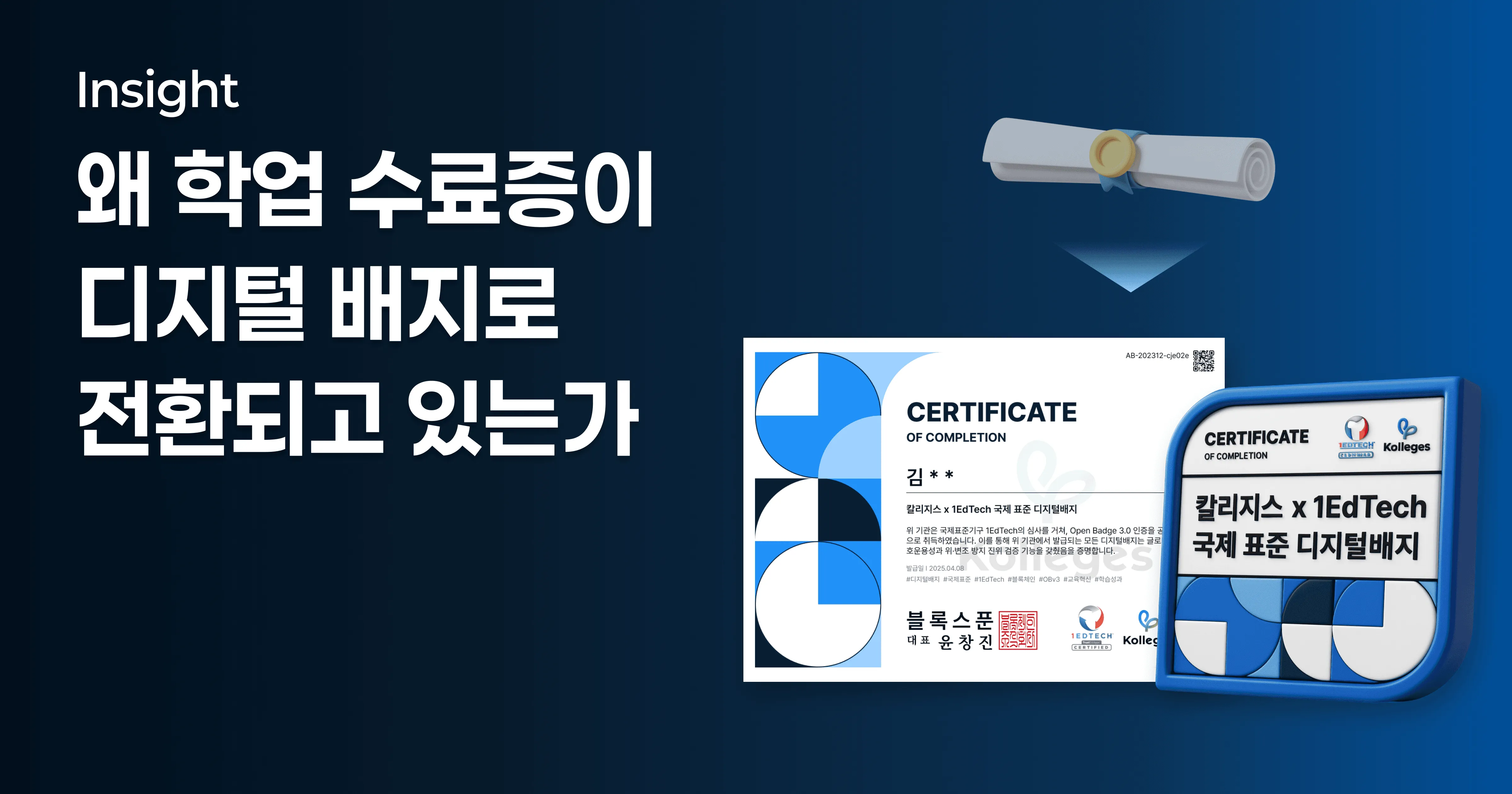
Why Academic Certificates Are Turning Into Digital Badges
Digital badges replace paper certificates by embedding verified competency data - practical outcomes, skills, and issuer credentials - that learners can share instantly and employers can trust.