
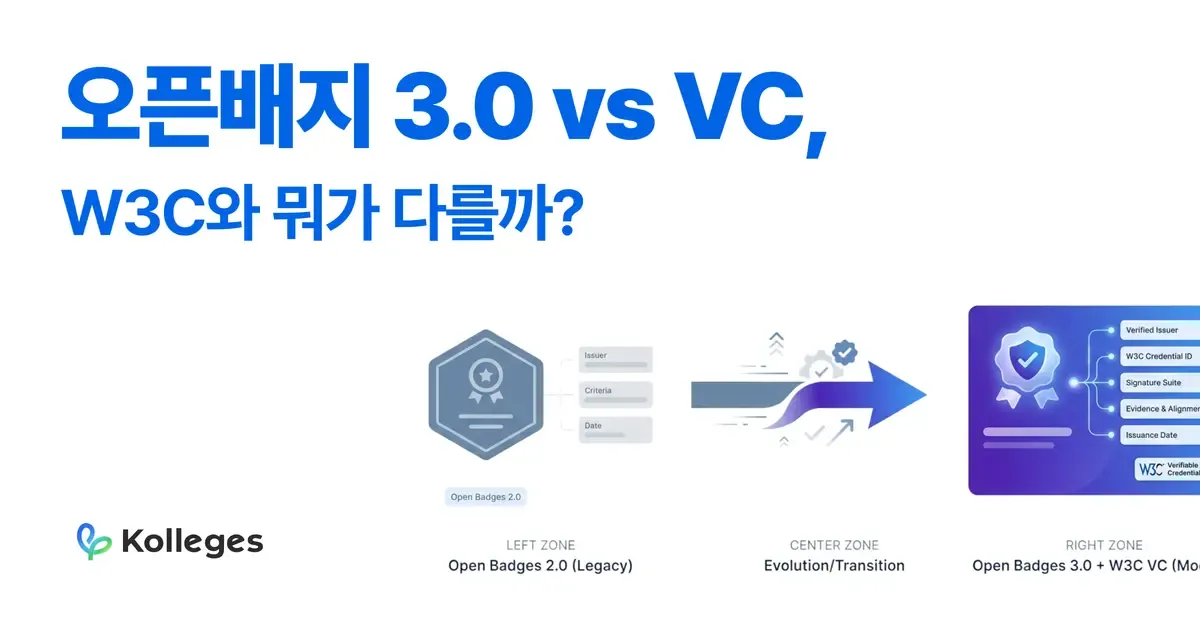
The complete Open Badges 3.0 guide: how it differs from W3C Verifiable Credentials
Open Badges 3.0 wraps W3C Verifiable Credentials with an education-specific metadata layer, replacing platform-dependent verification with cryptographic signatures that let learners own and selectively disclose their credentials.

Why ISO 27001 (Information Security) Certification Is Essential for Digital Badge Platforms
Digital badge platforms must hold ISO 27001 certification because learner credentials are lifelong career assets - any forgery, leakage, or outage directly harms individuals, not just institutions.
A New Standard for the AI Era: Digital Identity Verification
Personhood Credentials let users prove their humanity online without exposing personal data, and digital badge platforms like Kolleges are positioned as a key asset for this emerging trust layer.
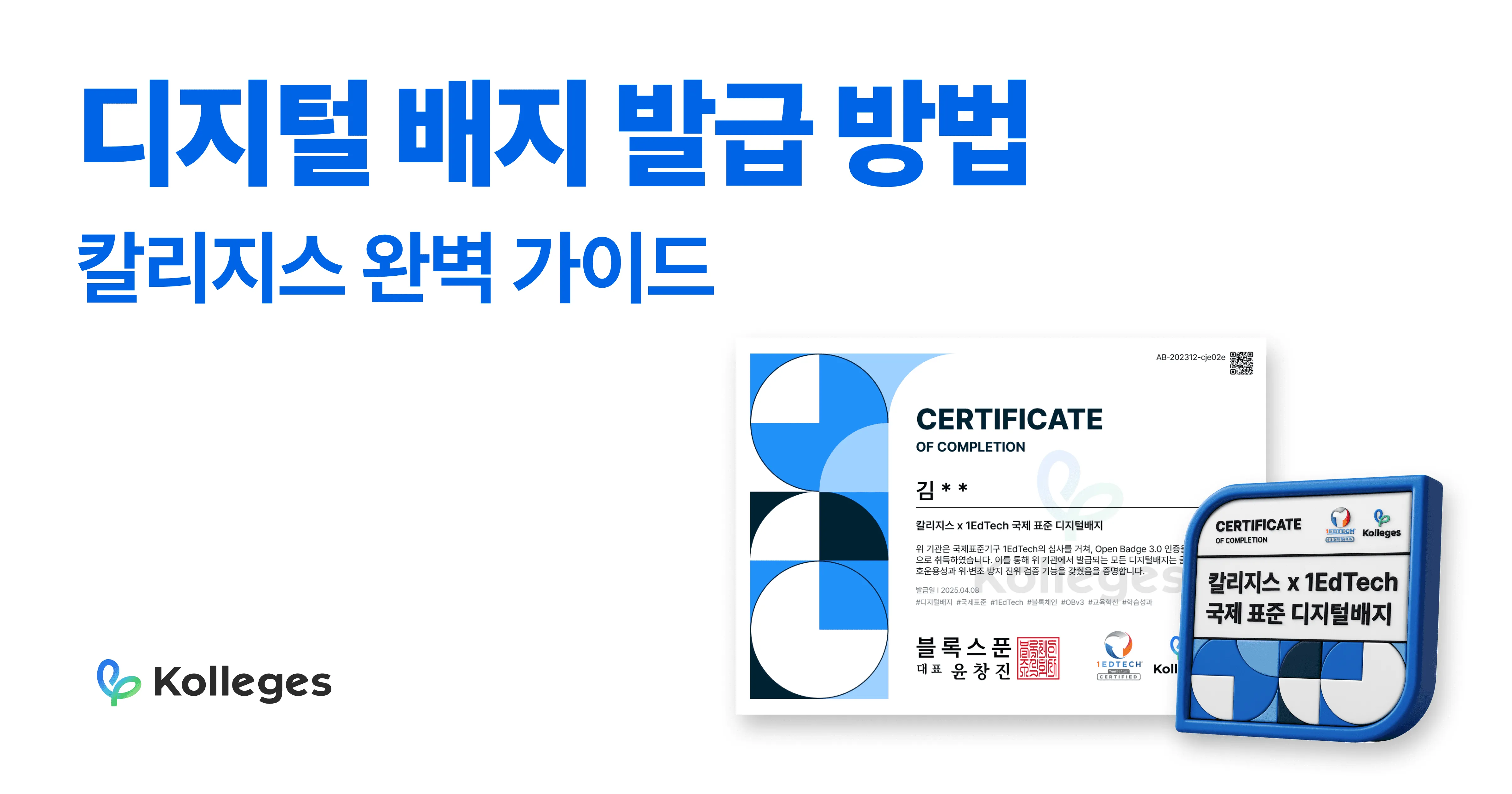
How to Issue Digital Badges and Store Them Safely (feat. IPFS)
Digital badges become tamper-proof Verifiable Credentials by combining JWT cryptographic signatures with IPFS distributed storage, letting anyone verify authenticity via a content-addressed CID link.
Digital Badges: How Is a DID Created and Stored?
Kolleges generates DID-based digital badges using the did:key method with RSA key pairs - storing only the public key server-side while delivering the encrypted private key to the user for self-custody.

What Is DID - Managing Digital Badges with Decentralized Identity
Kolleges builds digital badges on DID using the did:key method, so both issuers and recipients hold cryptographic key pairs that let anyone verify badge authenticity without a central server.
See whether it fits your institution - in 10 minutes
From issuing to verifying and amplifying, see it live in a Kolleges demo.
Request a demo