
From Hobby to Certification to Instructor: How Hongik University Sejong's Lifelong Learning Center Is Building a Virtuous Cycle of Education
 Robin Yoon · Customer Success Team Published
Hongik Sejong's RISE-funded Lifelong Learning Center replaced paper certificates with tiered Level 1-3 digital badges to record and sustain a hobby-to-certification-to-instructor growth path.
400 applicants from a single ad, ceramics classes sold out in 30 minutes
Until recently, Hongik University Sejong Campus Lifelong Learning Center was “essentially nominal.” Things changed once funding from the RISE (Regional Innovation System & Education) project began. Less than a year into its serious work on lifelong education, a single ad brought in 400 applicants and ceramics classes sold out 30 minutes after opening. Starting this year, the Lifelong Learning Center is issuing educational achievements as digital badges rather than paper certificates, and designing a virtuous cycle of education on top of the badge system - moving from hobby to certification to instructor. Below is a summary of the interview with Director Lee Eun-seon and Researcher An Gwan-ye.
1. A Lifelong Learning Center That Was “Nominal” - RISE Lit the Fire
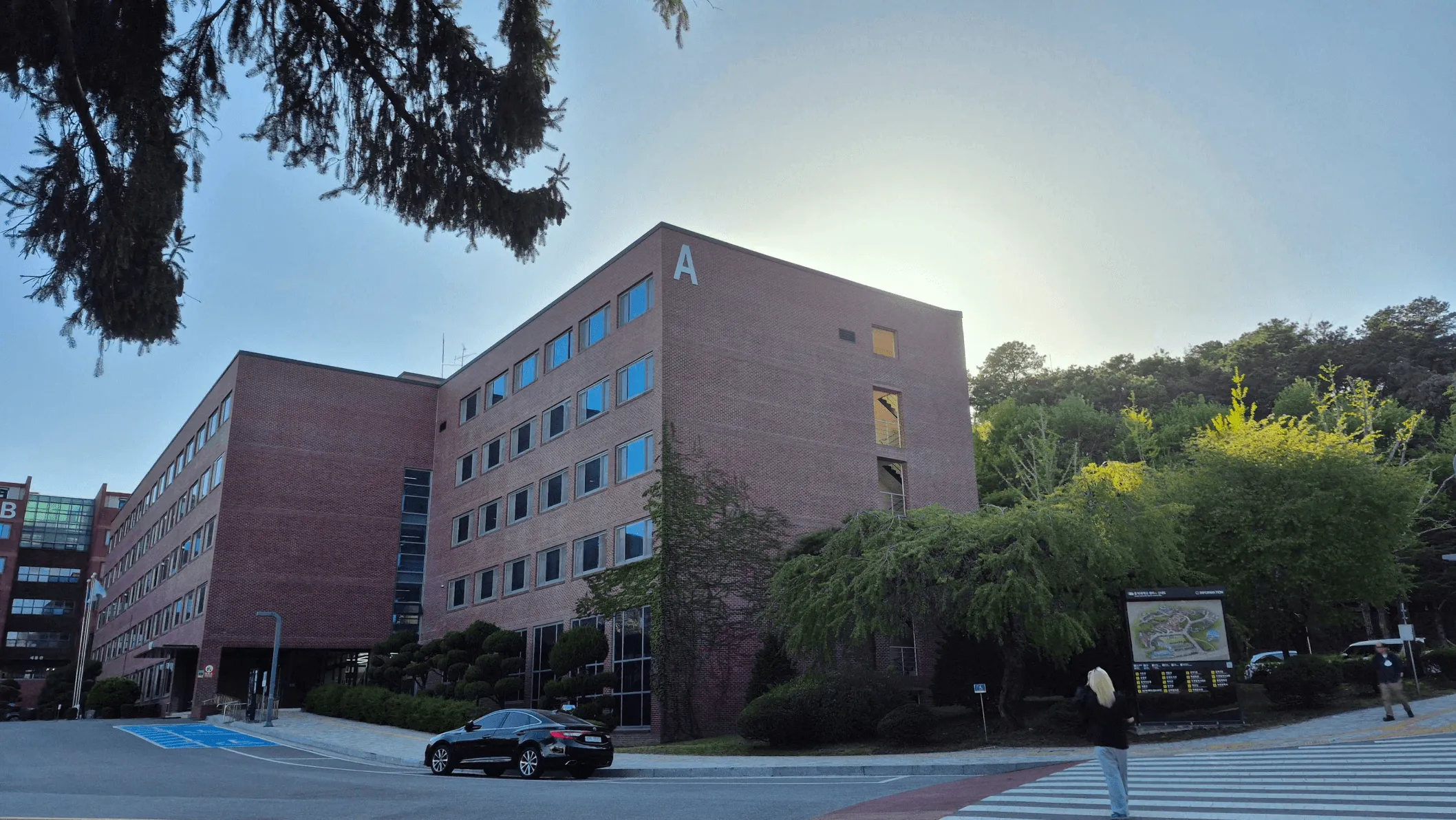
Hongik University’s Sejong Campus runs the RISE Project Group. Of the five tasks, the Lifelong Learning Center is responsible for Task 4, the lifelong education portfolio. Director Lee Eun-seon was candid about the center’s past.
How would you describe the Lifelong Learning Center in one sentence?
“In our case, the lifelong learning center was originally pretty nominal, but with the RISE funding, Hongik University has now seriously started on lifelong education. So for us, it’s actually become an opportunity to act as priming water - we’re at a stage where we’re trying various things to grow the lifelong learning center.”
The RISE project served as a priming pump. Hongik Sejong Campus operates across three locations as one campus - Handuri Campus (the largest in Sejong), Yeongsang University, and Goryeo Campus. The RISE Project Group runs major tasks like Jisan-Nakyeon centered on the Handori Campus, and the fourth of those tasks is lifelong education.
Director Lee defined the Lifelong Learning Center’s current position as a “pilot phase.” Starting with summer specials this year, the center plans to begin its proper 15-week cohort-based operation in the fall semester. Even before cohorts began, the pilot education alone has drawn intense response.
2. Sejong’s Unique Learning Market - People 50 and Older Are at the Core
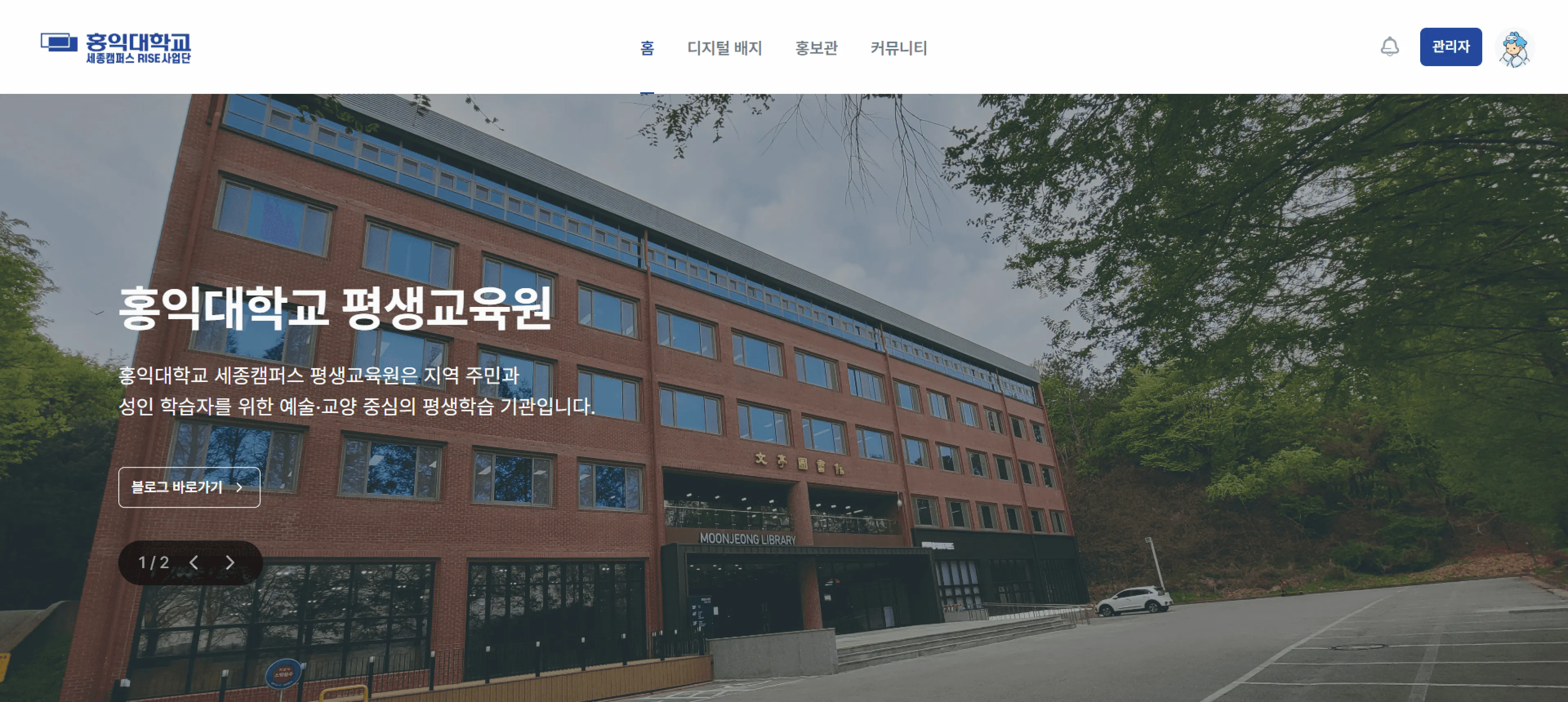
The learner composition at Hongik Sejong’s Lifelong Learning Center differs from that of a typical university lifelong learning center. Director Lee explained the distinctive characteristics of Sejong’s learning market, based on a recent learning demand survey.
What stands out about learners in Sejong?
“Sejong as a whole - not just us - has this pattern, and if you stop to think about why, it’s because so many public institutions have relocated here. There are a lot of older civil servants, and when they came, their wives - entire families - came with them, so there’s a really high-education demographic. So unexpectedly, our two key lifelong education pillars are: first, with so many people in their 20s, employment education for those in their 20s and 30s; second, courses on culture, arts, and retirement preparation for people 50 and older. Those came out as the core in the survey results.”
Sejong is a city that saw a major influx of civil servants and their families thanks to the relocation of government public institutions. There’s a large highly-educated population in the older demographic, and people in their 50s and 60s - either approaching retirement or beginning a second act - form the core learner base. At the same time, there’s also demand for employment and career-change education from current employees in their 20s and 30s.
These two tracks shape the Lifelong Learning Center’s curriculum design. The director said, “Older people aren’t ‘old’ anymore. They’re starting a second life, so a lot of them are preparing for certifications and things like that.” Rather than simple hobby activities, many learners are aiming for certifications and career transitions.
Is there demand for education from current employees too?
“We have a lot of public institutions here. You know how government public institutions and research centers are all concentrated in one place, right? We’re targeting that. So starting with the Korea Transport Institute, we’re working with the Korea Institute for Humanities and Social Studies as well - they have needs, we have needs, so we’re now starting work on developing curricula they want and offering education for free.”
The strategy is to provide tailored education to the cluster of government-funded research institutions in Sejong. The Korea Transport Institute requested training on AI usage and data analysis, and architecture-related institutions requested seminars on changing regulations. The center develops the curricula these institutions want, offers them for free, and through that broadens the Lifelong Learning Center’s base.
3. From Ceramic Kiln to State-Accredited Certification - Drawing on Hongik’s Art DNA
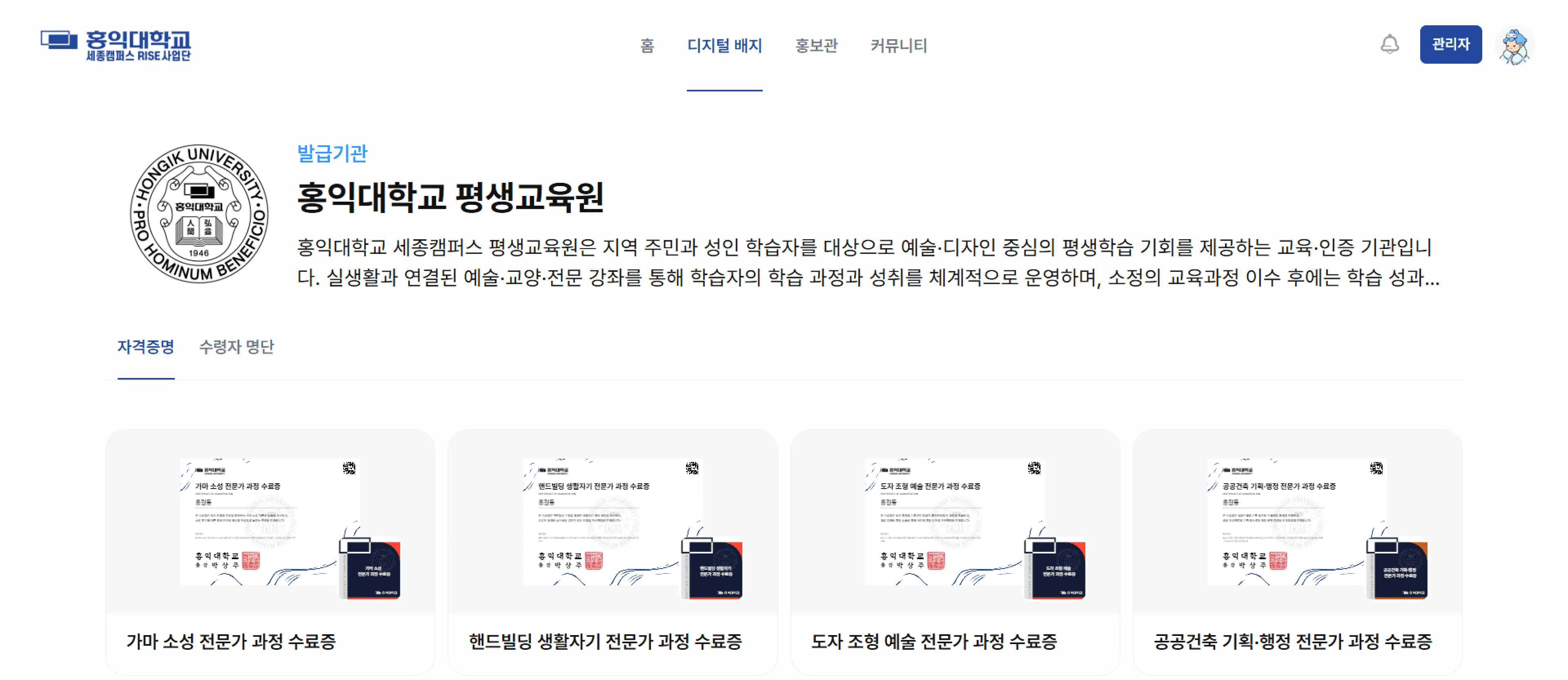
Hongik University has a strong reputation in the arts. The Sejong Campus Lifelong Learning Center took this DNA as the starting point for its program design.
What resources are unique to Hongik Sejong Campus?
“We have a kiln, and it’s extremely popular. So we’re now trying to set up a process-based assessment group and even pursue the Ceramic Craft Technician certification. The idea is that this doesn’t end at premium culture and arts - it goes up a level. That’s why with digital badges too, as I mentioned earlier, it’s not just about issuing one - we think we need to issue digital badges that look like certifications appropriate for higher education, divided into Levels 1, 2, and 3.”
Having a ceramic kiln on campus is itself rare infrastructure. There’s no ceramics department in Seoul, just design. The director said, “There’s no ceramics department in Seoul. Only design.” Ceramics classes using the kiln are so popular they sell out within 30 minutes of opening.
The ceramics classes generate that kind of response?
“They sell out in about 30 minutes once they open. They really do, that’s how popular they are. It’s rewarding.”
The director wants to channel this popularity beyond hobby classes into state-accredited certifications. They don’t issue private certifications. The reasoning: “There are so many private certifications floating around that their credibility is pretty low.” Instead, the plan is to issue state-accredited certifications through process-based assessment programs run by HRDK (Human Resources Development Service of Korea).
There are about three state-accredited certifications currently in preparation, including Interior Architecture Industrial Engineer and Landscape Engineer certifications. Operating a program leads directly to a certification - the structure requires completing 400-600 hour curricula. Unexpectedly, civil servants in Sejong had been going to Seoul or Gyeonggi for landscape education, even though the Sejong area had land available for practical work but no academies. The Lifelong Learning Center is filling this gap.
4. “From Hobby to Certification to Instructor” - Designing a Virtuous Cycle of Education
The core of the education model Director Lee envisions is a “virtuous cycle.” Learners start as hobbyists, earn certifications, and come back as instructors to teach the next cohort.
Is there a way to maintain a relationship with graduates after the program ends?
“For those who make it all the way there, we want to set up a virtuous cycle that lets them come back as instructors. That’s why we needed payment processing. We didn’t have a way to run that on our own.”
Taking ceramics as an example: a learner starts in a hobby class, earns the Ceramic Craft Technician certification, and then returns as an instructor to teach beginner learners. The director calls this “leveling.” Because the school’s image is “pretty strong” in the arts, the plan is to start in that area and then level up.
This virtuous cycle structure also fits Sejong’s learning market dynamics. There’s even been talk that if a wife learns ceramics after her civil-servant husband retires, she can work as an instructor and become the household’s source of livelihood in the area. This isn’t a simple liberal arts program - it’s education that links to local settlement and economic activity.
A similar structure works in childcare education. The Creative Science Foundation has long-run science camp infrastructure already on campus, and the center connects that instructor pool into childcare education. Mothers learn ceramics while children participate in science camps.
What differentiates the university lifelong learning center compared to existing facilities like administrative welfare centers or Idomaru?
“As you know, Sejong has a lot of administrative welfare centers running tons of programs. They do everything from yoga to dance classes, and Sejong residents are click-fast at signing up. At one point we limited it so that Areum-dong residents could only register for Areum-dong, and Goeun-dong for Goeun-dong, but the complaints exploded. Because Areum-dong residents wanted to take the Goeun-dong classes but couldn’t. So they removed the limit.”
Administrative welfare center programs are popular but lack advanced tracks. There are even cases where people learning painting say the teacher draws less well than they do. The director said, “We don’t believe in eating someone else’s lunch, so we’re aiming a little higher - toward higher education.” The space for university lifelong learning centers is the “higher education” zone that takes hobbies up a level - to certifications, and from there to even entrepreneurship.
5. “Paper Certificates Don’t Mean Much” - Why They Chose Digital Badges
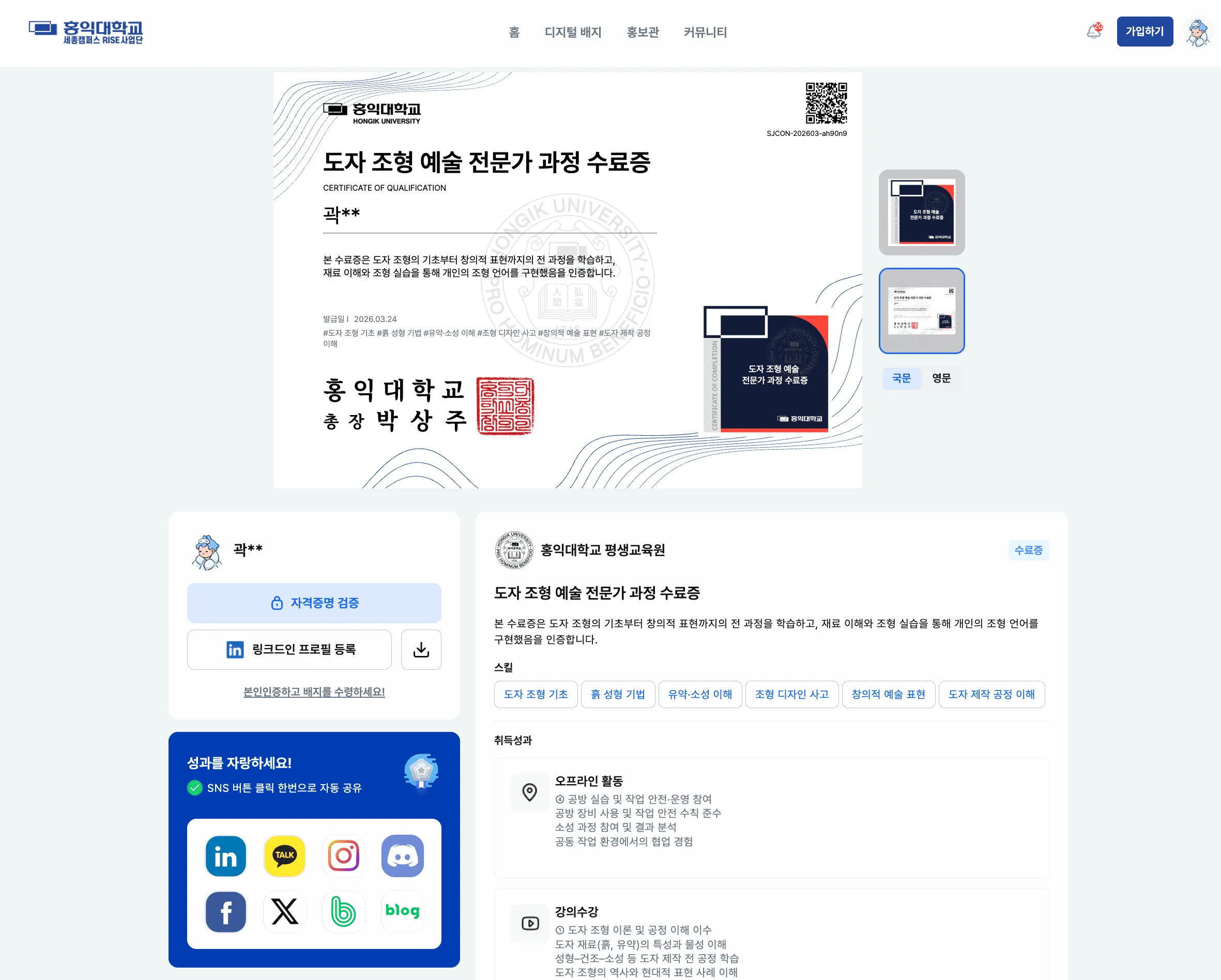
The direct trigger for adopting digital badges was the RISE project. The second sub-task within Task 4 was a “Sejong Mayor’s Name Certification System.” As the director thought about what certification really means, she was already harboring fundamental doubts about paper certificates.
How did you first hear about digital badges?
“What I was thinking when I was writing the report was - being certified means having some kind of completion certificate, but just giving a paper certificate doesn’t mean much. Because I used to work on extracurricular activities, and the trend in extracurriculars right now is digital badges. Right? Students post them on Instagram or their starts or wherever. People assumed older folks couldn’t do this, but anyway - the memory of ‘I once received this’ lasts better than paper. That’s why I looked into digital badges and brought it up.”
For a director with experience in extracurricular work, digital badges were already a familiar trend. Paper certificates fade over time, but digital badges leave a permanent record that “I once received this.” That principle applies to learners in their 50s and 60s too.
Researcher An Gwan-ye ran the actual vendor comparison. They reviewed in-house development through the school’s science and technology organization but decided to adopt a specialized solution. The researcher described that period this way.
“At first, they proposed starting slowly and then iterating - that made it easy to pick them. The other places, I’m not sure if they were thinking about the size of RISE from the start, but the proposals felt heavy. With these folks, the approach was ‘start simple and easy to use, then iterate later,’ so I thought, okay, let’s start here. That made the decision easier.”
The “start small and iterate” approach was decisive. Other vendors proposed large-scale builds from day one, which felt overwhelming. Kolleges proposed a phased approach. Running a pilot first and expanding based on response is well suited to organizations in their early adoption phase.
6. “Level 1 → Level 2 → Level 3” - Designing a Growth Path with Badges
Director Lee plans to use digital badges not just for simple completion certification but as a tool to visualize learners’ growth paths.
How are you designing the badge structure?
“Not just issuing one badge - divided into Levels 1, 2, and 3, like a certification suited to higher education. That’s what I think we need to issue. What I’m thinking right now is starting with ceramics and the arts, since the school has a strong image there, and from that area I want to do some leveling and move up.”
The plan is to first build a tiered badge structure in ceramics and arts, then expand to other programs. Learners who earn a Level 1 badge get guided to Level 2; collecting three or more leads to a master tier.
The director added the concept of a “signature program.” The vision is to form a council with three universities in Sejong, run satisfaction surveys across each university’s full program lineup, select the best programs, and award signature digital badges to those classes.
“In lifelong education, as I said, there are three big centers, but adult learners don’t have a clear standard when choosing. Unless someone recommends a program, they often don’t know. So starting this year, we’re going to standardize satisfaction surveys for the full program list in the first and second semesters and pick the best programs.”
The idea starts from the observation that adult learners lack an objective standard when choosing programs. Signature badges become an institution-certified “excellent program” mark, with prizes and gifts for instructors of those classes and differentiated badges for learners. Expanding this signature program into joint issuance with other universities could evolve into a citywide lifelong education quality management system for Sejong.
7. What They Felt on the Ground - Candid Reflections
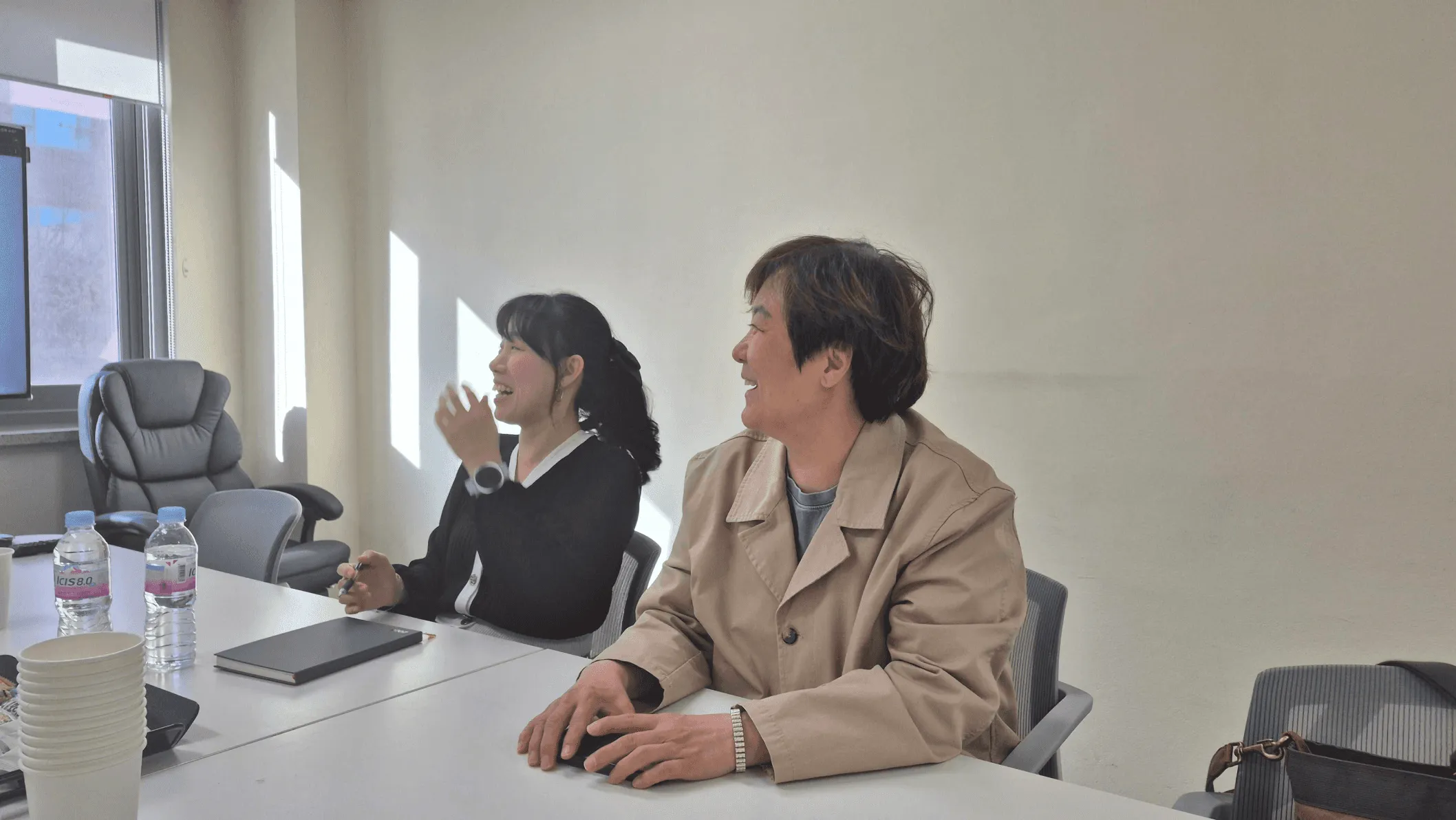
The pilot phase also surfaced some real challenges. The director and researcher were candid about what needs improvement.
Please share anything you’ve found inconvenient or that you’d like to see improved.
“It would help if you could give us something like this - at the end of class, if we could hand the relevant people a small card, that would be much faster. It’s a bit hard to explain verbally. So if you could make even a small card we can give out - ‘do this here, then this’ - we could distribute it. We can’t make it ourselves, but if you could just provide that for us.”
Explaining the concept and usage of digital badges to learners is the biggest on-the-ground challenge. Given that many learners at the Lifelong Learning Center are in their 50s and 60s, verbal explanations alone hit a ceiling. They want a simple instructional card explaining how to receive and use badges.
Are there areas where learners struggle when using badges?
“Educating older folks is a bit tough. Telling them ‘please receive this’ - even with online registration, a lot of them still register by phone. So it’s the digital literacy gap.”
Even for online course registration, more learners still register by phone - a sign of the digital literacy gap. Researcher An Gwan-ye added, “We’re in a transitional phase right now. Because we required it to be done this way, we’d get phone calls just to confirm.” Adaptation will come with time, but the friction of the transition is real.
Communicating badge use is another challenge. The director said, “It would also be great if you could write up how they’re used. Then we could promote it.” If there were materials showing learners how to share badges on SNS or set them as a KakaoTalk profile, the institution could use them as a promotional channel too.
8. “Enriching Life in the Region” - The Road Ahead
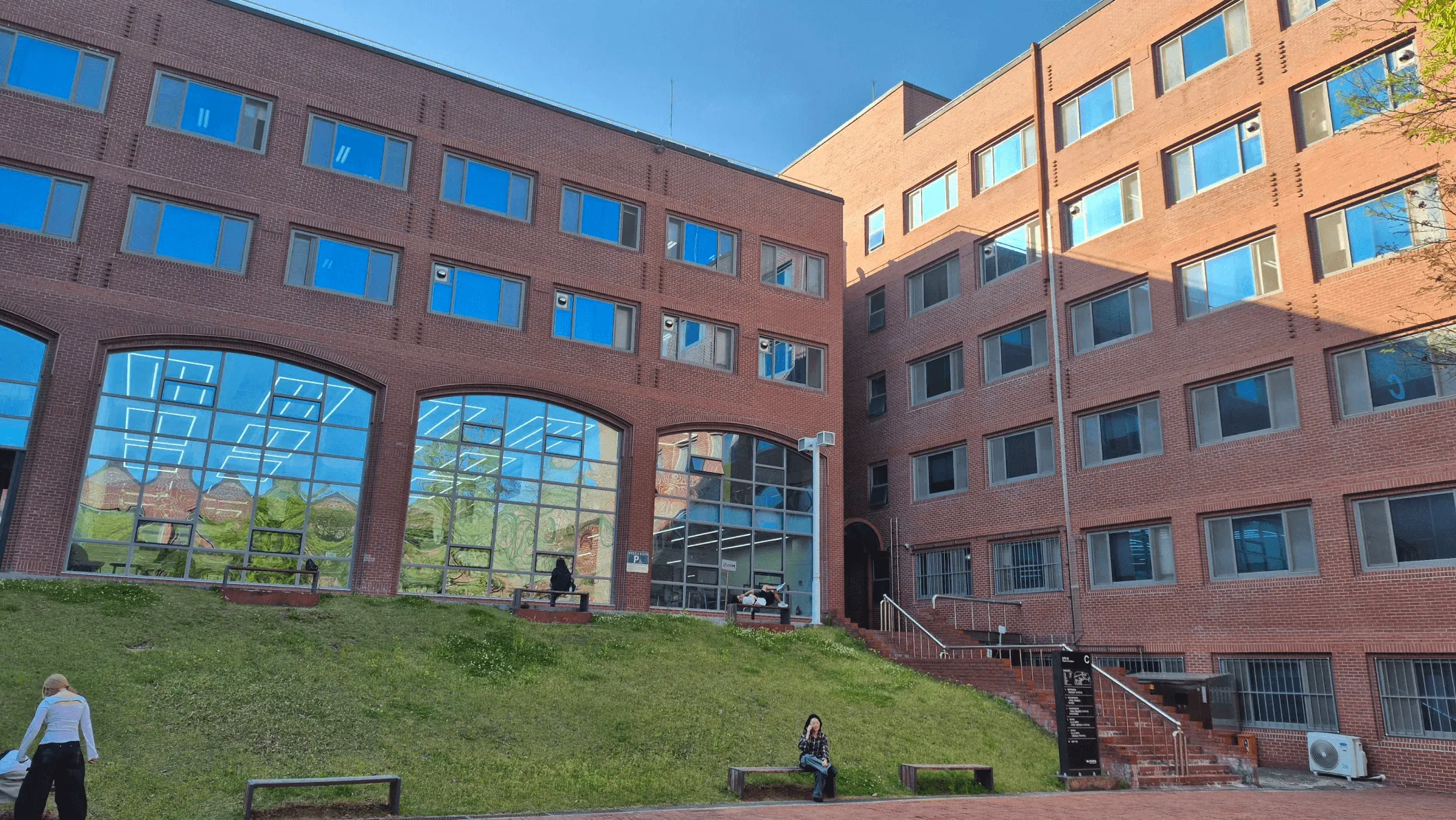
Hongik Sejong’s Lifelong Learning Center moves to a different rhythm than other RISE project groups. While most groups focus on local settlement and employment rates, Director Lee talked about a different set of values.
What direction or new plans does the institution have ahead?
“Our goal is to keep retirees here. When people in their 50s and 60s retire, they say they’re going back to Seoul. Because they’re civil servants. But honestly, there’s no real reason for them to go back to Seoul if they’ve already settled here. So we’re thinking about helping pre-retirees stay rooted here. And on top of that, helping current employees transition careers here in Sejong instead of in Seoul. We do a lot in culture and arts because what civil servants here say most often is, ‘There’s nothing to do.’”
“There’s nothing to do” - that complaint from civil servants explains the center’s reason for being. After work, on weekends, there aren’t many places to engage in culture, arts, or hobbies. The director said, “They can do those things as a hobby. So ‘enriching life in the region’ is what we see as our goal.”
There’s pressure on RISE project groups to prove their results through employment numbers. The director is aware of this but chose a different direction. “Most of the other project groups are focused on local settlement or industry-academia-research collaboration. We’re really focused on adult learners and adult residents - providing them with literary and cultural support, and letting that flow naturally into re-employment capability building.” This is the dilemma of a lifelong learning center that pursues value that can’t be reduced to numbers.
Even so, the director is finding intersections between childcare education and culture-arts education to capture both project outcomes and educational value. Programs that mothers and children can attend together, certification education that connects to post-retirement entrepreneurship, hands-on courses where you can open a studio or build prototypes at a Maker Land. “Rather than telling people ‘get a job,’ we develop classes that let them do hand-based work at home and start a business, or use Maker Land for prototypes.”
Hongik Sejong’s Lifelong Learning Center is still in the pilot phase. It starts with summer specials this year, then ramps up to 15-week cohort operation in the fall. Through that process, digital badges serve as a tool to record learners’ growth paths, guide them to the next stage, and prove the institution’s educational quality. For the virtuous cycle of hobby to certification to instructor to actually work, the achievements at each stage need to remain as verifiable data. A learner shaping clay at the kiln has their growth recorded as “Level 1 Badge → Level 2 Badge → Master Badge,” and that record becomes the basis for instructor qualification. The director’s goal of “enriching life in the region” is realized on top of that virtuous cycle.
Q: What’s the impact of introducing digital badges at a university lifelong learning center?
A: You can visualize learners’ growth paths as Level 1 → Level 2 → Master badges, and re-engage them post-completion into advanced courses, certifications, and instructor training. Unlike paper certificates, badges support online verification and SNS sharing, generating organic promotion for the institution.
Q: How are digital badges being used within RISE project groups?
A: They turn RISE project outcomes into verifiable data and let you build regional lifelong education quality management systems through signature program certification and council-based joint issuance. They’re also useful in project reporting as quantitative evidence - issuance counts, share rates, and so on.
Q: Can adult learners in their 50s and 60s actually use digital badges?
A: Initially there’s a media literacy gap, but with simple instructional cards and a gradual adaptation period, they can use them effectively. Naver Band and KakaoTalk become the primary sharing channels.
Frequently asked questions
Want to turn learning outcomes into verifiable assets?
From issuing to verifying and amplifying, see it for yourself with Kolleges.
Request a Kolleges demo Related posts
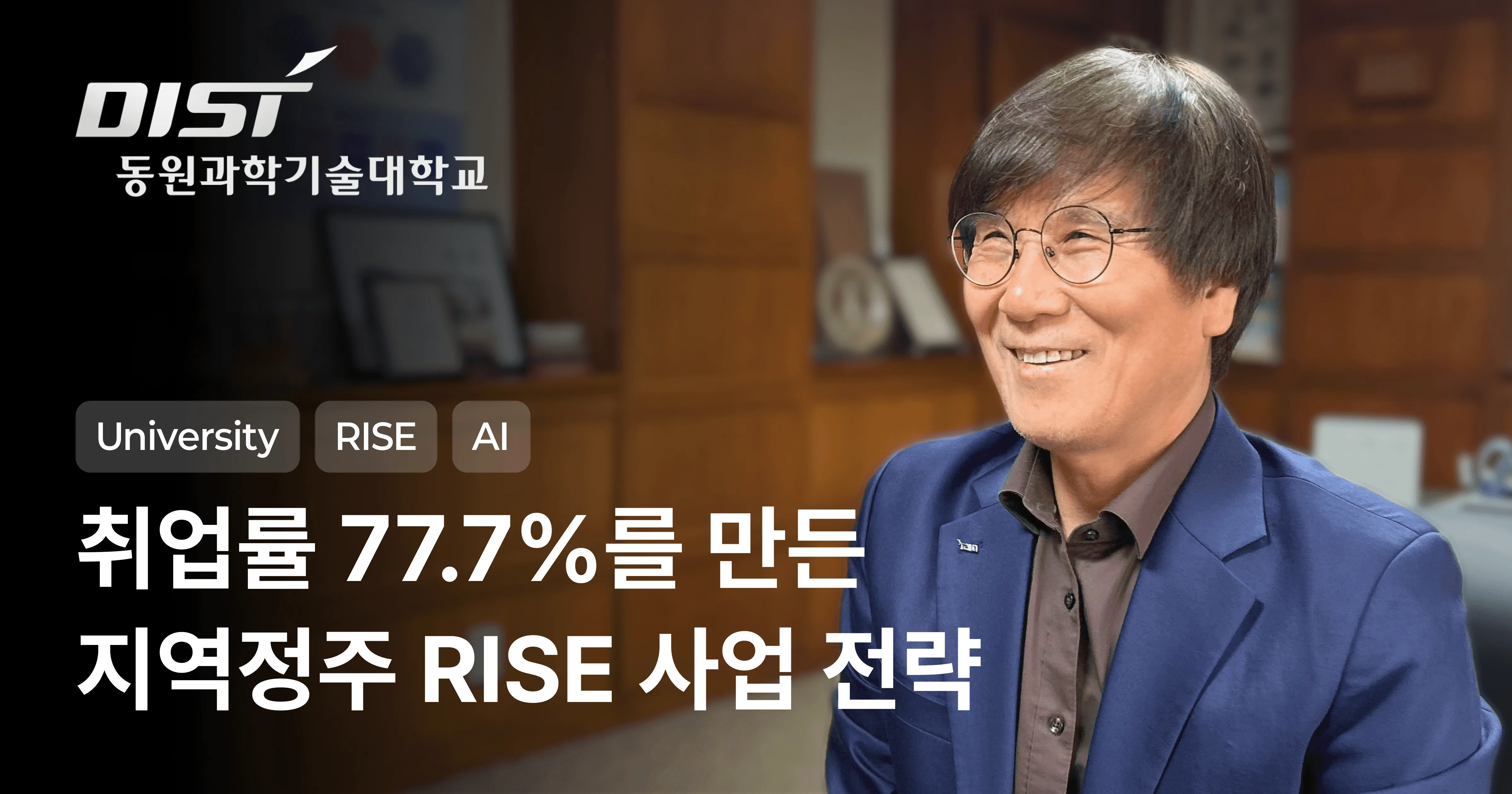
"Region, Industry, and University Thrive Together": President In-Seong Jang's Dongwon Institute of Science and Technology Opens the Next Stage of Regional Co-Prosperity with Digital Badges
Dongwon Institute of Science and Technology simultaneously rolled out Kolleges digital badges across three units, cutting national-program evidence work by 40% compared with paper certificates, and is now planning S/A/B grade differentiation to signal student competency to local employers.

What Is the RISE Project? Seoul's Selected Universities and Key Strategic Directions
Seoul selected 35 universities under RISE to align higher education with regional industry needs, investing 76.5 billion KRW across five strategic priorities including AI talent development.

Digital Badges: A New Answer for Cultivating Local Talent
Korea's RISE initiative pairs with digital badges to close the loop between regional university curricula, verifiable competency credentials, and local employment retention.