
Researching education for all: how SeeD connects a network of education experts

From fleeting association activities to verifiable records of growth - how SeeD adopted Kolleges digital badges.
Interview with Chair Ahn Ji-hoon and Secretary-General Jung Hyun-seong of the Special Education Edutech & Digital Education Association (SeeD)
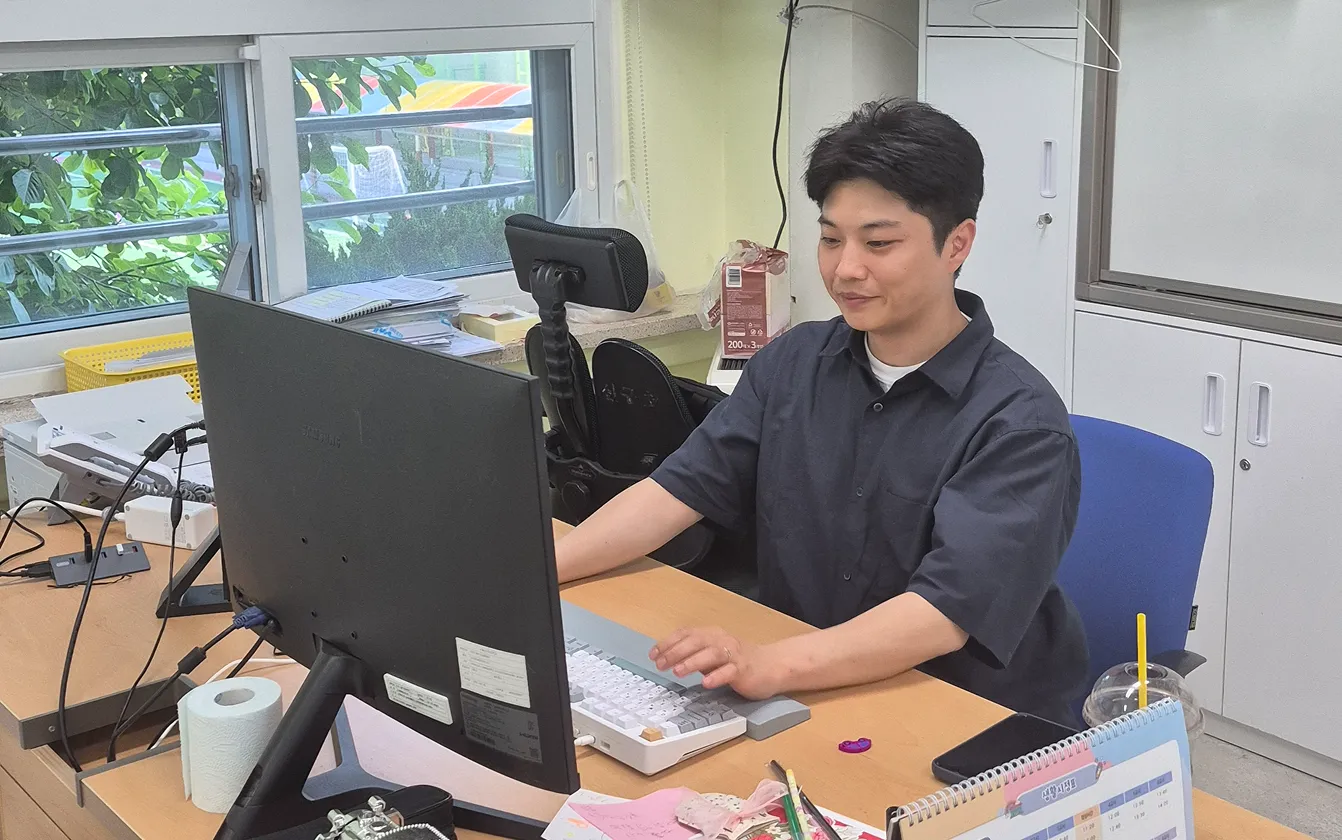
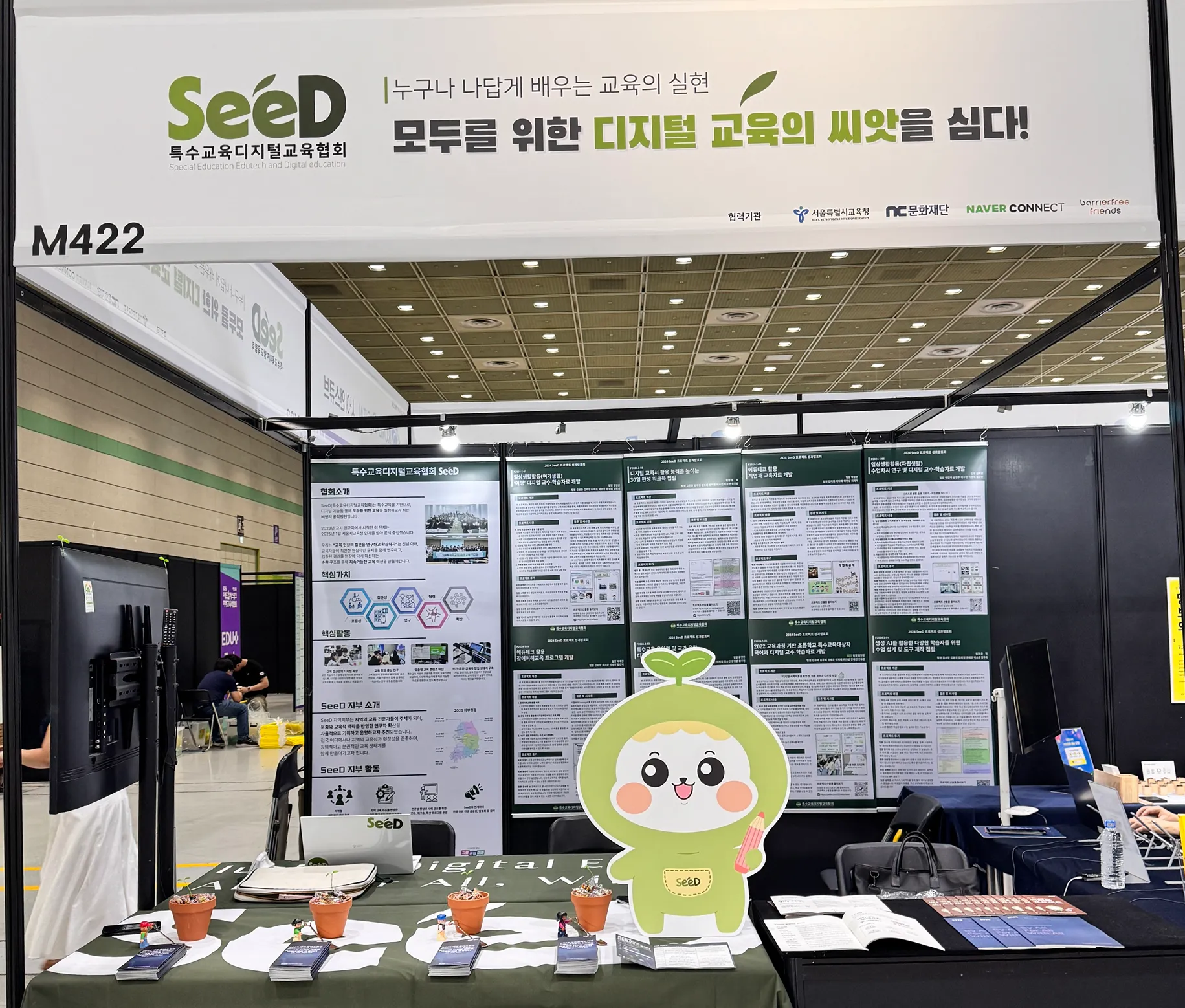
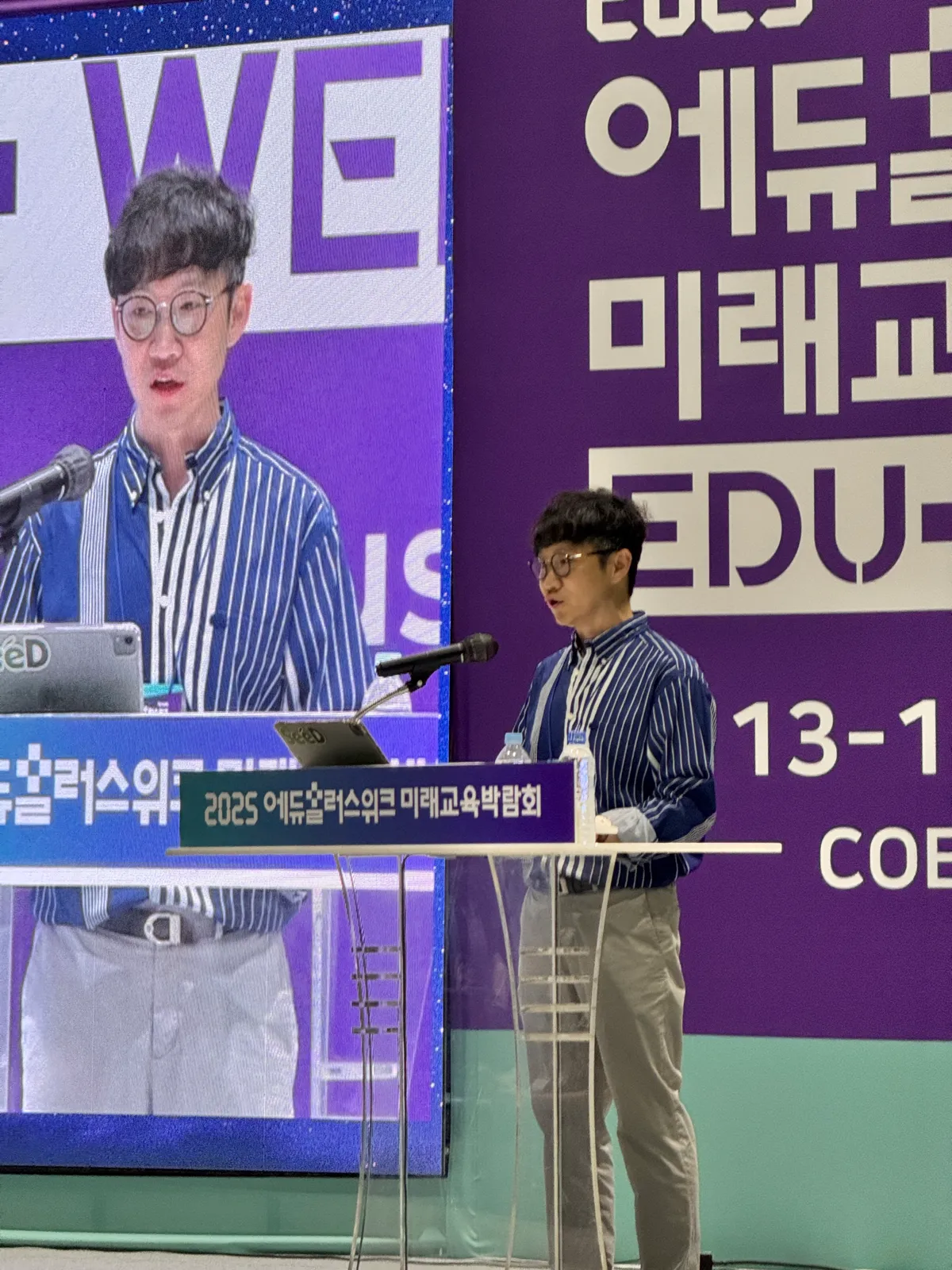
Special education and digital - two words you rarely see side by side in a single organization’s name. The Special Education Edutech & Digital Education Association (SeeD) began as a study group of special-education teachers across kindergarten, elementary, middle, and high schools, and became an incorporated association in November 2024. After incorporating, it broadened into a network for the era of inclusive education, drawing in general-classroom teachers, edutech companies, and experts from across the field. A single expo gathers 350 to 450 people, and digital and edutech training runs seven or eight times a year. SeeD adopted Kolleges digital badges so that activity like this would not simply slip away as a record of who attended. We sat down with Chair Ahn Ji-hoon, who has charted the association’s direction, and Secretary-General Jung Hyun-seong, who oversees its secretariat.
What kind of association is SeeD?
An inclusive-education network where on-the-ground concerns gather and connect
Q. If you had to introduce SeeD in one line to someone hearing about it for the first time, how would you describe it?
“SeeD is an association of people who care about the direction of education for all in the digital age, gathered together to build classrooms where everyone learns side by side. In our early days as a study group, it ran mainly around special-education teachers across kindergarten through high school. But after we founded the incorporated association in November 2024, general-classroom teachers, education stakeholders, and experts from edutech and the wider field joined in, and it has been expanding into a much broader networking space.”
- Ahn Ji-hoon, Chair
For Chair Ahn, special education and general education are not separate domains. “The special-education setting and the general-education setting are essentially the same,” he says. They are no different in discovering a student’s potential and helping them grow - what differs is only the kind of support each student needs.
Q. Where does SeeD place the most weight in its work?
“SeeD is closer to a network where on-the-ground concerns gather and are solved together. Teachers share the difficulties and needs they feel in the classroom, and on that basis we run training and networking gatherings, which then carry over into research and content development.”
- Ahn Ji-hoon, Chair
That description maps directly onto what the association actually does. Training, networking gatherings, conferences, expos, outside partnerships - the starting point is always a concern that came from the field.
Why was SeeD created?
To bridge the gap between the field, technology, and research
There was more than one reason the association felt necessary. Chair Ahn pointed to two strands together.
Q. What problem were you trying to address when SeeD was first created?
“There are many teachers with diverse talents and expertise in the field, but I felt there weren’t enough spaces where their ideas and experiences could come together. Good attempts and reflection were happening continuously in each classroom, but too often they remained the effort of one individual.”
- Ahn Ji-hoon, Chair
The other strand lies on the edutech and research side. Companies are raising their technical capability with no small amount of cost and effort, but a channel for hearing the field’s voice is not always in place.
“Edutech companies take on the challenge of building meaningful products in step with changes in the field, and they invest a great deal of cost and effort. Especially now, when individual diversity is respected and personalized learning is emphasized, I think the technical capability to support inclusive education - where every student can access and take part together - is important. The same is true on the research side. SeeD was created to play the role of connecting these gaps between the field, technology, and research.”
- Ahn Ji-hoon, Chair
Connecting the field, technology, and research. The work the association pursues is structured to pull these three axes closer together.
The most important criterion in special-education edutech
“Accessibility is not a separate feature”
When you talk about handling digital tools in special education, it’s easy to picture technology built around the characteristics of a disability. Chair Ahn sees the starting point differently.
Q. When digital and edutech enter the special-education setting, is there anything that needs more attention than in general education?
“The first thing to consider is accessibility. But here, accessibility must not stop at the meaning of ‘a separate feature only for students with special-education needs.’ It should instead start from the questions: can everyone use it, and can a wide range of students take part together?”
- Ahn Ji-hoon, Chair
Every student reads, writes, operates, and communicates differently. So a digital tool should not assume only a mouse or touch; it has to account for voice, images, assistive technology, easy guidance, and step-by-step support as well.
Q. What do you think matters most for edutech to enter the classroom?
“For edutech to enter the classroom, experts from the field have to take part from the planning stage. A teacher is not simply someone who picks a tool they like - they are a professional who runs the curriculum. So when judging whether a tool is a good one, the important questions aren’t personal preference but: is this tool necessary for running the curriculum, and does it expand students’ learning and participation?”
- Ahn Ji-hoon, Chair
Chair Ahn added that a student’s learning records, behavioral data, and disability-related information “must be handled very sensitively.” He means that guardian consent, the scope of use within the school, and data-security standards have to be in place together. In the end, the special-education edutech he describes is technology designed so that a diverse range of students learn and participate together.
How do special-education teachers judge a digital tool?
“Can I use it in class right away?”
SeeD’s training doesn’t stop at introducing a new tool. The association starts from the question teachers ask most often.
Q. Is there something special-education teachers most often bring up about “digital and edutech training”?
“What special-education teachers were most curious about in digital and edutech training was ‘can I apply this in class right away?’ No matter how good a new tool looks, there’s a point an educator thinks of first. Is the learning curve simple? Do students need too much explanation to use it? Will teaching how to use the tool eat into the time actually meant for the lesson?”
- Jung Hyun-seong, Secretary-General
In the special-education setting, every student differs in how they communicate, their level of understanding, and their ability to operate a tool. So how a tool embraces these differences becomes the heart of the judgment.
Q. What is the standard teachers use to take a tool on board?
“Teachers don’t run a lesson in order to use a digital tool. They want to use a digital tool to raise the educational participation and learning outcomes of diverse learners. So in our training, I think we have to answer how this tool can actually be used inside a real lesson, and what it supports for the participation of a wide range of students.”
- Jung Hyun-seong, Secretary-General
What does SeeD do?
Three axes: network, research, partnership
SeeD’s work divides broadly into three strands.
Q. Could you introduce SeeD’s core initiatives by category?
“SeeD’s work can be explained mainly around network, research, and partnership. The most important area is the network. SeeD builds spaces where teachers share the concerns and attempts they each feel in their classrooms. Through training, gatherings, conferences, and expo participation, we run things so that teachers connect with one another and field experience gets shared.”
- Jung Hyun-seong, Secretary-General
The second is research. The association doesn’t stop at talking about field problems; it refines them into educationally meaningful questions and widens them into research. Research and content that can be applied directly in the field follow, on themes of special education and digital education, inclusive education, and edutech use.
The third is partnership. SeeD does not stay inside the school fence. It joins hands with edutech companies, universities, public institutions, and education-related organizations to build a structure where the field, technology, and research mesh. Running education programs like Digital Saessak (Digital Sprout), taking part in expos and conferences, and collaborating with companies and institutions are what this axis looks like in practice.
“In short, SeeD is an education network that connects field concerns through a network, researches them, and expands sustainability through partnership.”
- Jung Hyun-seong, Secretary-General
The membership structure is also built to hold up these three axes. Full members are field teachers, education stakeholders, and experts who share the association’s direction. Advisory members are experts in education, research, technology, and policy who add advice on operations, content, and outside partnerships. SeeD-U is a participation channel for aspiring educators, centered on university students.
Why did SeeD adopt digital badges?
Leaving a record where a seed was planted
The name SeeD comes from a seed. Like its name, the association’s work is close to throwing out a single question and creating the spark for a new attempt and a new connection. So how do you record where that seed was planted and who received it? That’s exactly why they adopted digital badges.
Q. Was there a moment that first introduced you to digital badges as an approach?
“We adopted digital badges because we wanted the experience of everyone who took part in SeeD’s activities to remain not as a one-off, but as a record of growth that carries over into their own fields. SeeD’s work, true to its name, is close to the process of planting a seed.”
- Jung Hyun-seong, Secretary-General
Secretary-General Jung sees the work of tending and growing that seed as ultimately falling to the teachers, aspiring teachers, and experts standing in their own settings. So it felt like a loss if the experience of being part of SeeD remained only as a record of attendance.
“A digital badge was a way to record more clearly what activity a participant took part in and what experience they built. For someone it becomes a record of training participation; for someone it becomes a history of projects and research; and for someone it can become a small portfolio of carrying their practice forward in their own setting.”
- Jung Hyun-seong, Secretary-General
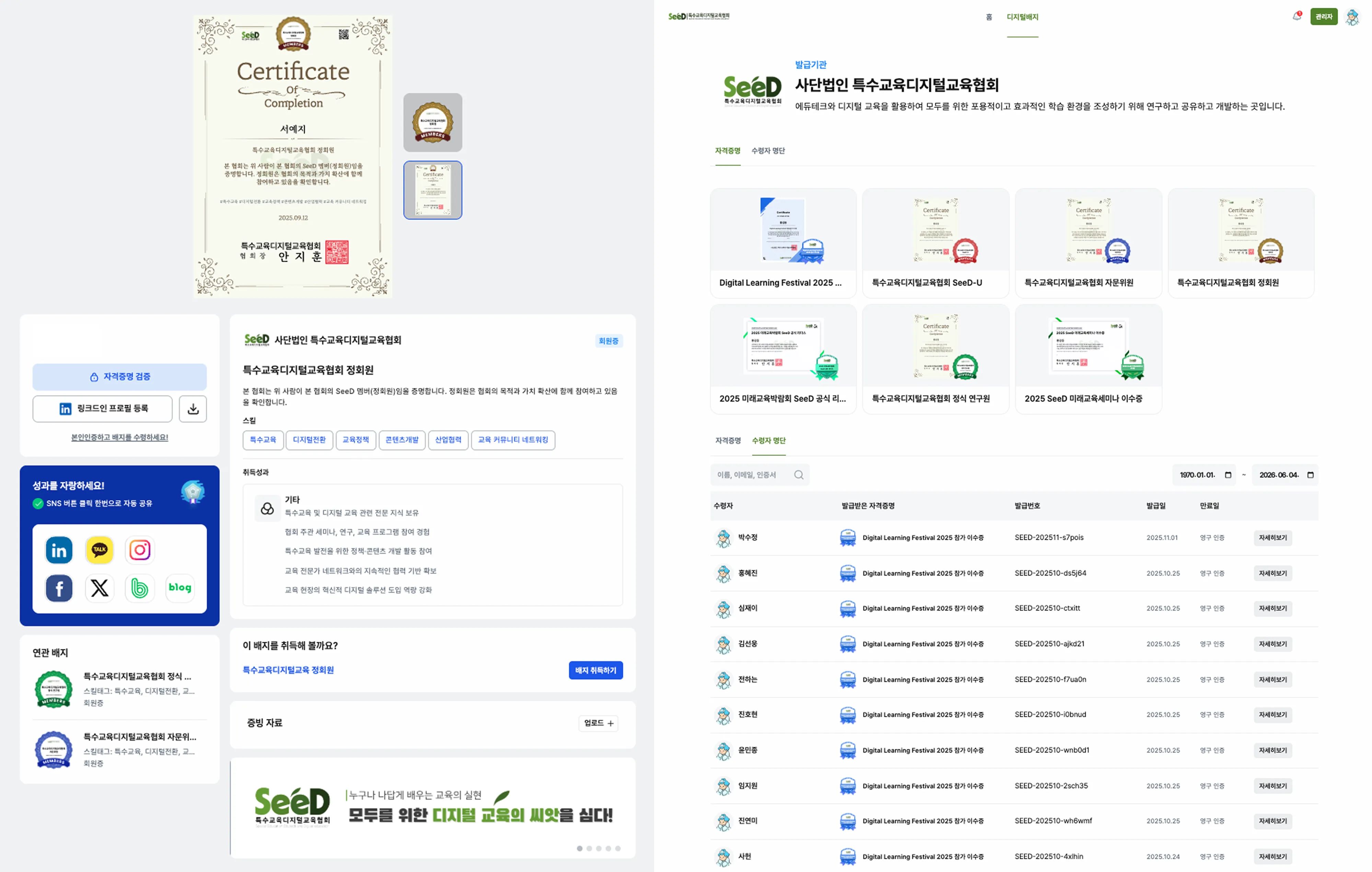
For the association, a digital badge is not merely a means of certification but a trace that a participant’s experience and growth carried over into their own field. The badges Kolleges issues follow the international 1EdTech Open Badges 3.0 standard, and their authenticity can be checked by QR code and link, so they verify even on external systems.
Why did SeeD choose Kolleges?
Before the features - a partner who shared the purpose and saw it through
There isn’t just one digital certification solution. The first reason SeeD chose Kolleges wasn’t a feature comparison.
Q. What was the decisive reason you chose Kolleges among several digital certification solutions?
“The biggest reason we chose Kolleges among many digital badge solutions was that, before talking about their own technology, they deeply empathized with SeeD’s purpose. At first, Kolleges reached out to us by email. We could have taken it as just a sales message, but as we talked, we felt they were genuinely listening to what problem SeeD started from and what kind of educational setting we wanted to build.”
- Jung Hyun-seong, Secretary-General
Secretary-General Jung says the more important criterion was not bringing in a solution, but whether you could build a relationship by listening to each other. On that point, Kolleges looked less like a service provider and more like a partner who would understand the direction together and connect it.
“The CEO is kind to begin with, takes good care of the service, and supports us well, which is why I think the community worked out. These days you often can’t even get a reply from a big-company platform, let alone a small company - even if you leave a question on the website, it comes back a week later. That kind of follow-up care was really good.”
- Jung Hyun-seong, Secretary-General
A digital badge solution isn’t adopted once and done - issuance repeats for every event, cohort, and program. So the most stressful moment for an operator is when you send a question and no answer comes back. That’s why Secretary-General Jung stressed follow-up care again and again.
How did operations change after adopting digital badges?
Activity that used to slip away, now a visible record
Q. Was there a feature or flow where you felt “this part really helps,” compared with before adoption?
“The most helpful part of using Kolleges was that SeeD’s activities remain as a visible record of growth for participants. Even before, when training or a project ended, we’d organize the participant roster or completion status. But that record was mostly closer to internal management material, and there were limits to participating teachers checking it or using it as their own experience.”
- Jung Hyun-seong, Secretary-General
Before adoption, the roster and completion status the association organized were internal administrative material - not the participants’. Moving to digital badges, the same data became something participants can see and use themselves.
“With digital badges, participants can directly check what activity they took part in and what experience they built. As training, projects, research, and network participation remain as a single badge, it became an occasion to recognize, ‘I was part of this activity, and I’ve built this experience.’”
- Jung Hyun-seong, Secretary-General
Secretary-General Jung sees this change as having affected participants’ engagement and sense of efficacy as well.
“For one thing, the parts that teachers could only keep as a memory of having simply taken part can now be distributed through certificates, so teachers feel proud when they receive them - that was good.”
- Jung Hyun-seong, Secretary-General
Activity that used to slip away now remains as a visible history. That’s the clearest use of digital badges the association named.
Improvement points found while operating
“I wish it were simpler”
This is the most candid part. Most of the association’s staff have separate day jobs. So once the impression of “it takes a lot of hands” sets in, even a good tool gets put off for next time. Secretary-General Jung summarized the points he ran into while operating into two.
The admin screen - organized around the operator’s actions
“There are really only two reasons to go in. To issue a badge, or to issue more because someone among the already-issued was missed. So you look at the history. I’d rather there were a dashboard home with buttons right there - ‘Create badge,’ ‘View issued badges,’ ‘Drag design,’ just like that.”
- Jung Hyun-seong, Secretary-General
The reason an operator goes into the admin page is clear: to create a new badge, or to check and patch up previous issuances. If the first screen is statistics-heavy, like issuance counts, it takes time to get to that first action.
Follow-up data - integrated satisfaction surveys
“I’d like a survey feature too. There was a response after badges were received, but honestly, unless we run a separate survey, we don’t know whether it had an effect. So once a badge is issued, it would be good to have a feature that asks about satisfaction - like, ‘Were you satisfied with this training?’”
- Jung Hyun-seong, Secretary-General
If satisfaction doesn’t accumulate as data after an activity, it’s hard to explain at the approval stage why the solution should be used again next year.
People in education have a distinctive digital habit. As Secretary-General Jung sees it, public officials use email more than desktop messaging apps - and within that, official government email (institutional domains like @sen.go.kr) most of all.
These points were passed directly to Kolleges CEO Yoon Chang-jin during the interview. Since SeeD named “feedback communication works well” as a reason for choosing Kolleges, it’s worth looking forward to how these requests are addressed in the next update.
The classroom SeeD envisions
The experience of “I can do it too”
Q. Is there a specific scene you’ve found most rewarding lately?
“The most rewarding moment in SeeD’s work is, in the end, hearing students’ reactions. Training, research, and partnership might look on the surface like activities aimed at teachers and institutions. But at the end of them, there is always a student.”
- Ahn Ji-hoon, Chair
The feedback Chair Ahn found striking is not grand. They are short lines like, “The students really enjoyed the lesson,” or, “A student who usually found it hard to participate said today they’d try it first.”
“Scenes where students more easily express their own thoughts using digital technology, or show interest by watching a friend’s activity, or take part at their own pace - these are very meaningful changes too. Every time I hear stories like that, I feel that what SeeD does isn’t staying as a one-off gathering or research, but is connected to widening students’ experience of participation in real classrooms.”
- Jung Hyun-seong, Secretary-General
The final scene the association hopes for gathers into one sentence: the moment every student has the experience of “I can do it too” within their education.
The association can’t achieve this alone. The gap between the field, research, and technology that Chair Ahn named as the starting point is filled where small devices that help a student change are made and carried forward. A digital badge is one of those devices. A teacher who received a badge at a training session steps into the next attempt, and that attempt carries over into a single touch of a student’s screen, a single glance toward a friend.
The name SeeD is a seed. The questions the association throws out, the spaces it makes, the badges it issues - all of it is the work of planting seeds. Tending and growing the seed happens in each classroom. A structure where activity that used to slip away remains as a visible record, and that record becomes the strength for the next attempt. The “classroom where every student participates meaningfully” that Chair Ahn described grows on the ground where those small records gather.
Frequently asked questions
Want to turn learning outcomes into verifiable assets?
From issuing to verifying and amplifying, see it for yourself with Kolleges.
Request a Kolleges demo
Related posts
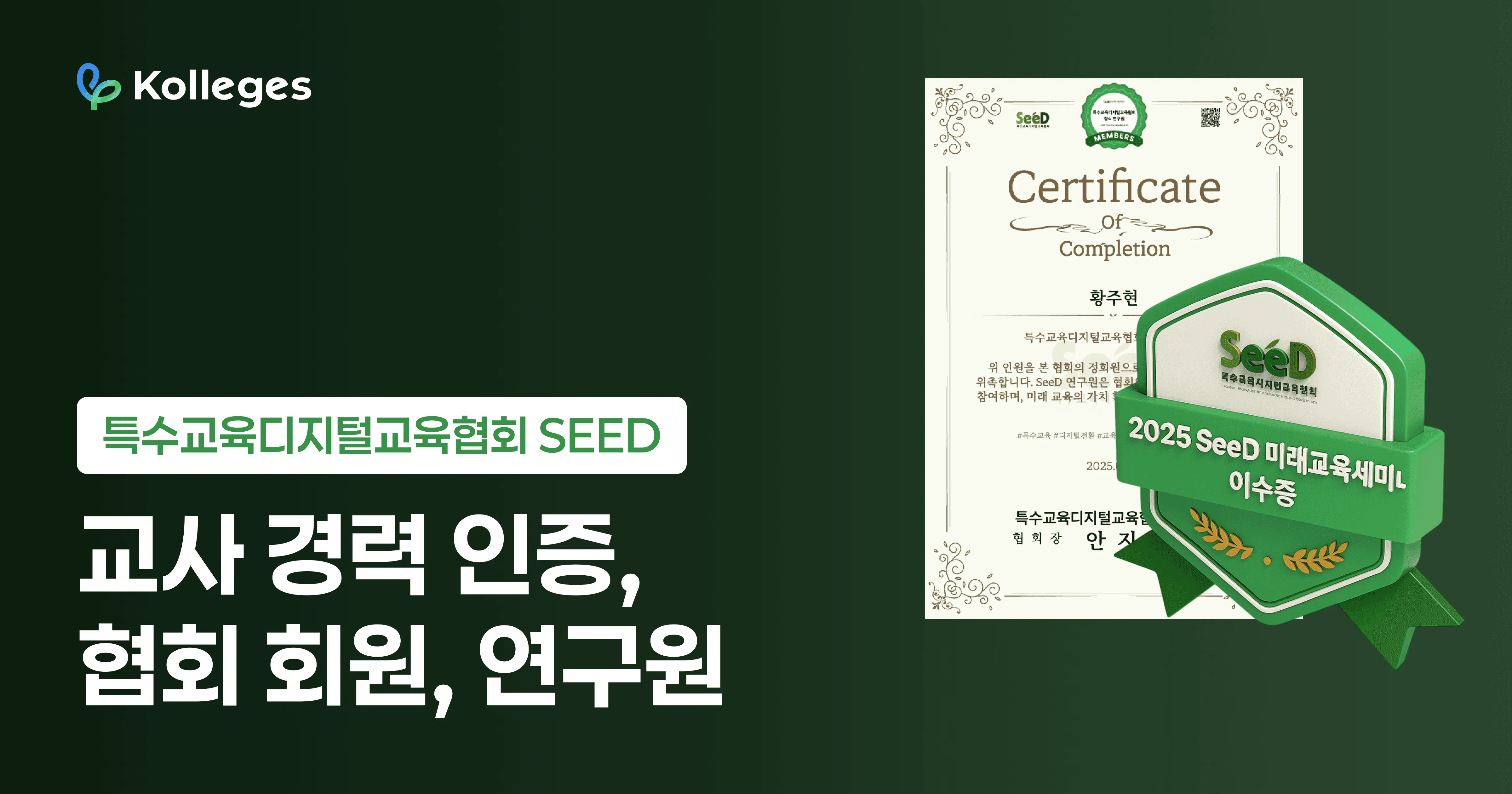
Reinventing Educational Outcome Certification: SeeD's New Challenge | Kolleges
South Korea's Special Education Digital Education Association (SeeD) issued blockchain-based digital badges at EduPlus Week 2025, turning seminar completion and speaker recognition into verifiable, shareable credentials built on Open Badges 3.0.

Three Core Advantages of Open Badges as an Essential Tool for Credible Credentialing
Open Badges outperform paper certificates by combining tamper-resistant, data-based verifiability, instant online sharing, and sequential career record-keeping in a single globally-standardized credential.

Automated Certificate Issuance in Just a Few Clicks
Kolleges automates certificate issuance end-to-end - upload an Excel participant list, set optional completion conditions, and the system generates and delivers every certificate in bulk with no manual editing.