
Verifiable Credentials
Digital-badge and credentialing insights related to Verifiable Credentials.

How Do Korean Universities Operate Their Microdegree Programs?
Four Korean universities — Sejong, Korea, Dankook, and Chung-Ang — show how short-credit microdegree programs pair with digital badges to turn learning outcomes into verifiable proof.

The future of digital badges: how Open Badges 3.0 is changing the credentialing standard
Open Badges 3.0 upgrades digital badges from embedded PNG metadata to a full Verifiable Credentials model — making them machine-verifiable, portable worldwide, and tamper-proof without relying on any central server.
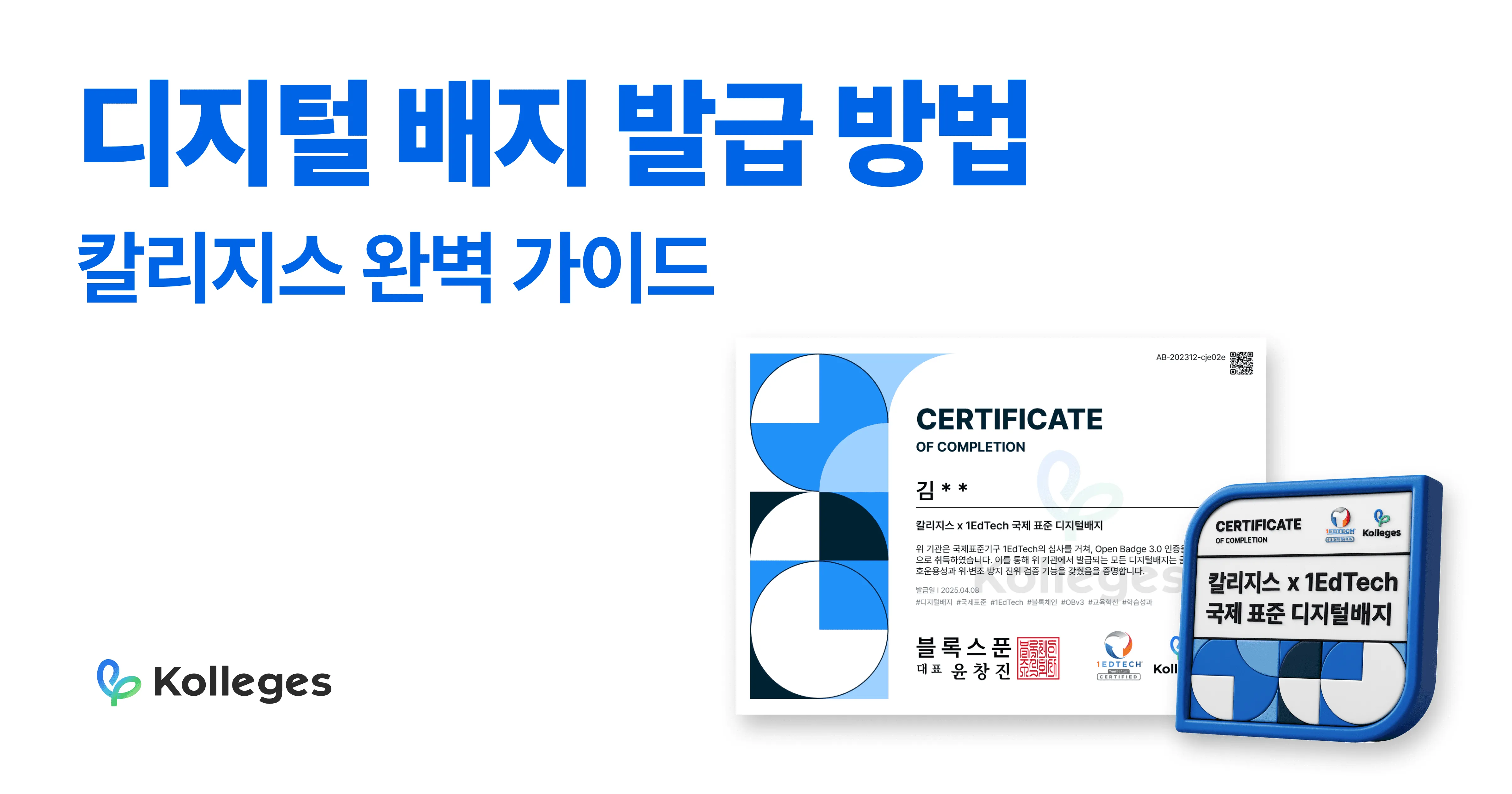
How to Issue Digital Badges and Store Them Safely (feat. IPFS)
Digital badges become tamper-proof Verifiable Credentials by combining JWT cryptographic signatures with IPFS distributed storage, letting anyone verify authenticity via a content-addressed CID link.
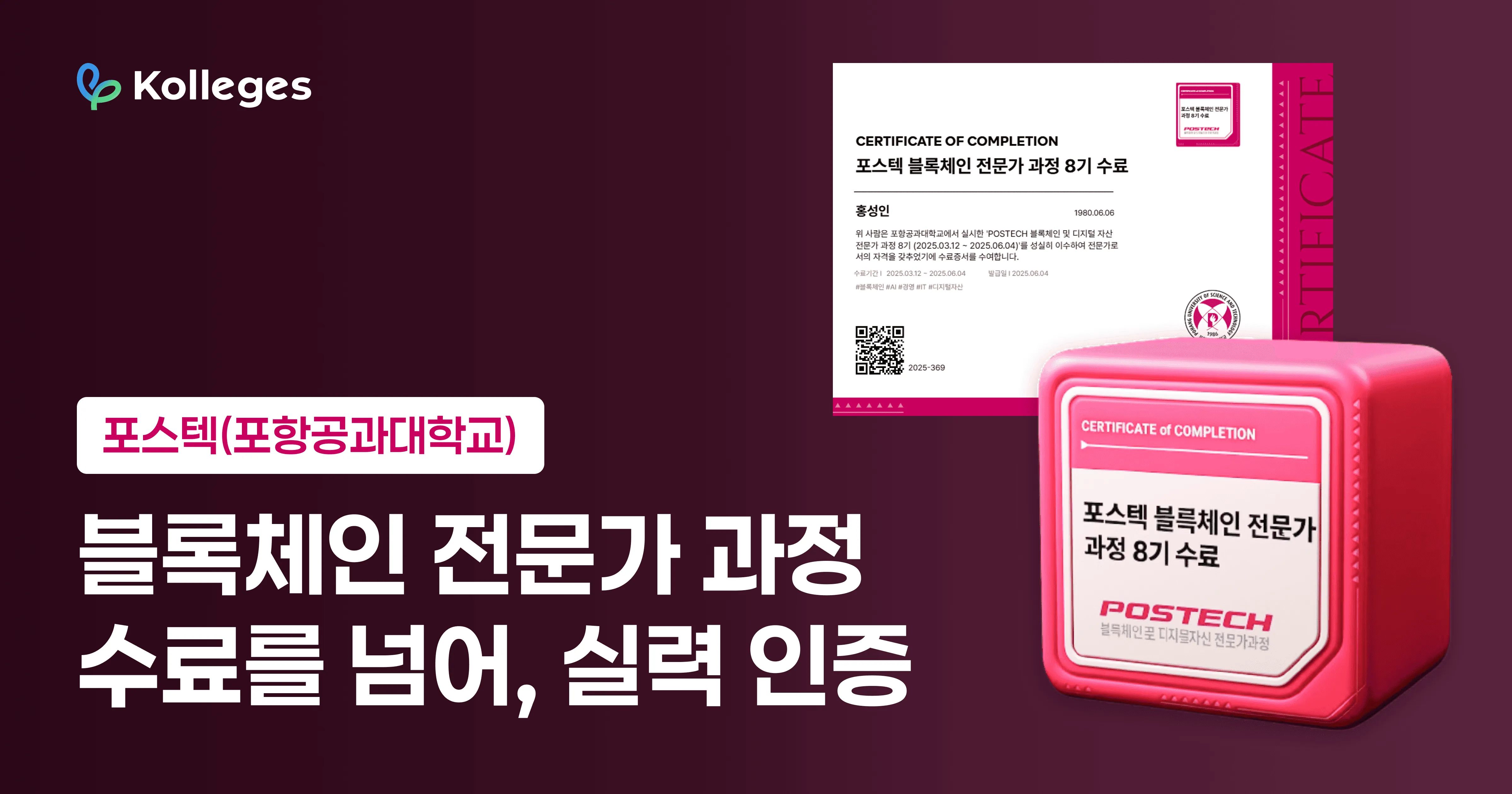
The Digital Badge POSTECH Chose: Proving Skill Beyond the Certificate
POSTECH issued Kolleges digital badges to graduates of its Blockchain and Digital Asset Specialist Program, giving learners a verifiable, metadata-rich credential shareable on LinkedIn and portfolios.
Digital Badges: How Is a DID Created and Stored?
Kolleges generates DID-based digital badges using the did:key method with RSA key pairs — storing only the public key server-side while delivering the encrypted private key to the user for self-custody.

What Is DID — Managing Digital Badges with Decentralized Identity
Kolleges builds digital badges on DID using the did:key method, so both issuers and recipients hold cryptographic key pairs that let anyone verify badge authenticity without a central server.
See whether it fits your institution — in 10 minutes
From issuing to verifying and amplifying, see it live in a Kolleges demo.