
The Beginning of the Microdegree Era for Practical Workplace Competency
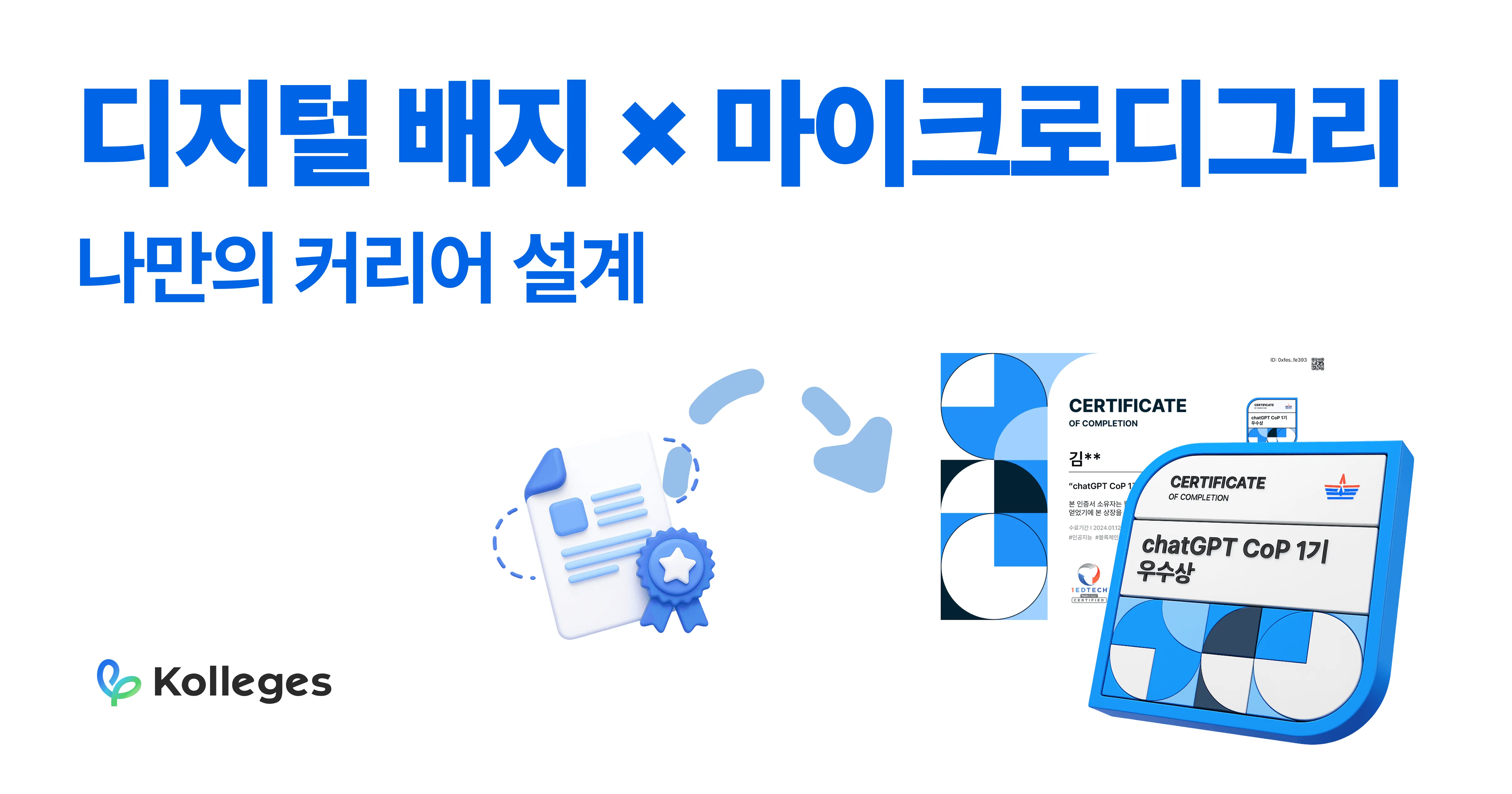
Microdegrees offer short-form, industry-aligned certification that pairs with tamper-proof digital badges to give graduates verifiable, portfolio-ready proof of workplace competency.
A small but powerful education system: the convergence of microdegrees and digital badges creates a new career strategy.
As the perception grows that major courses alone are not enough to remain competitive, more students are seeking education centered on practical workplace competency. Against this backdrop, the microdegree system - which lets students earn certified expertise and field experience for a small number of credits - is emerging as a new trend on university campuses.
By lowering the burden while broadening career options, this system offers meaningful possibilities for both institutions and learners.
What is a microdegree? - A small but powerful competency-verification system
A microdegree is a system in which a learner completes core competencies on a specific topic or job over a relatively short period and receives official certification for it.
Unlike traditional major-centered education, completion comes with a separate certificate of completion or digital badge - recorded on the academic transcript and used as a meaningful supplement for job placement or graduate school applications.
In particular, because microdegrees are structured around topics that reflect the latest industry trends - data analytics, UX/UI design, AI, ESG - they have the advantage of letting students acquire workplace competencies quickly.
Breaking down the walls between majors with interdisciplinary curricula

Microdegrees are not limited to a single department or major; their curricula link multiple disciplines and technologies.
For example, tracks like “AI-driven content marketing” can combine humanities, data, and design - letting students develop creative problem-solving abilities and interdisciplinary thinking together.
With a much lower barrier to entry than traditional double majors or minors, the number of students using microdegrees to fill in competencies their main major does not cover is on the rise.
Experience-driven learning tied to practical activities

Going beyond theory classes to build the abilities required in the actual field is the greatest strength of a microdegree.
Many programs are connected with special lectures, internships, hackathons, and project-based courses; collaborations with companies in particular let students experience industry needs firsthand.
These hands-on experiences give students the chance to build portfolios and provide real competitiveness in the post-graduation job market.
Microdegree + Digital Badge = Trustworthy Competency Verification
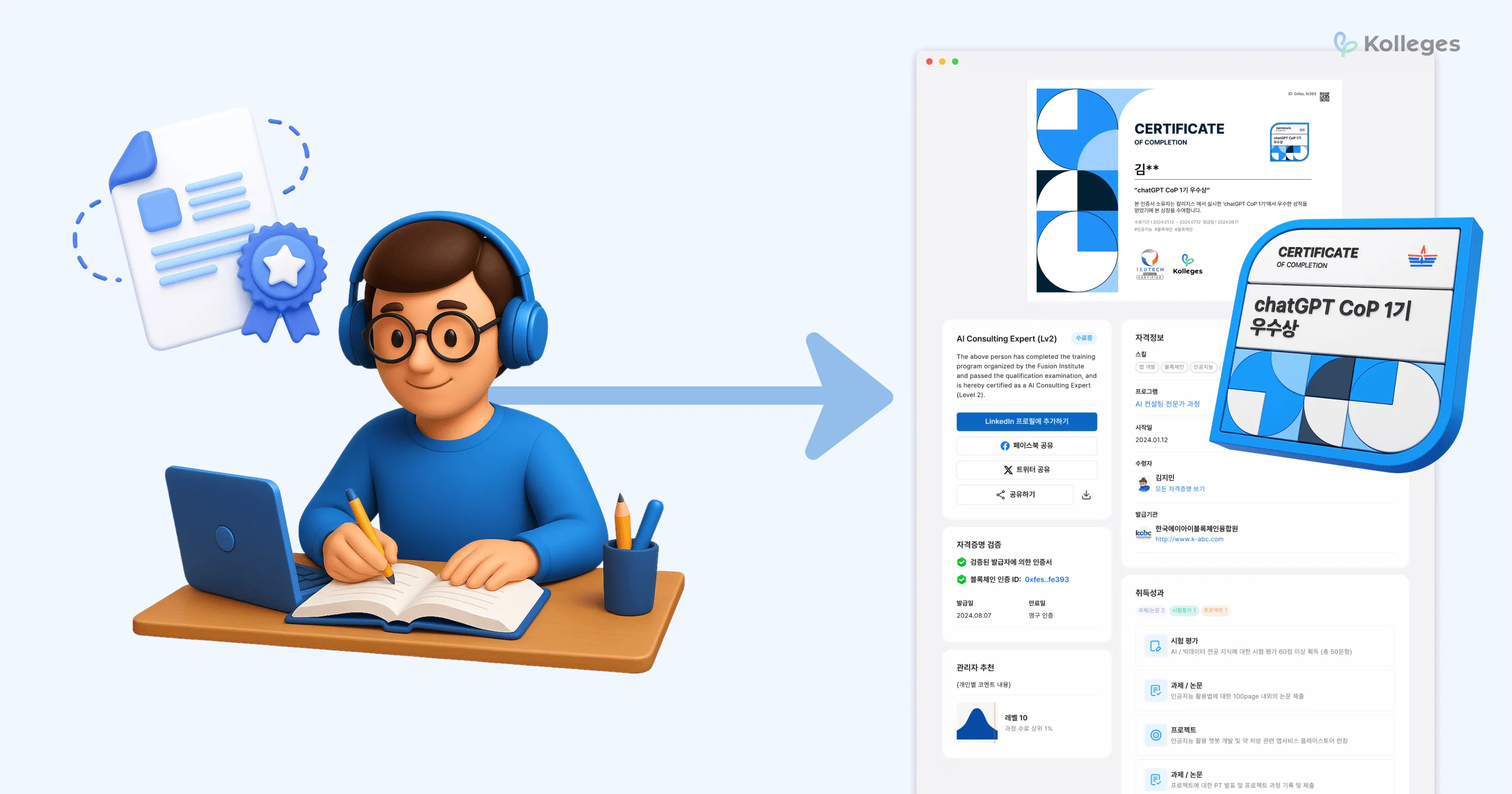
Many universities issue digital badges alongside microdegrees to microdegree completers.
Digital badges are issued on a blockchain basis, making them tamper-proof, and learners can share them online at any time.
When combined with a specialized digital badge platform like Kolleges, completion records can be managed as a visualized portfolio - an effective tool for both learners and institutions.
-
Register on LinkedIn
-
Embed a QR code on a résumé
-
Share records between institutions
Beyond simple completion confirmation, badges can be recognized in real careers as “trustworthy competency verification.”
A small beginning that prepares for the future of education
Microdegrees are the start of a new education paradigm. They are a practical way of supporting learners as they flexibly design their own competencies and paths, going beyond traditional degree-centered education.
And within this current, digital badges play the role of adding clear trust - not just a record.
🎓 A learning structure that starts small but grows broad. 🚀 Microdegrees and digital badges - with Kolleges at the center.
Summary of this content
- Microdegrees are a short-form education-and-certification system.
- They are structured to strengthen workplace competency by reflecting the latest industry trends.
- Digital badges visually verify learning records and support career design.
- Kolleges is a digital credentialing platform for both institutions and learners.
Frequently asked questions
Want to turn learning outcomes into verifiable assets?
From issuing to verifying and amplifying, see it for yourself with Kolleges.
Request a Kolleges demoRelated posts

How Do Korean Universities Operate Their Microdegree Programs?
Four Korean universities - Sejong, Korea, Dankook, and Chung-Ang - show how short-credit microdegree programs pair with digital badges to turn learning outcomes into verifiable proof.

Why Practice-Based Education Raises Employment Rates
Practice-based experience only translates into hiring advantage when it is objectively recorded - digital badges embedded in an E-Portfolio give employers instant, data-rich verification of real-world competencies.
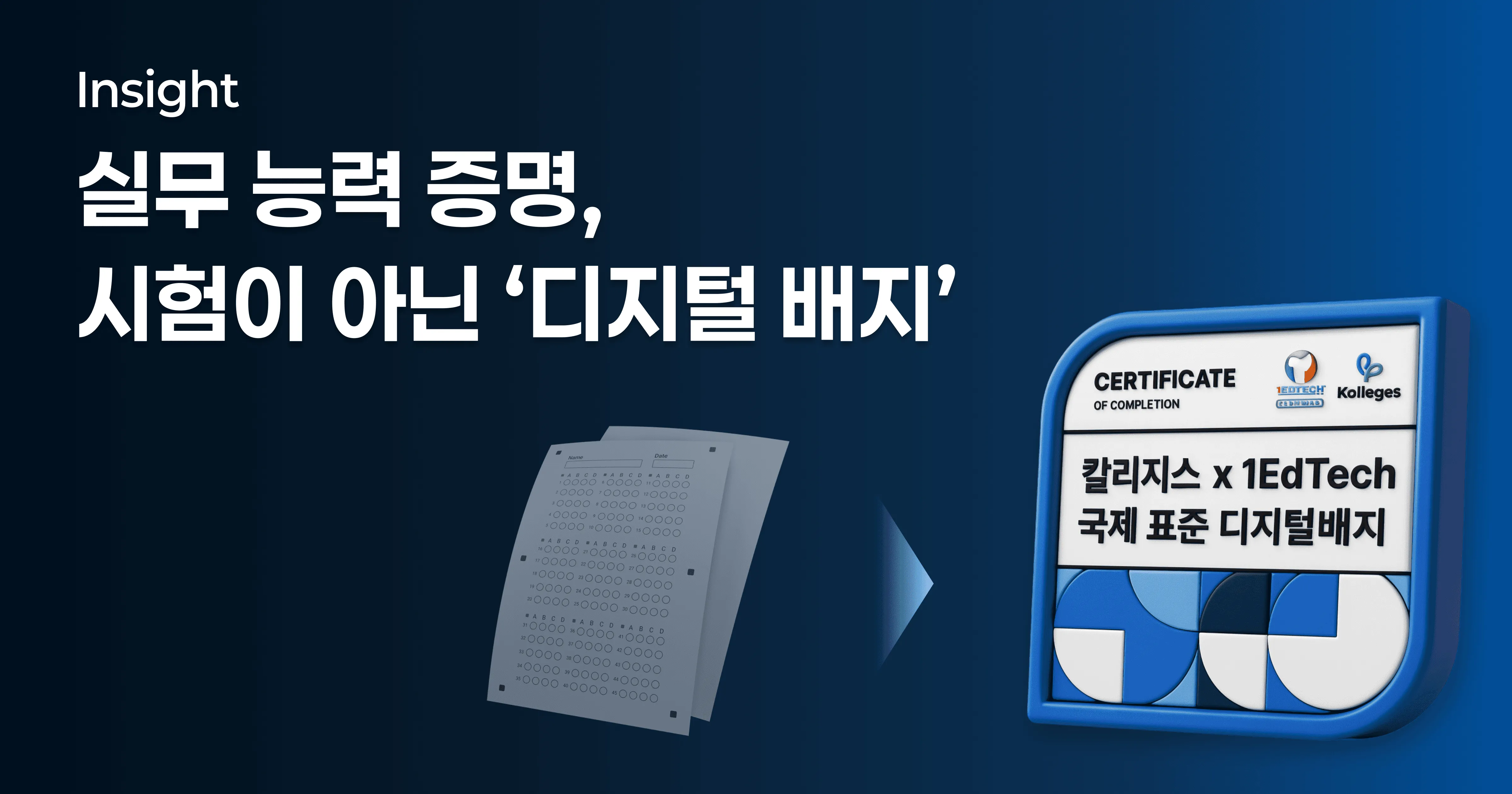
Proving Practical Skills with Digital Badges, Not Exams
Digital badges embed project links, tech stacks, and assessor sign-offs directly into verifiable metadata, replacing scattered files with a standardized proof of practical capability.