
Associations
Digital-badge and credentialing insights related to Associations.

Researching education for all: how SeeD connects a network of education experts
From fleeting association activities to verifiable records of growth - how SeeD adopted Kolleges digital badges.
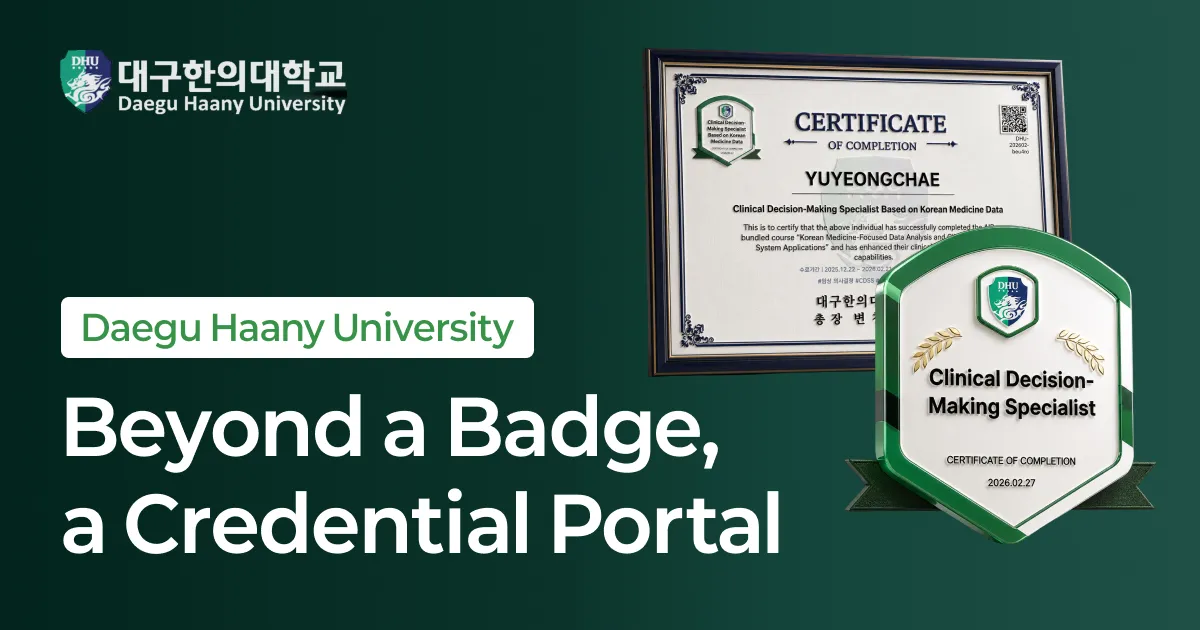
Running University Digital Badges: The Difference a Portal and Co-issuance Make (A Daegu Haany University Case)
University digital badges come down to operational structure beyond badge design. We lay out the differentiators that professors, education-innovation offices, and industry-academia foundations should look at: the dedicated portal Daegu Haany University built on Kolleges, co-issuance where two institutions sign together, KOLLEGES VERIFIED verification, and automatic issuance.
From Certificate Issuance to Connection: The Next Step in Outcome Management
Standards like Open Badges, CLR, and LER transform one-off certificate issuance into a connected, reportable flow of learning and employment outcomes.
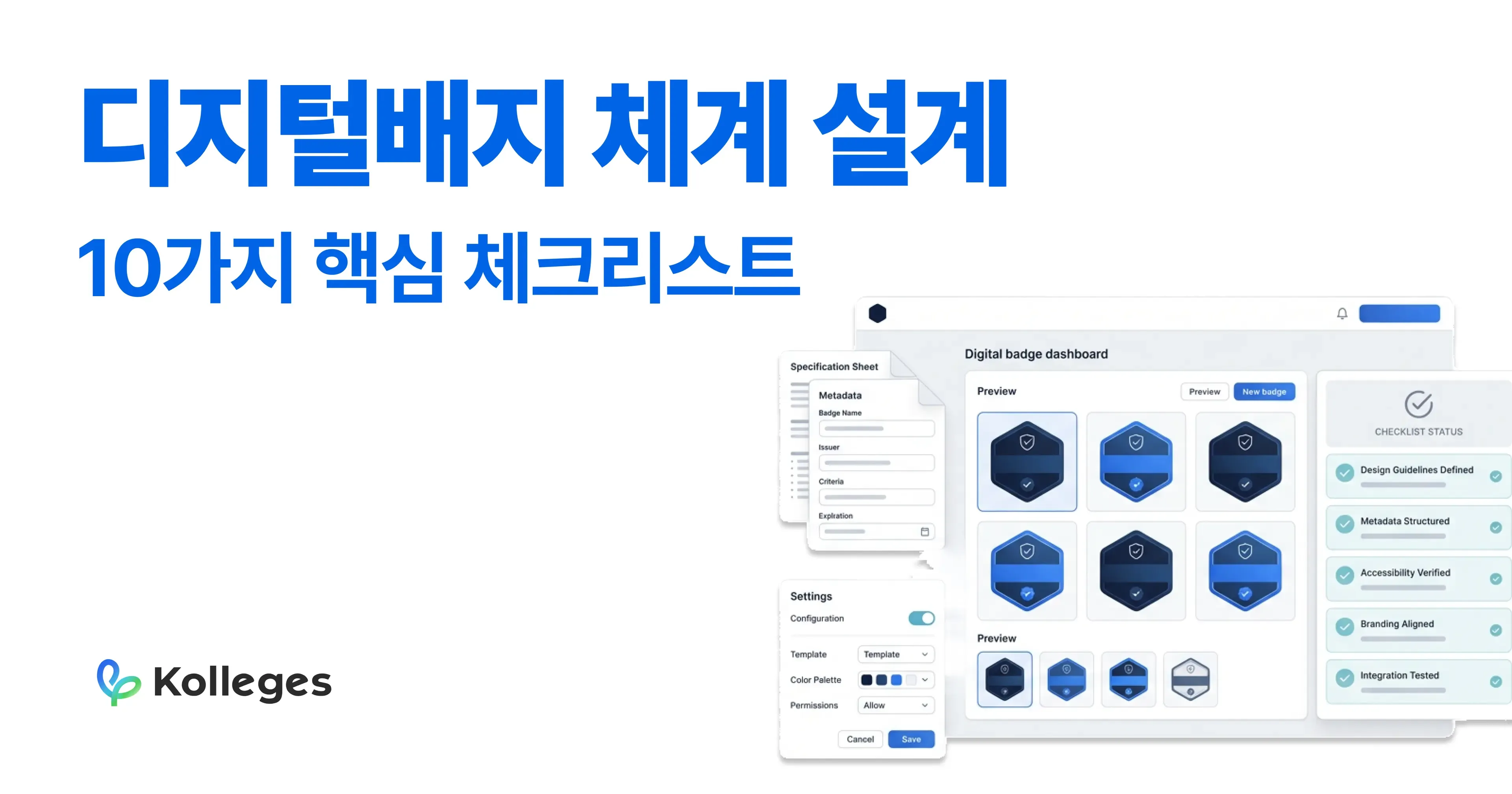
A 10-Point Digital Badge Design Checklist for Your Institution
Badge programs fail not from bad technology but from skipping design-stage decisions; this 10-point checklist helps institutions build badges that recipients actually use and share.
2025 Certification Trends: Which Credentials Actually Help You Get Hired
A job-function breakdown of 2025's most employable certifications - IT/data, office, engineering, and ESG/safety - with difficulty, prep time, and how digital badges make each credential verifiable to employers.
Automated Certificate Issuance in Just a Few Clicks
Kolleges automates certificate issuance end-to-end - upload an Excel participant list, set optional completion conditions, and the system generates and delivers every certificate in bulk with no manual editing.

Top 4 Digital Badge Providers | 2025 Comparison Guide
Kolleges stands out from LecoS, OmniOne, and K-OpenBadge by combining Open Badges 3.0 certification with automated SNS marketing and per-learner outcome credentials.

Building a Digital Badge Management Platform: A 5-Step Guide
A concise 5-step checklist - from defining criteria to operating analytics - that lets any institution launch a branded digital badge platform in roughly a day.
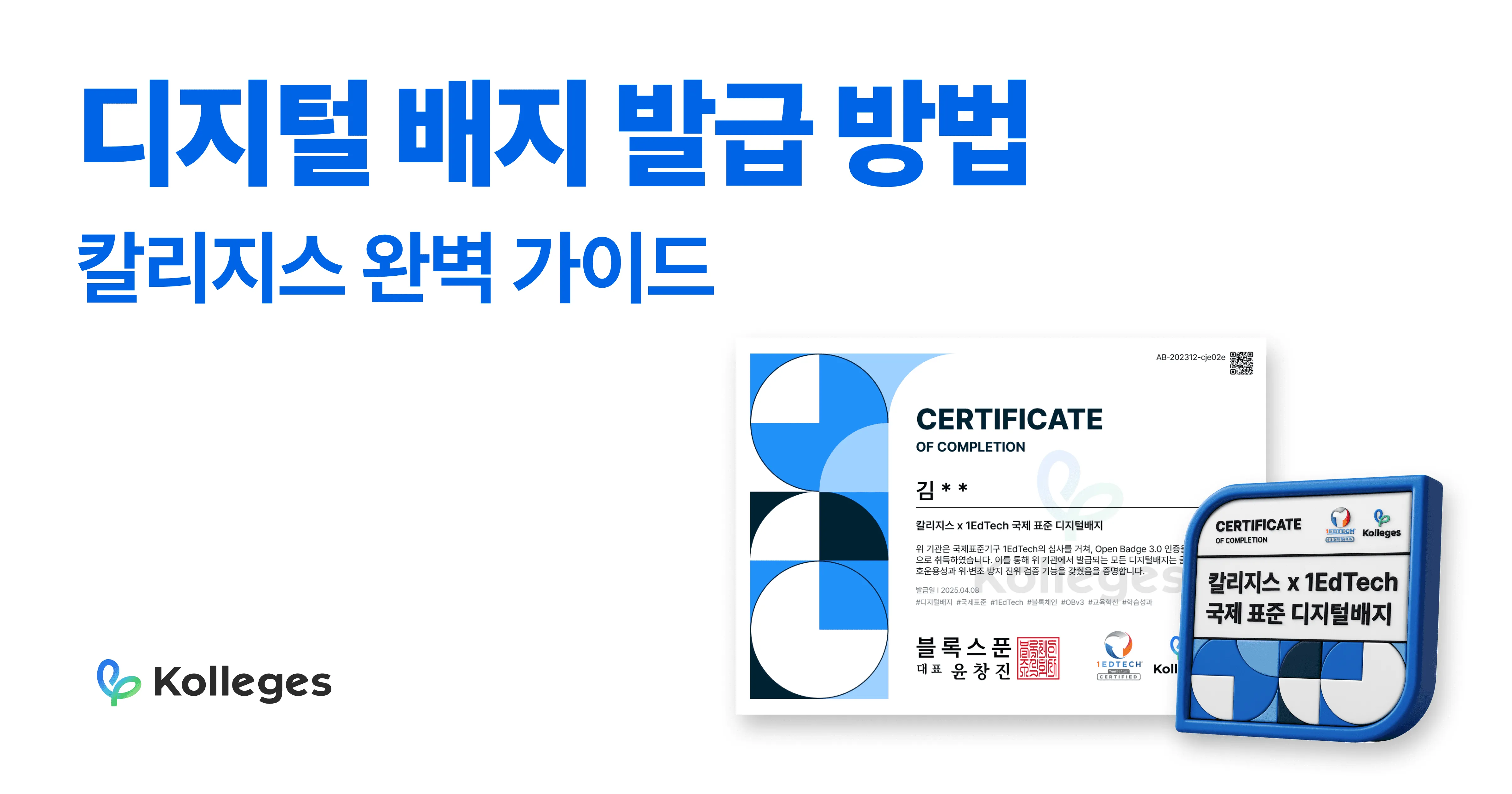
The Complete Guide to Issuing Digital Badges | Build the Kolleges 10-Minute System
Anyone can set up a professional digital badge issuance system in under 10 minutes using Kolleges - no technical knowledge or complex setup required.

Digital Badge Adoption Checklist: 5 Criteria You Must Verify
Before adopting a digital badge solution, verify OBv3 compliance, Issuer/Host/Displayer certification, data privacy procedures, ISO 27001 security, and a free admin demo.

Webinar Platforms: Pros, Cons, and How to Prepare an Online Seminar | Kolleges
A side-by-side breakdown of Zoom, Google Meet, and Microsoft Teams helps you pick the right webinar platform based on scale, features, and cost.

KOHI Mandatory Training: A Certificate Issuance Guide for Health and Welfare Workers | Kolleges
Health and welfare workers legally required to complete KOHI elder human rights training can now finish in 4 hours (down from 6 in 2025) - here's the full process from signup to certificate.
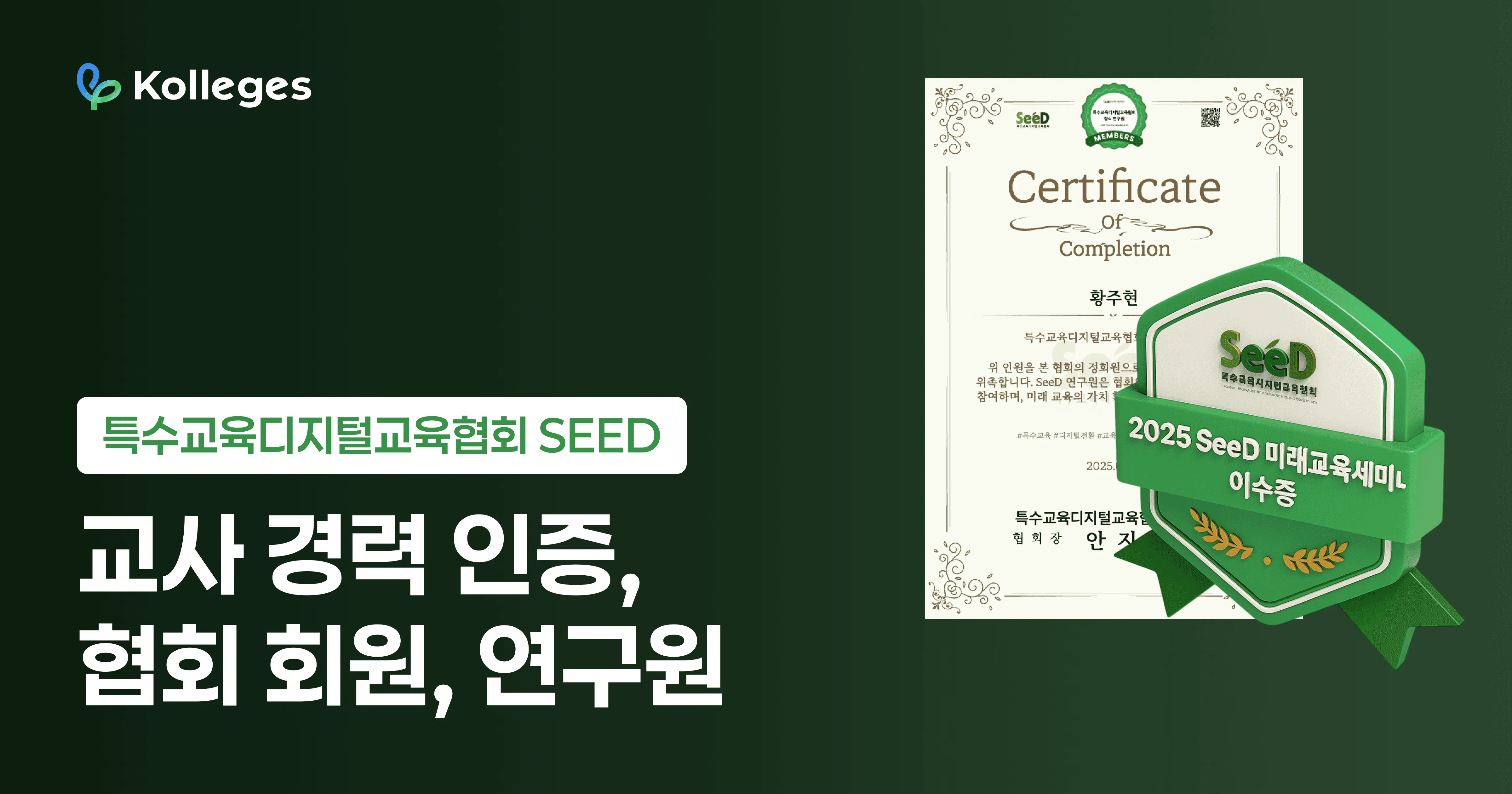
Reinventing Educational Outcome Certification: SeeD's New Challenge | Kolleges
South Korea's Special Education Digital Education Association (SeeD) issued blockchain-based digital badges at EduPlus Week 2025, turning seminar completion and speaker recognition into verifiable, shareable credentials built on Open Badges 3.0.

Food Hygiene Education Certificate: Issuance, Application, and Fees at a Glance
Food service operators in Korea must complete annual hygiene training under Article 40 of the Food Sanitation Act - skipping it triggers fines that escalate from KRW 200,000 to KRW 600,000.

Why Operating a Private Certification Is Harder Than Registering One | Kolleges
Discover why one-third of private certifications are abolished each year and how automating issuance, history management, and marketing prevents early abolishment.

Registering a private certification, Part 2: actual registration and tips for when documents are returned | Kolleges
A step-by-step walkthrough of submitting a Korean private certification on the PQI system, the top document-return pitfalls to avoid, and what annual monitoring requires after registration.

Registering a Private Certification, Part 1: Required Documents and Application Process | Kolleges
Educational institutions and sole proprietors can officially register a private certification in Korea by submitting the right documents and an Operations Regulation to KRIVET's Private Qualification Information Service between the 1st and 20th of each month.

Are More Digital Badges Always Better?
More digital badges only create value when each one is built on competency-driven design, outcome-based issuance, and real-world usability - quantity without that framework produces nothing but badge fatigue.
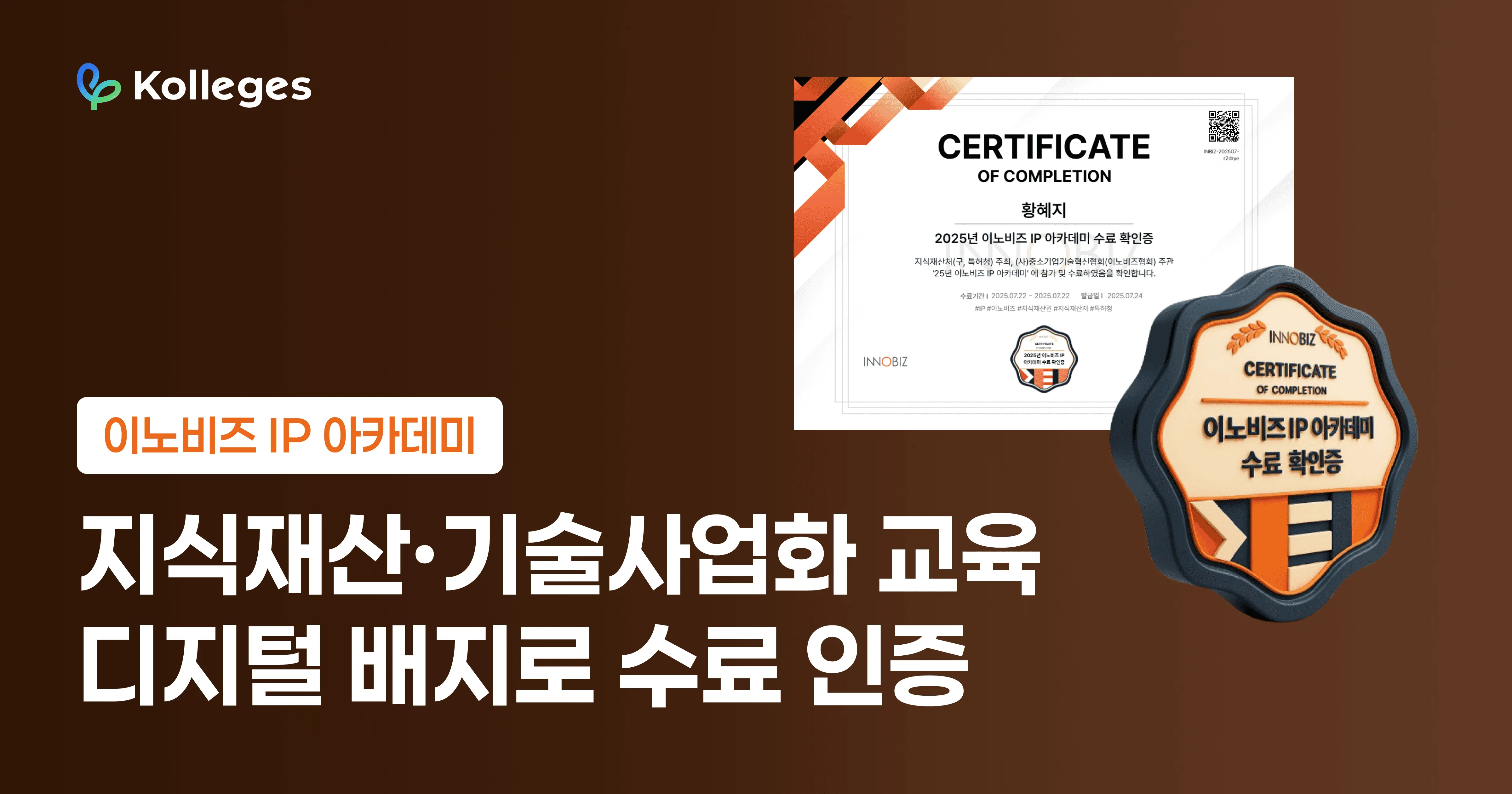
Innobiz IP Academy: Proving Practical Competencies With Digital Badges
Innobiz IP Academy replaced paper certificates with Open Badges 3.0 digital badges on blockchain, letting SME practitioners prove IP and tech-commercialization competencies on LinkedIn and portfolios.

Four Differentiators of the Kolleges Digital Badge: A Tailored Platform
Kolleges combines a branded homepage builder, end-to-end completion automation, built-in LMS, and a marketing analytics dashboard into one platform - going well beyond badge issuance alone.

5 Advantages of Digital Badges: Future-Ready Certification That Transforms Education and Careers | Kolleges
Digital badges built on blockchain and DID technology offer tamper-proof credibility, LinkedIn sharing, personalized learning tracking, reduced admin costs, and global English-language certification support.
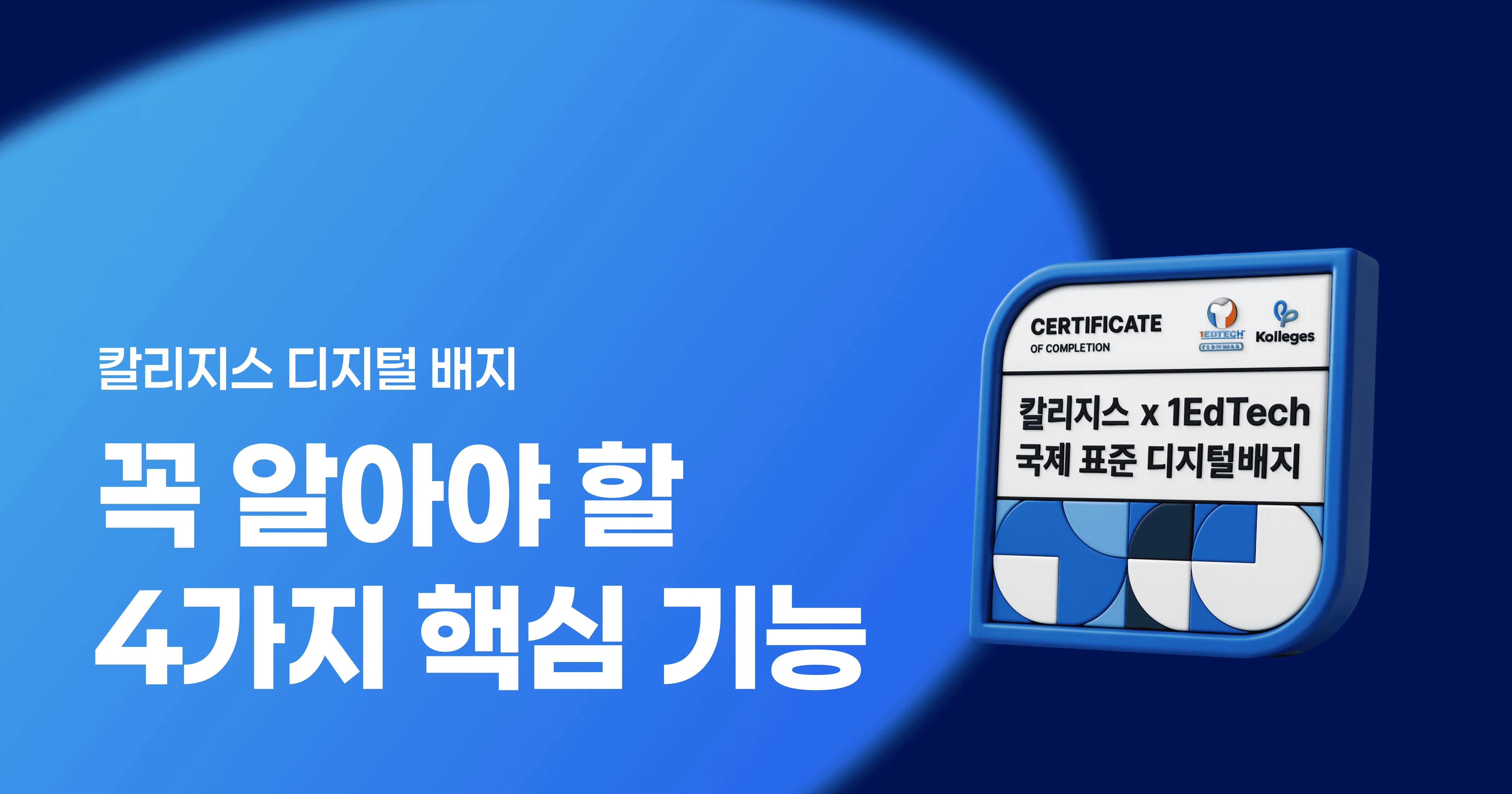
Four Differentiators of the Kolleges Digital Badge: Badge Features
Kolleges differentiates its badges through per-learner achievement data, full brand customization, automated multilingual issuance, and built-in viral sharing across nine social platforms.

Build and Manage an Education-Institution Homepage with Ease
Kolleges lets education institutions build and operate a full homepage - page design, menus, community boards, leaderboards - without any development work.

The future of digital badges: how Open Badges 3.0 is changing the credentialing standard
Open Badges 3.0 upgrades digital badges from embedded PNG metadata to a full Verifiable Credentials model - making them machine-verifiable, portable worldwide, and tamper-proof without relying on any central server.
Five Essential Checks Before Adopting Digital Badges
A practical five-point checklist - covering data privacy, blockchain stability, Open Badges 3.0 compliance, issuance management, and share UX - to evaluate before adopting digital badges.

Three Core Advantages of Open Badges as an Essential Tool for Credible Credentialing
Open Badges outperform paper certificates by combining tamper-resistant, data-based verifiability, instant online sharing, and sequential career record-keeping in a single globally-standardized credential.

Automating Institutional Promotion with Digital Badges and LinkedIn Integration
Connecting your LinkedIn company page to Kolleges makes every learner badge share an automatic, zero-cost promotion of your institution's brand.
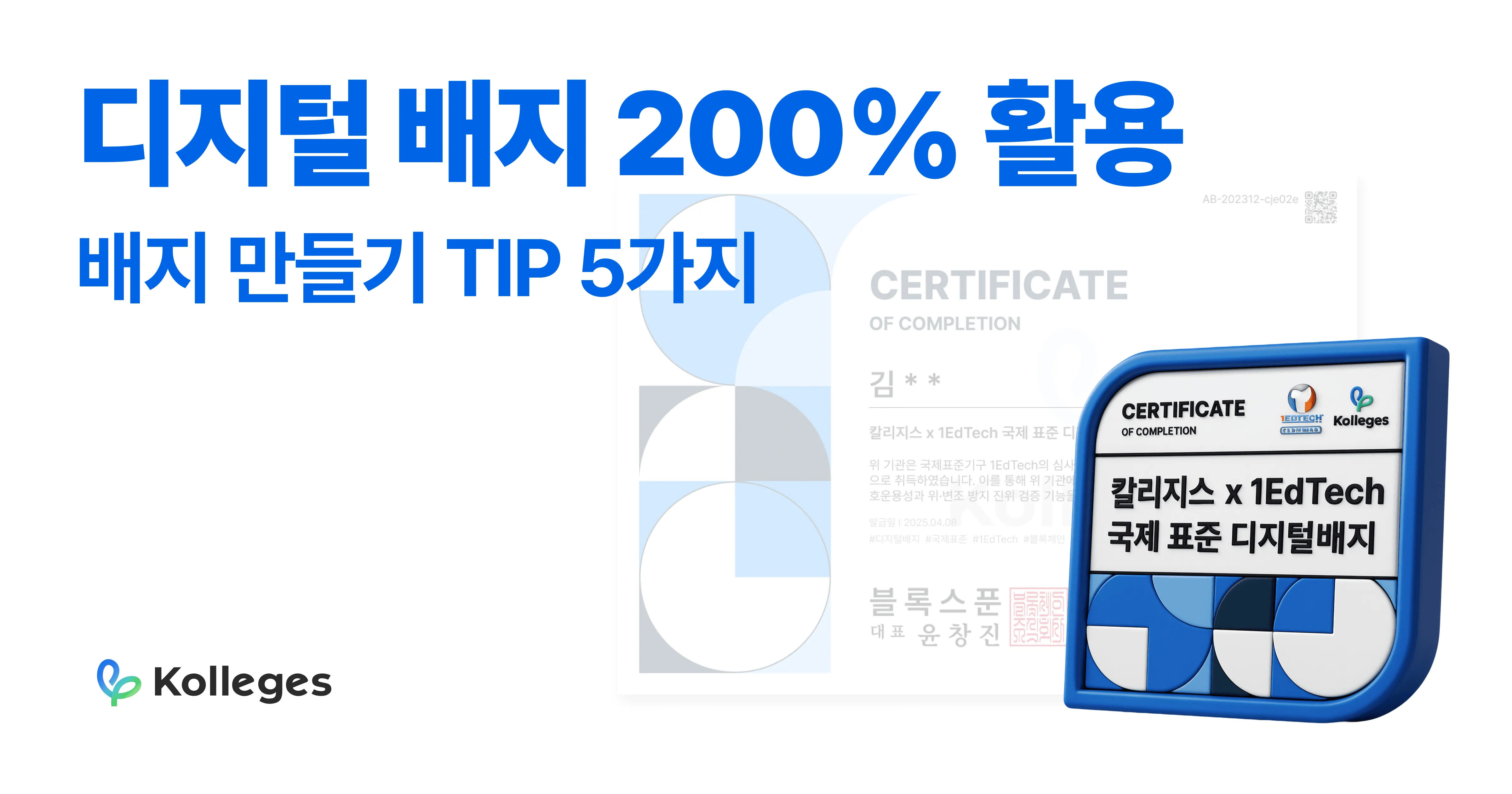
Get 200% Out of Digital Badges: 5 Tips for Creating Badges
A step-by-step walkthrough of issuing digital badges with Kolleges - from institution setup and design to bulk issuance, scheduled delivery, and class-linked automation.

Community Management
This guide provides step-by-step instructions on how admins can directly configure and operate the categories, posts, comments, and leaderboard of the Kolleges community.
Certificate Advertising Settings Guide: Adding Promotional Content to Verification Pages
From the Targeted Advertising tab on the certificate creation page, you can set up badge acquisition programs, related badges, and ad banners to drive re-enrollment and re-application conversions from verification page visitors.
Custom Domain Address
This guide covers the 9-step DNS configuration procedure (adding A and CNAME records) for connecting an organization-owned domain as your homepage address in Kolleges, as well as how to disconnect it.

How to get a pet groomer license - salary included
A complete guide to becoming a certified pet groomer in Korea - covering job duties, the Level 3 and Level 2 license paths, and starting salaries.

Psychological Counseling Certification: How to Earn It and Career Outlook
Psychological counseling certifications come in state-accredited and private types, each requiring coursework and practical training before opening careers in clinics, schools, and corporate wellness.

How to Earn a Detective License: Eligibility and Exam Schedule
The Detective License is open to anyone with a high school diploma, features a flexible self-scheduled written exam, a 4-subject curriculum completable in 2-3 weeks, and a ~97% pass rate.

Can I put a private certification on my resume?
Private certifications strengthen resumes when they're relevant, credibly sourced, and framed around concrete skills gained - not just credential names.
Private Certificate Registration: Requirements, Documents, and Key Considerations
Private certificate registration requires verifying eligibility, preparing operating regulations and business documents, and staying current on annual license tax and change registrations after approval.

Companion Animal Manager Certification: Career Outlook and Fields
The Companion Animal Manager certification requires only a middle school diploma, covers behavior and health sciences in 25 online lectures, and opens careers across a rapidly growing pet industry.
Top 5 Popular Private Certifications: Which One Fits You?
From counselor to barista, this guide compares five in-demand private certifications - who each suits, where they lead, and how to earn them.

Hospital Administrator Certification: Eligibility and Exam Content Explained
Korea's Ministry of Health and Welfare-accredited Hospital Administrator certification is open to health administration graduates and non-majors who complete the Association's training course, with a 60-77% historical pass rate.

Understanding the Personal Protection Officer Certification
The Personal Protection Officer certification - a Korean National Police Agency-authorized credential hosted by the Korea Security Association - qualifies holders for security, guard, and personal-protection roles across public and private sectors.
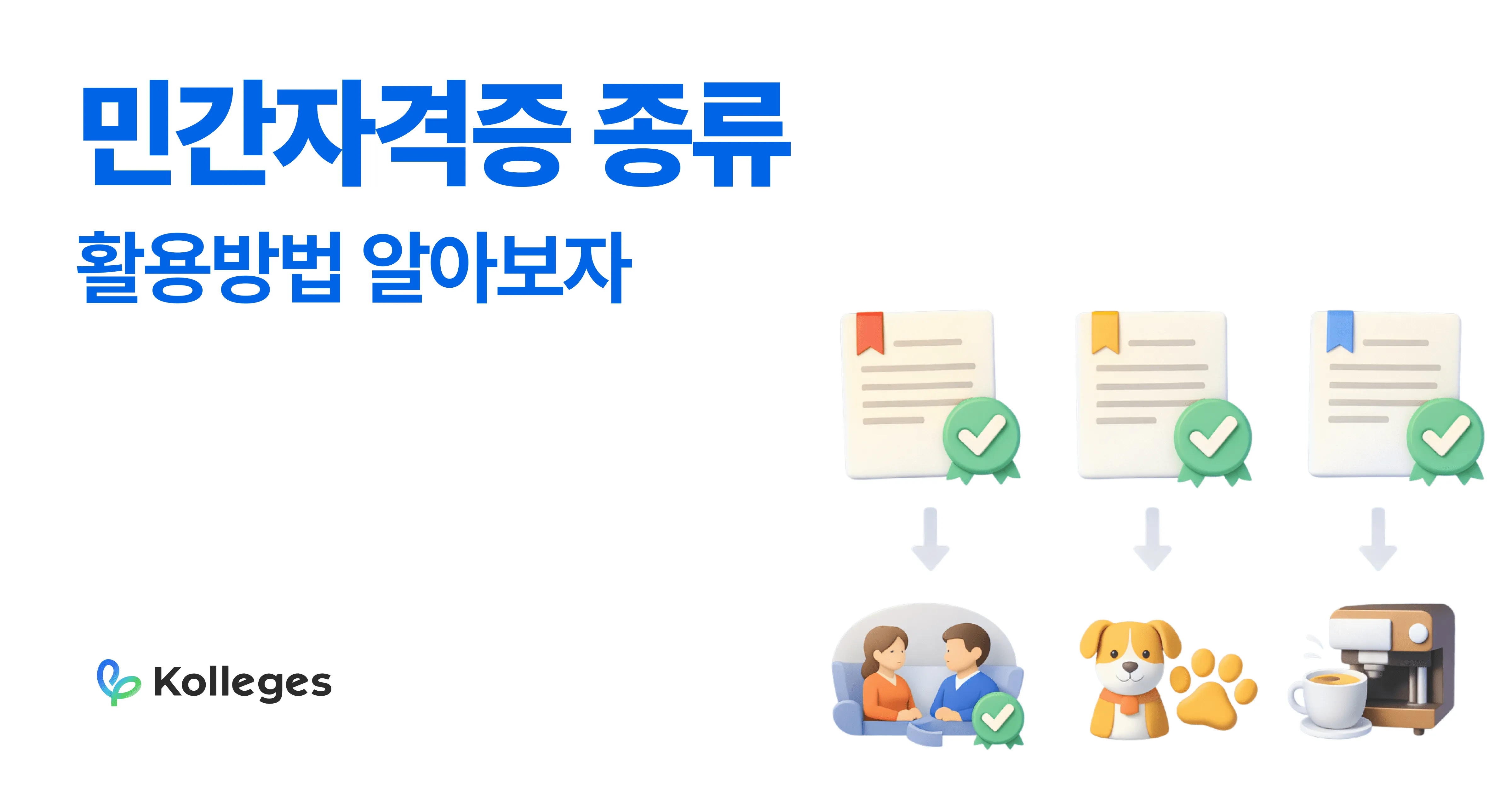
Types of Private Certifications and How to Use Them
Private certifications cover hundreds of varieties and lower entry barriers versus national exams; pairing them with blockchain-based digital credentials lets learners share results on social media and drives organic promotion for issuing academies.

How to Register a Private Certificate
Learn the full Korean private certificate registration process, key pitfalls to avoid, and how to register for free with Kolleges consulting instead of paying up to 1,000,000 KRW.

Private Certificate Issuance: Application, Required Documents, and Key Considerations
To register a private certificate in Korea, prepare four documents including operating regulations, submit for a 2-3 month review, and plan ongoing management from day one.

Companion Animal Manager: National vs. Private Certification
No national Companion Animal Manager certification exists yet - but private certifications from credible, hands-on programs can meaningfully support your career and entrepreneurship goals.
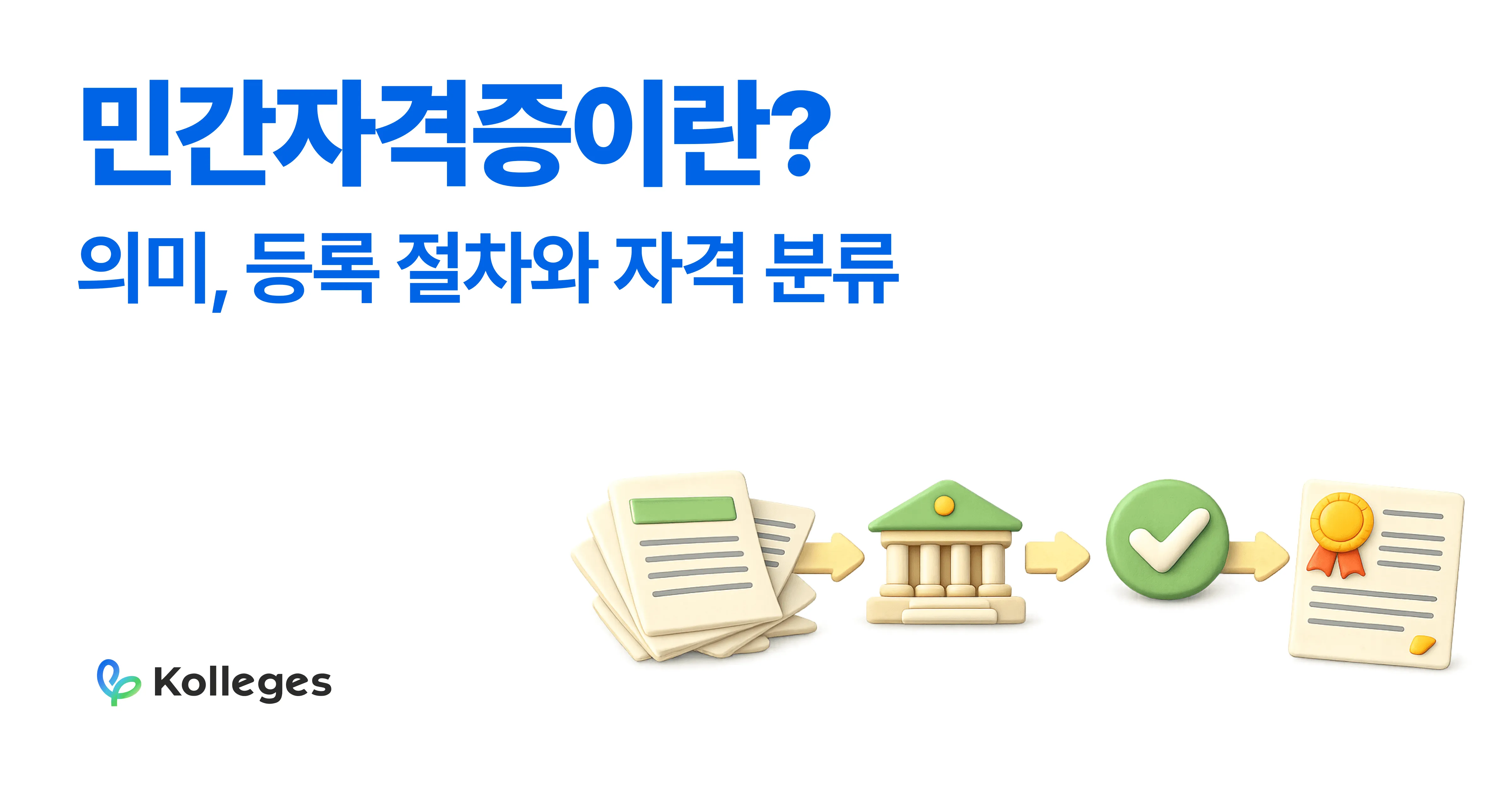
Private certification - meaning, registration process, accreditation system, and criteria
Private certifications are non-government credentials covering 52,879 types across 14,772 institutions - here's how to register one and earn official accreditation.
See whether it fits your institution - in 10 minutes
From issuing to verifying and amplifying, see it live in a Kolleges demo.
Request a demo