
Public sector
Digital-badge and credentialing insights related to Public sector.
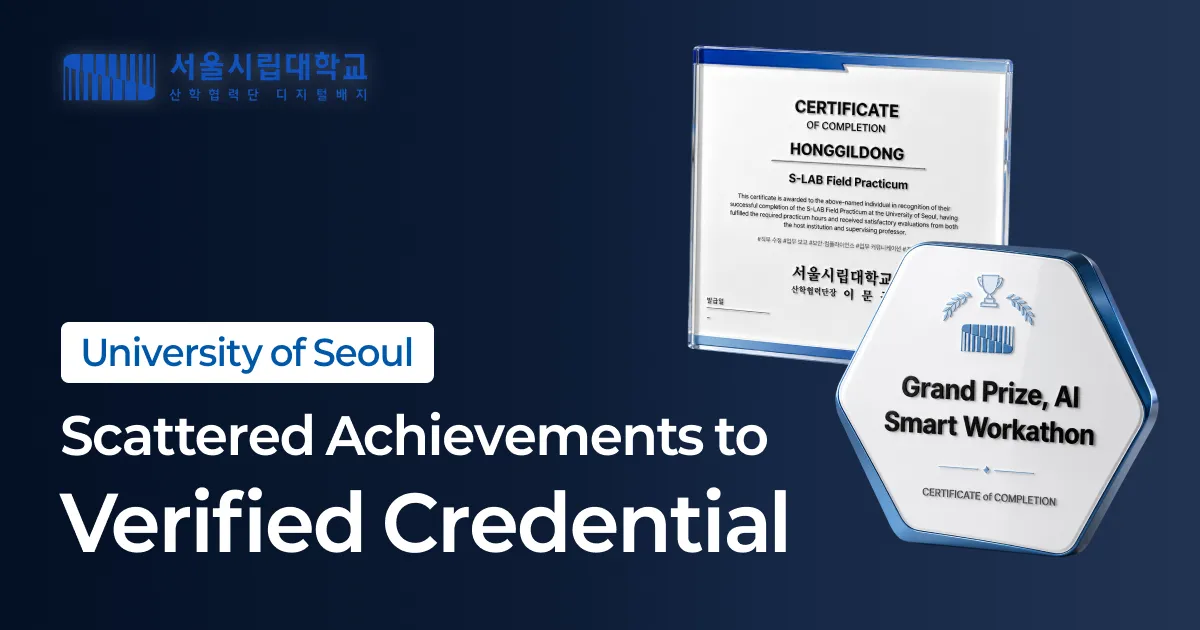
How to Connect RISE Performance with a Three-Tier Digital Badge Structure: A University of Seoul Case
The University of Seoul's RISE project team bundled the outcomes of 7 programs across 3 areas (industry-academia cooperation, AI, and convergence regional innovation) into 15 digital badges. This is the design behind a three-tier structure connecting unit badges through pathways to a comprehensive certification, turning scattered university achievements into verifiable one-line credentials.

When AI Takes Over the 'Doing': How University Majors and Digital Badges Are Changing
When AI takes over the 'doing' of a major, what should universities teach? Daegu Haany University, a Glocal University 30 institution and the only triple AID30 winner, redefines competency as domain knowledge to problem definition to AI execution to selection, and records the results as verifiable digital badges. An interview with Vice Director Park Seung-hee.

Researching education for all: how SeeD connects a network of education experts
From fleeting association activities to verifiable records of growth - how SeeD adopted Kolleges digital badges.
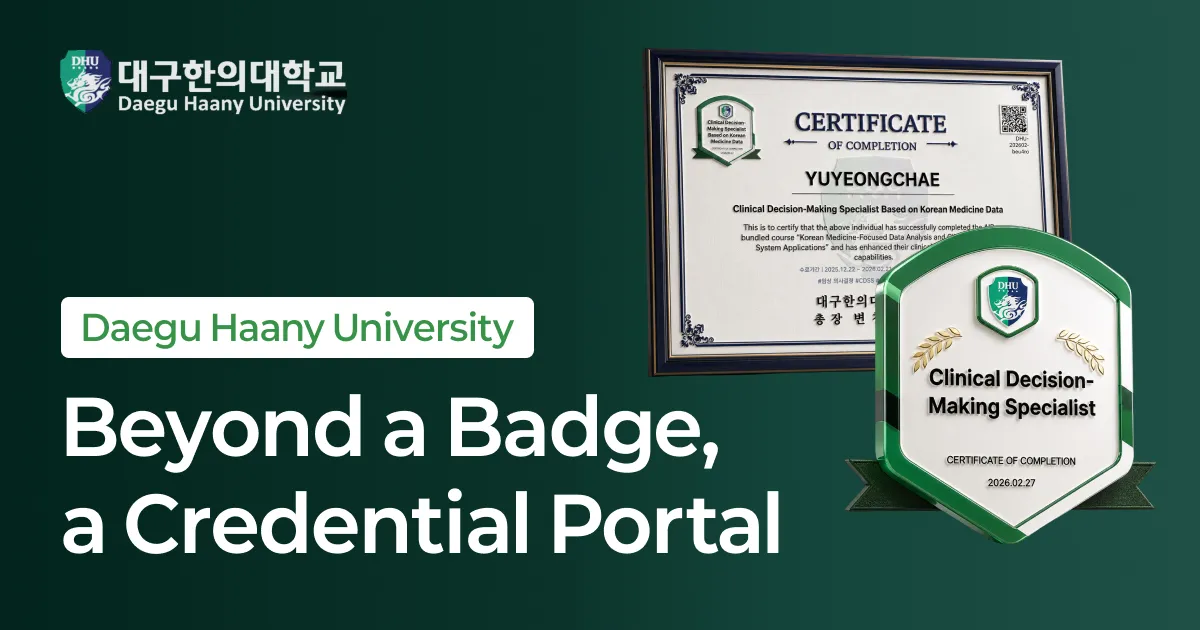
Running University Digital Badges: The Difference a Portal and Co-issuance Make (A Daegu Haany University Case)
University digital badges come down to operational structure beyond badge design. We lay out the differentiators that professors, education-innovation offices, and industry-academia foundations should look at: the dedicated portal Daegu Haany University built on Kolleges, co-issuance where two institutions sign together, KOLLEGES VERIFIED verification, and automatic issuance.
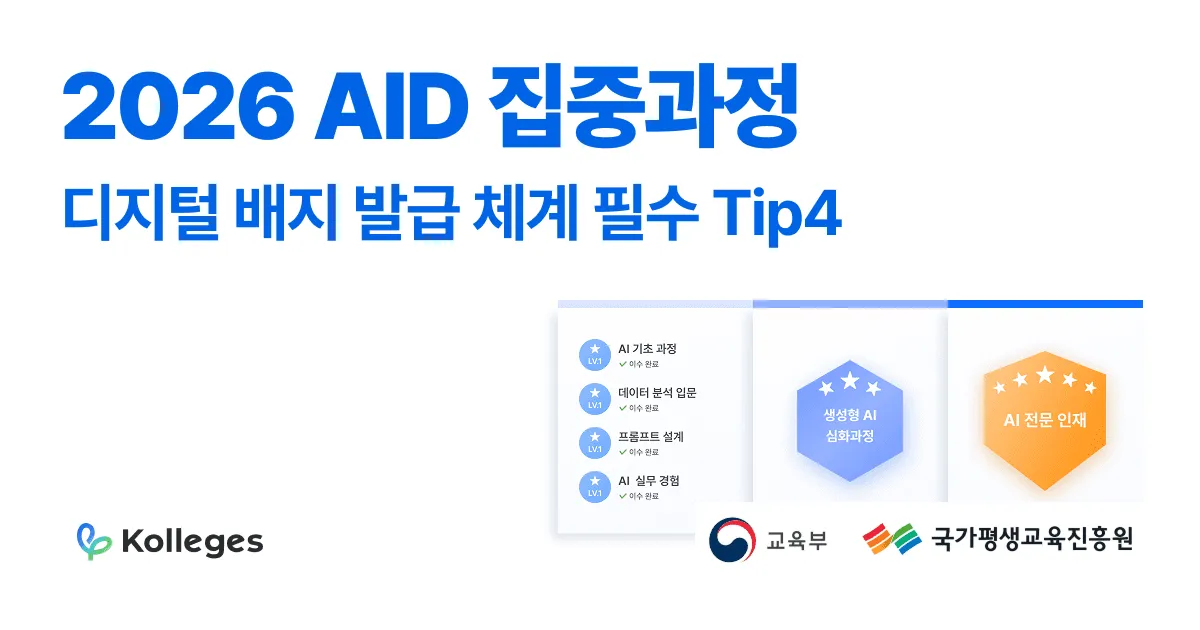
Designing the Digital Badge System for AID 30+ Intensive Camps and Bundled Courses
Design competency, course, and integrated badges for AID 30+ and Bundled Courses with the right metadata and automated issuance rules to satisfy both program evaluation and learner utility.
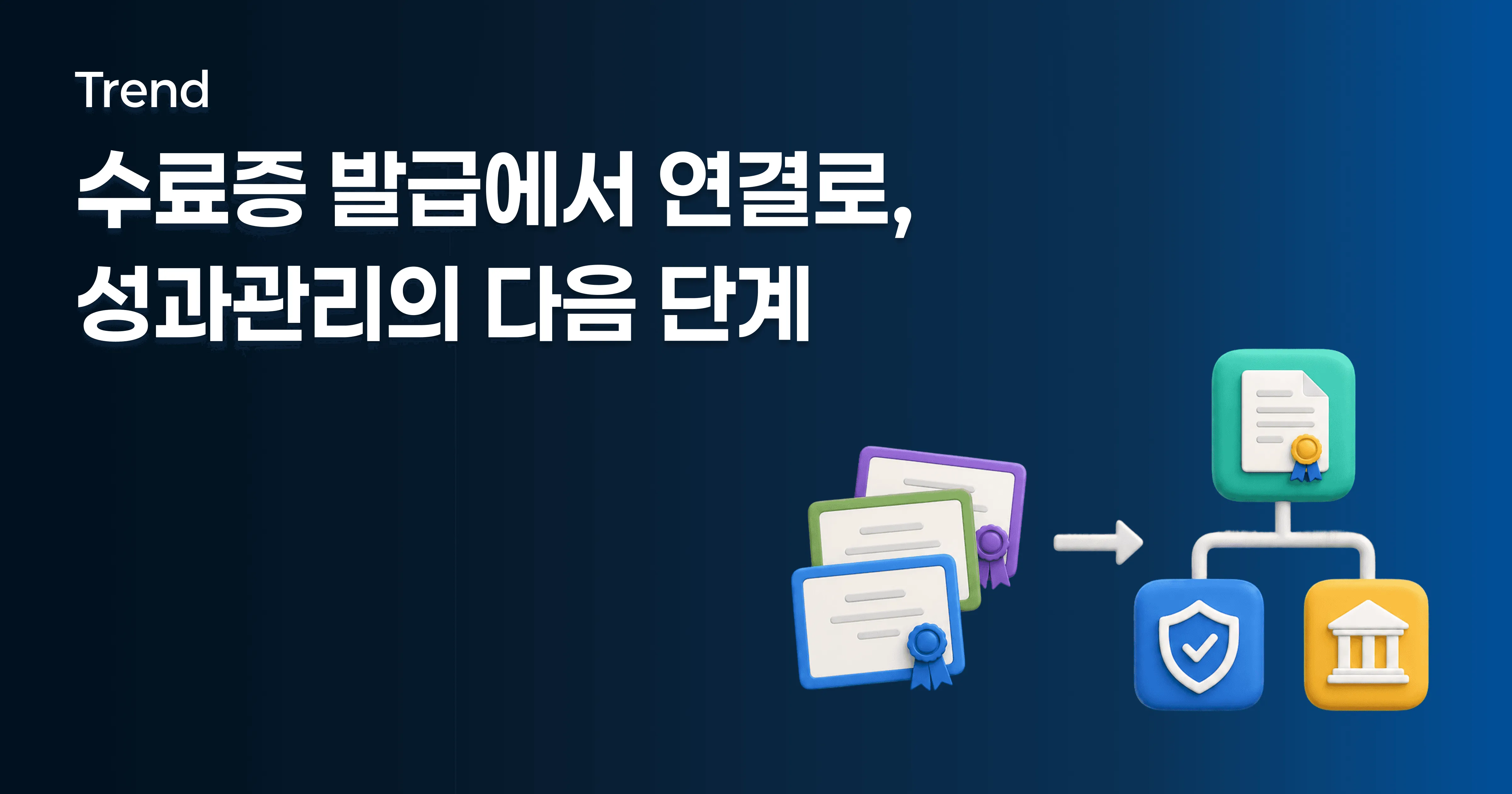
From Certificate Issuance to Connection: The Next Step in Outcome Management
Standards like Open Badges, CLR, and LER transform one-off certificate issuance into a connected, reportable flow of learning and employment outcomes.
Mother-Tongue Education: Why the Policy Exists but Doesn't Work in Classrooms
Mother-tongue education succeeds only when it starts in early grades, spans subjects, and is backed by coordinated teacher training and materials - not just official recognition.
'Technology' and 'care' on a single certificate - Korea Polytechnic University Daejeon Campus's 'AI × Human Care' co-issuance
Two universities in Daejeon co-issued a single digital badge bearing both institutions' logos, solving the NCS stage-recognition gap inside a RISE regional innovation consortium.
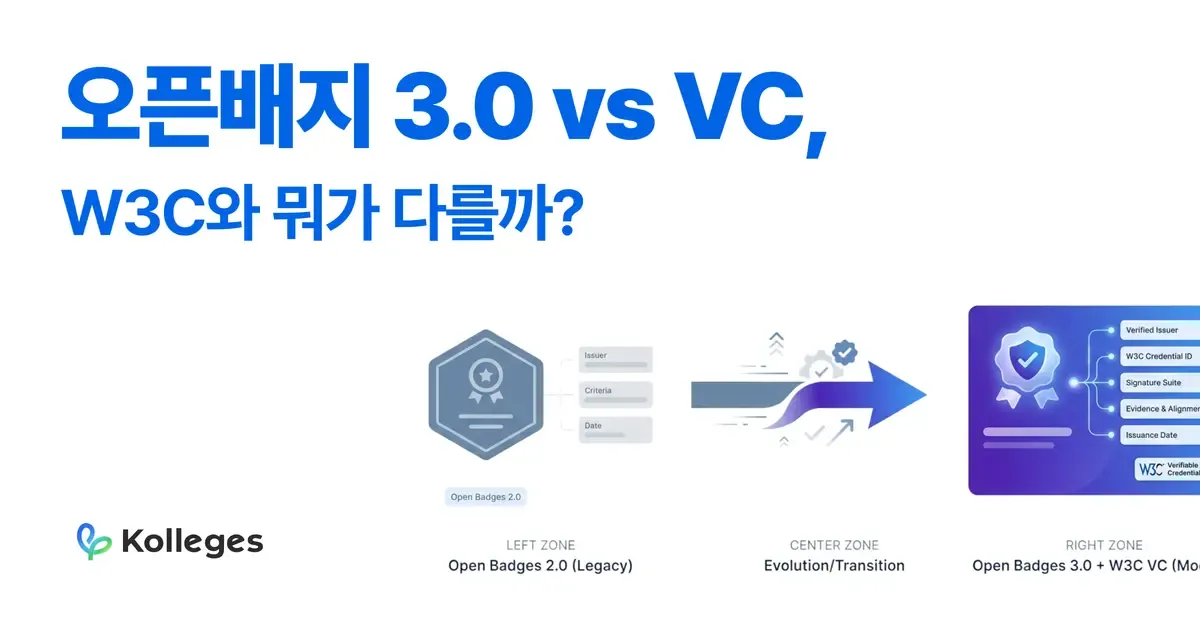
The complete Open Badges 3.0 guide: how it differs from W3C Verifiable Credentials
Open Badges 3.0 wraps W3C Verifiable Credentials with an education-specific metadata layer, replacing platform-dependent verification with cryptographic signatures that let learners own and selectively disclose their credentials.

Digital Badge Use Cases Across Southeast Asia
Singapore, Malaysia, Thailand, the Philippines, Vietnam, and Indonesia are each building distinct digital-badge and micro-credential ecosystems - from SIM's stackable courses to TESDA's 335-course TVET registry.
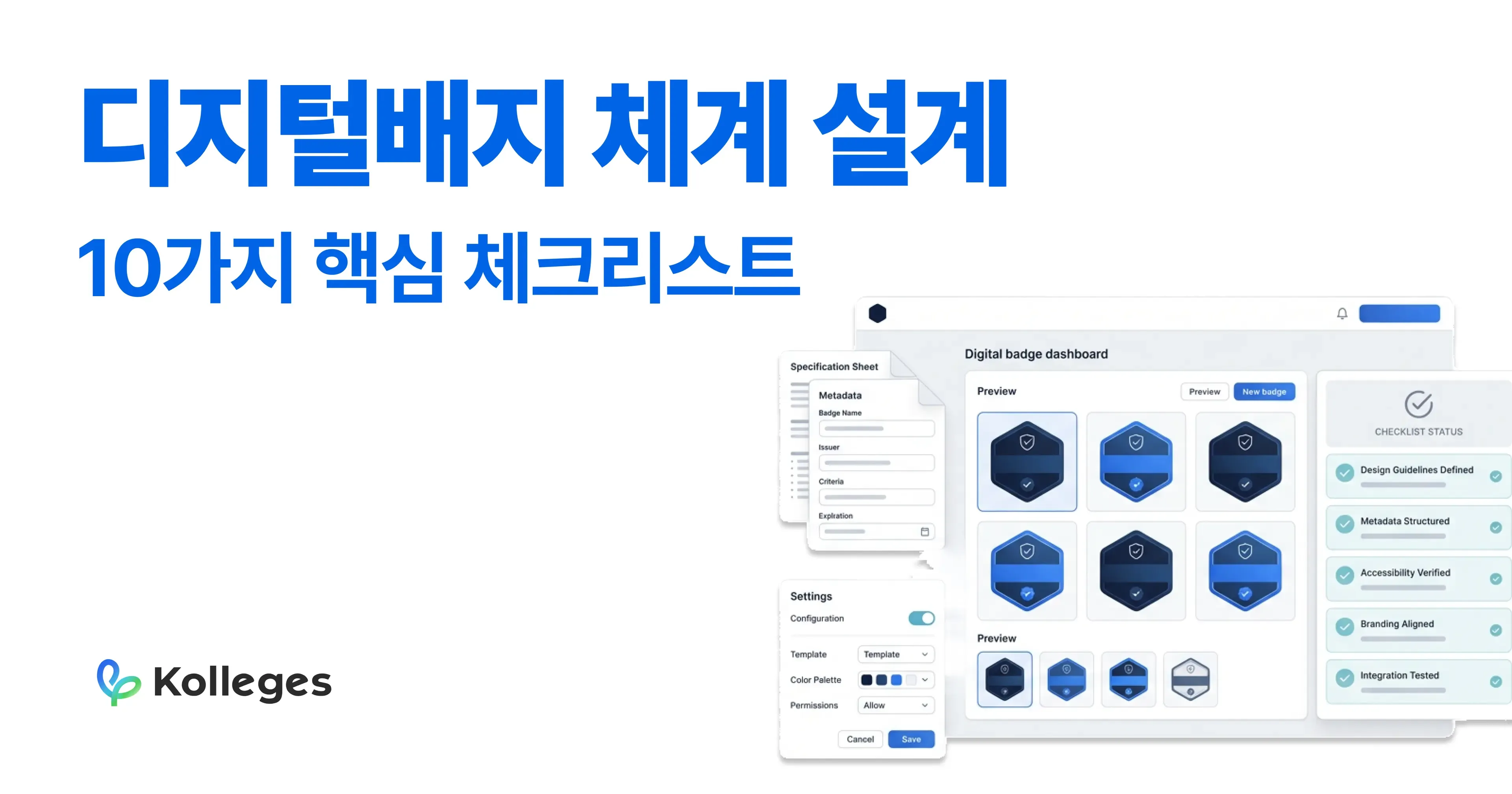
A 10-Point Digital Badge Design Checklist for Your Institution
Badge programs fail not from bad technology but from skipping design-stage decisions; this 10-point checklist helps institutions build badges that recipients actually use and share.
Inside Korea's 2026 AI·D Intensive Programs for Working Adults
Korea's 2026 AI·D intensive programs require universities to build digital badges into curriculum design, evaluation, and outcome diffusion from day one - not treat them as post-completion paperwork.

What's Changing in Korea's 2026 Youth Policy
Korea's 2026 youth policies ramp up AI education, regional employment incentives, and startup support, making verifiable experience credentials a decisive competitive advantage.
Public Education Is Changing: A Guide to Korea's 2025 Coding, AI, and Creative Education Policy
South Korea's 2025 national policy transforms coding, AI, and creativity from electives into core K-12 subjects, aiming for full adoption across all schools by 2027.

Korea's 2026 Youth Startup Grants: Conditions and What to Expect, Based on 2025 Data
Korea's 2026 youth startup grants (ages 19-39) will mirror 2025's core programs and reviewer priorities - start your business plan, team, and evidence portfolio now to compete effectively when announcements open in January-March.

What Is Glocal University 30? A University Support Program for Regional Innovation and Global Competitiveness
Glocal University 30 is a 2023-2027 Korean government initiative giving 30 regional universities up to ₩100 billion each to structurally reform curricula, deepen regional ties, and expand global partnerships.
What is the AID 30+ Intensive Camp? 2025 Selected Universities and Program Areas
In 2025, 20 Korean universities run the Ministry of Education's AID 30+ Intensive Camp - short-form AI and digital upskilling for working adults, with verified digital badges as proof of competency.

What Is the RISE Project? Seoul's Selected Universities and Key Strategic Directions
Seoul selected 35 universities under RISE to align higher education with regional industry needs, investing 76.5 billion KRW across five strategic priorities including AI talent development.

Why ISO 27001 (Information Security) Certification Is Essential for Digital Badge Platforms
Digital badge platforms must hold ISO 27001 certification because learner credentials are lifelong career assets - any forgery, leakage, or outage directly harms individuals, not just institutions.

Boosting University Competitiveness Through Education Administration Automation
Automating university administration - from graduation checks to event attendance - saves over 90% of staff time and enables real-time digital credential issuance.
Automated Certificate Issuance in Just a Few Clicks
Kolleges automates certificate issuance end-to-end - upload an Excel participant list, set optional completion conditions, and the system generates and delivers every certificate in bulk with no manual editing.

Top 4 Digital Badge Providers | 2025 Comparison Guide
Kolleges stands out from LecoS, OmniOne, and K-OpenBadge by combining Open Badges 3.0 certification with automated SNS marketing and per-learner outcome credentials.

Building a Digital Badge Management Platform: A 5-Step Guide
A concise 5-step checklist - from defining criteria to operating analytics - that lets any institution launch a branded digital badge platform in roughly a day.
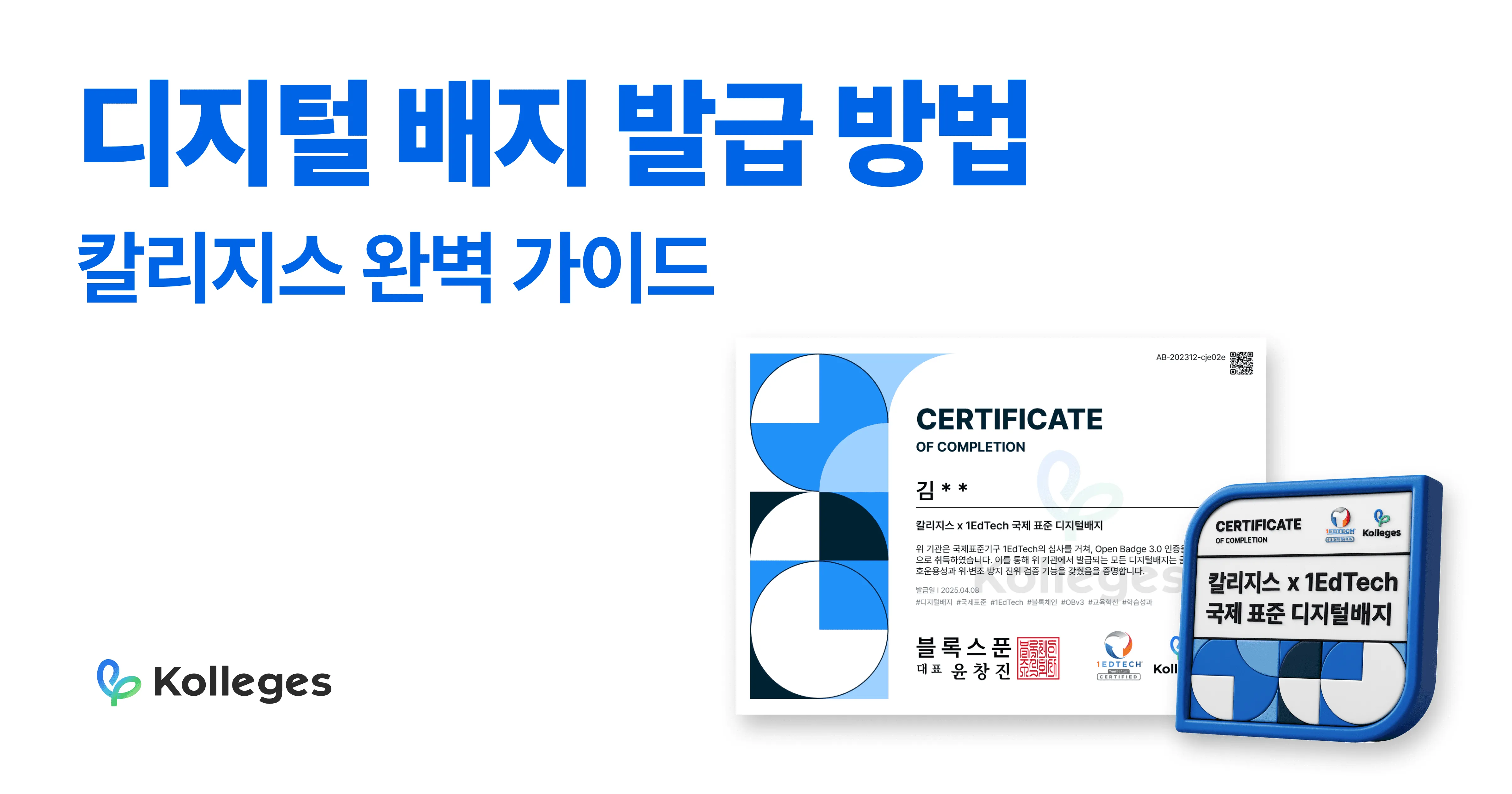
The Complete Guide to Issuing Digital Badges | Build the Kolleges 10-Minute System
Anyone can set up a professional digital badge issuance system in under 10 minutes using Kolleges - no technical knowledge or complex setup required.

Digital Badge Adoption Checklist: 5 Criteria You Must Verify
Before adopting a digital badge solution, verify OBv3 compliance, Issuer/Host/Displayer certification, data privacy procedures, ISO 27001 security, and a free admin demo.

Education Digital OnePass: Signup Guide and Tips
Education Digital OnePass lets students, parents, and school staff access Korea's major education platforms - NEIS, EduNet, EBS Online Class, and more - with a single secure account.

KOHI Mandatory Training: A Certificate Issuance Guide for Health and Welfare Workers | Kolleges
Health and welfare workers legally required to complete KOHI elder human rights training can now finish in 4 hours (down from 6 in 2025) - here's the full process from signup to certificate.
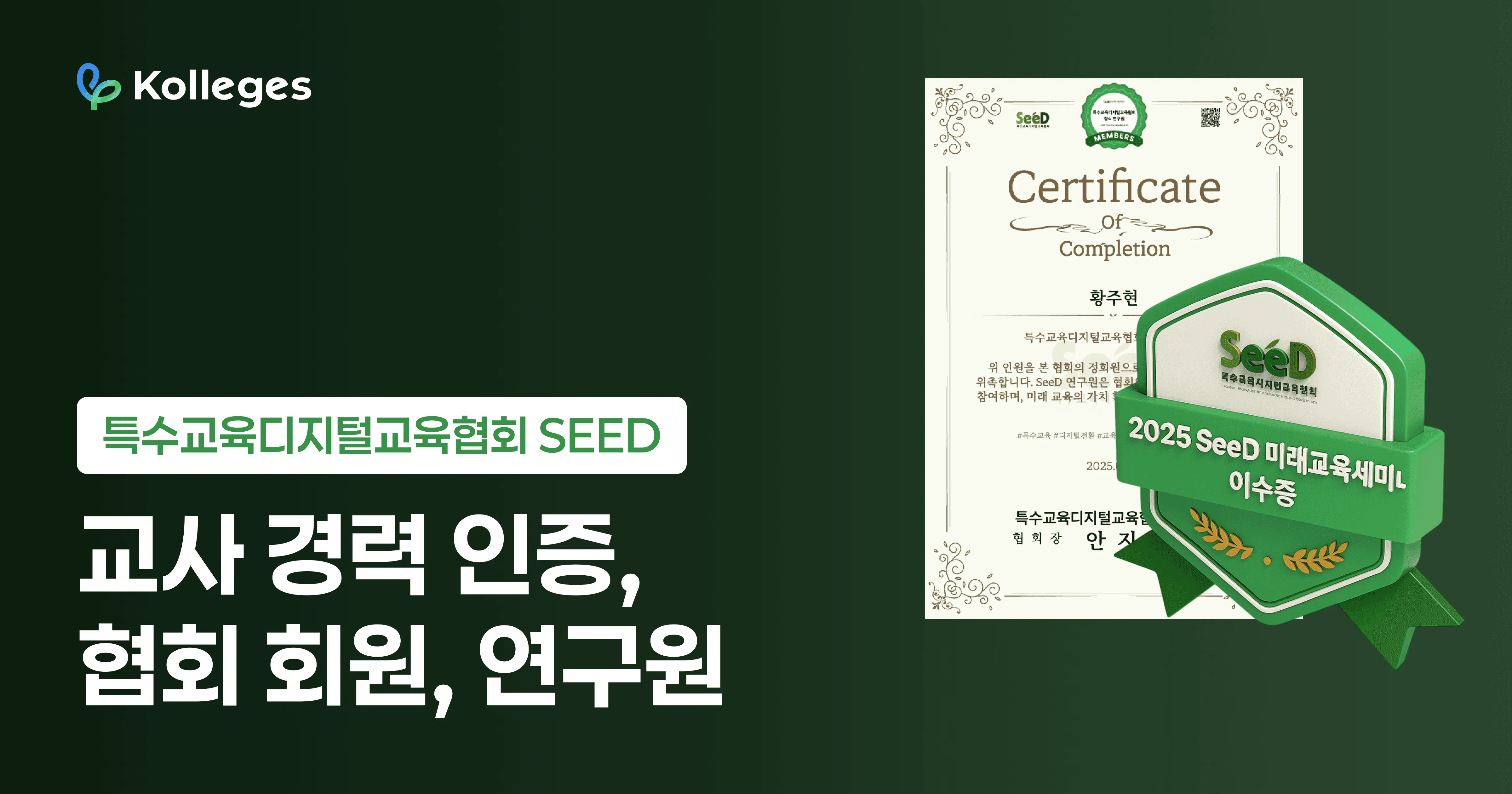
Reinventing Educational Outcome Certification: SeeD's New Challenge | Kolleges
South Korea's Special Education Digital Education Association (SeeD) issued blockchain-based digital badges at EduPlus Week 2025, turning seminar completion and speaker recognition into verifiable, shareable credentials built on Open Badges 3.0.

2025 EduPlus Week Future Education Expo - Key Keyword: "Personalized Learning"
At the 2025 EduPlus Week expo, 170+ organizations from 15 countries converged on "personalized learning," and Kolleges served as the event's official digital badge partner, issuing blockchain-based credentials via Open Badges 3.0.

Food Hygiene Education Certificate: Issuance, Application, and Fees at a Glance
Food service operators in Korea must complete annual hygiene training under Article 40 of the Food Sanitation Act - skipping it triggers fines that escalate from KRW 200,000 to KRW 600,000.

Safety Education Completion Certificate: Issuance and Use Cases at a Glance | Kolleges
A safety education completion certificate proves you completed required safety training - issued by KOSHA, schools, or private platforms - and opens employment, exam, and volunteer opportunities.

2025 Certificate Acquisition Subsidy: Application Process, Documents, and Benefits
Unemployed youth aged 19-39 can get up to KRW 200,000 in exam fee reimbursements through South Korea's 2025 Certificate Acquisition Subsidy - but budgets run out fast.
A New Standard for the AI Era: Digital Identity Verification
Personhood Credentials let users prove their humanity online without exposing personal data, and digital badge platforms like Kolleges are positioned as a key asset for this emerging trust layer.

Digital Badges: A New Answer for Cultivating Local Talent
Korea's RISE initiative pairs with digital badges to close the loop between regional university curricula, verifiable competency credentials, and local employment retention.

Korea's Global Education Strategy: Where Does It Stand Today?
As Korea pursues 300,000 international students by 2027 and expands Asian joint programs like CAMPUS Asia, digital badges have become essential infrastructure for proving learner outcomes across borders.

Four Differentiators of the Kolleges Digital Badge: A Tailored Platform
Kolleges combines a branded homepage builder, end-to-end completion automation, built-in LMS, and a marketing analytics dashboard into one platform - going well beyond badge issuance alone.
Four Differentiators of the Kolleges Digital Badge: Badge Features
Kolleges differentiates its badges through per-learner achievement data, full brand customization, automated multilingual issuance, and built-in viral sharing across nine social platforms.

Build and Manage an Education-Institution Homepage with Ease
Kolleges lets education institutions build and operate a full homepage - page design, menus, community boards, leaderboards - without any development work.

The future of digital badges: how Open Badges 3.0 is changing the credentialing standard
Open Badges 3.0 upgrades digital badges from embedded PNG metadata to a full Verifiable Credentials model - making them machine-verifiable, portable worldwide, and tamper-proof without relying on any central server.
How to Issue Digital Badges and Store Them Safely (feat. IPFS)
Digital badges become tamper-proof Verifiable Credentials by combining JWT cryptographic signatures with IPFS distributed storage, letting anyone verify authenticity via a content-addressed CID link.
Five Essential Checks Before Adopting Digital Badges
A practical five-point checklist - covering data privacy, blockchain stability, Open Badges 3.0 compliance, issuance management, and share UX - to evaluate before adopting digital badges.
Digital Badges: How Is a DID Created and Stored?
Kolleges generates DID-based digital badges using the did:key method with RSA key pairs - storing only the public key server-side while delivering the encrypted private key to the user for self-custody.

What Is DID - Managing Digital Badges with Decentralized Identity
Kolleges builds digital badges on DID using the did:key method, so both issuers and recipients hold cryptographic key pairs that let anyone verify badge authenticity without a central server.
Everything About the AID 30+ Project and Digital Badges
Korea's government-backed AID 30+ Project requires universities running adult AI and digital re-skilling programs to certify completions with Open Badges 3.0 digital badges issued under the university president's name.
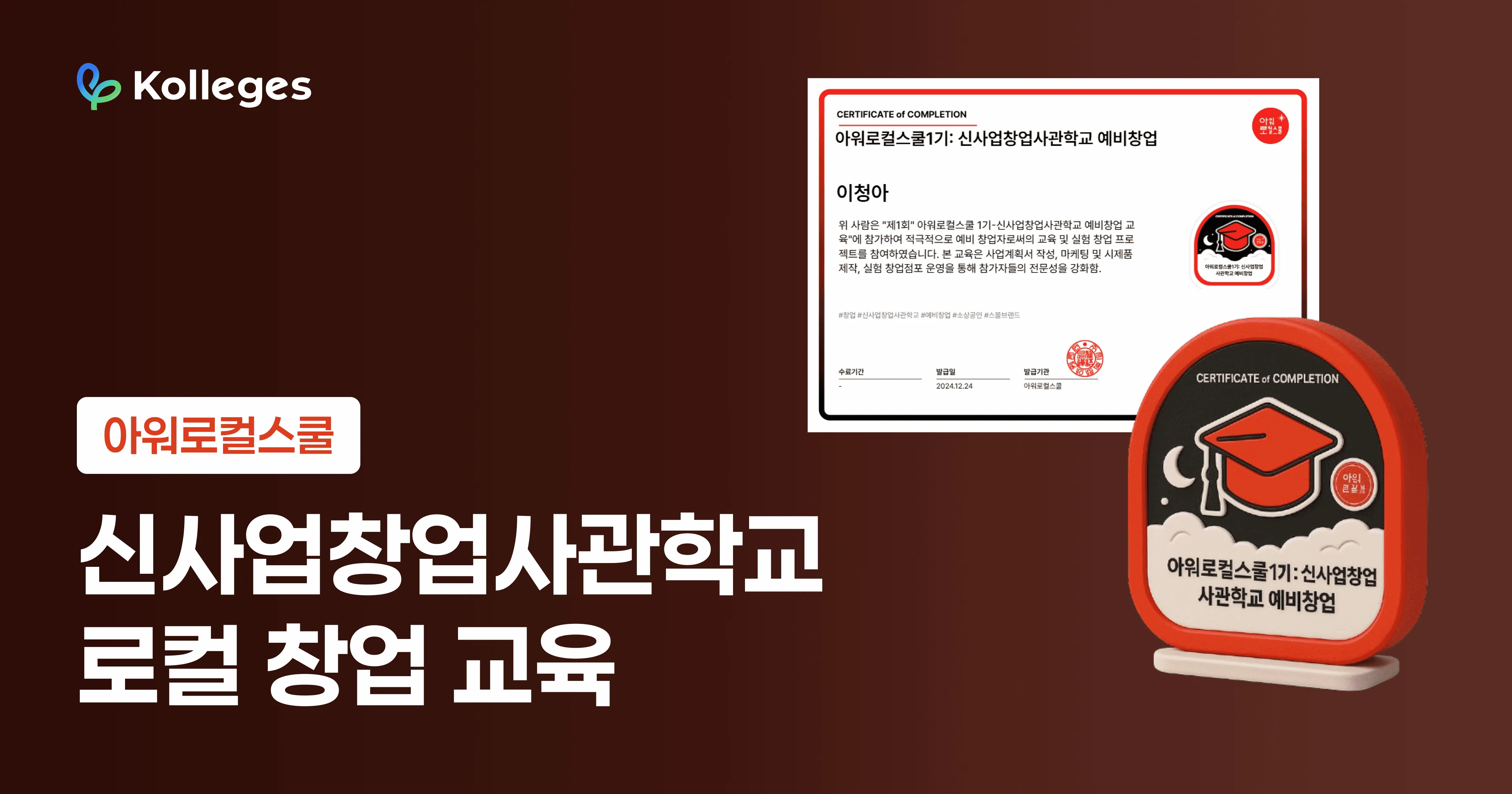
[Our Local School Cohort 1 - New Business Startup Academy concludes: reshaping the paradigm of regional startup education] | Kolleges
Oursisun replaced manual certificate workflows with Kolleges to run a 55-person regional pre-startup cohort, automating issuance and brand-shareable credentials.
See whether it fits your institution - in 10 minutes
From issuing to verifying and amplifying, see it live in a Kolleges demo.
Request a demo